
In today’s fast-paced digital economy, small and medium-sized businesses (SMBs) face mounting pressure to streamline operations, reduce costs, and stay competitive. Vendor agreements, often one of the most time-consuming administrative tasks, can benefit significantly from the adoption of electronic signatures. By digitizing this critical process, SMBs can save time, reduce errors, and ensure secure and compliant transactions. This guide will walk you through everything you need to know about using electronic signatures to simplify vendor agreements, empowering your business to operate more efficiently.
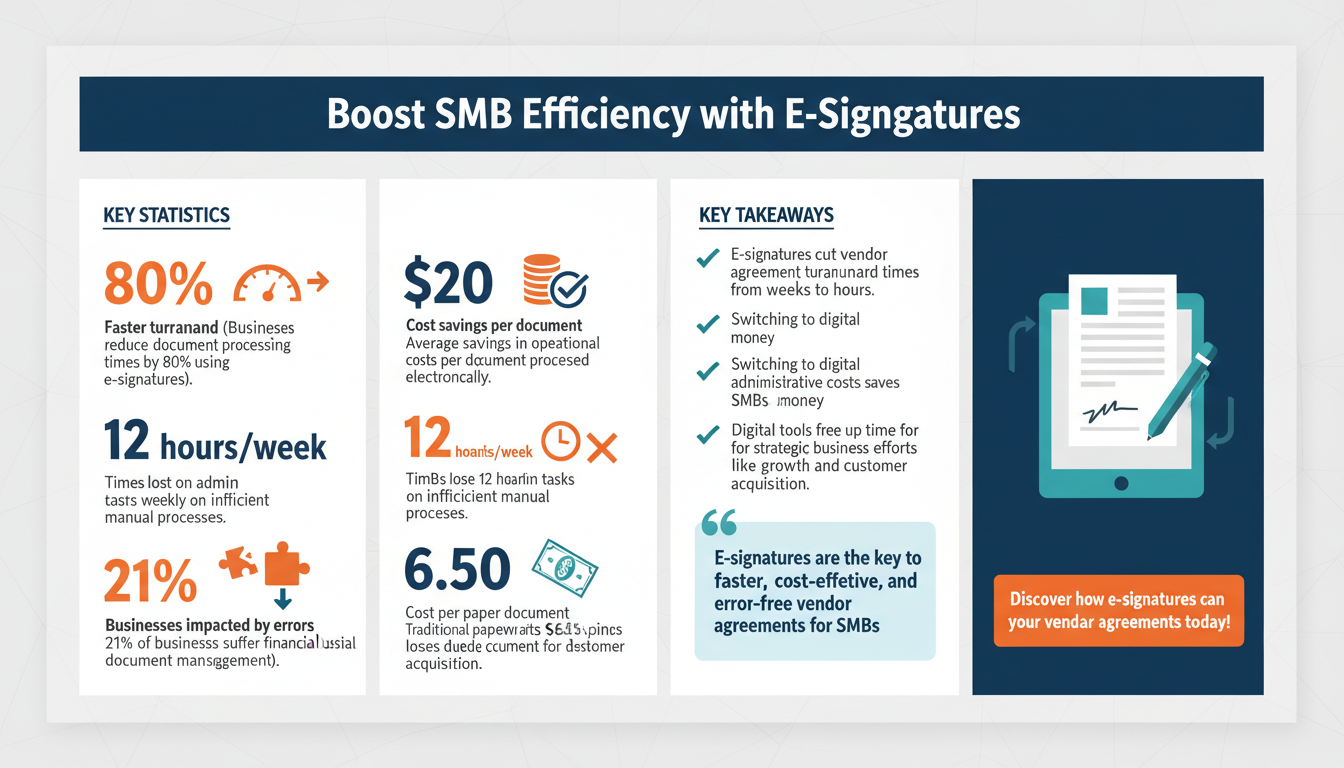
Research shows that businesses using electronic signatures can reduce document turnaround times by 80% and save an average of $20 per document in operational costs. Yet, many SMBs are still reliant on outdated, manual processes for vendor agreements, missing out on these game-changing benefits. In this article, we’ll explore why electronic signatures are a must-have for SMBs, how they simplify vendor agreements, and the steps you can take to implement them effectively. Along the way, we’ll share actionable tips, real-life examples, and expert insights to help you make the transition seamlessly.
1. The Challenges SMBs Face with Traditional Vendor Agreements
For many SMBs, vendor agreements are a critical part of daily operations. These contracts govern relationships with suppliers, service providers, and partners. However, traditional methods of managing these agreements—such as printing, signing, scanning, and mailing—are riddled with inefficiencies. Let’s examine the primary challenges:
Time-Consuming Processes
Manual processes often involve multiple steps, including printing the document, signing it, scanning it, and emailing or mailing it to the other party. This can take days or even weeks, especially if the vendor is located in a different geographic region. A survey conducted by Forbes found that businesses lose an average of 12 hours per week on administrative tasks, with contract management being a significant contributor. For SMBs, this is time that could be better spent on strategic activities like customer acquisition or product development.
High Administrative Costs
According to Forrester Research, the average cost of processing a single paper document is approximately $6.50. This figure accounts for printing, storage, and mailing expenses. For SMBs handling dozens—or even hundreds—of vendor agreements monthly, these costs can quickly add up, eroding already thin margins. Moreover, the hidden costs of inefficiency, such as delays in contract execution, can lead to lost revenue opportunities.
Risk of Errors and Mismanagement
Manual processes increase the likelihood of errors, such as missing signatures, incorrect dates, or lost paperwork. These mistakes can delay operations and even result in legal disputes if agreements lack proper documentation. A study by PwC revealed that 21% of businesses have experienced significant financial losses due to document mismanagement. For SMBs, even small errors can have outsized consequences, potentially damaging vendor relationships or leading to compliance issues.

2. What Are Electronic Signatures, and How Do They Work?
Electronic signatures, or e-signatures, are digital equivalents of handwritten signatures. They allow users to sign documents electronically, eliminating the need for paper, ink, and physical signatures. These signatures are legally binding in most jurisdictions, including the United States under the ESIGN Act of 2000 and the European Union under the eIDAS Regulation.
How Electronic Signatures Work
Here is a high-level overview of how e-signatures function:
- Document Upload: The document requiring a signature is uploaded to an e-signature platform.
- Placement of Signature Fields: The sender specifies where signatures, initials, or other required fields should be placed.
- Secure Sending: The document is sent to the recipient through a secure link or email.
- Recipient Signs: The recipient opens the document and provides their signature electronically, often using a mouse, touchscreen, or pre-saved digital signature.
- Completion and Storage: Once all parties have signed, the document is finalized and securely stored, often with an audit trail for compliance.
The process is designed to be user-friendly, secure, and legally binding, making it an ideal solution for SMBs handling vendor agreements. Moreover, many platforms include advanced features such as automated reminders, bulk sending, and integration with existing document management systems, further enhancing efficiency.
For instance, DocuSign, a leading e-signature provider, reports that its users have saved over 20 billion sheets of paper globally, highlighting the environmental and operational benefits of this technology. Similarly, Adobe Sign integrates seamlessly with tools like Microsoft Office and Salesforce, allowing SMBs to embed e-signatures into their existing workflows.

3. Key Benefits of Using Electronic Signatures for Vendor Agreements
Electronic signatures offer numerous advantages for SMBs, ranging from operational efficiency to enhanced security. Here’s a closer look at the key benefits:
Faster Turnaround Times
One of the most significant advantages of e-signatures is the speed at which agreements can be finalized. Documents that once took weeks to process can now be signed and completed in minutes. According to a Gartner study, businesses using e-signatures report an 80% reduction in document turnaround times. For example, a logistics company in Chicago reduced its vendor contract processing time from an average of seven days to just 24 hours after adopting e-signature technology.
Cost Savings
By eliminating the need for paper, printing, and postage, SMBs can significantly reduce their administrative expenses. Moreover, many e-signature platforms offer affordable subscription plans tailored to SMB budgets, making the solution accessible and cost-effective. A case study by Zignature revealed that a small IT consulting firm saved $12,000 annually by switching to e-signatures, funds they reinvested in marketing and employee training.
Improved Security and Compliance
Modern e-signature solutions use advanced encryption and authentication methods to ensure the security of signed documents. Additionally, they provide audit trails that track every step of the signing process, helping SMBs maintain compliance with legal and regulatory requirements. For instance, industries like healthcare and finance, which are heavily regulated under HIPAA and SOX, have found e-signatures indispensable for maintaining audit readiness.
Eco-Friendly Operations
Switching to electronic signatures aligns with sustainability goals by reducing paper consumption and waste. This can enhance your business’s reputation among environmentally conscious customers and partners. According to the Environmental Paper Network, reducing paper use by just 10% can prevent the emission of 1.45 million tons of carbon dioxide annually, equivalent to removing 280,000 cars from the road.

4. How to Choose the Right E-Signature Solution for Your SMB
With numerous e-signature platforms available, selecting the right solution for your business can be challenging. Here are some key factors to consider:
Ease of Use
Look for a platform with an intuitive interface that requires minimal training for your team and your vendors. Features like drag-and-drop functionality for placing signature fields can simplify the process and improve adoption rates.
Integration Capabilities
Choose a solution that integrates seamlessly with your existing tools, such as CRM software, document management systems, or accounting platforms. This ensures a smooth workflow and reduces manual data entry. For example, platforms like PandaDoc offer integrations with HubSpot, enabling automated updates to client records whenever a contract is signed.
Security Features
Ensure the platform uses robust security measures, such as two-factor authentication, encryption, and secure audit trails. These features are critical for protecting sensitive vendor agreements. Companies in the legal and financial sectors, in particular, should prioritize platforms that meet ISO 27001 and SOC 2 compliance standards.
Scalability
Consider whether the solution can scale with your business as it grows. This includes the ability to handle higher document volumes and support additional users or workflows. For instance, a small retail chain might start with a basic plan but later require multi-user functionality as it expands to new locations.
For a more detailed guide, check out our article on how to choose the right electronic signature solution for your business needs.

5. Steps to Implement E-Signatures for Vendor Agreements
Implementing electronic signatures doesn’t have to be a daunting task. Follow these steps to ensure a smooth transition:
- Assess Your Needs: Determine the volume and types of vendor agreements your business handles. This will help you choose a solution that meets your specific requirements.
- Select a Platform: Use the criteria outlined in the previous section to evaluate and select the best e-signature platform for your SMB.
- Train Your Team: Provide training to your employees on how to use the platform effectively, focusing on features like document templates and audit trails.
- Digitize Existing Documents: Scan and upload any existing paper agreements to your e-signature platform to centralize document management.
- Monitor and Optimize: Regularly review your e-signature workflows to identify areas for improvement and ensure compliance with legal standards.
6. Common Mistakes SMBs Should Avoid
Adopting electronic signatures can bring transformative benefits, but there are common pitfalls to watch out for:
Overlooking Legal and Compliance Requirements
Not all e-signature platforms meet the regulatory requirements for your industry. Ensure the solution you choose complies with standards like the ESIGN Act or eIDAS.
Failing to Involve Stakeholders
Skipping stakeholder input during the selection process can lead to resistance and poor adoption rates. Involve key team members early to ensure buy-in and alignment.
Neglecting Training
Without proper training, employees may misuse or underutilize the platform, negating its efficiency benefits. Invest in comprehensive onboarding and ongoing support.
7. Case Study: How an SMB Simplified Vendor Agreements with E-Signatures
Consider the example of a mid-sized marketing agency that managed over 50 vendor agreements annually. Before adopting electronic signatures, they faced delays averaging 10 days per agreement, costing them $15,000 annually in administrative expenses.
After implementing an e-signature solution, the agency reduced agreement processing times to 24 hours and cut costs by 60%. This allowed them to reinvest savings into revenue-generating activities, demonstrating the tangible benefits of this technology.
8. FAQs About Electronic Signatures for SMBs
Are electronic signatures legally binding?
Yes, electronic signatures are legally binding in most jurisdictions. Ensure your platform complies with local laws like the ESIGN Act or eIDAS.
How secure are electronic signatures?
Modern e-signature solutions use encryption, authentication, and audit trails to ensure document security and integrity.
Can I use electronic signatures for all types of vendor agreements?
While most agreements can be signed electronically, consult legal counsel for specific contract types that may require wet signatures.
What is the ROI of adopting electronic signatures?
According to McKinsey research, businesses can achieve a 200-300% ROI by transitioning to digital workflows, including e-signatures.
Conclusion
Electronic signatures are no longer a luxury but a necessity for SMBs looking to streamline vendor agreements. By adopting this technology, businesses can save time, reduce costs, and enhance security, all while improving relationships with vendors. Whether you’re just starting your digital transformation journey or looking to optimize existing workflows, implementing e-signatures is a strategic move that delivers measurable value.
Ready to simplify your vendor agreements? Explore our features or read our business case for going paperless to learn more.
To further enhance your digital workflows, explore our sister platforms: Apparatuz for workflow automation, Applicantz for recruitment management, Schedly for scheduling and appointments, Supportly for customer support, and Zatisfied for feedback management. Together, these tools create a comprehensive ecosystem that complements your digital signature strategy.