
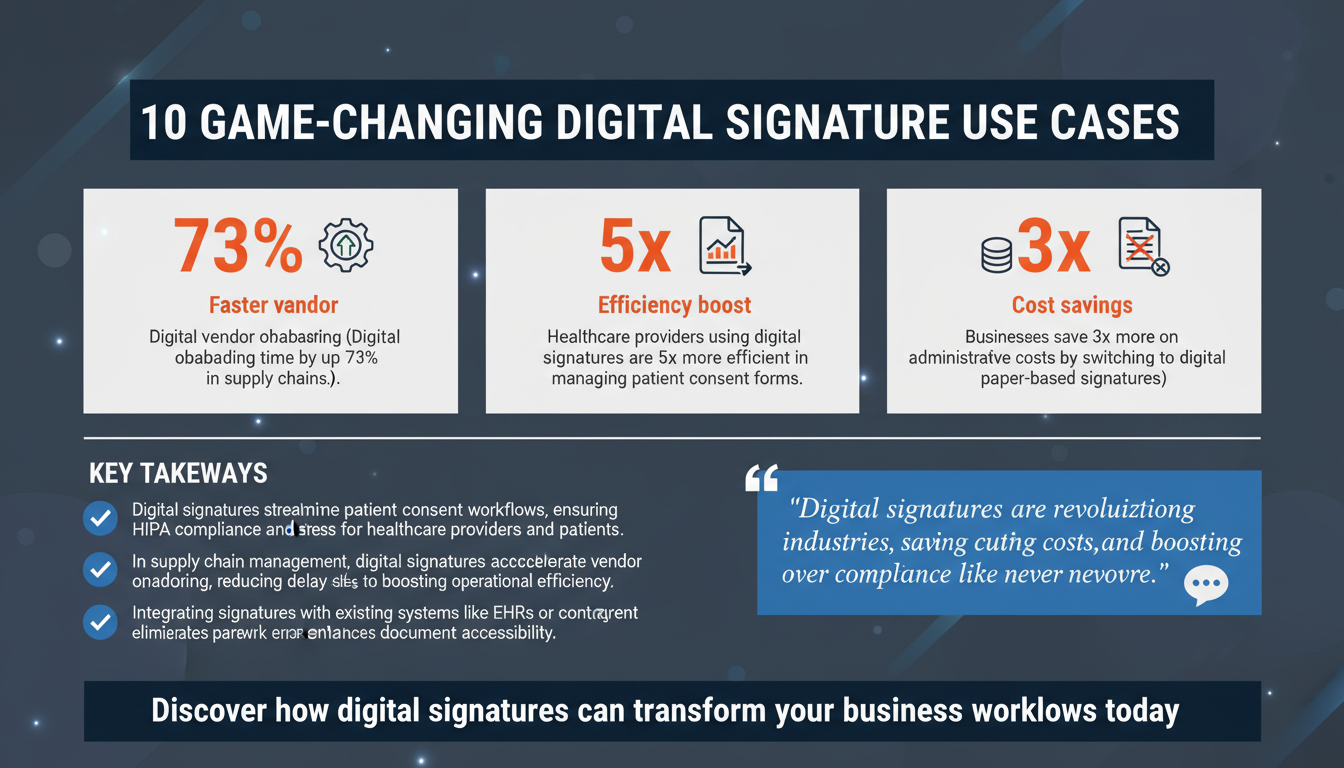
In today’s fast-paced digital landscape, businesses across industries are constantly seeking ways to streamline operations, save time, and improve compliance. Digital signatures have emerged as a game-changing tool, enabling secure, legally binding agreements without the need for physical paperwork. However, their potential goes far beyond the generic use cases we often hear about, such as signing contracts or approving invoices. In this article, we’ll dive deep into 10 unique, industry-specific applications of digital signatures that you probably haven’t considered yet. These innovative use cases demonstrate how digital signatures can create value in unexpected ways, helping businesses unlock new levels of efficiency and security.
From healthcare to real estate, finance to education, every sector faces its own set of challenges. Digital signatures offer tailored solutions, addressing pain points while opening up opportunities for growth. Whether you’re a business owner, operations manager, or IT leader, this guide will provide you with actionable insights and examples to inspire your next digital transformation initiative.
Let’s explore these 10 industry-specific use cases and discover how digital signatures are revolutionizing workflows across the board.
1. Streamlining Patient Consent Forms in Healthcare
The healthcare industry is highly regulated, with stringent requirements for maintaining patient privacy and ensuring compliance with laws such as the Health Insurance Portability and Accountability Act (HIPAA). Obtaining signed patient consent forms is a critical component of healthcare workflows, whether for medical procedures, telehealth services, or participation in clinical trials. However, traditional paper-based processes can be time-consuming, error-prone, and inconvenient for patients and providers alike.
Digital signatures address these challenges by enabling healthcare organizations to collect consent forms electronically, reducing administrative overhead and ensuring compliance. For instance, a hospital can use a digital signature platform to send pre-procedure consent forms to patients before they arrive for surgery. Patients can review the documents, sign them securely on their smartphones or tablets, and return them within minutes. This not only saves time but also enhances the patient experience by minimizing paperwork during already stressful medical visits.

Additionally, digital signatures integrate seamlessly with electronic health record (EHR) systems, ensuring that signed documents are automatically stored in the patient’s file. This eliminates the risk of misplaced paperwork and makes it easier for healthcare providers to access critical information when needed.
Key Takeaway: Digital signatures streamline patient consent workflows, improve compliance with healthcare regulations, and enhance the overall patient experience. By adopting this technology, healthcare providers can reduce administrative burdens and focus on delivering quality care.
2. Automating Vendor Onboarding in Supply Chain Management
Supply chain management involves complex networks of suppliers, manufacturers, and distributors. Onboarding new vendors often requires the exchange and signing of multiple documents, such as vendor agreements, compliance certifications, and non-disclosure agreements (NDAs). Traditional methods of obtaining signatures can delay onboarding, disrupt supply chain operations, and increase administrative costs.
Digital signatures simplify vendor onboarding by enabling all required documents to be signed electronically, often within hours rather than days. For example, a manufacturing company can use digital signature software to send vendor contracts and compliance forms to new suppliers. The suppliers can review and sign the documents remotely, eliminating the need for back-and-forth email exchanges or courier services. This accelerates the onboarding process and reduces the risk of delays in production schedules.

Moreover, digital signatures provide an added layer of security by ensuring that all signed documents are tamper-proof and legally binding. This is particularly important in industries where adherence to regulatory standards is critical, such as pharmaceuticals or food production.
Key Takeaway: By leveraging digital signatures, organizations can streamline vendor onboarding, reduce delays in supply chain operations, and ensure compliance with industry regulations. This technology is a must-have for businesses aiming to improve efficiency and scalability in their supply chains.
3. Enhancing Loan Processing in Financial Services
In the financial services industry, loan processing is one of the most document-intensive workflows. From loan applications to approval forms and closing documents, the traditional process involves significant paperwork, manual signatures, and in-person meetings. This not only slows down the approval process but also creates opportunities for errors and fraud.
Digital signatures revolutionize loan processing by enabling financial institutions to digitize the entire workflow. Borrowers can securely sign loan agreements online, whether they’re applying for a mortgage, auto loan, or personal loan. This eliminates the need for physical meetings and expedites the approval process, often reducing the time to close a loan from weeks to days.

In addition to speeding up the process, digital signatures enhance security by providing an audit trail that tracks every interaction with the document. This ensures transparency and reduces the risk of disputes or fraudulent activities. Many digital signature platforms also comply with financial regulations, such as the Electronic Signatures in Global and National Commerce (ESIGN) Act and the Uniform Electronic Transactions Act (UETA).
Key Takeaway: Financial institutions can leverage digital signatures to streamline loan processing, improve customer satisfaction, and enhance security. This technology is a game-changer for banks and credit unions aiming to stay competitive in the digital age.
4. Accelerating Real Estate Transactions
Real estate transactions involve multiple stakeholders, including buyers, sellers, agents, and attorneys. The process typically requires the signing of numerous documents, such as purchase agreements, disclosure forms, and closing statements. Traditional methods of obtaining signatures can lead to delays, especially when parties are in different locations or time zones.
Digital signatures eliminate these bottlenecks by enabling all parties to sign documents electronically, regardless of their location. For instance, a real estate agent can send a purchase agreement to a buyer and seller for digital signatures, ensuring that the deal is finalized quickly and efficiently. This is particularly beneficial in competitive markets where delays can result in lost opportunities.

Furthermore, digital signatures integrate seamlessly with real estate management software, providing agents with a centralized platform for managing transactions. This reduces the risk of errors, enhances compliance with legal requirements, and improves the overall client experience.
Key Takeaway: Digital signatures streamline real estate transactions by reducing delays, enhancing compliance, and improving the client experience. They are an essential tool for agents and brokers looking to close deals faster in today’s competitive market.
5. Facilitating Remote Hiring in Human Resources
The rise of remote work has transformed the way companies approach hiring and onboarding. Human resources (HR) teams now face the challenge of managing employment contracts, tax forms, and onboarding documents for remote employees across different states or countries. Traditional paper-based processes are not only inefficient but also impractical in a remote-first world.
Digital signatures provide a seamless solution by enabling HR teams to send and receive signed documents electronically. For example, an HR manager can send an employment contract to a new hire, who can review and sign it online from anywhere in the world. This accelerates the onboarding process and ensures compliance with labor laws and company policies.

Additionally, digital signatures integrate with HR management systems, allowing teams to automate document tracking and storage. This reduces administrative overhead and ensures that all employee records are securely maintained in a centralized system.
Key Takeaway: HR teams can leverage digital signatures to streamline remote hiring and onboarding, enhance compliance, and improve the employee experience. This technology is a must-have for organizations embracing the future of work.
6. Simplifying Cross-Border Agreements for Legal Teams
Legal teams often handle cross-border agreements that involve parties in different jurisdictions, each with its own set of regulations and requirements. Obtaining physical signatures in such scenarios can be a logistical nightmare, leading to delays and increased costs.
Digital signatures simplify cross-border agreements by enabling parties to sign documents electronically, regardless of their location. For instance, a multinational corporation can use digital signature software to finalize a joint venture agreement with partners in multiple countries. This eliminates the need for courier services or in-person meetings, saving time and reducing costs.
Moreover, many digital signature platforms comply with international e-signature laws, such as the European Union’s eIDAS regulation and the United Nations' Model Law on Electronic Commerce. This ensures that signed documents are legally binding and enforceable across borders.
Key Takeaway: Digital signatures enable legal teams to efficiently manage cross-border agreements, ensuring compliance with international laws while reducing delays and costs.
7. Securing Intellectual Property Agreements in Technology
Technology companies often deal with sensitive intellectual property (IP), such as patents, trade secrets, and proprietary algorithms. Protecting this IP requires robust non-disclosure agreements (NDAs) and licensing contracts, which must be signed by employees, contractors, and partners.
Digital signatures offer a secure and efficient way to manage these agreements. For example, a software company can use a digital signature platform to send NDAs to new hires, ensuring that they sign the documents before accessing sensitive information. The platform provides an audit trail that tracks who signed the document and when, enhancing accountability and reducing the risk of IP theft.
In addition to NDAs, digital signatures can be used for licensing agreements, partnership contracts, and other IP-related documents. This ensures that all agreements are legally binding and securely stored for future reference.
Key Takeaway: Digital signatures help technology companies protect their intellectual property by streamlining the management of NDAs and other critical agreements. This technology is essential for safeguarding sensitive information in today’s competitive landscape.
8. Streamlining Compliance Audits in Regulated Industries
Industries such as finance, healthcare, and energy are subject to strict regulatory requirements, often requiring detailed compliance audits. Maintaining accurate, signed records is critical for passing these audits and avoiding penalties.
Digital signatures simplify compliance audits by ensuring that all signed documents are securely stored and easily accessible. For example, a financial institution can use a digital signature platform to manage signed loan agreements, ensuring that they are tamper-proof and readily available for auditors. This reduces the time and effort required to prepare for audits while ensuring compliance with regulations.
Additionally, digital signatures provide an audit trail that tracks every interaction with a document, including who signed it and when. This enhances transparency and reduces the risk of disputes or non-compliance.
Key Takeaway: Digital signatures streamline compliance audits, reduce administrative burdens, and ensure that businesses meet regulatory requirements. This technology is invaluable for organizations in regulated industries.
9. Accelerating Procurement Processes in Government
Government agencies often face lengthy procurement processes, involving the review and signing of contracts, bids, and purchase orders. Traditional methods of obtaining signatures can lead to delays, impacting the timely delivery of public services.
Digital signatures accelerate procurement processes by enabling all documents to be signed electronically. For instance, a municipal government can use digital signature software to finalize contracts with vendors, reducing the time required for approvals. This ensures that projects are completed on schedule and within budget.
Moreover, digital signatures enhance transparency by providing an audit trail that tracks every step of the procurement process. This reduces the risk of corruption or fraud, ensuring that public funds are used responsibly.
Key Takeaway: Government agencies can leverage digital signatures to streamline procurement processes, improve transparency, and enhance the delivery of public services.
10. Facilitating Parental Consent in Education
Schools and educational institutions often require parental consent for activities such as field trips, extracurricular programs, and data sharing. Collecting these consent forms can be a logistical challenge, especially for large schools with hundreds of students.
Digital signatures provide a convenient solution by enabling parents to sign consent forms electronically. For example, a school can send field trip permission slips to parents via email, allowing them to sign the documents online. This eliminates the need for students to carry paper forms back and forth, reducing the risk of lost or misplaced documents.
Furthermore, digital signatures integrate with school management systems, ensuring that all signed consent forms are securely stored and easily accessible. This reduces administrative overhead and enhances communication between schools and parents.
Key Takeaway: Digital signatures streamline the collection of parental consent forms, reducing administrative burdens and improving communication in educational institutions.
Conclusion
Digital signatures are far more than a convenient alternative to traditional signatures—they are a transformative technology that addresses industry-specific challenges across healthcare, finance, real estate, education, and more. By adopting digital signatures, organizations can streamline workflows, improve compliance, enhance security, and deliver a better experience for stakeholders.
As the digital transformation accelerates in 2026, the use cases for digital signatures will continue to expand. Businesses that embrace this technology today will be better positioned to adapt to future challenges and opportunities. Whether you’re looking to enhance patient care, accelerate loan approvals, or improve government procurement, digital signatures offer a powerful solution that delivers measurable results.
Ready to explore how digital signatures can transform your industry? Discover our platform features and see how Zignature can help you achieve your goals.
To further enhance your digital workflows, explore our sister platforms: Apparatuz for workflow automation, Applicantz for recruitment management, Schedly for scheduling and appointments, Supportly for customer support, and Zatisfied for feedback management. Together, these tools create a comprehensive ecosystem that complements your digital signature strategy.