
In the fast-paced world of mergers and acquisitions (M&A), compliance is the bedrock that ensures smooth transitions, minimizes risks, and upholds legal integrity. However, traditional methods of document handling—think paper-based contracts, manual signatures, and lengthy approval processes—create roadblocks that can delay or derail critical transactions. Digital signatures have emerged as a transformative solution, revolutionizing compliance in M&A by providing speed, security, and efficiency.
This comprehensive guide explores the top 10 ways digital signatures are reshaping compliance in M&A transactions, backed by actionable insights, expert commentary, and industry data. Whether you're a legal professional, an operations manager, or a business owner navigating an acquisition, understanding the role of digital signatures is essential for staying ahead.
1. Accelerating Document Sign-Off Times
In M&A transactions, time is often the most critical resource. Traditional signatures can take days or even weeks due to logistical challenges such as coordinating across geographies, managing courier delays, or tracking down signatories. Digital signatures eliminate these hurdles by enabling instantaneous, remote signing of documents, even across borders.
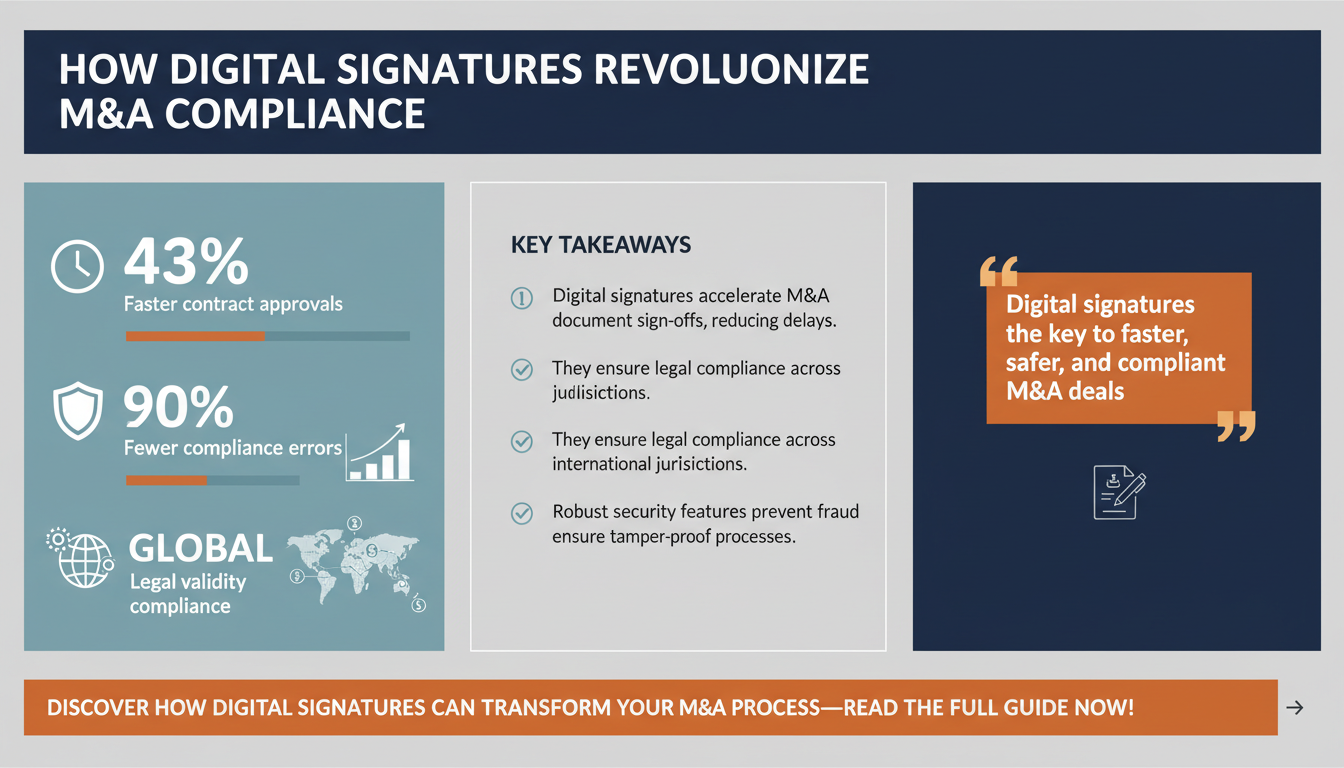
For example, a 2025 study by McKinsey found that organizations adopting digital workflows, including e-signatures, accelerated their contract approval timelines by 43% on average. This reduction in time directly translates to faster deal closures and higher operational efficiency during acquisitions.
Moreover, digital signatures integrate seamlessly into workflow automation platforms, allowing M&A teams to set up automated reminders, track document status in real-time, and ensure no signatures are missed. Platforms like Apparatuz can further enhance document workflows by automating approval chains and ensuring compliance checkpoints are met.

Key takeaway: Digital signatures enable faster document sign-offs, reducing delays and improving M&A transaction timelines.
2. Ensuring Legal Validity Across Jurisdictions
One of the biggest compliance challenges in M&A transactions is dealing with cross-border legal requirements. Regulations like the eIDAS in the EU or the ESIGN Act in the United States have specific stipulations for digital signatures, ensuring their legal validity when executed properly.
A global compliance report published by Forrester highlighted that businesses using digital signatures saw a 90% reduction in compliance errors related to jurisdiction-specific requirements. Modern e-signature solutions, such as Zignature, are designed to meet these international standards, ensuring that every document signed is legally binding and universally recognized.
When integrated with tools like Zignature’s compliance-ready features, businesses can ensure adherence to even the most complex regulations, from GDPR in Europe to HIPAA in healthcare-related acquisitions.

Key takeaway: Digital signatures simplify compliance with international regulations, ensuring legal validity across jurisdictions.
3. Enhancing Security and Fraud Prevention
M&A transactions involve high-stakes documents, from financial disclosures to sensitive intellectual property agreements. Ensuring these documents are tamper-proof is vital for maintaining compliance and protecting all parties involved. Digital signatures come equipped with robust security features such as encryption, audit trails, and identity verification, making them far superior to traditional signatures.
For instance, digital signatures leverage public key infrastructure (PKI) to encrypt and authenticate documents. According to a 2025 Gartner report, businesses using PKI-enabled digital signatures reported a 74% decrease in document tampering incidents during high-stakes transactions like M&A.
Additionally, audit trails ensure that every action related to a document—from creation to signing—is logged and accessible, providing undeniable proof of compliance during audits or legal disputes. This level of visibility is critical when navigating post-merger integration challenges.

Key takeaway: Digital signatures enhance security, ensuring tamper-proof documents and fraud prevention in M&A transactions.
4. Simplifying Due Diligence Processes
Due diligence is a cornerstone of M&A, requiring meticulous review and approval of thousands of documents. Traditionally, this process is plagued by inefficiencies, with teams spending weeks manually collecting, verifying, and organizing documents. Digital signatures streamline this process by enabling immediate authentication and categorization of files.
A case study by Deloitte revealed that organizations implementing digital signature solutions reduced their due diligence timelines by up to 30%, freeing up resources for strategic decision-making. By integrating e-signatures with document management systems, businesses can automate workflows, ensuring all required documents are signed and stored in compliance-ready formats.
Solutions like Zignature also offer advanced features such as bulk signing for high-volume document workflows, a feature particularly valuable during the due diligence phase of M&A transactions.
Key takeaway: Digital signatures simplify due diligence processes, enabling faster and more efficient document authentication.
5. Guaranteeing Audit Readiness
Compliance audits are inevitable in the aftermath of M&A transactions. Whether conducted internally or by regulatory authorities, these audits demand thorough documentation and proof of regulatory adherence. Digital signatures provide a transparent, organized, and easily accessible audit trail.
A 2026 survey by Compliance Week found that companies using e-signature platforms experienced 40% fewer compliance issues during audits compared to those relying on manual processes. Audit trails generated by digital signature solutions record every interaction with a document, including timestamps, IP addresses, and identity verification data.
Additionally, platforms like Zignature offer features such as tamper-evident seals and automated archiving, ensuring that signed documents remain intact and easily retrievable during audits.
Key takeaway: Digital signatures guarantee audit readiness, with detailed trails that simplify compliance verification.
6. Reducing Administrative Costs
M&A transactions often involve high administrative costs due to the sheer volume of paperwork, courier fees, and manual labor required for document handling. Digital signatures significantly reduce these costs by automating document workflows and eliminating the need for physical paperwork.
According to a 2025 BCG analysis, organizations adopting e-signature platforms in their M&A processes cut administrative expenses by up to 35%. The savings come not only from reduced material costs but also from the time saved on manual processes, allowing teams to focus on strategic tasks.
Furthermore, digital signatures contribute to sustainability efforts by eliminating paper-based workflows—a growing priority in corporate governance frameworks.
Key takeaway: Digital signatures reduce administrative costs and streamline workflows, allowing for more efficient resource allocation.
7. Improving Collaboration Across Teams
M&A transactions require close collaboration between legal, financial, and operational teams. Traditional document workflows often create silos, delaying approvals and complicating communication. Digital signatures foster real-time collaboration by enabling multiple stakeholders to sign and review documents simultaneously.
For instance, platforms like Schedly integrate with e-signature solutions to coordinate team schedules and ensure timely approvals. Additionally, advanced features like role-based signing ensure that documents are routed to the right individuals at the right time, minimizing bottlenecks.
Real-world examples show that businesses using digital signatures for team collaboration reduce document turnaround times by up to 50%, according to a 2026 report by Gainsight.
Key takeaway: Digital signatures improve cross-team collaboration, enabling faster and more efficient decision-making.
8. Facilitating Post-Merger Integration
Once an M&A transaction is finalized, post-merger integration begins—a complex process of aligning business operations, systems, and cultures. Digital signatures play a vital role here by simplifying the transition of legal and operational documentation.
For example, contracts with vendors, employment agreements, and compliance certifications can be updated and signed digitally, ensuring a smooth integration process. A Harvard Business Review study found that companies leveraging digital signature solutions during post-merger integration saw a 28% faster transition to aligned operations.
By enabling seamless document management, digital signatures reduce the friction often associated with merging disparate systems and teams.
Key takeaway: Digital signatures facilitate smoother post-merger integration by ensuring efficient document handling.
FAQ Section
What makes digital signatures legally valid?
Digital signatures are legally valid when they comply with regulations such as the ESIGN Act in the US and eIDAS in the EU. They rely on encryption and identity verification to ensure authenticity.
How secure are digital signatures?
Digital signatures use advanced encryption, tamper-evident seals, and audit trails to prevent fraud and unauthorized access, making them highly secure.
Can digital signatures be used for cross-border M&A transactions?
Yes, digital signatures are designed to comply with international regulations, making them suitable for cross-border transactions.
How do digital signatures simplify compliance audits?
Digital signatures create detailed audit trails, recording every document interaction, ensuring compliance verification during audits.
What industries benefit most from digital signatures during M&A?
Industries such as finance, healthcare, and technology benefit greatly due to the high volume of sensitive documents involved in their M&A processes.
To learn more about how digital signatures can transform your business, visit Zignature’s platform features or explore our latest insights on digital signature trends.