
Large enterprises often grapple with the challenges of managing complex approval processes that span multiple departments, regions, and hierarchies. These workflows, while essential for operational integrity, can become bottlenecks, causing inefficiencies, compliance risks, and delays in critical business decisions. Enter digital signatures—a game-changing technology that streamlines these multi-layered processes with unmatched speed, security, and scalability. In this expanded guide, we’ll dive deeper into how digital signatures simplify approval workflows, offering detailed insights, actionable advice, and real-world applications tailored for enterprise-level operations.
Understanding the Complexity of Multi-Layered Approval Processes
Multi-layered approval processes are intrinsic to the operations of large enterprises. These workflows often require input and sign-off from numerous stakeholders across different departments such as legal, finance, procurement, and executive leadership. The complexity of these processes stems from redundant communication loops, manual errors, and time-consuming document exchanges. For example, consider an enterprise managing a procurement contract. This document may require review by legal teams for compliance, finance teams for budget approval, procurement teams for vendor validation, and executive leadership for final authorization.
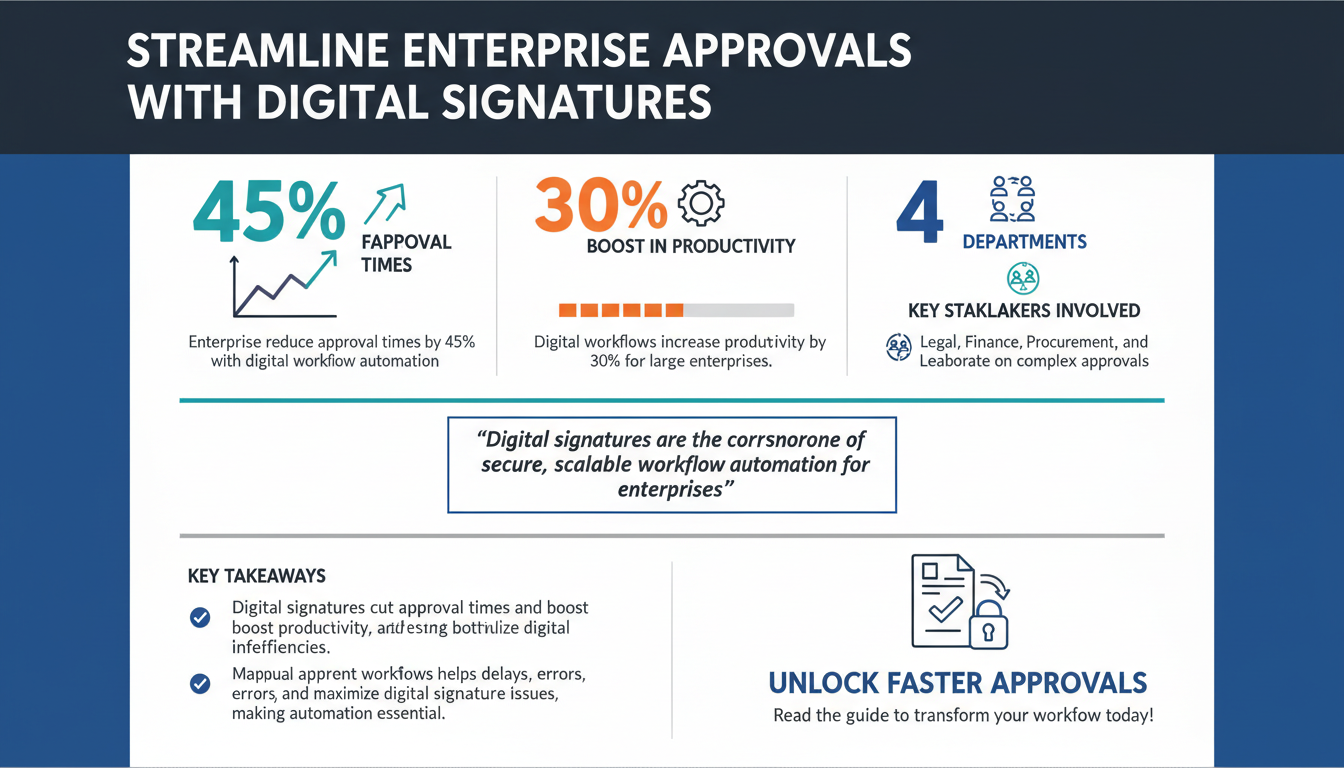
Statistics from Forrester's Total Economic Impact study reveal that enterprises adopting digital workflow automation have reduced approval times by 45% and increased productivity by 30%. This underscores the transformative impact digital signatures can have on complex workflows.
Without digital signatures, enterprises often rely on paper-based methods or fragmented digital tools, both of which introduce inefficiencies. For instance, paper-based approvals are prone to physical document loss, while fragmented digital tools often lack interoperability, leading to miscommunication between departments. Additionally, these traditional methods struggle to meet compliance and security standards, exposing enterprises to regulatory risks.
The Pain Points of Manual Approval Processes
Manual approval processes, while traditional, are fraught with inefficiencies that hinder enterprise agility. Bottlenecks occur when documents need physical transportation between departments, requiring couriers or interoffice mail systems. For example, a procurement contract might take days, or even weeks, to move from one approver to the next in a global organization. Additionally, manual processes are highly susceptible to human error, such as misfiling, document misplacement, or incomplete approvals.
Another common pain point is the lack of transparency. Stakeholders often face difficulty tracking the current status of a document, leading to confusion and unnecessary follow-ups. For instance, an employee in the finance department may need to chase multiple colleagues across different time zones to confirm whether a document has been signed, delaying further actions.
Pro Tip: Map Your Existing Processes
Before implementing digital signatures, create a visual map of your current approval workflows. Identify bottlenecks, redundant steps, and potential risks. This exercise will help you pinpoint exactly where digital signatures can have the most impact and justify the investment to stakeholders.
Key Takeaway: Multi-layered approval processes require robust solutions that address inefficiencies and align stakeholders. Digital signatures offer a scalable and secure alternative tailored to enterprise needs.
The Role of Digital Signatures in Enterprise Workflow Automation
Digital signatures go beyond electronic representations of handwritten signatures—they are legally binding, cryptographically secure, and compliant with global industry regulations. When integrated into enterprise workflows, digital signatures enable automation that reduces manual effort, minimizes errors, and ensures document integrity.
A study conducted by Gartner found that 80% of enterprises leveraging digital signatures within automated workflows experienced a 50% reduction in document turnaround times. This is particularly impactful in industries such as finance, healthcare, and legal services, where rapid approvals are critical for maintaining operational continuity.
Key Features of Digital Signatures
1. **Encryption and Security:** Digital signatures use public-key infrastructure (PKI) to encrypt data, ensuring document integrity and authenticity. Any tampering is immediately detectable, safeguarding sensitive information.
2. **Audit Trails:** Automatic logging of activities, such as who signed the document, when they signed it, and their IP address, ensures full traceability for compliance audits.
3. **Integration with Enterprise Tools:** Modern digital signature solutions integrate seamlessly with tools like Salesforce, SAP, and Microsoft 365, enabling end-to-end workflow automation without disrupting existing systems.
Real-World Example: Accelerating Loan Approvals in Finance
In the banking sector, loan approvals often involve multiple layers of review, including credit analysis, legal vetting, and senior management sign-offs. By integrating digital signatures into their workflow, a multinational bank reduced its loan approval time from an average of 10 days to just 3 days. This was achieved by enabling real-time notifications for pending approvals and leveraging cloud-based document sharing for faster collaboration.
Expert Insight: The Importance of Scalability
"One of the biggest advantages of digital signatures is scalability," says Amanda Roe, a workflow automation consultant. "Whether you're processing 100 or 10,000 documents, digital signature platforms can handle the volume without compromising speed or security. This is especially critical for enterprises experiencing rapid growth."
Key Takeaway: Digital signatures amplify workflow automation by reducing turnaround times, minimizing errors, and enhancing operational efficiency.
Enhancing Compliance and Security in Approval Processes
For large enterprises operating in regulated industries like healthcare and finance, compliance and security are top priorities. Digital signatures provide robust encryption and traceability, ensuring that documents remain tamper-proof and fully auditable.
According to Deloitte Insights, enterprises deploying digital signatures reported a 60% improvement in compliance adherence due to automated audit trails and secure document storage. This is particularly significant for industries like healthcare, where HIPAA compliance is mandatory, and finance, where frameworks like Sarbanes-Oxley demand stringent documentation standards.
Advanced Security Features
Leading digital signature solutions offer advanced security measures, including:
- **Multi-Factor Authentication (MFA):** Requiring users to verify their identity through multiple methods, such as SMS codes or biometric authentication.
- **Role-Based Access Controls:** Restricting document access to authorized personnel only, minimizing the risk of data breaches.
- **Blockchain Integration:** Some platforms use blockchain technology to create immutable records of signed documents, further enhancing security and traceability.
Case Study: Regulatory Compliance in Pharmaceutical Approvals
A global pharmaceutical company faced significant challenges in managing regulatory approvals for new drug trials. Each trial required multiple layers of documentation, including ethical reviews, clinical approvals, and government compliance checks. By adopting a digital signature solution with built-in audit trails and eIDAS compliance, the company reduced approval times by 65% and avoided costly regulatory penalties.
Checklist: Ensuring Compliance with Digital Signatures
- Verify that the digital signature provider complies with industry-specific regulations such as HIPAA, eIDAS, or ESIGN.
- Ensure that the solution offers robust encryption and multi-factor authentication.
- Regularly audit your workflows to ensure compliance with evolving regulatory requirements.
Key Takeaway: Digital signatures bolster compliance and security, reducing risks and guaranteeing enterprise-grade document integrity.
Accelerating Multi-Stakeholder Approvals
One of the most notable advantages of digital signatures is their ability to expedite approvals across multiple stakeholders. Traditional workflows often face delays due to miscommunication, misplaced documents, or conflicting schedules.
A case study published by McKinsey demonstrated that enterprises using digital signatures reduced stakeholder approval times by 70%, enabling faster contract closures and project launches. This acceleration was achieved through centralized document management systems and real-time notifications that identified pending approvals and escalations.
Parallel Approvals: A Game Changer
Unlike sequential approvals, where each stakeholder signs off one after another, digital signature platforms enable parallel approvals, allowing multiple stakeholders to review and sign documents simultaneously. This is particularly beneficial for enterprises with geographically dispersed teams. For example, a global marketing campaign requiring approvals from regional teams in Asia, Europe, and North America can be finalized in hours rather than days.
Practical Tip: Establish Clear Roles
To ensure smooth multi-stakeholder approvals, define clear roles and responsibilities for each participant in the workflow. Use digital signature tools to assign specific tasks and deadlines, reducing the risk of duplication or oversight.
Key Takeaway: Digital signatures streamline multi-stakeholder approvals, enabling enterprises to execute decisions faster and more efficiently.
Customizing Approval Workflows for Enterprise Needs
Large enterprises operate in diverse industries, each with its unique approval workflows shaped by organizational structure and regulatory requirements. Digital signature solutions like Zignature allow users to customize workflows to meet these specific needs.
For example, a manufacturing company might need tiered approvals for procurement contracts, while a healthcare organization may require stringent compliance checks before approving patient data agreements. Tools like customized digital workflows empower enterprises to define approval hierarchies, set conditional triggers, and create escalation paths for unapproved documents.
Benefits of Workflow Customization
1. **Flexibility:** Tailor workflows to align with unique business processes and industry requirements.
2. **Scalability:** Adjust workflows as your enterprise grows or evolves, ensuring long-term usability.
3. **Improved Accountability:** Automated notifications and role-based access ensure that every stakeholder understands their responsibilities, reducing the risk of bottlenecks.
Actionable Advice: Enterprises should conduct regular evaluations of their customized workflows to ensure they remain aligned with evolving business needs and regulatory changes.
Key Takeaway: Customizable digital signature workflows enable enterprises to adapt solutions to their unique needs, enhancing operational flexibility.
Common Mistakes Enterprises Make in Digital Signature Implementation
While digital signatures offer numerous advantages, their implementation can be fraught with challenges if not managed properly. Recognizing common mistakes can help enterprises avoid costly setbacks.
- Mistake #1: Failing to integrate digital signatures with existing systems. Without integration, workflows remain fragmented, defeating the purpose of automation.
- Mistake #2: Overlooking compliance requirements. Enterprises must ensure that their digital signature provider adheres to industry-specific regulations like eIDAS or ESIGN.
- Mistake #3: Neglecting user training. Employees need proper guidance on using digital signature tools effectively to avoid errors and delays.
Expert Insight: The Importance of User Adoption
"The success of digital signature implementation hinges on user adoption," says Michael Tang, a digital transformation strategist. "Invest in robust training programs and create user-friendly workflows to ensure a smooth transition."
Key Takeaway: Avoiding common mistakes is vital for realizing the full potential of digital signature solutions.
Proprietary Framework: The SIGN Framework for Digital Approval Optimization
To simplify the adoption of digital signature solutions, we’ve developed the SIGN Framework:
- Secure: Ensure encryption and compliance for sensitive documents.
- Integrate: Seamlessly connect digital signatures with enterprise systems.
- Governance: Establish clear rules for approval hierarchies and responsibilities.
- Notify: Enable real-time alerts for pending approvals and escalations.
Enterprises adopting the SIGN Framework have reported higher approval efficiency and reduced compliance risks.
Key Takeaway: The SIGN Framework provides a structured approach to optimizing digital approval processes.
FAQ: Addressing Common Questions
How secure are digital signatures?
Digital signatures use advanced encryption and authentication methods, ensuring tamper-proof and secure document workflows.
Are digital signatures legally binding?
Yes, digital signatures are legally recognized under regulations such as ESIGN (U.S.), eIDAS (EU), and others globally.
Can digital signatures integrate with ERP and CRM systems?
Most digital signature solutions, including Zignature, offer seamless integration with enterprise systems like ERP, CRM, and document management platforms.
What industries benefit most from digital signatures?
Industries such as healthcare, finance, real estate, and legal services benefit significantly due to their reliance on secure and compliant workflows.
How do digital signatures improve compliance?
Digital signatures create automated audit trails and ensure adherence to industry regulations, reducing compliance risks.
Conclusion: Transform Your Enterprise Approval Processes
Digital signatures are essential for large enterprises aiming to streamline multi-layered approval processes. Their ability to enhance efficiency, security, and compliance makes them indispensable in today’s fast-paced business environment.
As you explore solutions, consider leveraging Zignature’s workflow automation features to simplify approvals and drive enterprise innovation. Complement your efforts with tools like Apparatuz for workflow automation and Zatisfied for customer feedback management. Together, these solutions offer a comprehensive strategy for transforming enterprise workflows.