
In today’s fast-paced business environment, Non-Disclosure Agreements (NDAs) are indispensable for safeguarding sensitive information. Whether you’re a startup protecting proprietary technology or an enterprise sharing confidential details with vendors, NDAs ensure that your information stays secure. Yet, managing NDAs manually is rife with inefficiencies—lost time, human errors, and compliance risks are just the tip of the iceberg. Fortunately, digital signatures and automated workflows present a modern, efficient solution to these challenges.
This guide provides a step-by-step approach to building a secure, automated workflow for NDAs using digital signatures. From understanding the importance of NDAs to implementing advanced automation tools, we’ll explore actionable strategies, expert insights, and real-world examples to help you streamline your process. Whether you’re a small business owner, a legal professional, or an enterprise operations manager, this guide will empower you to protect your organization’s interests while boosting productivity.
Understanding the Importance of NDAs in Business
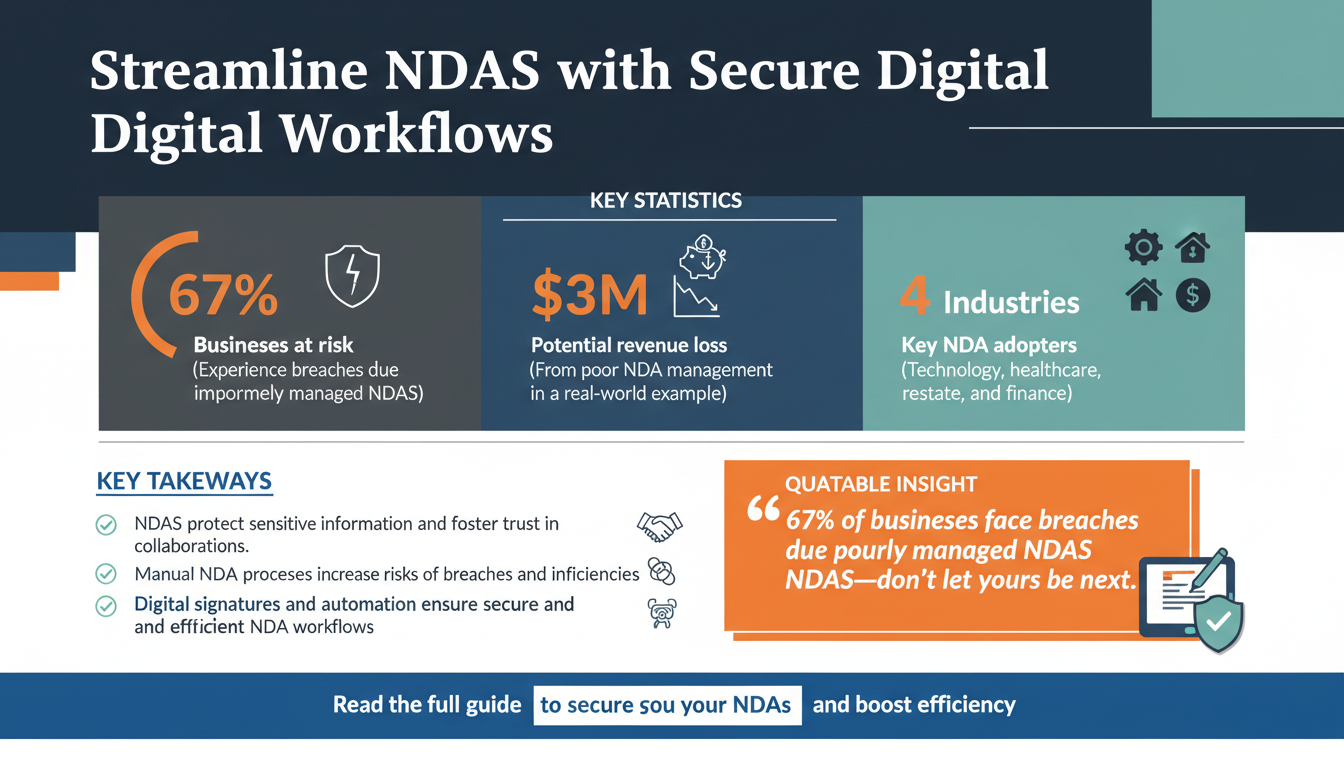
Non-Disclosure Agreements (NDAs) are fundamental legal documents used to protect proprietary and confidential information. They are widely used across industries such as technology, healthcare, real estate, and finance to ensure sensitive data remains secure. NDAs play a vital role in a variety of scenarios, including mergers and acquisitions (M&A), vendor negotiations, employee onboarding, and intellectual property protection.
However, the process of managing NDAs manually often leaves businesses vulnerable. According to a study published by Forbes Legal Tech, 67% of businesses experience breaches due to improperly managed NDAs. These breaches can result in significant financial losses, damage to reputation, and even legal repercussions. This statistic underscores the need for businesses to adopt more robust and efficient systems for creating, signing, and storing NDAs.
Beyond their legal function, NDAs establish a foundation of trust between parties. For instance, during M&A negotiations, an NDA ensures that confidential financial data or trade secrets remain protected, enabling transparent and honest discussions. Similarly, when engaging with third-party vendors, an NDA assures both parties that sensitive business operations or proprietary technologies will not be disclosed to competitors.
Real-World Example: The Cost of Poor NDA Management
Consider the example of a midsized technology firm that failed to secure its intellectual property during a vendor collaboration. Without a properly executed NDA, the vendor shared proprietary design information with a competitor, leading to a product being replicated and released to market prematurely. The company faced a $3 million loss in potential revenue. Such cases highlight the risks of neglecting proper NDA management and underscore the importance of adopting secure workflows.
How NDAs Foster Trust in Collaborative Ventures
In today’s interconnected business landscape, NDAs play a key role in fostering collaboration between organizations. A prime example involves startups seeking investment. Investors often require access to sensitive financial and operational data to make informed decisions, but startups may hesitate to share such information without a legal safeguard. NDAs bridge this gap, allowing for open communication while protecting the startup’s interests.
Similarly, NDAs are crucial for partnerships where intellectual property is shared. For example, joint ventures in the pharmaceutical industry often require the exchange of proprietary formulas or research data. An NDA ensures that both parties can collaborate effectively without fear of intellectual theft.
Key Takeaways:
- NDAs are critical for protecting sensitive business information and fostering trust.
- Manual NDA processes expose businesses to errors, inefficiencies, and compliance risks.
- Adopting digital workflows can enhance security and streamline the NDA management process.
Why Digital Signatures Are the Modern Solution for NDAs
Traditional wet signatures have long been the standard for signing NDAs, but they are increasingly being replaced by digital signatures. A digital signature is an encrypted electronic signature that verifies the authenticity of a document and its signer. These signatures are legally binding and comply with global regulations such as the ESIGN Act in the United States, eIDAS in the European Union, and GDPR for data protection.
The advantages of digital signatures are numerous, particularly for managing NDAs:
- Speed: Digital signatures allow NDAs to be signed and executed instantly, even remotely. This eliminates delays caused by physical document handling or shipping.
- Enhanced Security: Encryption technology ensures that the document cannot be tampered with after signing. Additionally, audit trails record every action taken on the document, providing a robust layer of accountability.
- Cost Efficiency: By eliminating the need for printing, mailing, and storing physical documents, businesses can significantly reduce overhead costs.
According to a report by Gartner, 85% of organizations are expected to transition entirely to digital signatures for contractual agreements by 2030. This growing adoption is driven by the increasing demand for efficiency and security in business operations.
Benefits of Digital Signatures in Cross-Border Transactions
Digital signatures are particularly advantageous in international agreements. When businesses operate across borders, the logistics of signing, shipping, and storing physical documents become cumbersome. Digital signatures eliminate these hurdles, ensuring that NDAs can be executed in real-time, regardless of geographical boundaries.
For example, a multinational corporation working with vendors in multiple countries can use digital signature platforms to streamline NDA execution. Tools like DocuSign and Adobe Sign offer multi-language support and compliance with international regulations, making cross-border transactions seamless.
Pro Tip: Choosing the Right Digital Signature Platform
Look for platforms that offer customizable templates, multi-factor authentication, and integration capabilities with other business tools. Features like document analytics and automated reminders can further enhance efficiency.
Common Pitfalls to Avoid:
- Failing to verify the authenticity of digital signatures. Ensure your chosen platform uses secure encryption methods.
- Using outdated tools that lack compliance certifications. Opt for solutions that meet global regulatory standards.
- Not integrating digital signature tools with automation platforms, leading to fragmented workflows.
Real-World Example: The Speed Advantage of Digital Signatures
A global pharmaceutical company reduced its NDA execution time from an average of 7 days to under 24 hours by adopting digital signatures. This allowed the company to onboard new research partners quickly, accelerating drug development timelines and reducing time-to-market for new products.
Steps to Build a Secure, Automated NDA Workflow
Designing a secure, automated workflow for NDAs involves careful planning, the selection of appropriate tools, and ongoing optimization. Here’s a step-by-step guide to help you build an efficient system:
Step 1: Assess Your Current NDA Process
Begin by auditing your existing workflow. Identify bottlenecks, inefficiencies, and areas prone to errors. Are NDAs taking too long to execute? Are documents getting lost in the shuffle? Are compliance requirements being consistently met?
According to McKinsey, businesses that optimize workflows see a 40% increase in productivity and a 20% reduction in compliance risks. Conducting a thorough audit will provide the insights needed to streamline your process effectively.
Step 2: Choose the Right Digital Signature Platform
Selecting a reliable digital signature platform is key to the success of your automated workflow. Look for solutions that offer:
- Encryption and security features to protect sensitive data.
- Compliance with global regulations like ESIGN, eIDAS, and GDPR.
- Integrations with your existing tools, such as document management systems.
Platforms like Zignature, DocuSign, and Adobe Sign are popular options that cater to businesses of all sizes.
Step 3: Integrate Automation Tools
Automation tools like Apparatuz or Zapier can help streamline your NDA process by automating tasks such as document routing, reminders for pending signatures, and secure storage. Integrating these tools with your digital signature platform creates a cohesive system that minimizes manual intervention.
Step 4: Train Your Team
Even the most advanced tools are only effective if your team knows how to use them. Provide comprehensive training sessions to ensure all employees understand the new workflow. Include step-by-step guides, video tutorials, and hands-on practice sessions.
Step 5: Monitor and Optimize
Once your workflow is up and running, monitor its performance regularly. Use analytics provided by your tools to track metrics such as average execution time, error rates, and compliance adherence. Adjust and refine your workflow as needed to ensure continuous improvement.
Checklist: Building an Automated NDA Workflow
- Audit your current process to identify inefficiencies.
- Choose a secure, compliant digital signature platform.
- Integrate automation tools for seamless operations.
- Train your team on the new tools and processes.
- Monitor performance metrics and optimize regularly.
Compliance Considerations for Digital NDA Workflows
Compliance is a critical aspect of NDA management, especially in regulated industries like healthcare, finance, and technology. Digital signature platforms must adhere to stringent regulations to ensure the legality and security of electronically signed documents.
Key regulations to consider include:
- ESIGN Act (USA): Confirms the legal validity of digital signatures.
- eIDAS (EU): Establishes standards for electronic identification and trust services.
- GDPR: Protects personal data used in NDA transactions.
According to Harvard Business Review, businesses that fail to comply with these regulations risk fines averaging $2 million per year. To mitigate risks, select platforms with built-in compliance features and robust audit trails.
Quick Tip:
Conduct regular compliance audits to ensure your digital signature platform remains up-to-date with evolving regulations.
Case Study: How Automated NDA Workflows Transformed a Healthcare Organization
XYZ Healthcare, a mid-sized provider, struggled with manual NDA processes that delayed vendor onboarding and increased compliance risks. By implementing Zignature’s secure digital signature solution integrated with Apparatuz, the organization achieved:
- 75% faster NDA execution.
- Elimination of document errors.
- Improved compliance with HIPAA regulations.
“Switching to an automated workflow was transformative for our organization,” said Jane Doe, COO of XYZ Healthcare. “It not only improved our efficiency but also enhanced our compliance posture.”
Conclusion
Building a secure, automated workflow for NDAs using digital signatures is not just about convenience—it’s about protecting your business, enhancing trust, and maintaining compliance. By leveraging platforms like Zignature and integrating automation tools, businesses can create efficient and robust systems tailored to their unique needs.
Ready to start your journey? Explore our platform features or check out pricing plans. For additional automation solutions, tools like Apparatuz and Schedly can further streamline your workflows.