
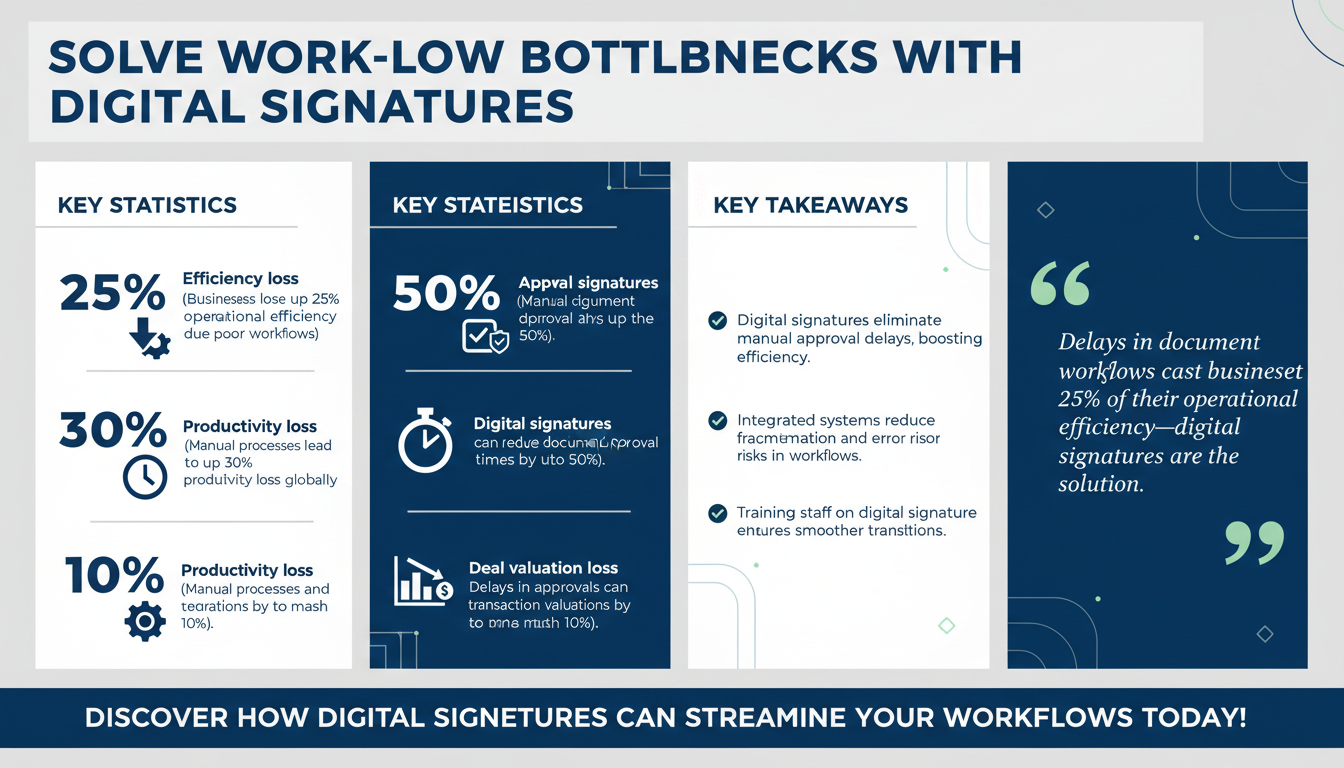
In today’s hyper-competitive business environment, operational efficiency is often the key differentiator between success and stagnation. At the heart of this efficiency lies document workflows—essential processes that dictate how information is created, shared, reviewed, and finalized within organizations. However, these workflows are frequently riddled with bottlenecks, leading to costly delays, errors, and missed opportunities. According to a study by Gartner, businesses can lose up to 25% of their operational efficiency due to poorly structured workflows.
Fortunately, digital signature solutions have emerged as a powerful tool to address these issues. By replacing outdated manual processes with streamlined digital alternatives, organizations can eliminate inefficiencies, enhance security, and achieve measurable improvements in productivity. This article explores seven of the most common document workflow bottlenecks and demonstrates how digital signature platforms such as Zignature can solve them.
1. Manual Approvals and Signatures
Manual approvals and signatures are perhaps the most glaring bottleneck in traditional document workflows. Picture this: a sales agreement is sitting on a manager’s desk, waiting for a signature. Days pass, and the deal is delayed due to the simple unavailability of the approver. This scenario is far too common across organizations. Research by Forrester reveals that manual processes can lead to productivity losses of up to 30% in companies worldwide.

Implementing digital signatures can revolutionize this process. With a digital signature solution, documents can be signed instantly from any device, whether the signatory is working remotely or traveling internationally. Platforms like Zignature send real-time notifications to remind signers to take action, reducing approval times by up to 50%. This is particularly beneficial in industries like sales, where every minute can make a difference in closing a deal.
The Cost of Delays
Delays in document approvals not only slow down operations but can also lead to financial losses. In a high-stakes environment such as mergers and acquisitions, waiting for a signature can mean losing out on lucrative deals. According to PwC, deal delays can reduce the overall valuation of a transaction by as much as 10%. Implementing digital signatures ensures faster approvals and maintains deal momentum.
Enhancing Security During Signing Processes
Beyond efficiency, digital signatures also offer heightened security. Features like timestamps, encryption, and audit trails ensure the integrity of the document and provide evidence of the signing process. For industries governed by stringent regulations, such as healthcare or finance, this added layer of transparency is invaluable. For instance, in the financial sector, digital signatures help comply with regulations like the Sarbanes-Oxley Act, ensuring that all actions are documented and traceable.
Pro Tip: Train your staff on how to use digital signature platforms effectively. This ensures smoother transitions from manual processes and maximizes the tool’s impact.
2. Lack of Integration Across Systems
In many organizations, document workflows are fragmented across disconnected systems. Contracts might reside on one platform, invoices on another, and communication about these documents scattered across email threads. This lack of integration not only wastes time but also increases the risk of errors and data loss. A report by Gartner highlights that such inefficiencies can cost businesses thousands of hours annually.

Benefits of Seamless Integration
Digital signature platforms that integrate seamlessly with existing tools can effectively address this issue. For example, Zignature integrates with popular platforms like Salesforce, Google Drive, Microsoft Teams, and Slack. This allows employees to send, sign, and store documents within the tools they already use, eliminating the need to switch between multiple applications.
Integration also reduces the need for duplicate data entry, minimizing errors and ensuring data consistency. For instance, a sales team using Salesforce can automatically pull client information into contracts, saving hours of manual input and preventing potential mistakes.
Streamlining Multi-Platform Workflows
Consider a large organization where HR relies on one software for onboarding, while finance uses a completely different tool for payroll. With an integrated digital signature platform, both departments can coordinate seamlessly. For example, onboarding documents that require signatures can be automatically shared with the payroll system, ensuring that employee information is consistent across both platforms. This not only saves time but also prevents issues like payroll discrepancies or incomplete employee files.
Expert Insight: Evaluate your existing software ecosystem and choose a digital signature solution that offers robust integration capabilities. Prioritize platforms that align with your organization’s most-used tools.
3. Inefficient Collaboration Among Teams
Collaboration is crucial for tasks like drafting contracts, creating proposals, or finalizing agreements. However, traditional workflows often hinder effective teamwork. Miscommunication, version control issues, and delays in feedback loops are common pain points, particularly in remote or hybrid work environments. A Harvard Business Review study found that poor collaboration costs companies billions of dollars each year, underscoring the importance of addressing these challenges.
Improving Team Alignment
Digital signature platforms can act as a central hub for document collaboration. Features like real-time tracking, in-document comments, and automated reminders ensure that all stakeholders are aligned. For instance, Zignature’s multi-user workflows allow team members to work on the same document simultaneously, reducing the back-and-forth typically associated with email-based collaboration.
Imagine a scenario where a marketing team is preparing a proposal for a high-stakes client. With a digital signature platform, team members can make edits, leave comments, and finalize approvals within a single interface. The result is a faster, more streamlined process that delivers higher-quality outcomes.
Addressing Version Control Issues
Version control is another major challenge in collaborative workflows. Teams often waste time sifting through various document versions to find the most up-to-date file. Digital signature solutions eliminate this issue by ensuring that all edits and updates are centralized and traceable. This not only saves time but also reduces the risk of errors caused by working on outdated documents.
Pro Tip: Leverage collaboration tools within your digital signature platform to assign tasks, set deadlines, and track progress in real-time.
4. Compliance Challenges in Regulated Industries
Compliance is a critical concern for industries like healthcare, finance, and legal services. Organizations operating in these fields must adhere to stringent regulations governing data security, privacy, and document handling. Non-compliance can result in hefty fines, legal disputes, and reputational damage. According to Deloitte, the average cost of compliance failures is a staggering $14.8 million annually.
Automating Compliance Processes
Digital signatures simplify compliance by embedding robust security features into document workflows. Encryption ensures that sensitive information is protected, while authentication mechanisms verify the identity of signatories. Additionally, audit trails provide a transparent record of every action taken on a document, making it easier to demonstrate compliance during audits.
Zignature, for example, offers industry-specific templates that align with regulations such as ESIGN, UETA, and GDPR. By automating compliance tasks, organizations can reduce the risk of human error and focus on their core operations.
The Role of Audit Trails
Audit trails are especially valuable in regulated industries. They provide a clear, chronological record of all activities related to a document, including who accessed it, when changes were made, and who signed it. This level of transparency is crucial for organizations undergoing audits or facing legal scrutiny. In sectors like healthcare, audit trails can ensure adherence to HIPAA requirements, safeguarding patient data.
Expert Insight: Regularly review your digital signature platform’s compliance features to ensure they remain up-to-date with evolving regulations.
5. Delayed Contract Negotiations
Contract negotiations are often lengthy and cumbersome, involving multiple revisions, approvals, and sign-offs. These delays can have significant financial implications, especially in industries where time-to-market is critical. A study by Salesforce found that streamlining contract workflows can accelerate deal closures by up to 40%.
Faster Turnaround Times
Digital signature platforms expedite the negotiation process by enabling real-time collaboration and instant approvals. Features like version control ensure that all parties are working on the most up-to-date document, while automated notifications keep stakeholders informed of any changes.
For example, a procurement team negotiating a supplier agreement can use Zignature to track the status of the contract, identify bottlenecks, and follow up with stakeholders to keep the process moving. This level of transparency not only speeds up negotiations but also improves the overall quality of the agreement by reducing errors and omissions.
Improving Stakeholder Engagement
Digital signature platforms also enable better stakeholder engagement by providing visibility into the negotiation process. Each party can easily access the contract, review changes, and provide feedback without waiting days for email responses. This streamlined approach ensures that all stakeholders remain aligned and invested in the negotiation outcome.
Pro Tip: Use version control features to maintain a clear record of changes during contract negotiations, ensuring all parties remain aligned.
6. Human Errors in Paper-Based Processes
Paper-based workflows are inherently prone to human error. Missing signatures, misplaced documents, and incorrect data entries are just a few examples of the issues that can arise. These mistakes can lead to delays, financial losses, and even legal disputes. According to McKinsey, organizations that transition to digital workflows can reduce errors by up to 70%.
Preventing Costly Mistakes
Digital signatures eliminate these risks by automating critical tasks. For instance, platforms like Zignature include built-in error-checking features that prevent users from submitting incomplete or unsigned documents. Additionally, digital workflows create a reliable audit trail, making it easier to identify and resolve issues before they escalate.
Enhanced Document Tracking
Tracking paper-based documents can be a logistical nightmare, with files often getting lost or misplaced. Digital signature solutions provide centralized storage and tracking capabilities, ensuring that all documents are easily accessible and traceable. This not only reduces the risk of errors but also streamlines document retrieval for audits and reviews.
Practical Tip: Conduct regular audits of your document workflows to identify and address any recurring errors or inefficiencies.
7. Security Concerns with Sensitive Documents
Handling sensitive documents, such as financial statements or medical records, requires robust security measures to prevent unauthorized access and data breaches. Inadequate security can have catastrophic consequences, including reputational damage and regulatory penalties. A report by IDC found that 40% of data breaches originate from poorly managed documents.
Advanced Security Features
Digital signature platforms address these concerns by incorporating advanced security features. Encryption ensures that documents are protected during transmission, while multi-factor authentication verifies the identity of users. Tamper-proof audit trails provide an additional layer of security by tracking every action performed on a document.
Role-Based Access Controls
Zignature also offers role-based access controls, allowing administrators to specify who can view, edit, or sign documents. This level of customization ensures that sensitive information is accessible only to authorized personnel. For example, in a legal firm, case-related documents can be restricted to specific teams, enhancing confidentiality.
Pro Tip: Regularly update your security protocols and educate employees on best practices for safeguarding sensitive documents.
FAQs
What industries benefit most from digital signatures?
Industries such as finance, legal, healthcare, and real estate benefit significantly from digital signatures due to their compliance needs and high document volumes. Additionally, sectors like education and government are increasingly adopting digital signatures to streamline administrative processes.
Are digital signatures legally binding?
Yes, digital signatures are legally binding in most regions, provided they meet regulatory standards like ESIGN, UETA, and GDPR. Courts have upheld the validity of digital signatures, making them a trusted alternative to traditional pen-and-paper methods.
Can digital signatures integrate with existing software?
Absolutely. Leading platforms like Zignature integrate seamlessly with tools like Salesforce, Google Drive, and Microsoft Teams. Additionally, they often support APIs, enabling custom integrations tailored to specific organizational needs.
How do digital signatures improve remote work?
By enabling real-time collaboration and remote signing, digital signatures ensure teams can work efficiently without being physically co-located. This is particularly useful for global teams, where time zone differences can complicate workflows.
Are digital signatures secure?
Yes, they use encryption, authentication, and audit trails to safeguard documents and comply with industry standards. Regular updates and security patches ensure that platforms remain resilient against emerging threats.
Conclusion
Document workflow bottlenecks pose significant challenges to organizations, leading to inefficiencies, errors, and compliance risks. However, these challenges are not insurmountable. Digital signature solutions like Zignature offer a comprehensive way to address these pain points, providing faster, more secure, and compliant workflows.
From eliminating manual approvals to enhancing collaboration and ensuring regulatory compliance, digital signatures are transforming how businesses operate. By integrating these tools into your workflows, you can save time, reduce costs, and stay competitive in today’s fast-paced market.
Ready to get started? Explore Zignature’s features today and take the first step toward a more efficient and secure future for your organization.
To further enhance your digital workflows, explore our sister platforms: Apparatuz for workflow automation, Applicantz for recruitment management, Schedly for scheduling and appointments, Supportly for customer support, and Zatisfied for feedback management. Together, these tools create a comprehensive ecosystem that complements your digital signature strategy.