
In today’s fast-paced business environment, small and medium-sized businesses (SMBs) are under constant pressure to streamline operations, reduce costs, and stay competitive. One often-overlooked area where efficiency gains can be significant is vendor contract management. From reducing administrative burdens to improving security and compliance, digital signatures are revolutionizing how SMBs handle vendor agreements. This guide explores the transformative power of digital signatures, offering actionable insights, real-world examples, and expert advice tailored to SMBs looking to thrive in 2026 and beyond.
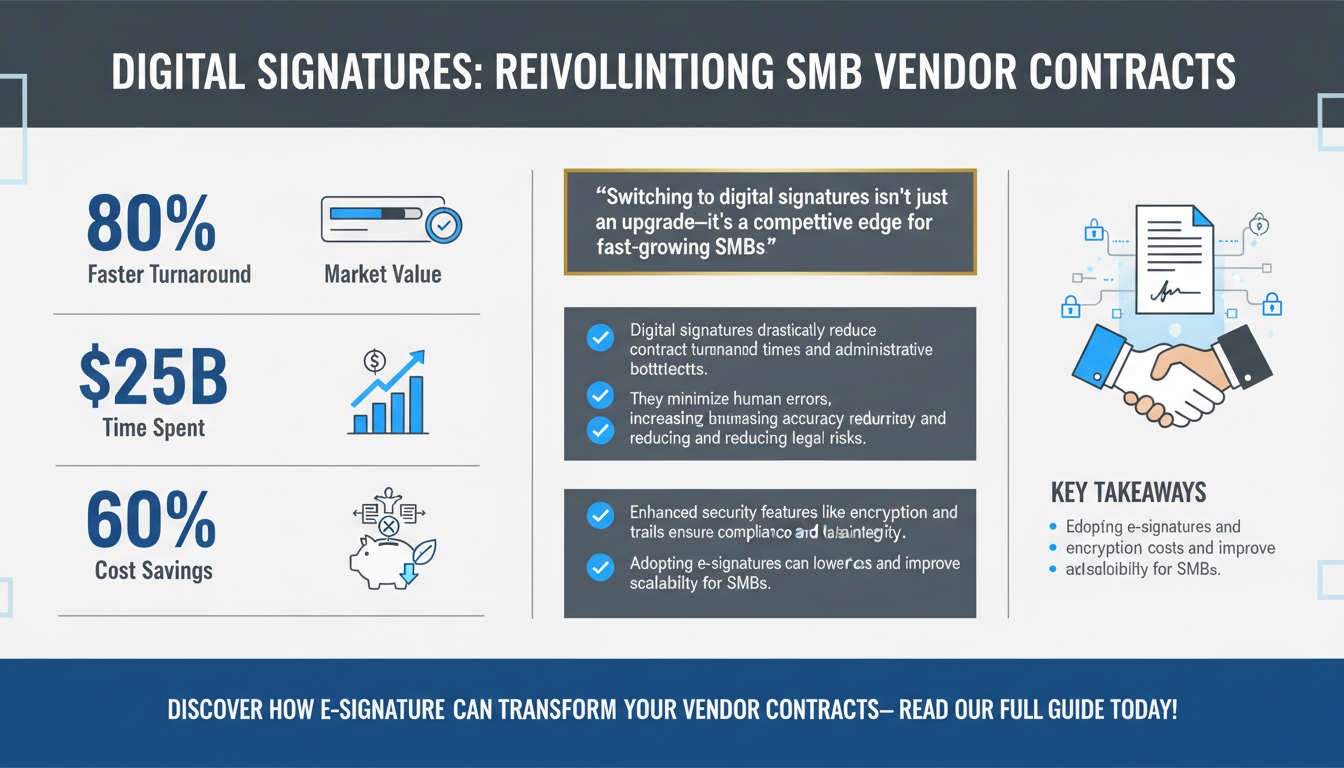
The growing adoption of digital signatures underscores their importance. According to a Forrester report, businesses that implement e-signature solutions reduce contract turnaround times by up to 80%. Furthermore, the global e-signature market is projected to reach $25 billion by 2027 (Statista), indicating a clear trend toward digital transformation. But how can SMBs harness this technology effectively? Let’s take a deep dive into the world of digital signatures and explore how they’re reshaping vendor agreements.
The Traditional Vendor Contract Process: Where It Falls Short
For decades, SMBs relied on manual processes to manage vendor contracts. These methods typically involved drafting agreements, printing them, obtaining signatures, scanning or faxing documents, and finally filing them away in a physical or digital repository. While this approach has been the status quo, it is fraught with inefficiencies and risks that can no longer be ignored in today’s fast-paced business environment.
Time Consumption and Bottlenecks
Time Consumption: One of the largest drawbacks of traditional contract management is the time it consumes. Contracts often pass through multiple stakeholders for review and approval, leading to delays. A study by McKinsey revealed that employees spend up to 40% of their time on administrative tasks like document management. For SMBs operating with lean teams, this time drain can hinder growth and innovation.
Consider the case of a boutique marketing agency handling multiple vendor contracts for creative services. Traditional workflows required several rounds of revisions, courier services to deliver contracts to clients for signing, and days of delay waiting for return documents. The cumulative time loss not only slowed operations but also jeopardized client deadlines. In competitive industries, such delays can cost an SMB potential business opportunities.
Error-Prone Nature
Error-Prone Nature: Paper-based processes are highly susceptible to errors. Misplaced documents, missing signatures, and incorrect filing can derail vendor negotiations and set projects back by weeks. A single oversight, such as forgetting to initial a key page, can invalidate an entire agreement.
For instance, an IT consulting firm found itself in legal trouble when an unsigned appendix in a vendor contract led to disputes over deliverables. Such errors are not uncommon in manual processes and could result in financial losses or damaged reputations.
Security Risks
Security Risks: Physical contracts are vulnerable to a range of security threats, including unauthorized access, forgery, and physical damage such as fire or water exposure. In an era where data breaches and compliance violations can lead to hefty fines, these risks are unacceptable.
Even beyond physical risks, manual processes lack transparency. For SMBs in regulated industries such as healthcare or finance, failing to prove the integrity of agreements can result in compliance breaches. Digital signatures, on the other hand, provide security layers like encryption and audit trails that make them robust and tamper-proof.
High Costs
High Costs: Printing, mailing, scanning, and storing paper contracts incur significant costs over time. According to the Deloitte Center for Innovation, businesses spend an average of $6 to $8 per document on printing and mailing alone. For SMBs handling hundreds of contracts annually, these costs accumulate rapidly, diverting resources from other growth-oriented initiatives.

Pro Tip: Conduct an internal audit of your current contract processes. Identify inefficiencies and quantify the time and costs involved. This baseline data will help you measure the impact of adopting digital signatures.
Key Insight: The inefficiencies of manual contract management are no longer sustainable for fast-growing SMBs. Digital signatures offer a streamlined alternative, eliminating bottlenecks and allowing businesses to focus on growth initiatives rather than administrative tasks.
What Are Digital Signatures and How Do They Work?
Digital signatures are a secure and legally binding way to sign documents electronically. Unlike basic electronic signatures, which may simply involve typing a name or uploading an image of a signature, digital signatures use cryptographic methods to authenticate and secure the signing process. This ensures that the document’s integrity is maintained and that the signature cannot be repudiated.
The Five-Step Digital Signature Process
The digital signature process can be broken down into five key steps:
- Document Preparation: The document is uploaded to a digital signature platform, such as DocuSign, Adobe Sign, or Zignature.
- Signer Authentication: To ensure security, the signer’s identity is verified using methods such as email verification, SMS codes, or even biometric data like fingerprints.
- Signature Application: The signer places their digital signature using a mouse, touchscreen, or pre-saved signature file.
- Encryption: The document is encrypted, and a unique digital certificate is applied. This ensures that any attempt to alter the document after signing will invalidate the signature.
- Audit Trail: A detailed log of all activities, including who signed, when, and where, is generated. This audit trail is invaluable for compliance and dispute resolution.
For example, a manufacturing company using DocuSign was able to cut its average contract processing time from three weeks to three days. The ability to authenticate signers via SMS codes provided an added layer of security, ensuring that only authorized personnel could complete the agreements.
According to Gartner, businesses adopting digital signatures see a 60% reduction in document processing times. SMBs that adopt this technology can reallocate saved time and resources to strategic initiatives, such as customer acquisition or product development.

Understanding the Technology Behind Digital Signatures
Digital signatures rely on Public Key Infrastructure (PKI), a technology that uses a pair of keys—one private and one public—to create and verify signatures. When a signer applies their digital signature, the private key encrypts the data. The recipient can then use the corresponding public key to decrypt the data and verify its authenticity. This dual-key system ensures the document remains tamper-proof while confirming the signer’s identity.
Expert Insight: When selecting a digital signature provider, ensure they comply with international standards such as eIDAS (EU) or ESIGN (US). Platforms adhering to these frameworks provide the legal standing necessary for your contracts to hold up in court.
Key Insight: Digital signatures provide more than just convenience—they offer a level of security and authenticity that makes them ideal for legally binding contracts, especially in compliance-heavy industries.
Benefits of Digital Signatures for Vendor Contracts
Digital signatures offer a wide array of benefits that address the pain points of traditional contract management. Here’s a closer look at how they can transform vendor relationships and workflows for SMBs:
1. Speed and Efficiency
By eliminating the need for printing, mailing, and manual follow-ups, digital signatures significantly accelerate the contract lifecycle. Contracts that once took days or weeks to finalize can now be completed in hours or even minutes. This speed is particularly valuable for SMBs that need to onboard vendors quickly to meet growing business demands.
For example, a logistics startup that switched to digital signatures reported reducing its vendor contract completion time from 10 days to just 2 hours, enabling it to scale operations faster.
A study by Deloitte found that digital signatures improve contract execution speeds by an average of 70%, offering a significant competitive advantage in dynamic markets.
Pro Tip: Use automated reminders and notifications within your digital signature platform to nudge stakeholders to act quickly. This can further reduce delays in the signing process.
2. Cost Savings
The costs associated with traditional contract processes—printing, mailing, and storing physical documents—can add up quickly. Digital signatures virtually eliminate these expenses. According to Nucleus Research, organizations save an average of $20 per document by transitioning to digital signatures. For SMBs managing hundreds of contracts annually, this translates into thousands of dollars in savings that can be reinvested in other areas of the business.
3. Enhanced Security
Digital signatures provide advanced security features, such as encryption, tamper-proof seals, and multi-factor authentication. These measures protect sensitive vendor information and ensure compliance with regulations like GDPR and HIPAA. Furthermore, the audit trail generated by digital signature platforms helps SMBs meet legal and regulatory requirements with ease.
In one instance, a mid-sized healthcare provider implemented digital signatures to handle vendor contracts that contained patient-sensitive information. The encryption technology and secure access controls ensured compliance with HIPAA, avoiding potential legal penalties.
4. Improved Vendor Relationships
A streamlined signing process demonstrates professionalism and respect for your vendors’ time. This can strengthen relationships, build trust, and foster long-term partnerships. For instance, a retail SMB that adopted digital signatures reported a 30% increase in vendor satisfaction ratings, as contracts were easier to finalize and track.
Comparison Table:
| Aspect | Traditional Contract Process | Digital Signature Process |
|---|---|---|
| Time to Completion | 7–10 days | 1–2 hours |
| Cost Per Document | $6–$8 | <$1 |
| Error Rate | High (manual errors) | Low (automated systems) |
| Security | Low | High |

Key Insight: Beyond cost and time savings, digital signatures enhance the overall vendor experience, making them a strategic tool for relationship-building and operational excellence.
Legal Considerations: Are Digital Signatures Valid?
One of the most pressing questions SMBs have about digital signatures is their legal validity. Thankfully, digital signatures are recognized as legally binding in most countries, provided they meet specific criteria outlined by local laws and regulations. Key frameworks include:
- United States: The ESIGN Act and UETA recognize electronic signatures as legally equivalent to handwritten signatures.
- European Union: The eIDAS Regulation standardizes digital signature laws across member states, ensuring legal validity and cross-border acceptance.
- Globally: Many countries adhere to the UNCITRAL Model Law on Electronic Commerce, which provides a foundation for digital signature legislation worldwide.
However, not all digital signature platforms are created equal. SMBs should select solutions that comply with relevant legal standards and provide features like audit trails and encryption to meet regulatory requirements.
Common Misconceptions About Legal Compliance
It’s a common misconception that digital signatures are less secure or less legally binding than traditional handwritten signatures. However, courts worldwide have upheld the validity of digital signatures, provided they meet authentication and integrity requirements. Investing in a reputable platform that adheres to legislation such as ESIGN or eIDAS ensures peace of mind.
Expert Insight: Always consult legal counsel when adopting a digital signature platform, especially if your SMB operates internationally. Local laws may have nuances that require specific compliance measures.
Key Insight: By adopting a compliant digital signature solution, SMBs can streamline vendor contract workflows while ensuring legal enforceability and regulatory adherence.
How to Implement Digital Signatures in Your SMB
Transitioning to digital signatures can seem daunting, but with a structured approach, SMBs can make the shift smoothly. Here’s a step-by-step guide:
- Assess Your Needs: Identify pain points in your current vendor contract process and determine where digital signatures can add the most value.
- Choose the Right Platform: Evaluate platforms like DocuSign, Adobe Sign, or Zignature for features like security, compliance, and ease of use.
- Train Stakeholders: Educate your team and vendors on how to use the platform effectively, providing tutorials and support as needed.
- Integrate with Existing Tools: Ensure the digital signature platform integrates with your CRM, ERP, or other business systems for a seamless workflow.
- Monitor Performance: Use analytics and audit trails to measure the efficiency of your new process and identify areas for improvement.
Training and Onboarding for Success
Even the most advanced digital signature platform can fall short if employees and vendors are not properly onboarded. Provide detailed training sessions, video tutorials, and help documentation to ensure all stakeholders understand the new process. Consider appointing a dedicated team member to serve as the go-to resource for questions and troubleshooting during the transition period.

Pro Tip: Start with a small pilot project. Test the digital signature solution on a subset of vendor contracts before rolling out the platform company-wide. This allows you to identify and address potential issues early.
Key Insight: A phased implementation approach minimizes disruption and allows your business to realize the benefits of digital signatures more quickly.
Common Mistakes to Avoid When Adopting Digital Signatures
While adopting digital signatures offers numerous benefits, there are pitfalls that SMBs should avoid:
- Choosing the Wrong Platform: Not all platforms are created equal. Select one that meets your security, compliance, and scalability needs.
- Ignoring Vendor Compatibility: Ensure that your vendors are comfortable using the chosen platform. Provide support and training if needed.
- Overlooking Training: A lack of training can lead to underutilization of the platform and resistance from employees and vendors.
Common Security Gaps
One mistake SMBs often make is neglecting to configure the security settings of their digital signature platforms. For example, failing to enable multi-factor authentication can leave contracts vulnerable to unauthorized access. Always review and optimize security settings during the setup phase.

Pro Tip: Regularly audit your digital contract processes to identify and address any security vulnerabilities. This proactive approach ensures long-term success and compliance.
Key Insight: Avoiding these common mistakes ensures a smoother adoption process and maximizes the ROI of digital signatures.
FAQ: Digital Signatures for SMB Vendor Contracts
1. Are digital signatures legally binding?
Yes, digital signatures are legally binding under laws like the ESIGN Act, eIDAS, and others.
2. How secure are digital signatures?
Digital signatures use encryption, authentication, and audit trails to ensure maximum security.
3. Can I use digital signatures for international contracts?
Most countries recognize digital signatures, but it’s essential to ensure compliance with local regulations.
4. What’s the ROI of adopting digital signatures?
Studies show businesses can save up to $20 per document and reduce contract processing times by 80%.
5. How do I get started?
Choose a compliant platform like Zignature and follow a phased implementation plan.
Conclusion: The Future of Vendor Contracts Is Digital
The adoption of digital signatures is no longer a question of "if" but "when." For SMBs looking to remain competitive, streamline operations, and improve vendor relationships, digital signatures offer a clear path forward. By reducing costs, accelerating contract timelines, and enhancing security, this technology empowers businesses to focus on strategic growth rather than administrative inefficiencies.
Ready to make the leap? Start by exploring Zignature’s features or delve deeper into related resources like streamlining procurement processes. Your journey to a more efficient vendor contract process begins now.
To further enhance your digital workflows, explore our sister platforms: Apparatuz for workflow automation, Applicantz for recruitment management, Schedly for scheduling and appointments, Supportly for customer support, and Zatisfied for feedback management. Together, these tools create a comprehensive ecosystem that complements your digital signature strategy.