

Procurement is the lifeblood of any organization, encompassing everything from vendor selection to contract management and payment approvals. Yet, for many SMBs (small and medium-sized businesses), procurement processes remain burdened by inefficiencies, manual tasks, and compliance risks. Enter digital signatures—a game-changing solution that eliminates bottlenecks, enhances security, and ensures seamless workflows. In this comprehensive guide, we’ll explore how digital signatures are transforming procurement processes in 2026 and why SMBs must adopt this technology to stay competitive.
Whether you’re managing purchase orders, vendor agreements, or compliance documentation, digital signature solutions like Zignature are designed to revolutionize how you operate. SMBs that integrate digital signatures into their workflows can expect accelerated approvals, improved collaboration, cost savings, and ironclad compliance. By the end of this guide, you’ll have a clear roadmap for leveraging digital signatures effectively, backed by actionable insights, real-world examples, and industry data.
1. The Current Procurement Challenges SMBs Face
Procurement for SMBs has always been a juggling act. From sourcing reliable suppliers to negotiating contracts and ensuring compliance, SMBs often lack the resources or bandwidth to manage these processes efficiently. These challenges are compounded in an era where speed, accuracy, and cost-efficiency are critical to staying competitive. Below, we break down the key challenges SMBs face in their procurement workflows:
1.1 Manual Processes
Despite advancements in technology, a significant number of SMBs still rely on paper-based workflows and email correspondence for procurement. These outdated methods introduce inefficiencies and increase the risk of human error. According to a 2025 report by McKinsey, 42% of SMBs cite manual paperwork as the biggest bottleneck in procurement workflows. Vendors often wait weeks for signed documents to be mailed back, and internal teams spend countless hours managing piles of paperwork. These delays not only slow down operations but also negatively impact vendor relationships.
Moreover, manual processes can lead to inconsistent record-keeping. For instance, a purchase order might be approved verbally or via email, but without proper documentation, it becomes challenging to track accountability. This lack of standardization can result in missed opportunities for cost savings or even duplicate orders.
Pro Tip: Start with High-Impact Documents
For SMBs transitioning from manual to digital workflows, focus on digitizing high-impact documents first, such as vendor contracts and purchase orders. These are often the most time-sensitive and carry the highest risk if mishandled.
1.2 Compliance Risk
Procurement involves handling legally binding documents, such as contracts and purchase orders. Manual processes increase the risk of errors, such as missing signatures or misplacing documents, which can lead to non-compliance with industry regulations. For example, failing to maintain proper audit trails can result in penalties under laws like the GDPR in Europe or the Sarbanes-Oxley Act in the U.S. A 2025 survey by Deloitte found that 38% of SMBs faced regulatory fines due to documentation errors in procurement workflows.
Non-compliance doesn’t just result in financial penalties; it can also damage an SMB’s reputation. Vendors and clients are less likely to trust a business that cannot reliably manage its legal and regulatory obligations. For example, a missed signature on a contract could lead to disputes or even lawsuits, eroding trust with key stakeholders.
Expert Insight: Automate Audit Trails
One of the most significant advantages of digital signatures is their built-in audit trail capabilities. These logs automatically capture who signed, when, and where, making it easier to demonstrate compliance during audits.
1.3 Approval Delays
Traditional procurement workflows often require multiple approvals from various stakeholders, leading to delays. Documents are printed, signed, scanned, emailed, and often misplaced, creating a loop of inefficiencies. A study by Gartner found that manual approval processes result in an average delay of 7-10 business days for SMBs. These delays can have downstream effects, such as late orders, missed deadlines, and strained vendor relationships.
Consider a real-world scenario: a small manufacturing firm needs to order raw materials for a new project. The purchase order requires approvals from the project manager, finance team, and procurement officer. In a paper-based system, this process could take days or even weeks, jeopardizing project timelines and potentially leading to costly rush orders.
Checklist: Streamlining Approvals
- Identify unnecessary approval layers and remove them.
- Set clear deadlines for each approval stage.
- Use digital workflows to automatically notify stakeholders of pending tasks.
1.4 Lack of Visibility
Without centralized systems, tracking the status of procurement documents—such as contracts awaiting signatures—becomes a significant challenge. A lack of real-time visibility can lead to missed deadlines, duplicate orders, or even overpayments. For instance, a procurement team might be unaware that a crucial vendor agreement is stuck in someone’s inbox, delaying project timelines.
In addition, poor visibility into procurement data makes it harder to analyze spending patterns or identify areas for cost savings. For example, an SMB might miss bulk discount opportunities simply because they lack a centralized record of vendor contracts and purchase orders.
Comparison Table: Manual vs. Digital Procurement Visibility
| Feature | Manual Procurement | Digital Procurement |
|---|---|---|
| Document Tracking | Manual follow-ups via email or phone | Real-time status updates in dashboards |
| Data Accessibility | Scattered across emails and files | Centralized and searchable repository |
| Error Rates | High due to manual entry | Minimal with automation |
Key Takeaway:
- Procurement in SMBs is plagued by inefficiencies due to manual processes, compliance risks, and lack of visibility. Digital signatures address these pain points head-on, enabling faster, more secure, and transparent workflows.
2. What Are Digital Signatures, and How Do They Work?
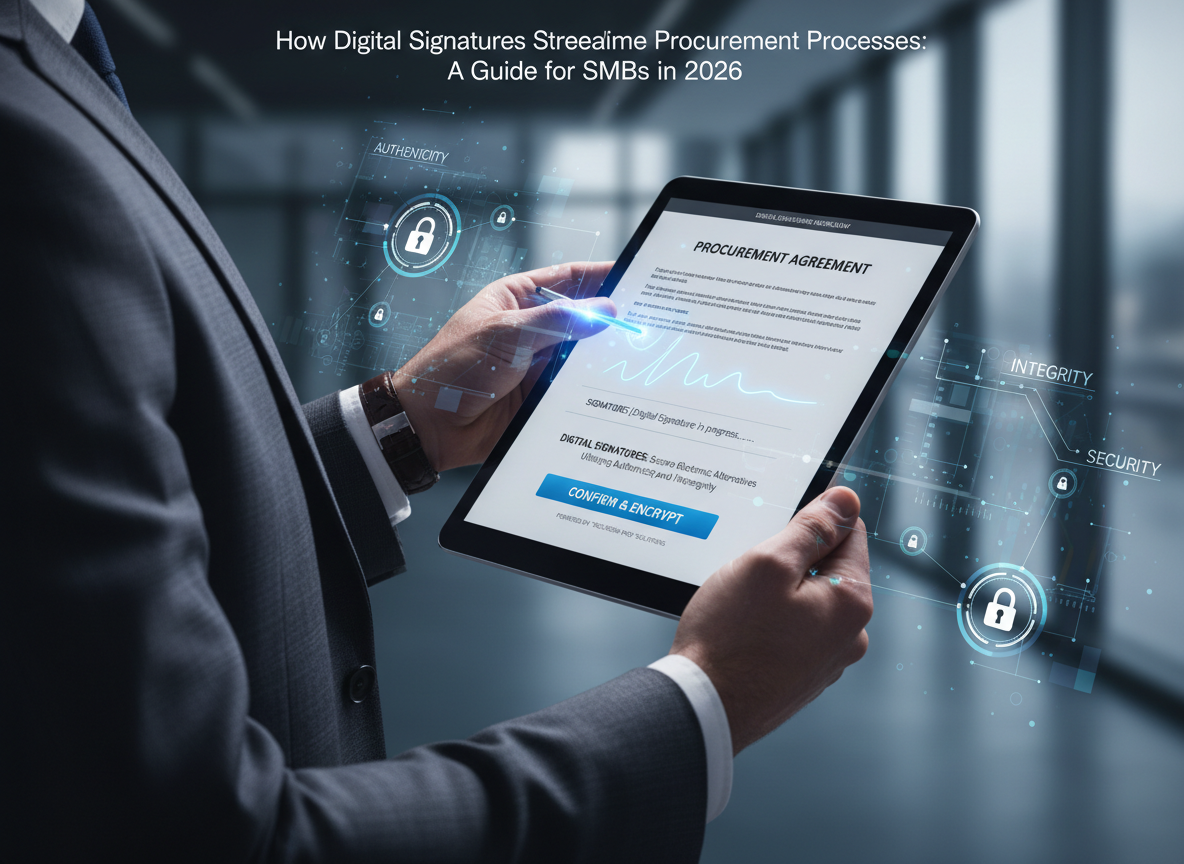
Before diving into how digital signatures transform procurement, it’s essential to understand what they are and how they work. Digital signatures are a secure electronic alternative to handwritten signatures, utilizing cryptographic technology to verify the authenticity and integrity of a document. They are designed to provide a higher level of security compared to traditional signatures, making them particularly valuable in business transactions.
2.1 How Digital Signatures Work
Here’s a step-by-step breakdown of how digital signatures function:
- Document Creation: A document, such as a vendor agreement or purchase order, is prepared and uploaded to a digital signature platform like Zignature. The platform integrates with popular tools like Microsoft Office, Google Workspace, or dedicated procurement software.
- Signature Request: The document is sent to relevant stakeholders for their signatures. Each recipient receives a secure link to access the document, ensuring that only authorized individuals can view or sign it.
- Authentication: Digital signature platforms use multi-factor authentication (e.g., email verification, SMS codes, or biometric login) to ensure the signer’s identity. This layer of security helps prevent fraud or unauthorized access.
- Signing: Stakeholders can sign the document electronically using their device. The platform encrypts the signature, creating a unique digital fingerprint that is tied to the document and the signer.
- Audit Trail: A detailed log of all actions—such as who signed, when, and from where—is automatically generated. This ensures compliance and provides traceability in case of disputes or audits.
...
To further enhance your digital workflows, explore our sister platforms: Apparatuz for workflow automation, Applicantz for recruitment management, Schedly for scheduling and appointments, Supportly for customer support, and Zatisfied for feedback management. Together, these tools create a comprehensive ecosystem that complements your digital signature strategy.