
In an era where disruptions are inevitable—be it global pandemics, cyberattacks, or supply chain crises—business continuity planning has never been more critical. SMBs and enterprises alike face mounting pressure to safeguard their operations while ensuring agility and resilience. Digital signatures have emerged as a transformative solution, enabling businesses to streamline workflows, maintain legal compliance, and keep operations running seamlessly during disruptions. This article dives deep into the top 10 ways digital signatures bolster business continuity planning, providing actionable insights for SMBs and enterprises looking to future-proof their organizations.
Whether you're a small business owner, IT manager, or operations executive, this comprehensive guide will show you how digital signatures can become a cornerstone of your contingency strategies. From accelerating document approvals to enhancing disaster recovery, each section is packed with expert advice, compelling data, and real-world examples. Bookmark this article, share it with your team, and start implementing these strategies today.
1. Accelerating Document Approvals During Operational Disruptions
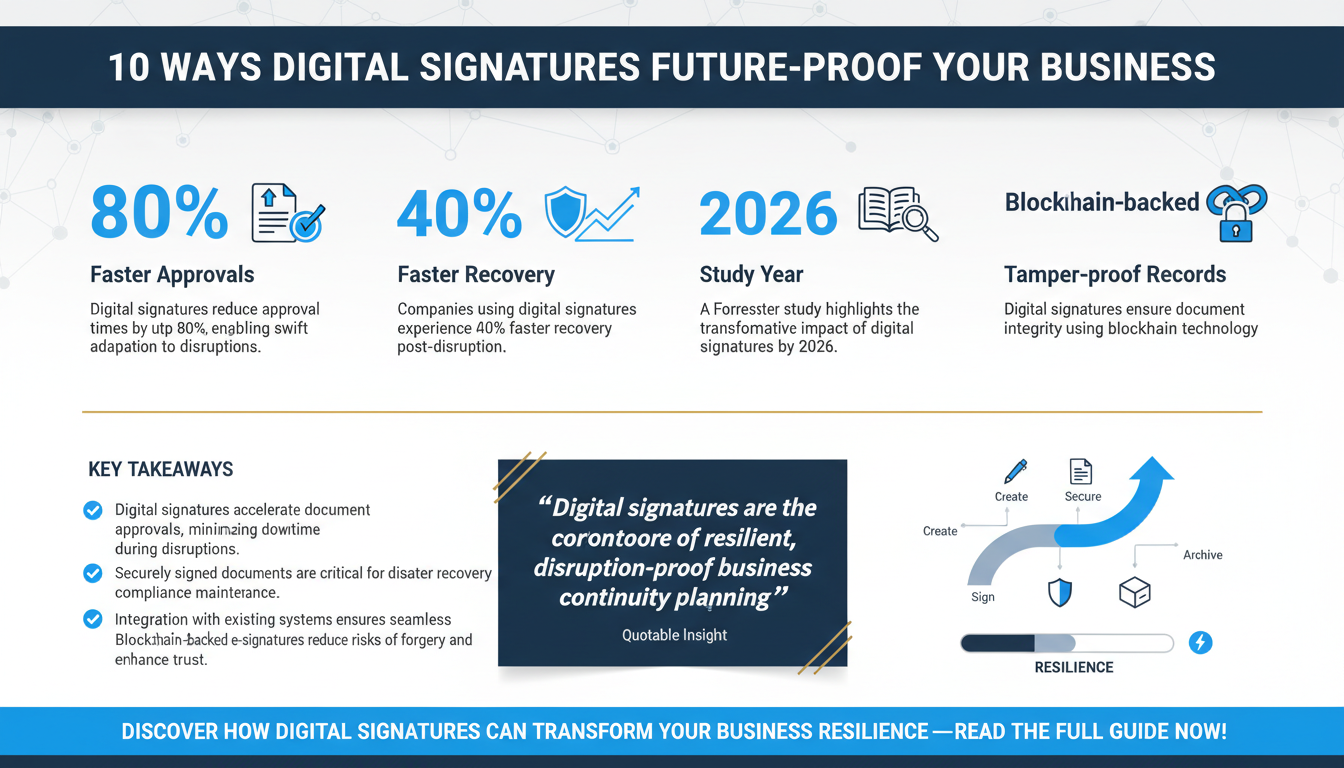
Operational disruptions—such as natural disasters, remote work shifts, or supply chain interruptions—can bring critical business processes to a grinding halt. Digital signatures solve this problem by enabling instant document approvals, regardless of where stakeholders are located. A 2026 study by Forrester revealed that digital signature solutions reduce approval times by up to 80%, allowing businesses to adapt swiftly to changing circumstances.
Consider a scenario where a remote team needs to finalize a vendor contract during a snowstorm that shuts down in-person operations. With digital signatures, stakeholders can sign and approve contracts securely from their homes, ensuring that critical supply chain agreements remain intact. This agility not only prevents delays but also reinforces trust among partners and clients.
Moreover, digital signature platforms like Zignature integrate seamlessly with existing document management systems, ensuring uninterrupted workflows. Their legally binding nature ensures compliance across jurisdictions, even during chaotic times.

Key Takeaway: Digital signatures enable faster document approvals, ensuring continuity even during operational disruptions. SMBs can leverage this technology to minimize downtime and maintain critical workflows.
2. Enhancing Disaster Recovery Plans with Secure Documentation
Disaster recovery plans often hinge on the availability of secure, accessible documentation. Digital signatures play a pivotal role in ensuring that critical agreements, contracts, and compliance documents remain intact and accessible during crises. According to Gartner, companies using digital signature platforms experience 40% faster recovery times post-disruption due to centralized and secure documentation.
For example, a healthcare organization faced with a ransomware attack can rely on digitally signed contracts stored in encrypted cloud systems. These signed documents remain tamper-proof and accessible, helping the organization rebuild its operations while maintaining regulatory compliance.
Additionally, digital signatures reduce the risk of document forgery or loss—a common problem in traditional paper-based systems. By leveraging technologies such as blockchain-backed e-signatures, businesses can ensure the integrity of their records.

Key Takeaway: Secure and accessible digitally signed documents are a cornerstone of effective disaster recovery planning, enabling faster recovery and minimizing legal risks.
3. Streamlining Vendor Management During Supply Chain Interruptions
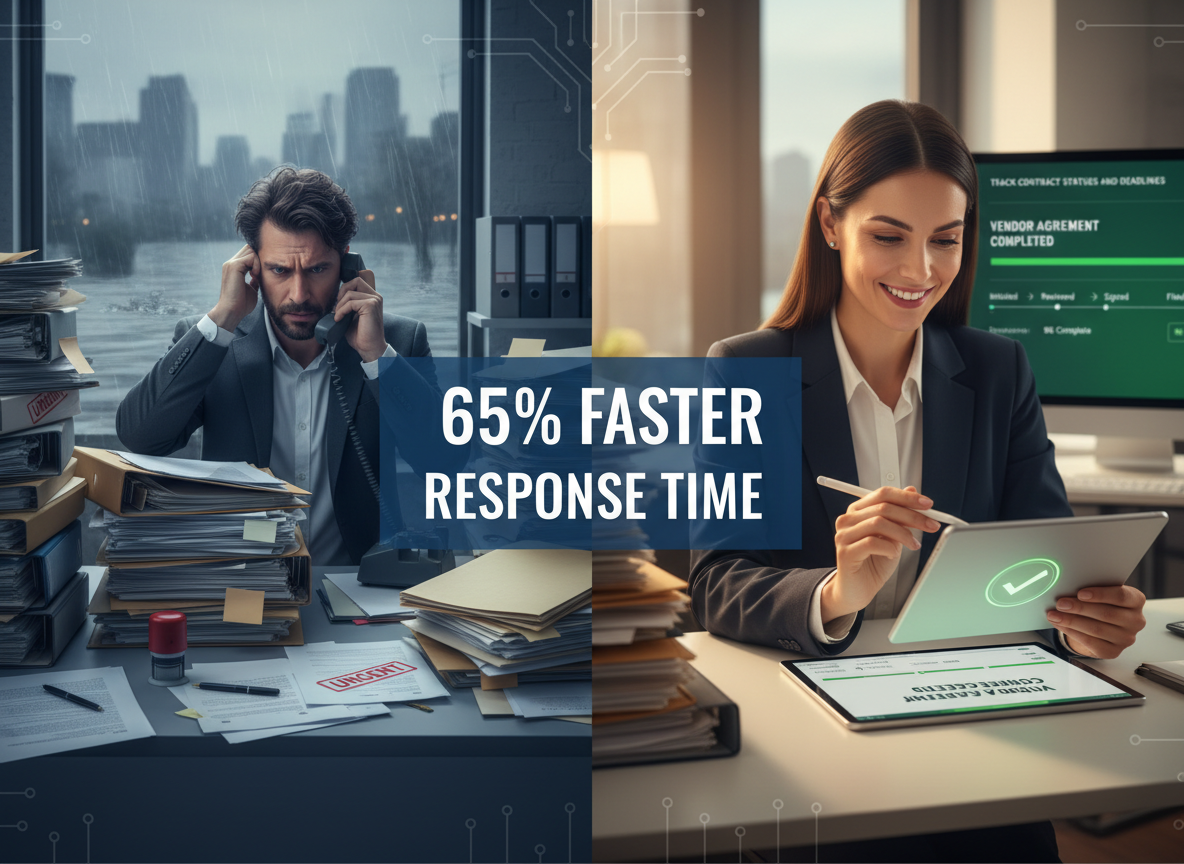
Supply chain interruptions can cripple business operations, especially for SMBs reliant on timely vendor deliveries. Digital signatures simplify vendor management by enabling faster contract negotiations and renewals, even during crises. According to Deloitte, businesses adopting e-signature solutions see a 65% improvement in vendor response times.
Imagine an enterprise procuring emergency supplies during a flood. Digital signatures facilitate swift vendor agreements, ensuring that procurement processes continue without delays. Additionally, automated workflows built into platforms like Zignature allow teams to track contract statuses and deadlines, reducing administrative burdens.
With real-time tracking and audit trails, businesses can maintain transparency and accountability, further strengthening vendor relationships even during challenging times.
Key Takeaway: Digital signatures streamline vendor management, enabling faster contract execution and real-time tracking during supply chain interruptions.
4. Reducing Compliance Risks in Remote Work Scenarios
Remote work presents unique challenges for maintaining compliance across jurisdictions. Digital signatures help businesses navigate these challenges by providing legally binding, tamper-proof agreements that meet global regulatory standards. A Harvard Business Review study found that 78% of companies using digital signatures reported fewer compliance violations compared to traditional methods.
Take the example of an HR team onboarding remote employees across multiple countries. Using digital signatures, the team can ensure that employment contracts remain compliant with local labor laws while eliminating the need for physical document exchanges. This not only reduces compliance risks but also accelerates onboarding timelines.
Furthermore, digital signature tools often include automated audit trails, enabling businesses to track who signed what and when—critical for regulatory audits.
Key Takeaway: Digital signatures reduce compliance risks by providing tamper-proof, globally recognized agreements tailored for remote work scenarios.
5. Boosting Collaboration Across Departments and Stakeholders
Collaboration across departments and stakeholders is crucial for effective business continuity planning. Digital signatures enhance collaboration by enabling real-time document sharing and approvals, regardless of geographical barriers. A McKinsey report highlighted that organizations leveraging digital signature workflows see a 73% increase in interdepartmental efficiency.
Consider a cross-departmental team managing a cybersecurity breach. Using digital signatures, legal, IT, and operations teams can quickly approve incident response plans, ensuring swift action and minimizing downtime.
Platforms like Zignature provide collaborative features such as role-based signing and automated notifications, ensuring that all stakeholders remain aligned during critical decision-making processes.
Key Takeaway: Digital signatures foster seamless collaboration, enabling departments to coordinate effectively during disruptions.
6. Minimizing Environmental Impact and Operational Costs
Paper-based systems not only slow down operations but also contribute to environmental degradation. Digital signatures eliminate the need for physical paperwork, reducing carbon footprints and operational costs. According to a GreenBiz study, businesses transitioning to digital signatures reduce paper usage by 90%, saving $2,000 annually per employee.
For example, a real estate firm can replace paper-based lease agreements with digitally signed contracts, cutting costs while demonstrating sustainability commitments to clients.
This shift not only improves operational efficiency but also aligns with ESG goals, which are increasingly important for businesses to maintain stakeholder trust.
Key Takeaway: Digital signatures reduce environmental impact and operational costs, supporting both business continuity and sustainability goals.
7. Improving Client Retention During Uncertain Times
Client retention is critical during periods of uncertainty. Digital signatures enhance customer satisfaction by providing secure, convenient, and fast document signing experiences. A Salesforce study revealed that businesses using digital signature workflows see a 25% higher client retention rate compared to traditional methods.
For instance, a financial services firm can offer clients the ability to sign loan agreements digitally, ensuring a seamless experience even during market volatility. This convenience builds trust and loyalty, reducing the risk of client churn.
By integrating digital signatures with CRM systems, businesses can personalize client interactions, further enhancing satisfaction and retention.
Key Takeaway: Digital signatures improve client retention by delivering secure and seamless signing experiences, even during uncertain times.
8. Enabling Scalability for Future Disruptions
Scalability is essential for businesses looking to adapt to future disruptions. Digital signatures provide the flexibility and scalability needed to handle increased document volumes and complex workflows. A 2026 IDC report found that SMBs adopting scalable digital signature solutions achieved 150% ROI within two years.
For example, a growing e-commerce business can use digital signatures to handle increased vendor agreements during peak seasons, ensuring uninterrupted operations.
Additionally, digital signature platforms often include analytics tools, enabling businesses to optimize workflows and identify bottlenecks proactively.
Key Takeaway: Digital signatures enable scalability, helping businesses adapt to future disruptions and maintain operational continuity.
FAQ: Common Questions About Digital Signatures and Business Continuity
1. Are digital signatures legally binding?
Yes, digital signatures are legally binding in most jurisdictions, including the US (under the ESIGN Act) and the EU (under eIDAS regulations). They offer the same legal weight as traditional handwritten signatures.
2. How secure are digital signatures?
Digital signatures use encryption technologies to ensure tamper-proof documents. Advanced solutions like Zignature also offer audit trails and multi-factor authentication for added security.
3. Can digital signatures integrate with existing software?
Yes, most digital signature platforms, including Zignature, integrate with popular tools like Microsoft Office, Google Workspace, and CRM systems for seamless workflows.
4. What industries benefit the most from digital signatures?
Industries such as healthcare, legal, real estate, finance, and technology benefit significantly due to the high volume of sensitive and time-critical documents they handle.
5. How do digital signatures support remote work?
Digital signatures enable secure document approvals and collaboration across remote teams, ensuring compliance and productivity without physical interactions.
Conclusion
Digital signatures are more than just a tool for convenience—they are a strategic asset for business continuity planning. By accelerating document approvals, reducing compliance risks, enhancing disaster recovery, and boosting scalability, digital signatures empower SMBs and enterprises to navigate disruptions with resilience and confidence. As businesses face an increasingly uncertain future, adopting digital signatures is no longer optional—it is essential.
Ready to transform your business continuity planning? Explore Zignature’s platform features or start with our pricing plans today.
To further enhance your digital workflows, explore our sister platforms: Apparatuz for workflow automation, Applicantz for recruitment management, Schedly for scheduling and appointments, Supportly for customer support, and Zatisfied for feedback management. Together, these tools create a comprehensive ecosystem that complements your digital signature strategy.