
In today’s fast-paced digital landscape, onboarding workflows have evolved into a critical area for organizations aiming to enhance efficiency, ensure regulatory compliance, and deliver exceptional experiences to employees, clients, and stakeholders. By 2026, digital signatures have become a foundational tool in this transformation, offering secure, legally binding solutions across industries such as HR, finance, healthcare, legal services, and real estate. Failure to implement secure and compliant onboarding workflows not only risks inefficiency but also increases the likelihood of regulatory penalties and dissatisfied stakeholders.
This comprehensive guide explores 10 actionable strategies for building secure and compliant onboarding workflows with digital signatures. Packed with expert insights, real-world examples, and practical tips, this resource aims to empower both SMBs and enterprises to stay ahead in an increasingly competitive and regulated environment.
1. Understand Your Industry’s Compliance Requirements
Compliance lies at the heart of any secure onboarding workflow. Each industry faces its own set of regulatory challenges, which must be addressed to ensure the legality and security of digital signature implementations. For example, healthcare organizations must comply with HIPAA regulations, while financial institutions are subject to PCI DSS and SOX requirements. By 2026, the global regulatory landscape has grown even more complex, with data privacy laws such as GDPR, CCPA, and new regional mandates shaping onboarding workflows.
Begin by conducting a comprehensive compliance audit to identify regulations applicable to your industry. Collaborate closely with legal and compliance teams to map out requirements for secure document storage, encryption, and transmission. For example, healthcare providers may need secure cloud storage for patient consent forms, while real estate companies must manage property sale agreements under eIDAS regulations.
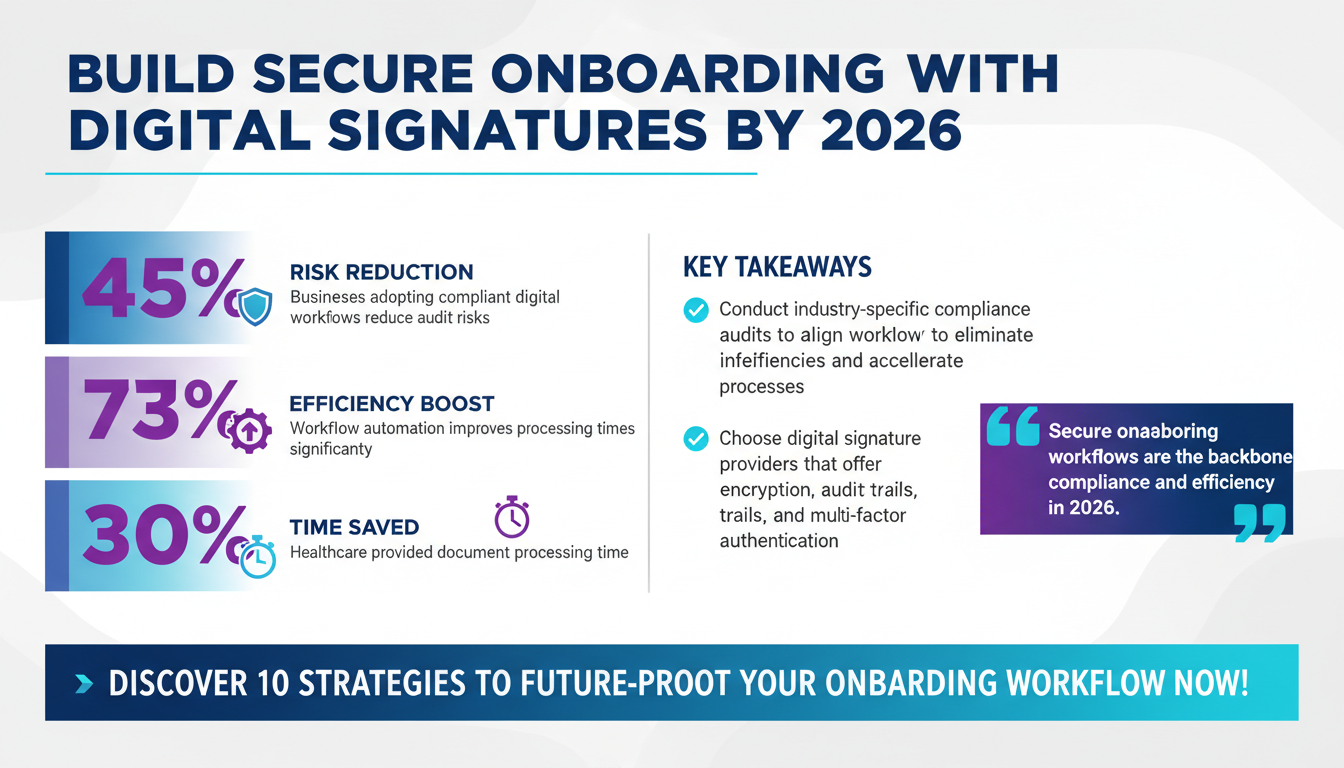
Digital signature solutions must align with these compliance frameworks, offering features like tamper-proof audit trails, advanced encryption, and multi-factor authentication. A study from Gartner highlights that businesses adopting compliant digital workflows experience a 45% reduction in audit-related risks and penalties.
Real-World Example: A U.S.-based healthcare provider revamped its onboarding workflow to meet HIPAA standards by using encrypted digital signatures for patient intake forms. The result was a 30% reduction in document processing time and improved compliance during audits.
Key Takeaways:
- Conduct a compliance audit specific to your industry.
- Choose a digital signature provider that complies with international and local regulations.
- Integrate tools like encryption and audit trails into workflows to maintain compliance.
2. Leverage Workflow Automation to Streamline Processes
Manual onboarding processes are prone to inefficiencies, delays, and human errors. By 2026, workflow automation has become a cornerstone for organizations seeking to enhance efficiency without sacrificing compliance. Digital signature solutions integrated with automation platforms allow businesses to eliminate repetitive tasks, reduce errors, and accelerate document processing.
For instance, automated workflows can generate contracts based on predefined templates, route them to relevant signatories, and send automatic reminders for pending signatures. Platforms such as DocuSign and Adobe Sign have emerged as leaders in providing this seamless integration. A report from Forrester reveals that organizations using automated workflows experience a 73% improvement in processing times and a 40% reduction in operational costs.
Case Study: A midsized HR firm integrated digital signatures into their onboarding automation tool, enabling new hires to complete forms and agreements within hours instead of days. The streamlined process resulted in a 50% faster onboarding timeline, improving employee satisfaction and operational efficiency.
Key Takeaways:
- Adopt workflow automation platforms with digital signature integrations.
- Use templates and prebuilt workflows to standardize processes.
- Regularly monitor workflows to identify bottlenecks and inefficiencies.
3. Prioritize Security with Advanced Encryption Protocols
Security is a non-negotiable element of onboarding workflows, especially when sensitive data such as financial information, healthcare records, or employment contracts is involved. Digital signatures that leverage advanced encryption protocols like AES-256 and RSA ensure that documents remain secure both in transit and storage.
By 2026, encryption standards have become more robust, with leading providers incorporating features such as end-to-end encryption, secure cloud storage, and alerts for unauthorized access attempts. Additionally, multi-factor authentication (MFA) adds an extra layer of security by verifying signatories’ identities through methods such as biometrics, hardware tokens, or one-time passwords.
A study by Cybersecurity Magazine found that organizations using encrypted digital signature solutions experienced 60% fewer data breaches compared to those relying on manual processes.
Real-World Example: A financial institution implemented AES-256 encryption for all client agreements signed digitally, significantly reducing the risk of sensitive data exposure. The move increased client trust and compliance with PCI DSS mandates.
Key Takeaways:
- Ensure your digital signature provider uses encryption protocols like AES-256.
- Implement multi-factor authentication for signatories to prevent unauthorized access.
- Monitor workflows for security breaches and unauthorized document changes.
4. Design User-Friendly Interfaces for Seamless Adoption
A secure onboarding workflow is only effective if users—whether employees, clients, or administrators—can easily navigate it. Platforms with intuitive and user-friendly interfaces drive higher adoption rates and ensure smooth transitions from manual to digital processes.
Modern digital signature platforms prioritize simplicity by offering mobile-friendly designs, drag-and-drop functionality, and customizable dashboards. According to Nucleus Research, organizations investing in user-friendly platforms see a 35% increase in adoption rates among employees.
Case Study: A real estate agency adopted a digital signature solution with a mobile-friendly interface, allowing clients to sign property agreements remotely. The quick and seamless process improved client satisfaction and reduced transaction timelines by 40%.
Key Takeaways:
- Choose digital signature platforms with intuitive, mobile-friendly interfaces.
- Offer training and resources to ensure smooth adoption by all stakeholders.
- Customize workflows to meet the specific needs of different departments.
5. Implement Robust Document Tracking and Audit Trails
Document tracking and audit trails are essential for maintaining transparency and ensuring compliance. Regulators often require detailed records of document histories, including timestamps, signer identities, and actions taken during the workflow.
Digital signature platforms with built-in tracking tools enable administrators to monitor document progress in real-time, while audit trails provide an immutable record for compliance checks or disputes. A report from McKinsey highlights that businesses leveraging these tools reduce compliance-related costs by up to 25%.
Key Takeaways:
- Ensure your digital signature solution includes real-time tracking and audit trail capabilities.
- Use audit trails to maintain transparency and address disputes effectively.
- Regularly review tracking data to identify workflow inefficiencies and compliance risks.
6. Ensure Cross-Platform Integration for Scalability
Scalability is critical for future-proofing your workflows. Digital signature solutions that integrate seamlessly with other platforms such as HR management systems, CRM tools, and workflow automation software enable businesses to scale efficiently while maintaining compliance and security.
For instance, integrating digital signatures with recruitment platforms or project management tools creates unified workflows that span multiple departments. According to Forbes, cross-platform integrations reduce workflow inefficiencies by 40% and improve overall productivity.
Key Takeaways:
- Choose digital signature solutions with APIs for seamless integration.
- Ensure compatibility with your existing software ecosystem.
- Test integrations to identify and resolve compatibility issues early.
7. Build Transparency into Employee and Client Communication
Transparent communication reduces confusion and fosters trust during the onboarding process. Automated updates, status notifications, and accessible FAQs keep stakeholders informed at every step.
Platforms with built-in communication tools allow organizations to send real-time updates to signatories, ensuring they are aware of pending actions and deadlines. A study by Harvard Business Review reveals that transparent workflows improve stakeholder satisfaction by 30%.
Key Takeaways:
- Send automated updates to stakeholders about workflow progress.
- Maintain open communication channels via email or messaging platforms.
- Use FAQs to address common concerns and improve clarity.
8. Continuously Monitor and Optimize Workflow Performance
Optimization is an ongoing process. Regular monitoring helps organizations identify bottlenecks, inefficiencies, and compliance risks before they escalate.
Digital signature platforms with analytics dashboards provide actionable insights into workflow metrics such as completion rates, processing times, and signer engagement. According to HubSpot, organizations that actively monitor workflows achieve 20% faster completion times.
Key Takeaways:
- Use analytics dashboards to monitor workflow performance.
- Conduct regular reviews to ensure workflows remain compliant and efficient.
- Optimize bottlenecks based on actionable insights from metrics.
Conclusion
By 2026, digital signatures are an indispensable tool for organizations aiming to build secure, compliant, and efficient onboarding workflows. From understanding compliance requirements to leveraging automation, encryption, and real-time communication, the strategies outlined in this guide empower businesses to optimize their processes while maintaining high levels of security and stakeholder satisfaction. The future of onboarding is digital, and adopting these best practices will ensure your organization stays ahead in an increasingly competitive landscape.
For additional resources on optimizing onboarding workflows, check out our guide on NDA workflows or explore our platform features.
To further enhance your digital workflows, explore our sister platforms: Apparatuz for workflow automation, Applicantz for recruitment management, Schedly for scheduling and appointments, Supportly for customer support, and Zatisfied for feedback management. Together, these tools create a comprehensive ecosystem that complements your digital signature strategy.