
In the modern digital era, businesses are under increasing pressure to streamline their operations, reduce expenses, and improve efficiency. Despite this, many organizations—particularly small to medium-sized businesses (SMBs) and enterprises—continue to rely on outdated paper-based document workflows. These workflows may seem reliable and familiar, but they come with hidden costs that can significantly impact an organization’s bottom line, productivity, and sustainability goals.
This article explores the often-overlooked costs of paper-based workflows and makes a compelling case for why electronic signatures (e-signatures) are not just a convenience but a necessity for modern businesses. By the end, you’ll have a clear understanding of the benefits of e-signatures and why transitioning to digital document management is a strategic imperative in 2026.
1. The Financial Burden of Paper-Based Workflows
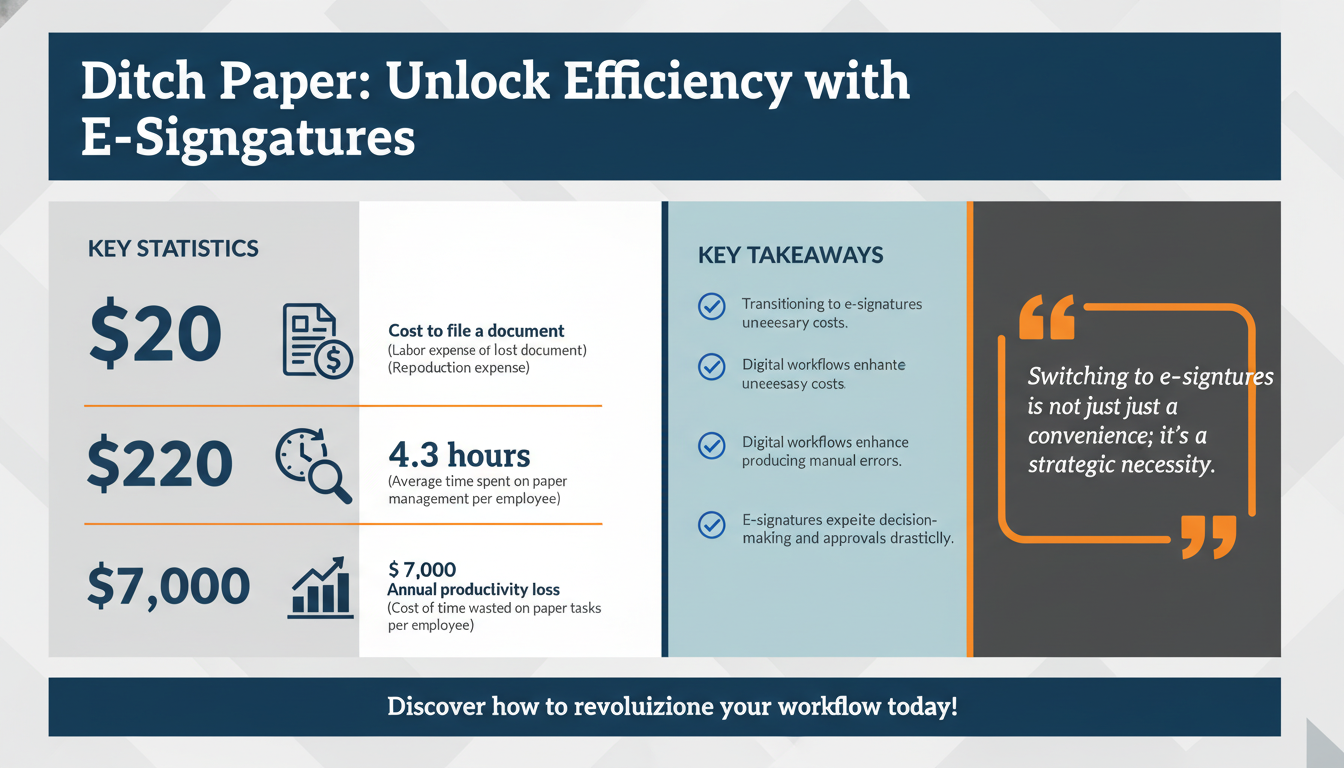
At first glance, paper-based workflows may not appear costly. However, when you consider the expenses associated with printing, storage, mailing, and labor, the real financial impact becomes evident. According to a Forrester study, the average company spends $20 in labor to file a document, $120 to find a misfiled one, and $220 to reproduce a lost document. Multiply these figures across thousands of documents, and the costs quickly add up.
- Printing and Supplies: Businesses spend an estimated $8 billion annually on paper, ink, and toner, as reported by Gartner.
- Storage Costs: Physical storage of paper documents requires file cabinets, office space, and offsite storage facilities. On average, businesses pay $2,340 annually per filing cabinet for maintenance and storage.
- Mailing and Shipping: Sending paper documents via mail or courier incurs significant costs. For example, the U.S. Postal Service estimates that businesses spend $1.4 billion annually on mail-related expenses.
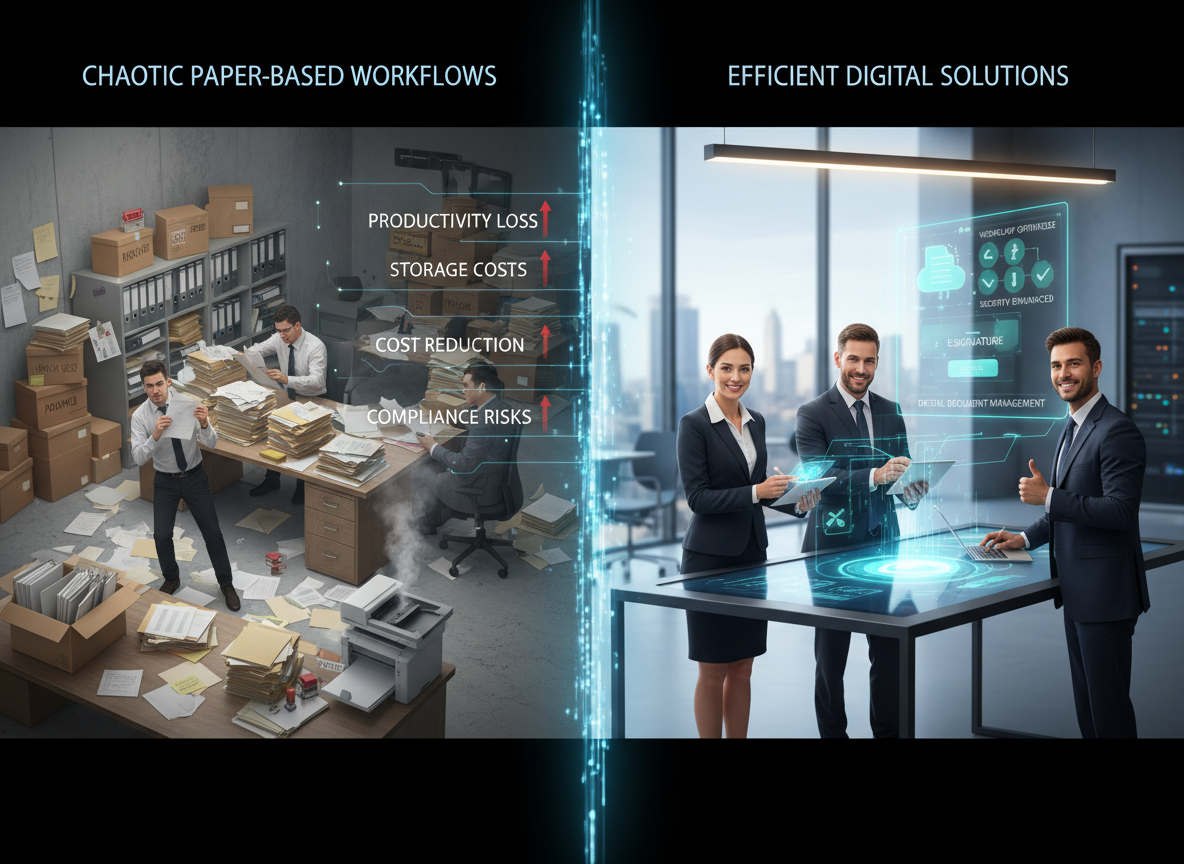
These financial burdens are avoidable with e-signature solutions. By digitizing workflows, businesses can eliminate printing, storage, and mailing costs entirely while gaining the ability to manage documents efficiently.
2. Productivity Losses and Workflow Inefficiencies
Paper-based workflows are notorious for slowing down processes. Employees spend valuable time printing, signing, scanning, and filing documents instead of focusing on higher-value tasks. Research by McKinsey found that knowledge workers waste an average of 4.3 hours per week managing paper documents, equating to a productivity loss of over $7,000 per employee annually.
Manual Errors
Paper-based systems are prone to human error. Misfiled or lost documents can delay projects, cause compliance issues, and lead to costly errors. Digital workflows with e-signatures minimize these risks by automating document management and ensuring that documents are always stored in the correct location.
Delayed Decision-Making
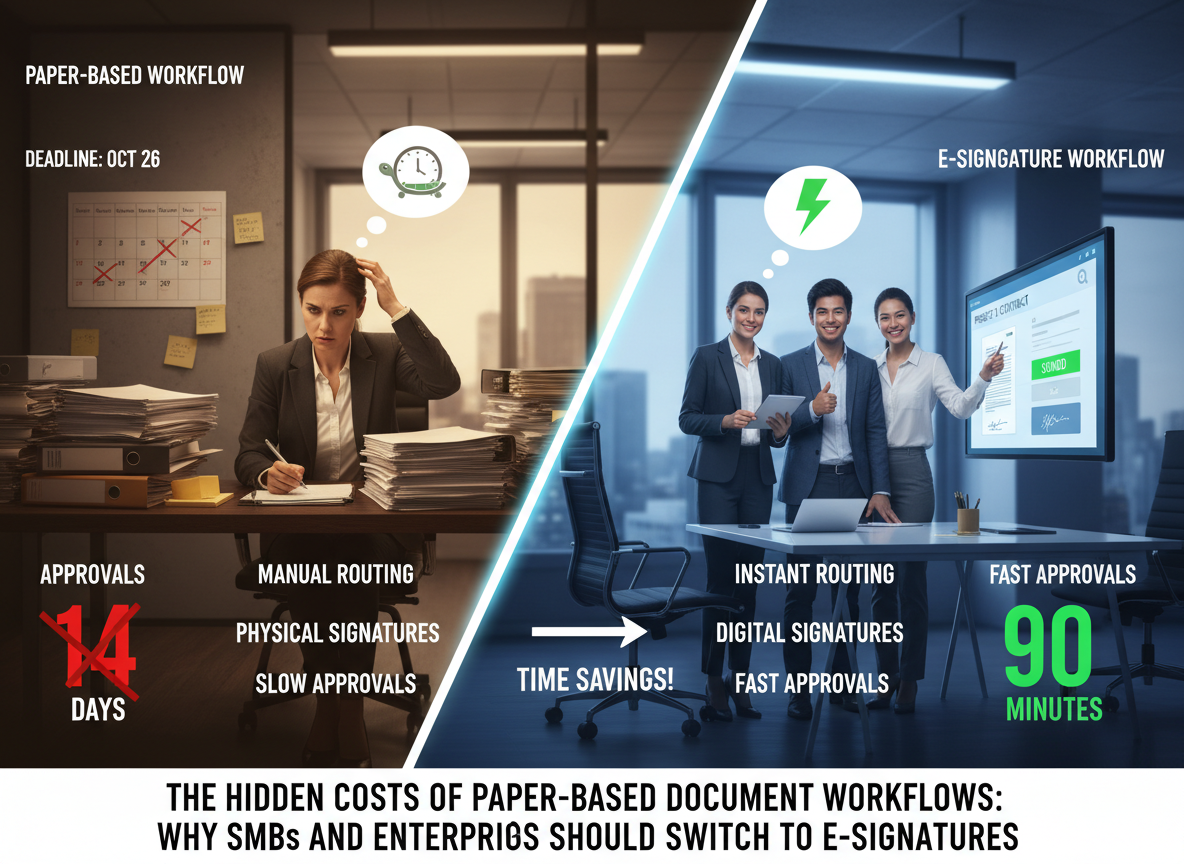
Paper-based workflows often require physical signatures, which can delay approvals by days or even weeks, especially for remote or geographically dispersed teams. E-signatures, on the other hand, enable instant approvals and real-time tracking, accelerating decision-making processes.
By switching to e-signatures, businesses can reclaim lost productivity and ensure that their teams operate at peak efficiency.
3. Compliance Risks and Legal Challenges
Compliance is a critical concern for businesses, especially in heavily regulated industries like finance, healthcare, and legal services. Paper-based workflows come with inherent risks, including lost documents, unauthorized access, and incomplete audit trails. A report by Accenture highlights that compliance violations due to poor document management cost businesses an average of $4.5 million annually.
Lack of Audit Trails
Paper-based documents often lack comprehensive audit trails, making it difficult to track who accessed or modified a document. E-signature platforms provide detailed audit logs, ensuring transparency and accountability.
Data Security Risks
Physical documents are vulnerable to theft, loss, and damage. In contrast, e-signature solutions offer robust security features, including encryption, access controls, and tamper-proof seals, ensuring that sensitive information remains protected.
For organizations striving to meet compliance standards such as GDPR or HIPAA, e-signatures are a critical tool for maintaining data integrity and avoiding costly fines.

4. Environmental Impact of Paper Usage
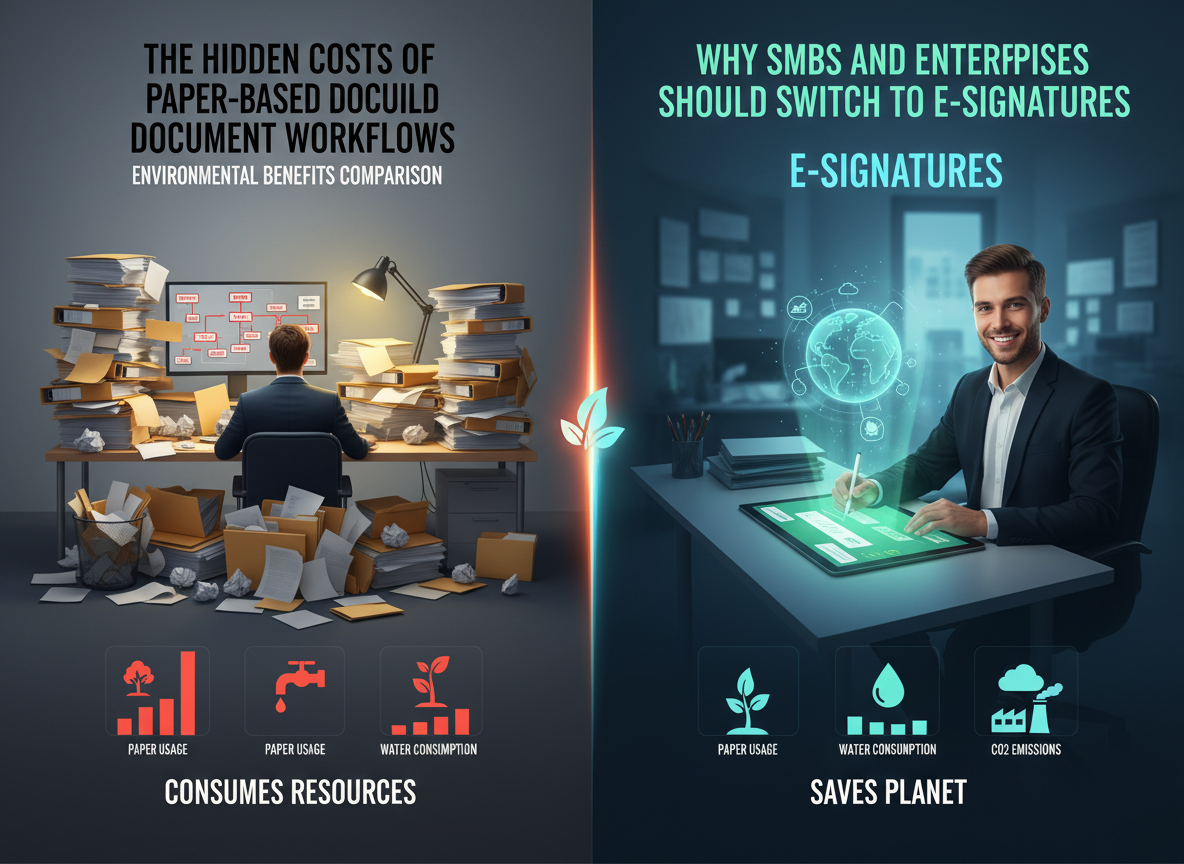
The environmental consequences of paper-based workflows are significant. The production of paper contributes to deforestation, water pollution, and greenhouse gas emissions. According to the World Wildlife Fund, the paper industry is the fourth-largest contributor to greenhouse gas emissions globally, responsible for 9% of total emissions.
- Deforestation: Approximately 40% of the world’s commercially cut timber is used for paper production.
- Water Usage: Producing a single sheet of paper requires 10 liters of water.
- Waste Management: Paper accounts for 26% of waste in landfills, contributing to methane emissions.
By adopting e-signatures and digital workflows, businesses can significantly reduce their environmental footprint. This shift not only supports sustainability goals but also enhances brand reputation among eco-conscious consumers and stakeholders.
5. Scalability and Future-Proofing
Paper-based workflows are inherently limited in their scalability. As businesses grow, managing physical documents becomes increasingly complex and costly. Conversely, e-signature solutions offer unparalleled scalability, enabling organizations to handle large volumes of documents without additional overhead.
Integration with Digital Ecosystems
Modern e-signature platforms integrate seamlessly with other digital tools, such as customer relationship management (CRM) systems, enterprise resource planning (ERP) software, and cloud storage solutions. This integration ensures that businesses can create end-to-end digital workflows that are efficient and scalable.
Adapting to Remote Work
The rise of remote work has further highlighted the limitations of paper-based systems. E-signatures empower remote teams to collaborate effectively, ensuring that critical documents are signed and processed without delays, regardless of location.
By implementing e-signature solutions, businesses can future-proof their operations and remain competitive in an increasingly digital marketplace.
6. Actionable Steps to Transition to E-Signatures
Transitioning to e-signatures may seem daunting, but with the right approach, it can be a seamless and rewarding process. Here are some actionable steps to get started:
- Evaluate Your Needs: Assess your current workflows to identify pain points and areas where e-signatures can add value.
- Choose the Right Platform: Select an e-signature solution that meets your security, compliance, and scalability requirements. For guidance, check out our guide to choosing the best e-signature features.
- Train Your Team: Provide training to ensure that employees are comfortable using the new system.
- Integrate with Existing Tools: Leverage integrations to create streamlined workflows.
- Monitor and Optimize: Regularly review your digital processes to identify opportunities for further optimization.
For a step-by-step guide on implementing e-signatures, visit our detailed resource.
FAQ: Addressing Common Questions
1. Are e-signatures legally binding?
Yes, e-signatures are legally binding in most countries, including the United States (e.g., E-SIGN Act) and the European Union (eIDAS Regulation). Ensure that your chosen e-signature provider complies with relevant legal standards.
2. Are e-signatures secure?
Reputable e-signature platforms utilize advanced encryption and authentication methods to ensure the security and integrity of your documents.
3. How much does an e-signature solution cost?
Costs vary depending on the provider and features. For detailed pricing, visit our pricing page.
4. Can e-signatures be used for all types of documents?
Yes, e-signatures are suitable for a wide range of documents, including contracts, NDAs, invoices, and more. However, some jurisdictions may have specific restrictions on certain document types.
5. How do I get started with e-signatures?
Begin by evaluating your needs and selecting a platform that aligns with your goals. For a comprehensive guide, see our platform features.
Conclusion: The Time to Switch is Now
The hidden costs of paper-based document workflows extend far beyond what meets the eye. From financial burdens and productivity losses to compliance risks and environmental impact, the drawbacks of paper-based systems can no longer be ignored. E-signature solutions offer a modern, efficient, and sustainable alternative that empowers businesses to thrive in the digital age.
By making the switch to e-signatures, SMBs and enterprises can unlock significant cost savings, enhance productivity, and position themselves as forward-thinking organizations. Don’t wait—start your journey toward digital transformation today.
To further enhance your digital workflows, explore our sister platforms: Apparatuz for workflow automation, Applicantz for recruitment management, Schedly for scheduling and appointments, Supportly for customer support, and Zatisfied for feedback management. Together, these tools create a comprehensive ecosystem that complements your digital signature strategy.