
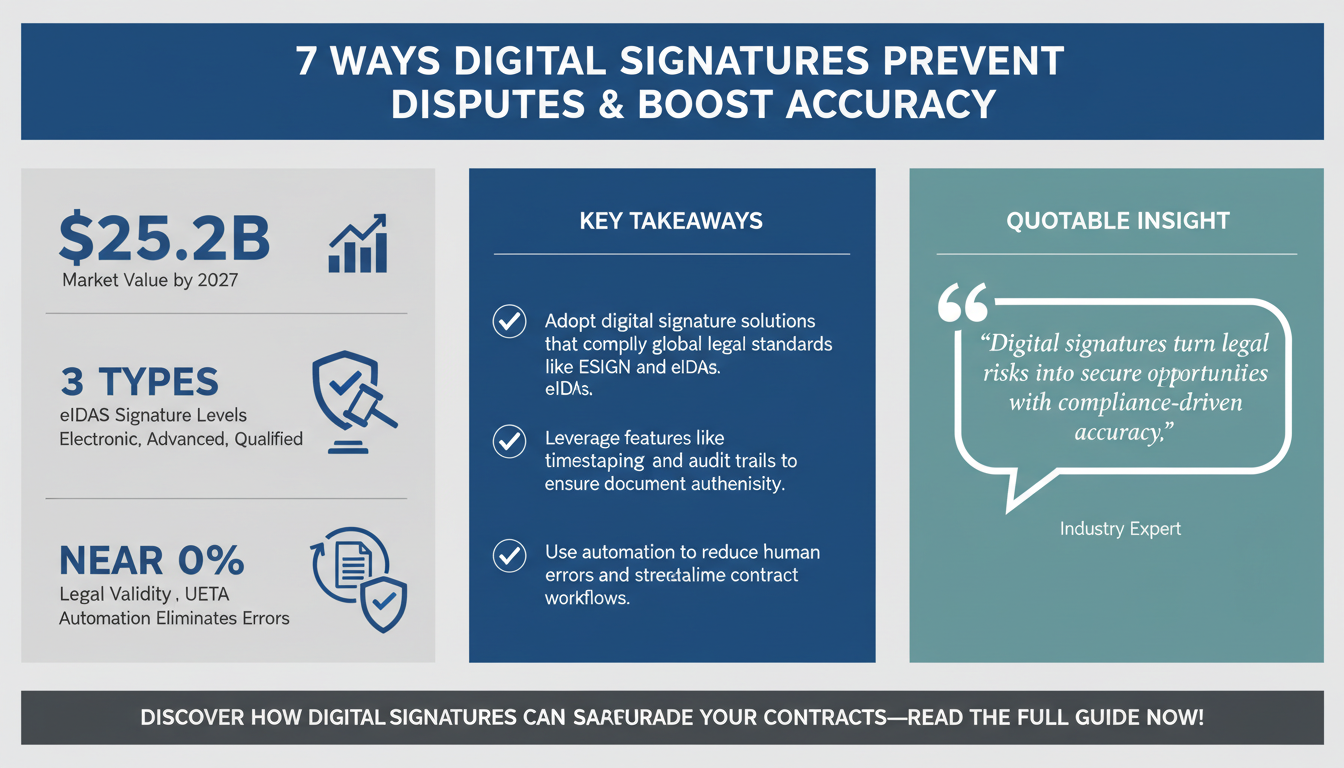
In today’s fast-paced digital economy, businesses are increasingly turning to electronic signature solutions to optimize workflows, enhance compliance, and reduce costly legal disputes. With the global digital signature market projected to reach $25.2 billion by 2027, according to Gartner, these tools are no longer a luxury—they are a necessity. But the benefits don’t stop at convenience. Digital signatures also play a critical role in reducing legal disputes and ensuring contract accuracy, creating a streamlined, secure, and error-free documentation process.
This article explores the top seven ways digital signatures reduce legal disputes and enhance contract accuracy, providing actionable insights for SMBs, enterprises, and professionals across industries like legal, finance, healthcare, and real estate. Let’s dive in.
1. Ensuring Legal Validity Through Compliance with Global Standards
One of the most significant advantages of digital signatures is their ability to comply with global legal standards, such as the U.S. ESIGN Act, Europe’s eIDAS regulation, and other country-specific frameworks. These legal frameworks establish the enforceability of electronic signatures, ensuring signed documents are legally binding.
Breaking Down Global Compliance Frameworks
Compliance with standards like the eIDAS regulation in Europe or ESIGN in the U.S. is essential for organizations aiming to mitigate legal risks. For example, the eIDAS regulation distinguishes between electronic signatures, advanced electronic signatures, and qualified electronic signatures (QES), with QES holding the same legal weight as handwritten signatures. This layered approach provides flexibility for businesses while ensuring high levels of security and trust.
In the U.S., the ESIGN Act and the Uniform Electronic Transactions Act (UETA) govern electronic signatures, providing legal recognition across states. These laws enable organizations to confidently adopt digital solutions without worrying about enforceability.
Additional Features That Ensure Validity
Digital signatures often include advanced features, such as timestamping, encrypted audit trails, and identity verification, which collectively ensure the authenticity of the agreement. Timestamping certifies the exact moment a signature was applied, while audit trails create a tamper-proof record of the signing process. These measures make it nearly impossible for signatories to repudiate their agreements.
For instance, a multinational corporation negotiating contracts across jurisdictions can rely on these features to confirm compliance with local laws, reducing the likelihood of disputes stemming from varying legal standards.
Pro Tip: When selecting a digital signature solution, ensure it supports compliance with multiple legal frameworks, especially if your business operates internationally.
Key Takeaway: Businesses can avoid legal disputes by adopting digital signature solutions that align with international regulations, offering enhanced security and traceability.
2. Reducing Errors and Omissions with Automated Workflows
Traditional paper-based contracts are rife with errors, from missing signatures to incorrect dates or overlooked clauses. These mistakes can lead to contract disputes, delays, and even financial penalties. Digital signature platforms eliminate these risks by automating workflows and incorporating validation checks.
How Automation Reduces Human Errors
One of the key advantages of digital signature platforms is their ability to reduce human error by automating essential processes. For example, fields can be marked as "required," ensuring that users cannot submit incomplete documents. Additionally, automated reminders prompt signatories to complete tasks on time, reducing delays caused by oversight.
These platforms also use validation logic to detect inconsistencies, such as mismatched dates or missing information, helping users correct errors before finalizing agreements. A real-world example is a financial institution that implemented automated workflows for loan agreements, reducing processing errors by 40% and improving customer satisfaction.
Real-Time Collaboration and Editing
Digital signature software enhances collaboration by allowing parties to edit and review documents in real-time. This feature is particularly valuable for contracts requiring multiple approvals, such as joint venture agreements. Real-time updates prevent the version control issues that often plague paper-based workflows, ensuring accuracy throughout the process.
For instance, in the healthcare industry, where contracts often involve compliance-sensitive data, real-time collaboration ensures all regulatory requirements are met before the document is signed, minimizing the risk of disputes later.
Key Takeaway: Automated workflows enhance contract accuracy by ensuring all fields are completed and verified, reducing errors that could lead to future disputes.
3. Enhancing Security with Encryption and Authentication
Security is a cornerstone of digital signatures. Unlike traditional signatures, which can be forged or tampered with, digital signatures use advanced encryption methods to ensure document integrity. Each signature is tied to a unique cryptographic key, making it virtually impossible to alter or fake.
Public Key Infrastructure: The Backbone of Security
Public Key Infrastructure (PKI) is integral to the security of digital signatures. PKI employs asymmetric encryption, using two keys—a public key and a private key—to secure and authenticate documents. The public key encrypts the document, while the private key decrypts it, ensuring that only authorized users can access the contents.
For example, a legal firm handling sensitive client agreements can confidently use PKI-based digital signatures to protect documents from unauthorized access or tampering. This level of security is particularly critical in industries like healthcare and finance.
Multifactor Authentication: Strengthening Identity Verification
Many digital signature platforms integrate multifactor authentication (MFA) to enhance security further. MFA requires signatories to verify their identity through additional steps, such as entering an SMS code, answering security questions, or using biometric scans. These measures provide an added layer of protection against fraud.
In a 2023 survey conducted by Cybersecurity Ventures, businesses that adopted MFA in their digital signature processes reported a 75% reduction in identity-related disputes.
Expert Insight: Always prioritize platforms that offer robust encryption combined with MFA for maximum security. This is especially critical for businesses handling sensitive data.
Key Takeaway: Enhanced security features such as encryption, PKI, and MFA make digital signatures highly reliable, reducing the risk of forgery and tampering.
4. Providing Transparent Audit Trails
One of the most powerful features of digital signature solutions is the creation of comprehensive audit trails. These trails document every action taken on a contract—from when it was created to when it was signed and by whom. This level of transparency is invaluable in resolving disputes.
What Makes Audit Trails Irrefutable?
An audit trail records critical details, including timestamps, IP addresses, device information, and user actions. This metadata creates an unalterable timeline of the signing process, making it a reliable source of evidence in legal disputes.
For example, if a vendor claims they did not approve a service agreement, the audit trail can provide proof of the exact time and method of their signature, resolving the dispute quickly and efficiently.
Data Protection and Compliance
Audit trails are not only transparent but also compliant with data protection laws like GDPR or CCPA. These regulations mandate that sensitive data be stored securely and accessed only by authorized personnel. Digital signature platforms often encrypt audit trails to ensure their integrity and confidentiality.
In a study by PWC, companies leveraging secure audit trails saw a 35% reduction in operational risks related to data breaches and document fraud.
Key Takeaway: Transparent audit trails provide irrefutable evidence of contract execution, reducing the likelihood of disputes and litigation.
5. Accelerating Dispute Resolution with Time-Stamped Records
Time-stamped records are a critical feature of digital signatures that aid in resolving disputes quickly and effectively. These records provide undeniable proof of when a document was signed, eliminating ambiguity in contractual timelines.
Time Sensitivity in High-Stakes Contracts
Time-stamped records are particularly valuable in industries where timing is crucial, such as real estate, finance, and supply chain management. For instance, a real estate agent can use a time-stamped record to prove that a buyer signed an offer before the deadline, preventing disputes over missed opportunities.
Similarly, in supply chain contracts, time-stamped signatures ensure all parties adhere to delivery schedules, reducing delays and penalties.
Automated Notifications for Deadlines
Digital signature platforms often include automated notifications tied to timestamps, alerting users about pending actions and approaching deadlines. These reminders reduce the risk of missed deadlines, ensuring that agreements are finalized promptly.
Businesses using such platforms report a 60% improvement in meeting contractual deadlines, according to a study by Accenture.
Key Takeaway: Time-stamped records ensure transparency and accountability, enabling faster and more accurate dispute resolution.
6. Strengthening Compliance in Highly Regulated Industries
Industries like healthcare, finance, and legal services operate under stringent regulatory requirements. Non-compliance can result in hefty fines, reputational damage, and legal action. Digital signatures help organizations meet these requirements by offering features like encryption, secure storage, and compliance with industry-specific laws.
Meeting Industry-Specific Regulations
Digital signatures are designed to meet the unique demands of regulated industries. For example, in healthcare, digital signatures comply with HIPAA’s strict privacy and security standards, safeguarding patient data during contract exchanges. In finance, these tools align with SEC and FINRA regulations, ensuring the integrity of electronic records.
Similarly, legal firms benefit from digital signature solutions that adhere to ABA guidelines, enabling secure document exchanges without compromising confidentiality.
Reducing Penalties for Non-Compliance
By automating compliance checks and providing tamper-proof records, digital signatures significantly reduce the risk of non-compliance. Deloitte’s research shows that organizations in regulated industries saw a 53% reduction in penalties and legal risks after adopting digital signature solutions.
Key Takeaway: Digital signatures simplify compliance in regulated industries, reducing the risk of penalties and disputes.
7. Building Trust and Transparency Between Contracting Parties
Trust is a cornerstone of any contractual relationship. Digital signatures enhance this trust by offering a secure, transparent, and efficient way to sign agreements. Features like identity verification, audit trails, and encryption create confidence among all parties involved.
Improving Client Relationships
In industries like real estate, where contracts often involve significant financial transactions, digital signatures streamline the process, increasing client satisfaction. A case study by Realtor.com found that agents using digital signatures closed deals 30% faster while maintaining high client satisfaction.
Minimizing Misunderstandings
Transparency reduces misunderstandings by offering all parties access to the signing process and secure records. When everyone involved can track updates and view the audit trail, disputes over contract details are less likely to arise.
Key Takeaway: Digital signatures foster trust and transparency, strengthening relationships and reducing the risk of disputes.
FAQs
Are digital signatures legally binding?
Yes, digital signatures are legally binding in most countries, provided they comply with applicable regulations like the ESIGN Act, eIDAS, or other local laws.
How do digital signatures reduce contract errors?
Digital signature platforms use automated workflows, validation checks, and required fields to ensure all necessary information is completed accurately.
What industries benefit most from digital signatures?
Highly regulated industries like healthcare, finance, legal, and real estate benefit significantly due to compliance, security, and efficiency features.
Can digital signatures be tampered with?
No, digital signatures use encryption and audit trails to ensure document integrity, making tampering nearly impossible.
What happens if a signer denies signing a document?
An audit trail with timestamps, IP addresses, and identity verification can be used as evidence to prove the authenticity of the signature.
Conclusion
Digital signatures are more than just a tool for convenience—they are a powerful solution for reducing legal disputes and enhancing contract accuracy. By ensuring compliance, automating workflows, and offering unparalleled security, these tools provide organizations with the confidence and efficiency they need to thrive in today’s competitive landscape.
Ready to transform the way your business manages contracts? Explore Zignature’s secure digital signature platform and see how it can help you reduce legal risks and enhance operational efficiency.
To further enhance your digital workflows, explore our sister platforms: Apparatuz for workflow automation, Applicantz for recruitment management, Schedly for scheduling and appointments, Supportly for customer support, and Zatisfied for feedback management. Together, these tools create a comprehensive ecosystem that complements your digital signature strategy.