
In today’s fast-paced business environment, small and medium-sized businesses (SMBs) are increasingly adopting digital solutions to enhance efficiency, reduce costs, and maintain competitive advantage. Among these solutions, digital signatures have emerged as a game-changer in streamlining operations across industries, from real estate and finance to healthcare and technology. By replacing traditional, paper-based signature processes, digital signatures empower SMBs to operate more efficiently, securely, and sustainably.
This comprehensive guide explores the top 10 benefits of digital signatures, detailing how they can revolutionize your SMB's operations, improve productivity, and save costs. Whether you're new to digital signatures or looking to optimize your current processes, these insights will help you unlock their full potential.
1. Enhanced Efficiency and Faster Turnaround Times
One of the most immediate benefits of using digital signatures is the drastic improvement in efficiency. Traditional paper-based workflows often involve printing, scanning, mailing, and waiting for responses, which can take days or even weeks. Digital signatures eliminate these time-consuming steps, enabling documents to be signed and returned within minutes.
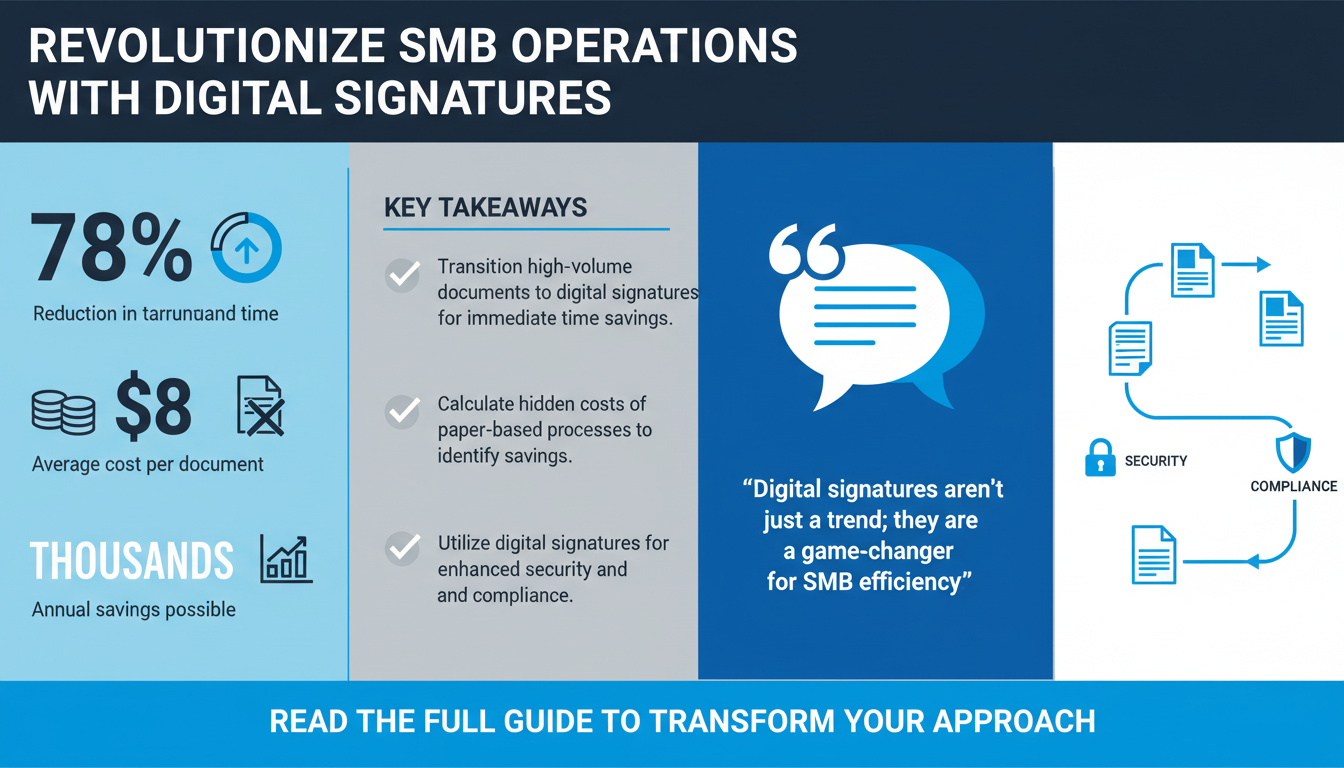
According to a 2025 study by Gartner, businesses that adopted digital signature solutions experienced a 78% reduction in document turnaround time on average. This efficiency is particularly crucial for SMBs, where timely decision-making and contract execution can directly impact revenue and customer satisfaction.

Moreover, digital signatures allow for multiple parties to sign documents simultaneously, regardless of their location. This is especially beneficial for SMBs that work with remote teams, clients, or partners. By removing physical barriers, digital signatures ensure that critical agreements are completed without unnecessary delays.
- Quick Win: Identify high-volume documents, such as contracts or purchase orders, and transition them to digital signature workflows to save time instantly.
- Key Takeaway: Digital signatures can reduce document turnaround times by up to 78%, leading to faster business operations and improved client relations.
2. Cost Savings on Paper, Printing, and Storage
Paper-based processes can be surprisingly expensive. From purchasing paper, ink, and printers to paying for postage and physical storage space, these costs add up quickly. Digital signatures eliminate the need for physical resources, translating into significant cost savings for SMBs.
A McKinsey analysis from 2024 revealed that businesses spend an average of $8 per document on printing, mailing, and storage. By transitioning to digital signatures, SMBs can save thousands of dollars annually, especially for high-volume paperwork like invoices, contracts, and employee onboarding forms.
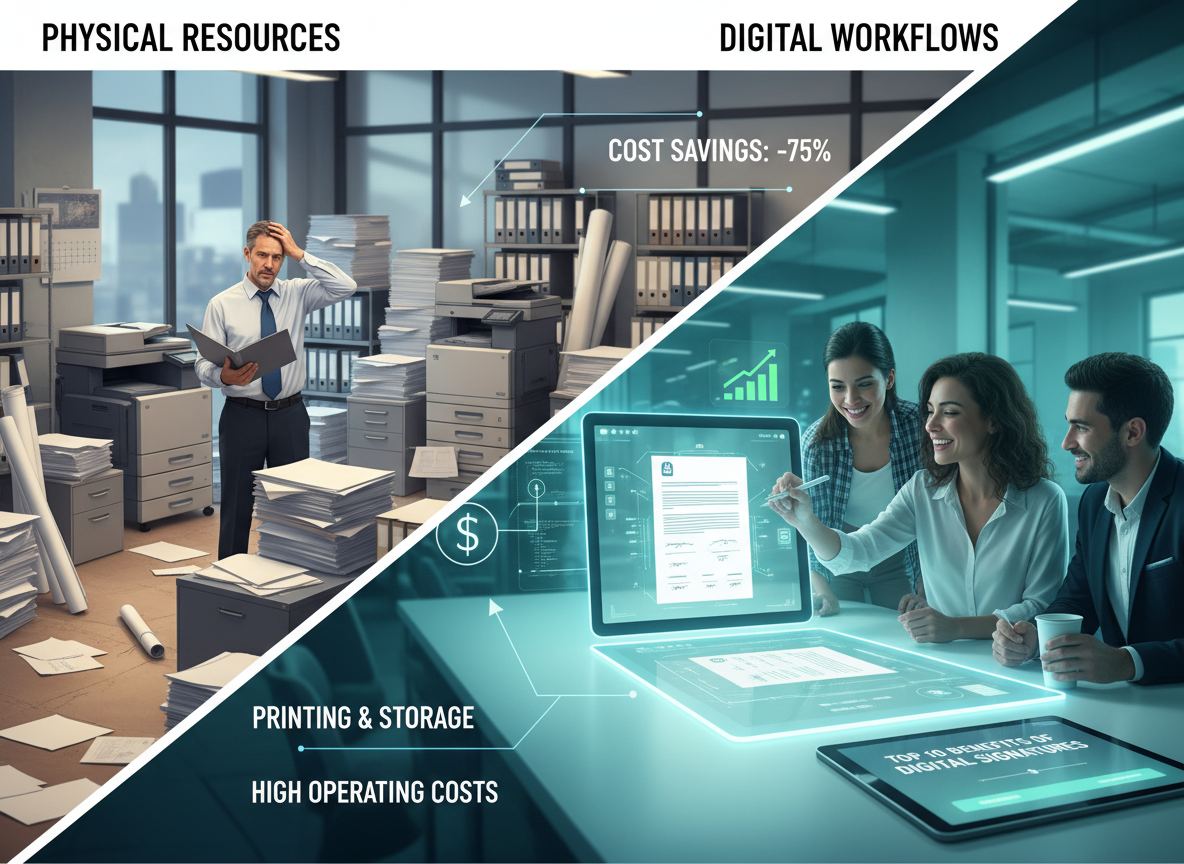
Additionally, digital signatures reduce the need for physical storage space, freeing up valuable office real estate. Documents stored digitally are also easier to organize, access, and retrieve, further improving operational efficiency.
- Common Mistake: Failing to calculate the hidden costs of paper-based processes, such as wasted time and lost documents.
- Key Takeaway: Digital signatures reduce operational costs by eliminating expenses associated with printing, mailing, and storing physical documents.
3. Improved Security and Compliance
Digital signatures are far more secure than traditional, handwritten signatures. They use advanced encryption and authentication methods to ensure the integrity and authenticity of signed documents, significantly reducing the risk of fraud and tampering.
For SMBs operating in regulated industries such as healthcare, finance, or legal, compliance is non-negotiable. Digital signature solutions like those offered by Zignature’s platform come equipped with features such as audit trails, timestamping, and identity verification to meet industry-specific standards.
For instance, in the European Union, eIDAS regulations recognize digital signatures as legally binding and provide clear guidelines for their use. Similarly, in the U.S., the ESIGN Act and UETA ensure the legal validity of e-signatures in most transactions.

- Expert Insight: "In the digital age, security is paramount. Digital signatures not only protect your documents but also strengthen your compliance posture in regulated industries." - Dr. Emily Carter, Cybersecurity Analyst.
- Key Takeaway: Digital signatures provide unparalleled security and compliance, making them ideal for SMBs in regulated sectors.
4. Seamless Integration with Existing Workflows
Modern digital signature solutions are designed to integrate seamlessly with existing business tools and workflows. Whether your SMB uses document management systems like SharePoint, cloud storage platforms like Google Drive, or CRM software like Salesforce, digital signatures can be easily incorporated into your operations.
A report by Forrester in 2025 highlighted that businesses that integrated digital signature solutions with their existing tools saw a 45% improvement in overall workflow efficiency. This is especially valuable for SMBs, where resources are often limited, and maximizing productivity is a top priority.

By automating repetitive tasks and ensuring a smooth flow of information, digital signatures help SMBs save time while reducing the likelihood of human error in document processing.
- Quick Win: Evaluate your current software stack and choose a digital signature solution that offers native integrations with your existing tools.
- Key Takeaway: Digital signatures enhance productivity by integrating seamlessly with your existing business tools.
5. Enhanced Customer Experience
In the competitive SMB landscape, providing a seamless customer experience can be a significant differentiator. Digital signatures make it easy for customers to review, sign, and return documents from any device, anywhere in the world.
According to a 2026 survey by Deloitte, 64% of customers prefer businesses that offer digital document signing over traditional methods. This preference is particularly pronounced among younger, tech-savvy demographics. By adopting digital signatures, SMBs can cater to customer expectations and enhance satisfaction.

Additionally, digital signatures provide transparency and convenience, allowing customers to track the status of their documents in real time. This reduces frustration and builds trust, ultimately improving customer retention.
- Expert Insight: "In a digital-first world, convenience is king. Digital signatures show your customers that you value their time and preferences." - Sarah Johnson, Customer Experience Consultant.
- Key Takeaway: Digital signatures enhance the customer experience by providing a fast, convenient, and user-friendly signing process.
6. Environmental Sustainability
As businesses worldwide increasingly prioritize sustainability, digital signatures offer a simple yet impactful way to reduce environmental impact. By eliminating the need for paper, ink, and physical transportation of documents, SMBs can significantly reduce their carbon footprint.
An analysis by Environmental Paper Network estimated that every ton of paper saved prevents the emission of 2.5 tons of CO2 equivalents. For SMBs handling hundreds or thousands of documents annually, the cumulative environmental benefits can be substantial.
Adopting digital signatures also aligns with the values of environmentally conscious customers and stakeholders, enhancing your SMB’s reputation and appeal.
- Common Mistake: Overlooking the environmental impact of traditional workflows when calculating ROI for digital signature solutions.
- Key Takeaway: Digital signatures contribute to sustainability by reducing paper waste and cutting down on carbon emissions.
7. Scalability for Growing Businesses
As SMBs grow, their operational needs become more complex. Digital signatures offer the scalability necessary to handle increased document volumes and more diverse use cases. Whether you're onboarding new employees, managing vendor contracts, or handling customer agreements, digital signatures can keep pace with your growth.
A study by McKinsey in 2026 found that SMBs using scalable digital solutions achieved 30% faster growth compared to those relying on manual processes. Digital signatures enable businesses to adapt quickly to changing demands without incurring significant additional costs.
For instance, a company transitioning from 50 to 500 employees can easily scale its digital signature solution without the need for additional physical infrastructure or resources.
- Quick Win: Start with a scalable digital signature platform that can grow alongside your business.
- Key Takeaway: Digital signatures offer the flexibility and scalability to support SMB growth efficiently and cost-effectively.
FAQs: Common Questions About Digital Signatures
- Are digital signatures legally binding? Yes, digital signatures are legally binding in most countries, including the U.S. (under the ESIGN Act) and the EU (under eIDAS regulations). They are recognized as equivalent to handwritten signatures.
- How secure are digital signatures? Digital signatures use advanced encryption and authentication methods, making them more secure than traditional signatures. They also include features like audit trails and tamper-proof technology.
- Can digital signatures be used on mobile devices? Absolutely. Most digital signature solutions are mobile-friendly, allowing users to sign documents on smartphones or tablets.
- What types of documents can be signed digitally? Digital signatures can be used for a wide range of documents, including contracts, agreements, invoices, and HR forms.
- How do digital signatures support remote work? Digital signatures allow users to sign and share documents from anywhere, making them an essential tool for remote teams.
Conclusion
Digital signatures are no longer a luxury; they are a necessity for SMBs looking to streamline their operations, enhance security, and provide exceptional customer experiences. From improving efficiency and reducing costs to ensuring compliance and supporting sustainability, the benefits of digital signatures are both numerous and impactful.
If your SMB hasn’t yet adopted a digital signature solution, now is the time to make the switch. Explore Zignature’s platform features to learn how our secure, scalable, and easy-to-use solution can transform your business operations. For more insights on digital signature solutions, check out our blog.
To further enhance your digital workflows, explore our sister platforms: Apparatuz for workflow automation, Applicantz for recruitment management, Schedly for scheduling and appointments, Supportly for customer support, and Zatisfied for feedback management. Together, these tools create a comprehensive ecosystem that complements your digital signature strategy.