
In 2026, the digital signature landscape is undergoing a seismic transformation. Artificial intelligence (AI) has become the driving force behind this evolution, enabling businesses to process documents faster, more securely, and with unprecedented accuracy. Whether you’re a small business owner managing contracts or an enterprise navigating multi-stakeholder workflows, understanding how AI reshapes digital signatures isn’t optional—it’s essential.
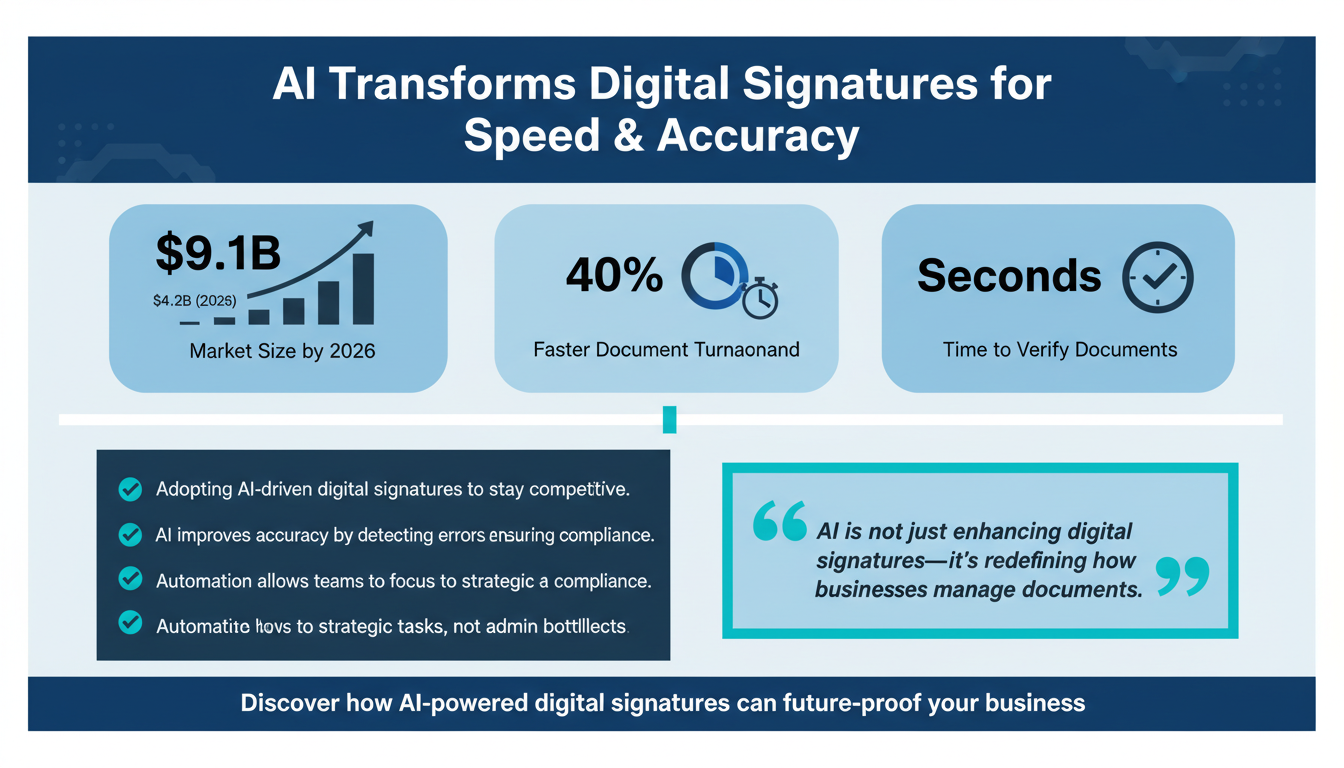
The adoption of digital signatures has skyrocketed in recent years, and the market is projected to grow from $4.2 billion in 2023 to $9.1 billion by 2026 (Statista). This growth is fueled by businesses' increasing reliance on automation and innovation to streamline operations. AI, specifically, is playing a pivotal role in transforming how digital signatures are integrated into document management systems. From reducing bottlenecks to enhancing security, AI is unlocking new possibilities that were unimaginable just a few years ago.
This article explores the top trends, technologies, and strategies shaping the future of digital signatures. We’ll break down how AI is not only solving long-standing challenges but also creating new opportunities for SMBs and enterprises alike. By the end, you’ll understand why adopting AI-driven digital signature solutions is no longer a luxury—it’s a necessity for staying competitive in 2026 and beyond.
1. Why AI is the Game-Changer in Digital Signatures
Artificial intelligence is no longer an emerging technology in 2026—it’s a cornerstone of modern business operations. In the realm of digital signatures, AI is solving long-standing challenges while opening doors to new opportunities. But what makes AI such a game-changer?

Automation and Efficiency: AI-powered tools have revolutionized how documents are processed. Tasks that once required hours of manual effort—such as verifying signatures, checking compliance, and extracting data—are now completed in seconds. For instance, companies leveraging AI tools have reported a 40% reduction in document turnaround times (McKinsey). This efficiency allows teams to focus on strategic tasks rather than getting bogged down by administrative processes.
Enhanced Accuracy: Errors in document workflows can lead to costly mistakes, especially in industries like finance, healthcare, and legal services. AI minimizes such risks by using machine learning algorithms to identify inconsistencies, flag missing fields, and even predict potential errors before they occur. For example, an AI-enabled platform can automatically detect if a required signature is missing or if a document doesn’t comply with regulatory standards.
Real-World Application: Consider a real estate firm handling complex lease agreements. Traditionally, reviewing and verifying these documents could take days. With AI, hundreds of pages can be analyzed in seconds, ensuring compliance with local regulations and reducing the risk of legal disputes. This enables agents to spend more time building client relationships and less time on administrative tasks.
Moreover, AI’s ability to learn and improve over time ensures that digital signature platforms become more accurate and efficient the more they are used. This continuous improvement is a key reason why businesses are investing heavily in AI-driven solutions.
Key Takeaway
- AI is not just enhancing digital signature platforms; it’s redefining how businesses manage documents.
- Automation, accuracy, and predictability are the new pillars of document management.
- Adopting AI-driven solutions is no longer optional for competitive businesses in 2026.
2. The Role of AI in Workflow Optimization
One of the most significant impacts of AI on digital signatures is its role in workflow optimization. Traditional document workflows are often riddled with inefficiencies: manual approvals, redundant steps, and cumbersome compliance checks. AI changes this paradigm entirely by introducing intelligence into every step of the process.

Dynamic Workflow Routing: AI can analyze historical data to optimize the routing of documents. For example, if a contract requires multiple approvals, AI can intelligently prioritize which stakeholders need to review it first based on urgency, availability, and compliance requirements. This eliminates unnecessary delays and ensures that critical documents are processed as quickly as possible.
Smart Notifications and Reminders: Forget chasing stakeholders for signatures. AI-driven platforms can send predictive notifications, ensuring that documents never get stuck in limbo. For instance, if a stakeholder hasn’t signed a document within a predefined timeframe, the system can escalate the reminder or even reassign the task. According to Gartner, businesses implementing AI for workflow management have seen a 31% improvement in task completion rates.
Case Study: A mid-sized healthcare provider faced significant bottlenecks in its patient onboarding process due to manual document handling. By integrating AI-powered digital signatures, the provider streamlined its workflows, reducing onboarding time by 50%. This not only improved operational efficiency but also enhanced patient satisfaction, as new patients were able to access care faster.
Beyond improving efficiency, AI also provides valuable insights into workflow performance. Dashboards powered by AI can identify bottlenecks, track approval times, and suggest optimizations, enabling businesses to continuously improve their processes.
Key Takeaway
- AI-driven workflows eliminate inefficiencies, saving businesses time and money.
- Dynamic routing and predictive alerts ensure smoother, faster approvals.
- Workflow optimization is critical for scaling operations efficiently.
3. AI and Security: Reinventing Trust in Digital Signatures
Security has always been a cornerstone of digital signatures, but AI is raising the bar in 2026. As cyber threats grow more sophisticated, businesses need advanced measures to protect sensitive data and ensure compliance with global regulations.

Advanced Threat Detection: AI algorithms can identify suspicious activities, such as unauthorized access or tampering attempts, in real time. This proactive approach significantly reduces the risk of data breaches. For example, an AI-enabled system can detect if a document has been altered after it was signed and immediately alert the relevant parties.
Biometric Authentication: AI-powered biometric solutions, including facial recognition and fingerprint scanning, are becoming standard in digital signature platforms. These technologies ensure that only authorized individuals can access and sign documents, adding an extra layer of security. In sectors like healthcare and finance, where confidentiality is paramount, biometric authentication has become a game-changer.
Blockchain Integration: Many AI-driven platforms now incorporate blockchain technology to create immutable audit trails. This guarantees the authenticity of signatures and provides a transparent record of all transactions. For instance, a blockchain-backed system can verify the exact time and location of a signature, making it virtually impossible to dispute its validity.
Example: A legal firm handling high-stakes contracts adopted an AI-enabled platform with biometric authentication and blockchain integration. This allowed the firm to provide clients with unparalleled security and transparency, giving them a competitive edge in the market.
Key Takeaway
- AI enhances security by identifying and mitigating threats in real time.
- Biometric authentication adds an extra layer of trust and user convenience.
- Blockchain-backed audit trails ensure document integrity and compliance.
4. Personalization and Predictive Insights with AI
AI isn’t just about automation—it’s also about personalization. In 2026, digital signature platforms are leveraging AI to deliver predictive insights and tailored experiences that drive better decision-making.
Predictive Analytics: AI can analyze past document trends to forecast future needs. For instance, businesses can identify peak times for contract approvals and allocate resources accordingly. This level of foresight helps organizations prepare for busy periods and ensures that they can meet deadlines without compromising quality.
Customizable User Experiences: AI-driven platforms can adapt interfaces based on user behavior. For example, if a user frequently accesses specific features, the platform can prioritize these features in the dashboard, reducing friction and boosting productivity. This level of personalization ensures that users spend less time navigating the platform and more time completing tasks.
Example: A financial services firm used AI to analyze client preferences, enabling them to customize agreements for faster approval. By tailoring the user experience to meet client expectations, the firm achieved a 25% increase in client satisfaction and a significant improvement in approval times.
Key Takeaway
- AI transforms digital signatures from transactional tools into strategic assets.
- Predictive analytics enable proactive planning and resource allocation.
- Personalization enhances user experience and drives higher adoption rates.
5. AI’s Role in Global Compliance and Legal Validity
In an increasingly globalized world, compliance with local and international regulations is a top priority for businesses. AI is playing a transformative role in ensuring that digital signatures meet the highest legal and regulatory standards.
Real-Time Compliance Monitoring: AI can instantly verify that documents comply with region-specific laws, such as GDPR in Europe or HIPAA in the United States. This reduces the risk of costly penalties and ensures that businesses operate within legal boundaries.
Automated Audit Trails: AI-driven platforms generate detailed audit trails, documenting every action taken on a document. This ensures transparency and simplifies legal disputes. For instance, an audit trail can show who signed a document, when they signed it, and what changes were made.
Example: A multinational corporation implemented AI-powered compliance features for cross-border contracts. Within a year, the company achieved a 98% reduction in compliance-related errors, saving millions in potential fines and legal fees.
Key Takeaway
- AI ensures that digital signatures comply with diverse international standards.
- Automated audit trails provide transparency and legal protection.
- Global compliance is simplified with AI-powered tools.
6. The Impact of AI on Document Turnaround Times
One of the most tangible benefits of AI in digital signatures is the reduction in document turnaround times. In 2026, businesses are leveraging AI to achieve near-instantaneous approvals, even for complex agreements.
Instant Data Extraction: AI can extract key information from documents, such as names, dates, and terms, in seconds. This accelerates the review process and eliminates manual data entry. For example, an AI-powered platform can automatically populate fields in a contract based on data from previous documents.
Parallel Processing: Traditional workflows often require documents to be reviewed and approved sequentially, leading to delays. AI enables parallel processing, allowing multiple stakeholders to review and approve documents simultaneously. This significantly reduces downtime and speeds up the overall process.
Statistic: According to Forrester, businesses using AI-powered digital signatures have reduced average turnaround times by 67%. This improvement has far-reaching implications for customer satisfaction, contract negotiations, and overall business efficiency.
Key Takeaway
- AI accelerates document processing, improving operational efficiency.
- Parallel processing eliminates traditional bottlenecks in approval workflows.
- Faster turnaround times enhance customer satisfaction and business outcomes.
7. AI-Driven Insights for SMBs vs. Enterprises
The needs of SMBs and enterprises differ significantly. AI’s ability to adapt to these unique requirements makes it an invaluable tool for businesses of all sizes.
For SMBs: AI simplifies complex tasks, such as compliance and workflow automation, allowing small businesses to operate with the efficiency of larger organizations. Platforms like Zignature are tailored to SMBs, offering intuitive features without the need for extensive IT resources.
For Enterprises: AI provides scalability and advanced analytics, enabling large organizations to manage high volumes of documents across multiple departments and geographies. Enterprises benefit from AI’s ability to integrate with existing tech stacks, ensuring seamless operations.
Example: An SMB in the retail industry used AI-powered digital signatures to streamline vendor contracts. This allowed the company to reduce contract approval times by 60%, freeing up resources to focus on growth initiatives. Meanwhile, a multinational enterprise used AI analytics to manage contracts across 15 countries, ensuring compliance with diverse regulations and reducing legal risks.
Key Takeaway
- AI democratizes access to advanced digital signature capabilities for SMBs.
- Enterprises gain scalability and deep analytics through AI integration.
- Both segments benefit from cost savings and efficiency improvements.
8. The Road Ahead: Predictions for AI in Digital Signatures
As we look to the future, the role of AI in digital signatures will only grow more significant. Here are some key trends to watch:
Voice-Activated Signatures: AI-powered voice recognition may soon enable secure, voice-activated document approvals. This could transform how contracts are signed, particularly in hands-free environments.
Deeper Integration with IoT: Imagine signing contracts directly from smart devices, such as wearables or virtual assistants. AI’s integration with the Internet of Things (IoT) will make this a reality, creating seamless user experiences.
AI-Powered Negotiations: Advanced AI algorithms could assist in contract negotiations, suggesting optimal terms and flagging potential risks. This would enable businesses to close deals faster while minimizing legal exposure.
According to a Deloitte study, 75% of businesses plan to adopt AI-enhanced digital signature platforms by 2030. This highlights the immense potential of AI to redefine document management over the next decade.
Key Takeaway
- AI will continue to push the boundaries of what’s possible in digital signatures.
- Emerging technologies like IoT and voice recognition will redefine user experiences.
- Businesses must stay ahead by adopting AI-driven tools today.
Conclusion
The future of digital signatures is here, and it’s powered by AI. From optimizing workflows to enhancing security and compliance, AI is revolutionizing document management for SMBs and enterprises in 2026. Businesses that embrace these innovations will enjoy faster processes, reduced errors, and a competitive edge that’s hard to beat.
As you explore the possibilities of AI in digital signatures, consider leveraging complementary tools to streamline your operations further. Platforms like Apparatuz for workflow automation or Schedly for scheduling can amplify your efficiency. For recruitment needs, check out Applicantz, and don’t forget to monitor customer satisfaction with Zatisfied. Together, these tools create a robust ecosystem for modern businesses.
Ready to elevate your document management strategy? Explore the cutting-edge features of Zignature’s AI-powered digital signature platform by visiting our features page. Don’t get left behind—embrace the future today.