
In today’s fast-paced, digital-first world, high-security industries such as finance, healthcare, and legal services face mounting pressure to modernize their workflows while maintaining airtight security and regulatory compliance. Digital signatures have emerged as a cornerstone technology for these industries, enabling secure, seamless, and legally binding document processes. However, with a plethora of solutions available, choosing the right platform tailored to your organization’s unique needs can become a daunting task.
This comprehensive guide will help you navigate the intricacies of digital signature solutions, focusing on compliance requirements, advanced security features, usability, integration capabilities, and vendor reliability. Armed with actionable steps, insightful examples, and expert recommendations, you’ll be prepared to select the solution that optimizes efficiency while safeguarding sensitive data.
Understanding the Unique Needs of High-Security Industries
High-security industries operate under stringent regulatory requirements, often managing sensitive data that demands robust protection against breaches, fraud, and unauthorized access. Unlike general-purpose businesses, industries such as healthcare, finance, and legal services face penalties and reputational risks if they fail to meet compliance standards.
For instance, healthcare organizations must adhere to HIPAA regulations to protect patient information. Digital signature platforms in this space need to ensure that electronic Protected Health Information (ePHI) is encrypted, tamper-proof, and accessible only to authorized personnel. Similarly, financial institutions are subject to eIDAS standards in Europe and SEC guidelines in the United States, requiring strict data integrity protocols and timestamped audit trails. Legal firms must meet the requirements of the ESIGN Act and UETA to guarantee the admissibility of electronic signatures in court.
The Cost of Non-Compliance
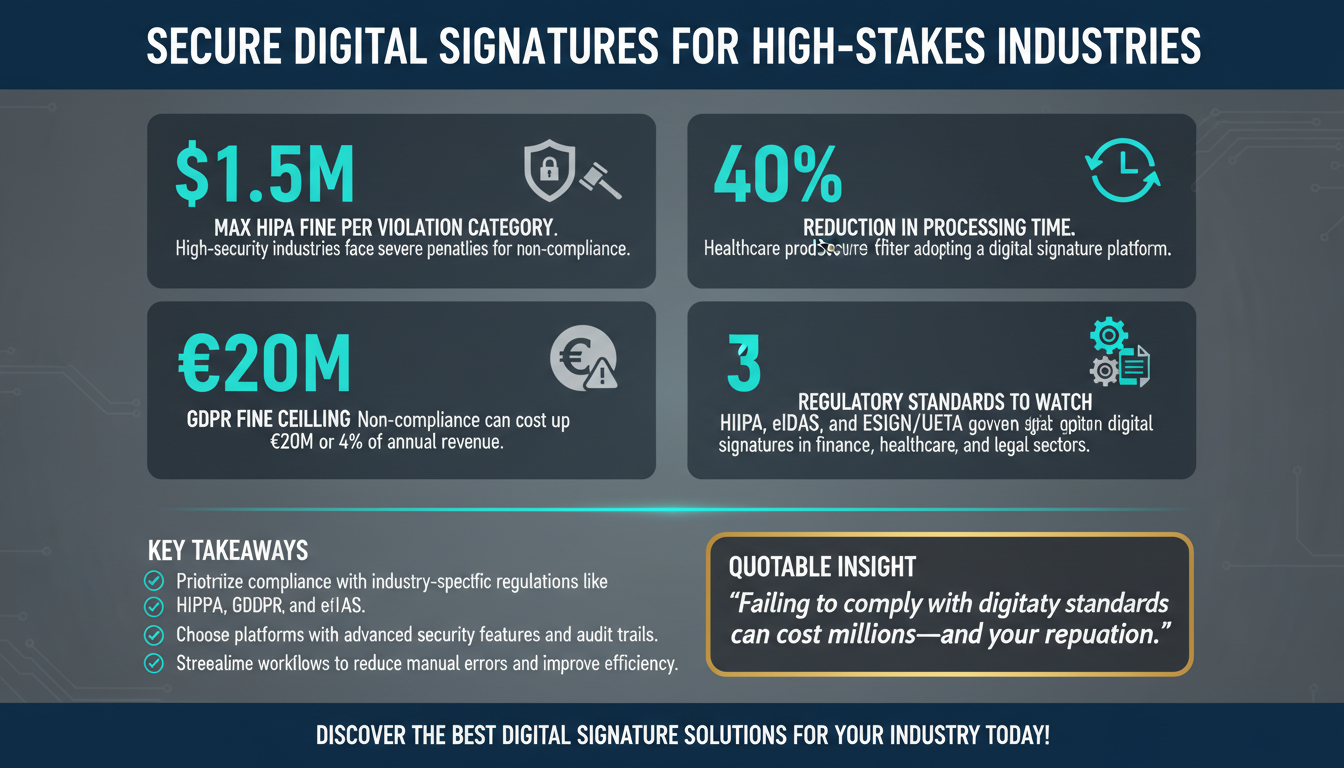
Failing to meet compliance standards can have devastating consequences for organizations in these industries. For example, healthcare providers found in violation of HIPAA can face fines ranging from $100 to $50,000 per violation, with an annual maximum of $1.5 million per violation category. Similarly, non-compliance with financial regulations such as the General Data Protection Regulation (GDPR) can lead to fines of up to €20 million or 4% of the company’s global annual revenue, whichever is higher.
These penalties, combined with the reputational damage caused by data breaches or regulatory violations, make it imperative for organizations to prioritize compliance when selecting digital signature solutions. Companies like FinTrust, a U.S.-based financial advisory firm, adopted a robust e-signature platform after a near-miss compliance issue. The solution not only helped mitigate future risks but also improved client trust and operational transparency.
Industry-Specific Operational Challenges
Beyond compliance, operational efficiency is another critical concern. Many organizations in these industries still rely on outdated manual processes, leading to bottlenecks, errors, and delays. For example, a legal firm processing contracts manually may suffer from misfiled documents or missed deadlines. A digital signature solution streamlines these workflows, reducing human error and improving client satisfaction.
Consider the case of MedSecure, a healthcare provider that transitioned to a HIPAA-compliant digital signature platform. Within six months, the organization reported a 40% reduction in document processing time and a significant drop in compliance violations. This underscores how digital signatures can transform operations while addressing industry-specific challenges.
Key Security Features to Look For
Security is paramount in high-risk industries where the consequences of a data breach extend beyond financial loss to legal repercussions and damaged reputations. When evaluating digital signature solutions, prioritize platforms that offer the following security features:
- Advanced Encryption: Look for AES-256 encryption, the gold standard for securing data during transit and storage. This ensures that even if intercepted, the data remains unreadable.
- Multi-Factor Authentication (MFA): MFA enhances security by requiring additional verification beyond a password, such as fingerprint scans, facial recognition, or one-time passcodes (OTPs).
- Tamper Detection: A reliable solution should provide tamper-proof seals and alerts for unauthorized alterations to signed documents.
- Comprehensive Audit Trails: Detailed logs tracking every action—such as who signed, when they signed, and what changes were made—are crucial for compliance and fraud prevention.
Real-World Examples of Security Success
According to a 2026 report by Gartner, 87% of organizations in regulated industries identified encryption and MFA as non-negotiable requirements for e-signature solutions. Additionally, platforms offering tamper detection and audit trails saw a 25% higher adoption rate compared to those without these features.
For example, SecureDoc, a financial institution, integrated a solution with robust encryption and MFA. During a routine audit, the company demonstrated its ability to trace every signed document’s history, resulting in a flawless compliance review. This case highlights the importance of investing in security-focused technologies.
Expert Insight: Future-Proofing Security
“As cyber threats evolve, businesses must choose digital signature solutions that not only meet today’s security requirements but are also adaptable to future challenges. Look for vendors that continuously update their security protocols to address emerging threats.” — Sarah Lin, Cybersecurity Consultant
Compliance Considerations for Regulated Industries
Compliance is the bedrock of operations in high-security industries. Failure to meet regulatory requirements can result in hefty fines, legal challenges, and reputational damage. Here’s a closer look at compliance considerations across healthcare, finance, and legal sectors:
Healthcare Industry Compliance
Healthcare organizations must comply with HIPAA, which mandates the protection of patient records and electronic health information. Digital signature solutions should include encryption, secure access controls, and integration capabilities with electronic health record (EHR) systems. Additionally, audit trails must meet HIPAA’s requirements for tracking access and modifications to documents.
For instance, HealthEase, a mid-sized hospital, implemented a HIPAA-compliant digital signature solution. The platform’s seamless integration with its EHR system enabled doctors and administrative staff to sign patient consent forms electronically, reducing paperwork and improving patient experience.
Finance Industry Compliance
Financial institutions are subject to regulations like eIDAS in Europe and SEC rules in the United States. These standards require timestamping, encryption, and audit trails for all signed documents. Implementing a compliant digital signature platform ensures transaction integrity and protects against fraud.
A notable example is FinSecure, a European bank that adopted an eIDAS-certified solution. The platform’s encryption protocols and timestamping features allowed the bank to meet regulatory audits without additional preparation, saving resources and reducing stress.
Legal Industry Compliance
Legal firms need to ensure electronic signatures comply with the ESIGN Act and UETA standards. These laws guarantee that digital signatures are legally admissible and tamper-proof. Solutions should also offer compatibility with case management systems and document storage platforms.
For example, LawPro, a legal firm specializing in contract law, integrated a digital signature solution that adhered to ESIGN and UETA. This allowed the firm to expedite contract approvals while ensuring legal admissibility during disputes.
Checklist for Compliance
- Verify the solution’s certifications (e.g., SOC 2, ISO 27001, GDPR).
- Ensure the platform supports industry-specific regulations like HIPAA, eIDAS, or the ESIGN Act.
- Test audit trail functionality to ensure it meets compliance needs.
Usability and Integration Capabilities
While security and compliance are vital, the usability and integration capabilities of a digital signature solution often determine its long-term success. A platform that is difficult to use or fails to integrate with existing tools will face resistance from employees, undermining its benefits.
Evaluate solutions based on the following criteria:
- User-Friendly Interface: Opt for platforms with intuitive designs that require minimal training. Visual dashboards and guided workflows can significantly reduce onboarding time.
- Mobile Compatibility: Ensure the solution works seamlessly across devices, including smartphones and tablets, to enable remote signing.
- Integration with Existing Tools: Check for compatibility with popular platforms like Salesforce, Microsoft Teams, and Google Workspace. Industry-specific integrations, such as EHR systems for healthcare or accounting software for finance, are essential.
Pro Tip: Focus on Scalability
“Choose a solution that scales with your organization. As your business grows, you’ll need a platform that can handle increased document volume and user count without compromising performance.” — Kevin Rhodes, IT Solutions Architect
Cost Considerations and ROI
Cost is a major factor in selecting a digital signature solution, but organizations must adopt a long-term perspective when evaluating ROI. Cheaper solutions may lack the necessary security and compliance features, leading to greater risks and hidden costs.
Consider the following:
- Tiered Pricing Models: Many platforms offer scalable pricing based on user count or document volume. Assess whether the pricing aligns with your organization’s growth plans.
- Hidden Costs: Be cautious of fees for integrations, advanced features, or compliance updates. Transparency is key.
- ROI Metrics: Evaluate productivity gains, error reduction, and time saved as part of the solution’s overall value.
A Deloitte study found that businesses using secure e-signature solutions save an average of $36 per document compared to manual processes. Additionally, organizations reported a 50% reduction in processing times, underscoring the efficiency gains.
Vendor Reputation and Support
The vendor you choose is as crucial as the solution itself. Trusted providers with a proven track record in regulated industries can offer valuable expertise and reliable support.
Key criteria include:
- Industry Expertise: Select vendors with experience in serving high-security industries like finance, healthcare, and legal.
- Customer Support: Ensure 24/7 support is available, with dedicated account managers for enterprise clients.
- Case Studies: Review success stories to understand how the platform has solved challenges similar to yours.
Conclusion
Choosing the right digital signature solution for high-security industries requires a meticulous evaluation of compliance capabilities, security features, usability, integration options, and vendor reliability. By addressing these factors, organizations can ensure they adopt a solution that drives efficiency, safeguards sensitive data, and meets regulatory requirements.
Ready to explore how Zignature can deliver customized digital signature solutions for your industry? Learn more about our platform features and pricing plans.
For additional tools that complement your workflows, check out Apparatuz, Applicantz, and Schedly.