
In today’s interconnected world, cross-border transactions have become a cornerstone of business operations for small to medium-sized businesses (SMBs) and enterprises. However, this globalization of commerce comes with unique challenges, especially around data security, compliance, and efficiency. Digital signatures have emerged as a transformative solution to address these challenges while facilitating seamless and secure international transactions.
This comprehensive article explores how digital signatures enhance data security in cross-border transactions, ensuring compliance with international regulations, preventing fraud, and driving operational efficiency for SMBs and enterprises alike. With actionable insights, case studies, and expert analysis, this guide is your definitive resource on leveraging digital signatures to protect sensitive data and streamline global operations.
Understanding Cross-Border Transactions and Their Security Challenges
Cross-border transactions involve the exchange of goods, services, or financial assets between entities located in different countries. While these transactions open up lucrative opportunities for businesses, they also introduce complex security concerns due to varying regulatory requirements, data privacy laws, and risks of cyberattacks.
For example, businesses operating across the EU, the U.S., and Asia must navigate regulations such as the General Data Protection Regulation (GDPR), the eIDAS Regulation, and region-specific compliance frameworks. Failure to adhere to these standards can result in legal penalties, reputational damage, and financial losses.
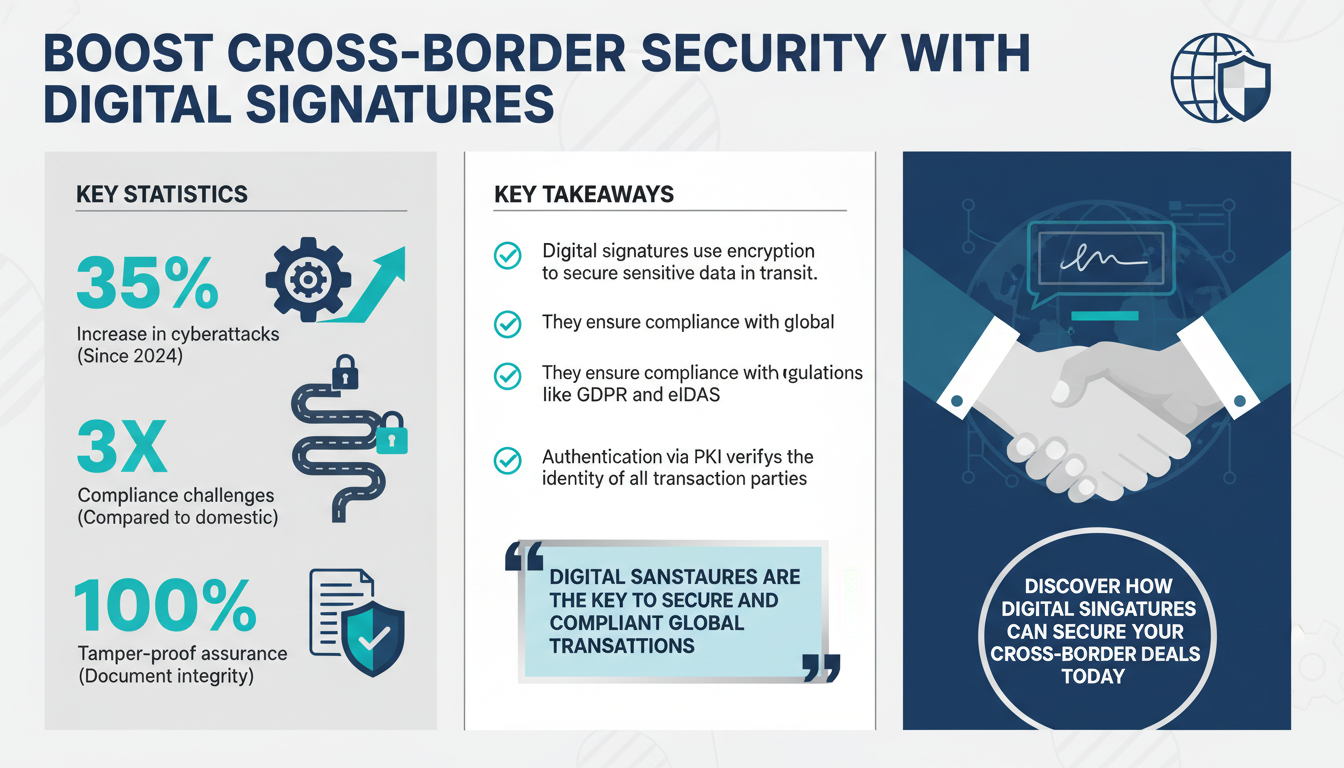
Cybersecurity threats are another critical concern. According to a Forbes Tech Council report, cyberattacks targeting cross-border transactions have increased by over 35% since 2024. Hackers often exploit vulnerabilities in unsecured digital communication channels to intercept sensitive data.
Key Security Challenges in Cross-Border Transactions
The intricacies of cross-border transactions amplify the risks businesses face. These include:
- Data Sovereignty: Different countries have varying laws governing how data can be stored and transferred. For example, the GDPR mandates that personal data of EU citizens must be adequately protected, even when transferred outside the EU.
- Authentication Issues: Verifying the identities of parties involved in cross-border transactions can be challenging, especially when dealing with unfamiliar regions or entities.
- Language and Cultural Barriers: Miscommunication due to language differences can result in errors, disputes, or misunderstandings, all of which complicate the security landscape.
Pro Tip:
To mitigate these challenges, businesses should conduct regular risk assessments for their cross-border transactions. Identify weak points, such as outdated encryption methods or insufficient verification protocols, and address them proactively.
Digital signatures play a pivotal role in mitigating these challenges by offering robust encryption, authentication, and tamper-proofing capabilities. But how exactly do digital signatures work, and what makes them indispensable for cross-border transactions?
What Makes Digital Signatures Secure?
Digital signatures are essentially electronic equivalents of handwritten signatures, but with significantly enhanced security features. They use public key infrastructure (PKI) technology to verify the authenticity and integrity of digital documents and transactions.
Core Security Features of Digital Signatures
Here’s how digital signatures enhance security:
- Encryption: Digital signatures encrypt the data being exchanged, ensuring that only authorized parties can access it. This prevents unauthorized interception or tampering during transmission.
- Authentication: PKI enables businesses to verify the identity of signatories, ensuring that documents are signed by authorized individuals. This eliminates the risk of impersonation or fraud.
- Integrity: Digital signatures provide a tamper-proof seal. If a document is altered after being signed, the signature becomes invalid, alerting all parties to potential manipulation.
- Non-repudiation: Once a digital signature is applied, the signatory cannot deny their involvement, creating a legally binding record of consent.
How PKI Technology Works
Public key infrastructure (PKI) forms the backbone of digital signature security. It involves a pair of cryptographic keys: a public key and a private key. Here’s a step-by-step breakdown of how it works:
- The sender uses their private key to create a unique digital signature for the document.
- The recipient uses the sender’s public key to verify the signature’s authenticity.
- If the signature matches, the document is confirmed as authentic and unaltered.
According to Gartner’s 2026 Digital Signature Trends report, businesses adopting digital signatures have seen a 40% reduction in fraud-related incidents and a 25% improvement in compliance with international regulations.
Expert Insight:
"The strength of digital signatures lies in their ability to combine cryptographic security with ease of use," says Dr. Emily Hart, a cybersecurity expert. "By integrating PKI technology, businesses can protect their data without introducing unnecessary complexity into their workflows."
Legal Compliance: How Digital Signatures Simplify Cross-Border Regulations
One of the most significant advantages of digital signatures is their ability to simplify compliance with international regulations. Different countries have varying requirements for electronic transactions, making manual processes cumbersome and prone to errors.
Global Legal Recognition of Digital Signatures
Digital signatures are legally recognized in major jurisdictions worldwide, including:
- European Union: The eIDAS Regulation sets standards for electronic identification and trust services, ensuring that compliant digital signatures are legally binding across EU member states.
- United States: The ESIGN Act and Uniform Electronic Transactions Act (UETA) grant digital signatures the same legal standing as handwritten signatures.
- Asia-Pacific: Countries such as Singapore, Australia, and India have established frameworks recognizing digital signatures as legally valid for electronic transactions.
Streamlining Compliance Processes
By implementing digital signatures, businesses can streamline compliance in several ways:
- Standardized Documentation: Digital signatures ensure that documents meet the required standards for authenticity and integrity.
- Automated Audits: Many digital signature platforms offer built-in audit trails, making it easier to demonstrate compliance during regulatory reviews.
- Reduced Paperwork: Eliminating paper-based processes reduces errors and speeds up compliance checks.
For example, the eIDAS Regulation mandates stringent requirements for electronic identification and trust services. Digital signatures that comply with eIDAS are automatically considered legally binding across EU member states, reducing the administrative burden for companies operating in Europe.
Pro Tip:
When choosing a digital signature provider, verify that their solutions are compliant with the legal frameworks relevant to your target markets. This ensures seamless cross-border operations without the risk of non-compliance.
Preventing Fraud in Cross-Border Transactions
Fraud prevention is a critical concern for businesses engaged in global trade. The complexity of cross-border transactions often creates opportunities for malicious actors to exploit vulnerabilities in traditional documentation processes.
Digital signatures eliminate many of these vulnerabilities by ensuring that signed documents are authentic, secure, and tamper-proof. For instance, PKI technology employs cryptographic algorithms that make it nearly impossible for fraudsters to forge or alter digital signatures without detection.
Real-World Success Stories
Consider the case of a multinational logistics company that implemented digital signatures to secure its shipping contracts. The company reported a 70% decrease in fraudulent activities, as digital signatures provided an audit trail that verified the authenticity of every transaction.
Moreover, the integration of digital signatures with blockchain technology has further strengthened fraud prevention. Blockchain creates an immutable ledger of transactions, ensuring transparency and accountability. According to McKinsey, businesses using blockchain-based digital signatures have experienced a 50% reduction in fraud-related losses.
Checklist: Steps to Prevent Fraud with Digital Signatures
- Choose a trusted digital signature provider with a strong reputation and robust security features.
- Ensure all signatories undergo multi-factor authentication before accessing documents.
- Integrate digital signatures with blockchain technology for added transparency.
- Conduct regular audits to verify the integrity of signed documents.
Operational Efficiency: Streamlining Global Business Processes
Beyond security and compliance, digital signatures significantly enhance operational efficiency in cross-border transactions. Traditional paper-based processes are slow, error-prone, and expensive, especially when dealing with international shipping, legal agreements, or financial approvals.
Digital signatures enable businesses to execute contracts, approvals, and document workflows in real time, regardless of geographical boundaries. This reduces turnaround times and accelerates decision-making. For example, a study by IDC found that companies using digital signatures reduced document processing times by an average of 45%, saving millions in operational costs.
Integrating Digital Signatures with Automation Tools
Additionally, digital signatures integrate seamlessly with workflow automation platforms, allowing businesses to create end-to-end solutions for document management. Platforms like Zignature offer features that automate recurring approvals, track document statuses, and ensure compliance, all within a user-friendly interface.
The operational efficiency gained through digital signatures is particularly valuable for SMBs, which often lack the resources to manage complex international processes manually.
Pro Tip:
Combine digital signatures with project management tools like Trello or Asana to track the progress of cross-border agreements and ensure timely delivery of signed documents.
The Role of Cloud Technology in Enabling Secure Digital Signatures
Cloud technology is a critical enabler of secure digital signatures in cross-border transactions. By leveraging cloud-based platforms, businesses can access digital signature solutions that are scalable, cost-effective, and universally accessible.
Advantages of Cloud-Based Digital Signatures
Cloud-based digital signature solutions offer several advantages:
- Global Accessibility: Users can sign documents from anywhere in the world, ensuring cross-border transactions are not delayed by logistical barriers.
- Scalability: Businesses can scale their operations without worrying about infrastructure limitations, as cloud platforms handle increasing volumes of transactions seamlessly.
- Data Security: Leading cloud providers offer advanced security features, including encryption, multi-factor authentication, and real-time monitoring to protect sensitive data.
According to AWS, cloud-based digital signature solutions have reduced downtime in cross-border transactions by 30%, while enhancing security protocols.
Pro Tip:
Always verify the data residency options offered by your cloud provider. This ensures that your digital signature data complies with regional data sovereignty laws.
Proprietary Framework: The Global Digital Security Matrix (GDSM)
To simplify the implementation of digital signatures for cross-border transactions, we introduce the Global Digital Security Matrix (GDSM). This proprietary framework consists of four key pillars:
- Compliance Alignment: Ensure your digital signature solution complies with international regulations such as GDPR, eIDAS, and the ESIGN Act.
- Authentication Protocols: Implement PKI-based authentication to verify the identity of all signatories.
- Integration Capabilities: Integrate digital signatures with workflow automation platforms to create seamless processes.
- Audit Trail Management: Maintain detailed logs of all signed transactions for transparency and accountability.
By following this matrix, businesses can achieve a secure, efficient, and compliant cross-border transaction environment.
FAQs: Addressing Common Questions About Digital Signatures
1. Are digital signatures legally valid in all countries?
Yes, digital signatures are recognized as legally valid in most countries, provided they comply with local regulations such as eIDAS in the EU or the ESIGN Act in the U.S.
2. Can digital signatures prevent document tampering?
Absolutely. Digital signatures use cryptographic technology to detect any alterations, ensuring the integrity of the signed document.
3. How do digital signatures improve cross-border compliance?
Digital signatures simplify compliance by adhering to international standards, making it easier for businesses to meet regulatory requirements in multiple jurisdictions.
4. Are digital signatures secure in cloud environments?
Yes, leading cloud providers implement advanced security protocols such as encryption and real-time monitoring to protect digital signatures.
5. What industries benefit the most from digital signatures in cross-border transactions?
Industries such as finance, healthcare, legal, and real estate benefit significantly due to the high volume of sensitive documents involved.
Conclusion: Future-Proofing Your Cross-Border Operations
Digital signatures are revolutionizing the way SMBs and enterprises conduct cross-border transactions. By enhancing data security, ensuring compliance, and streamlining operations, they provide a robust solution to the challenges of globalization.
As you explore digital signature solutions, consider platforms like Zignature, which offers secure, scalable, and user-friendly tools tailored to your business needs. For further insights, check out our guide on preventing fraud with digital signatures.
Looking to optimize your workflows further? Complement your efforts with tools like Apparatuz for automation, Schedly for scheduling, and Zatisfied for customer feedback management. Together, these solutions create a comprehensive ecosystem for secure and efficient cross-border operations.