
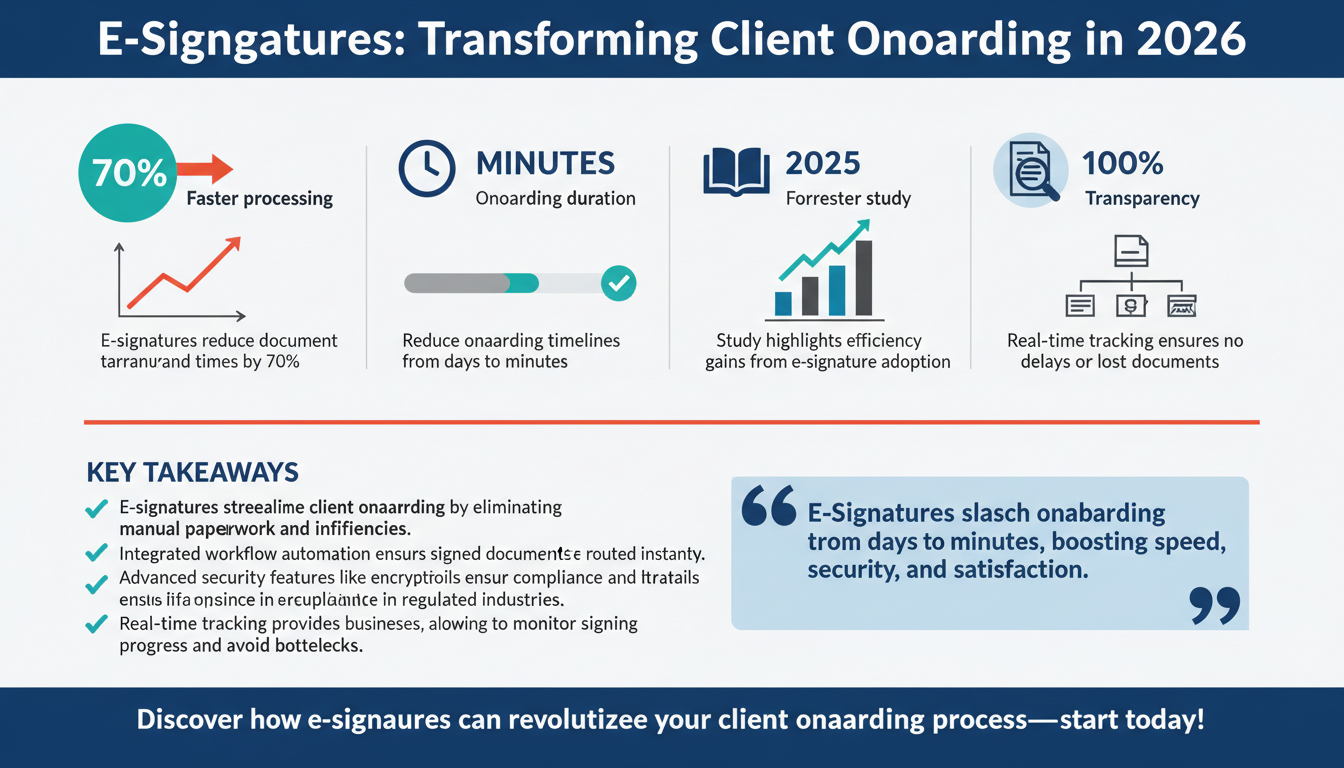
The year 2026 marks a pivotal moment in the ongoing digital transformation of industries worldwide. Among the technologies driving this change, e-signatures have emerged as a cornerstone for businesses seeking to streamline and optimize their workflows. Client onboarding—a process that serves as the first impression for customers in industries such as finance, healthcare, legal services, and real estate—has undergone a complete overhaul thanks to e-signatures. What once required endless paperwork, manual signatures, and days of back-and-forth communication now happens in mere minutes, delivering faster results, enhanced compliance, and a superior client experience.
This article will delve into seven impactful ways e-signatures are revolutionizing client onboarding processes in 2026. Whether you're an enterprise operations manager, legal professional, or small business owner, understanding these trends will enable you to harness the full potential of e-signature technology to enhance your workflows, save costs, and elevate customer satisfaction.
1. Speeding Up Document Turnaround Times
One of the most prominent benefits of e-signatures is their ability to dramatically accelerate document turnaround times. In traditional onboarding workflows, documents would have to be printed, manually signed, scanned, and sent back—often involving multiple parties and taking days or even weeks to finalize. E-signature solutions eliminate these inefficiencies by allowing clients to sign documents digitally within seconds, regardless of their location.
For example, imagine a financial advisor onboarding a new client. Using e-signature software, the advisor can send account agreements directly to the client’s email. The client can review, sign, and return the document instantly, without needing to visit the office or post physical paperwork. This streamlined process ensures that onboarding timelines shrink from days to minutes.
According to a 2025 Forrester study, organizations that adopt e-signature solutions experience a 70% reduction in document processing times. Moreover, these platforms often integrate with workflow automation tools, ensuring that signed documents are automatically routed to the next step in the process. For instance, once a contract is signed, it can trigger notifications to the legal team or initiate an automated billing system—eliminating bottlenecks and reducing manual follow-ups.
Beyond speed, e-signature platforms also enhance transparency. Most modern platforms provide real-time updates, allowing businesses to track the signing process and identify delays. This visibility ensures that no critical documents get lost in the shuffle.
Key Takeaway:
- E-signatures reduce document turnaround times by up to 70%, enabling faster onboarding and improved operational efficiency.
- Automated workflows ensure signed documents are routed to the relevant departments for immediate action.
- Real-time tracking capabilities provide transparency throughout the process.
2. Enhancing Security and Compliance
In highly regulated industries like finance, healthcare, and legal services, security and compliance are critical pillars of client onboarding. E-signature platforms have evolved to meet the stringent requirements of these industries, offering advanced security features such as encryption, audit trails, and identity verification to protect sensitive documents.
Take, for instance, the onboarding process for a healthcare provider. Patients often need to complete intake forms containing sensitive medical information. Using e-signature platforms equipped with multi-factor authentication (MFA) and encryption, healthcare providers can ensure that these forms are securely transmitted and signed by authorized parties only. Additionally, detailed audit trails capture every action taken during the signing process—including timestamps, IP addresses, and geolocation data—creating an irrefutable record for compliance purposes.
According to a Gartner report, businesses that adopted e-signature solutions reduced compliance risks by 45% in 2025. For legal teams, this capability is particularly valuable as it provides the evidentiary support needed to defend agreements in court.
Moreover, many e-signature platforms comply with international regulations such as the ESIGN Act in the United States and eIDAS in Europe, ensuring the legal validity of signed documents across borders. This compliance simplifies global operations and minimizes the risk of penalties for non-adherence to regulatory standards.
Key Takeaway:
- Advanced security features like encryption, MFA, and audit trails safeguard sensitive information and ensure compliance.
- E-signatures reduce compliance risks by 45%, according to Gartner.
- Legal validity under international regulations makes e-signatures essential for global operations.
3. Reducing Operational Costs
Traditional onboarding processes come with a host of operational costs, including expenses for printing, shipping, and storing physical documents. Additionally, manual handling of paperwork often requires significant manpower, further driving up costs.
E-signatures eliminate these expenses by enabling fully digital workflows. Businesses no longer need to purchase printers, paper, or ink, nor do they have to budget for courier services to deliver documents. Moreover, digital records are easier to store and retrieve, reducing administrative overhead.
A HubSpot analysis revealed that companies save an average of $30 per document by switching to e-signature solutions. For organizations onboarding hundreds or thousands of clients annually, these savings quickly add up to substantial figures. For instance, a mid-sized real estate company that processes 1,000 contracts per year could save $30,000 annually simply by adopting e-signatures.
Beyond direct cost savings, e-signatures also help businesses avoid indirect expenses related to errors in manual processes. Digital workflows often include built-in checks and validations, ensuring that documents are completed accurately the first time and reducing costly rework.
Key Takeaway:
- E-signatures save businesses $30 per document on average, eliminating costs associated with printing, shipping, and storage.
- Digital workflows minimize errors, saving time and reducing rework expenses.
4. Improving Client Experience
In an era where convenience and speed are paramount, client expectations for onboarding have shifted dramatically. Today’s clients want seamless, digital experiences that require minimal effort and time, and e-signatures deliver precisely that.
For instance, a real estate agent can send purchase agreements electronically to clients, allowing them to sign contracts from their smartphones or tablets. Similarly, a financial institution can enable clients to open accounts and sign loan agreements remotely, eliminating the need for in-person visits. These capabilities not only save clients time but also demonstrate that the business values their convenience.
A Salesforce study revealed that 83% of clients prefer digital onboarding methods over traditional paper-based processes. This preference is especially pronounced among younger generations who are accustomed to conducting transactions online. By implementing e-signatures, businesses can differentiate themselves in competitive markets and build stronger relationships with their clients.
Moreover, the accessibility of e-signature platforms is a game-changer for clients with disabilities or mobility challenges, as they can complete onboarding tasks without leaving their homes.
Key Takeaway:
- E-signatures provide clients with flexibility, allowing them to complete onboarding tasks from any device, anywhere.
- Digital onboarding methods are preferred by 83% of clients, according to Salesforce.
- Accessibility features enable inclusive onboarding experiences for diverse client groups.
5. Automating Workflow Integration
Modern e-signature solutions don’t exist in isolation—they integrate seamlessly with other digital tools to create cohesive workflows. For example, signed contracts can automatically update client profiles in CRM systems, trigger billing processes, or initiate service provisioning without requiring human intervention.
Integrations with platforms like Salesforce, HubSpot, and Slack enable businesses to synchronize communication and data across departments. This level of automation reduces manual errors, saves time, and ensures a consistent client experience.
According to a McKinsey report, businesses that leverage integrated e-signature workflows experience a 25% increase in operational efficiency. For example, a legal team using e-signatures integrated with document management software can automatically archive signed agreements and notify relevant parties about contract updates.
Key Takeaway:
- E-signatures integrate with CRM and automation tools for seamless workflows.
- Businesses experience a 25% boost in efficiency with integrated systems.
6. Supporting Remote and Global Operations
With remote work and global business expansion becoming the norm, e-signatures have emerged as a critical tool for onboarding clients across borders. Companies can onboard clients from anywhere in the world without logistical challenges, as documents can be signed electronically and shared instantly.
Moreover, e-signature platforms comply with international regulations like eIDAS in Europe and ESIGN in the U.S., ensuring that signed documents are legally valid in different jurisdictions. This compliance is invaluable for multinational corporations or small businesses looking to expand globally.
According to a Deloitte survey, 67% of businesses cited e-signatures as essential for scaling global operations. For example, a tech startup onboarding clients in both the U.S. and Europe can rely on e-signatures to ensure consistent and compliant processes across borders.
Key Takeaway:
- E-signatures enable efficient onboarding in remote and global contexts.
- Compliance with international regulations ensures legal validity worldwide.
7. Reducing Environmental Impact
As businesses increasingly prioritize sustainability, the transition to paperless workflows is an important step toward reducing environmental impact. E-signatures eliminate the need for physical documents, thereby minimizing paper waste and energy consumption associated with printing and transportation.
For example, a single mid-sized company adopting e-signatures can save thousands of sheets of paper annually. Additionally, digital workflows reduce carbon emissions by cutting down on courier services and in-person meetings.
A study on paperless workflows estimated that businesses adopting e-signatures reduce their carbon footprint by 20% on average. These environmental benefits not only align with corporate social responsibility goals but also resonate with eco-conscious clients.
Key Takeaway:
- E-signatures help businesses achieve sustainability goals by reducing paper waste and energy consumption.
- Organizations can cut their carbon footprint by 20% through paperless workflows.
Conclusion
E-signatures have transformed client onboarding processes in 2026, offering faster workflows, enhanced security, and significant cost savings. By aligning with modern expectations for convenience and sustainability, e-signatures empower businesses to deliver exceptional client experiences while meeting regulatory requirements. As remote work and globalization continue to shape the business landscape, adopting e-signature solutions is not just a convenience—it’s a necessity.
If you’re ready to take your client onboarding to the next level, explore our platform features or view our pricing plans today.
To further enhance your digital workflows, explore our sister platforms: Apparatuz for workflow automation, Applicantz for recruitment management, Schedly for scheduling and appointments, Supportly for customer support, and Zatisfied for feedback management. Together, these tools create a comprehensive ecosystem that complements your digital signature strategy.