
In today’s fast-paced and increasingly digital world, compliance is no longer a back-office exercise—it’s a front-and-center priority for businesses operating in heavily regulated sectors such as healthcare, finance, real estate, and legal services. Navigating complex regulatory environments while maintaining efficiency, security, and accountability is a daunting challenge for these industries. With stringent regulations like HIPAA, GDPR, SOX, and others shaping operational frameworks, ensuring airtight compliance has become a mission-critical task. This is where digital signatures have emerged as a cornerstone technology, enabling organizations to achieve regulatory alignment while simultaneously improving efficiency, security, and customer trust.
Digital signatures are much more than an electronic equivalent of handwritten signatures. They are legally binding, secure, and efficient tools that not only streamline workflows but also ensure compliance with global and regional regulations. From safeguarding sensitive data to reducing compliance costs, digital signatures are now indispensable for organizations striving to meet the demands of highly regulated industries.
This article explores 10 compelling reasons why digital signatures are essential for compliance and offers actionable insights, real-world examples, and expert data to illustrate their transformative impact.
1. Ensuring Legal Validity and Enforceability
One of the primary reasons digital signatures are vital for compliance is their legal validity and enforceability across jurisdictions. Digital signatures meet stringent requirements outlined in regulations such as the U.S. ESIGN Act, the European Union’s eIDAS Regulation, and similar laws worldwide. These laws ensure that digital signatures are recognized as legally binding, provided certain criteria are met.

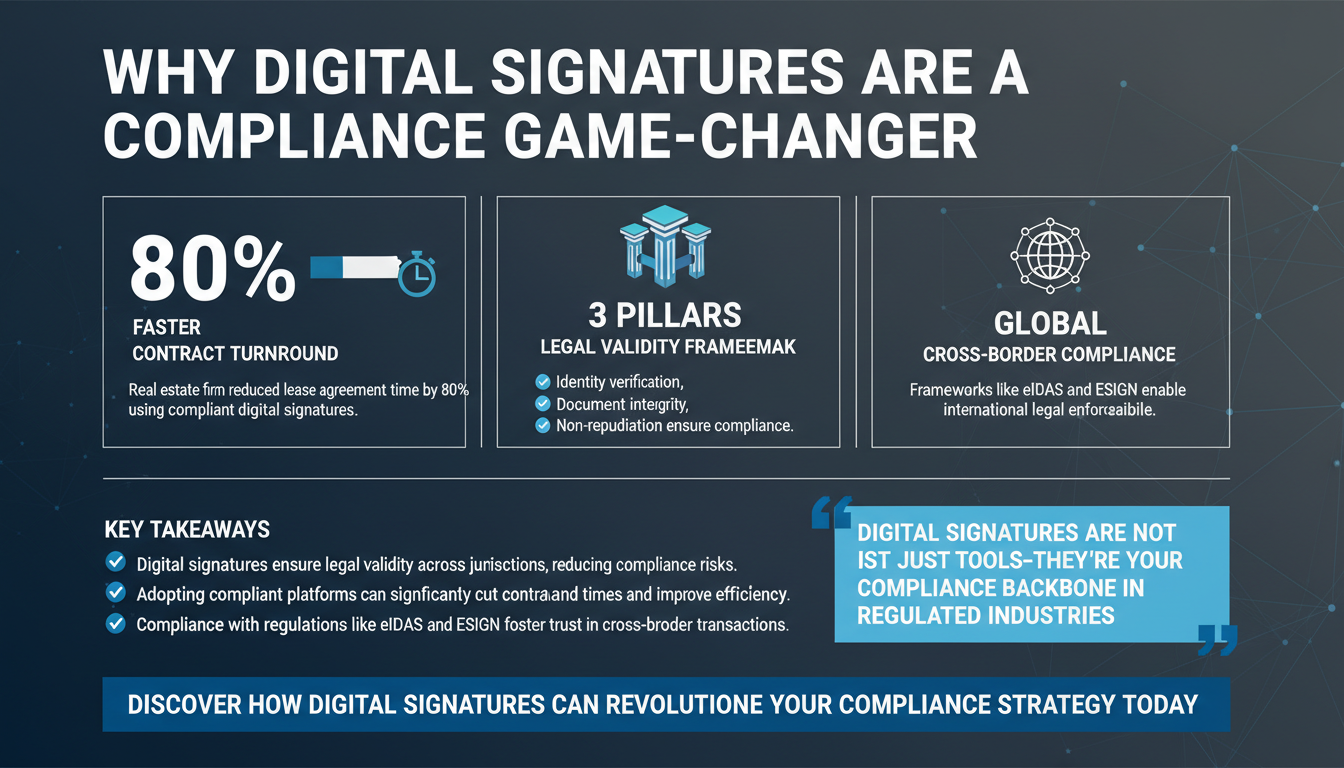
For example, under eIDAS, digital signatures must provide identity verification, document integrity, and non-repudiation. Identity verification ensures that the signer is who they claim to be, document integrity ensures that the document has not been tampered with, and non-repudiation ensures that the signer cannot deny their involvement. These features make digital signatures legally robust, ensuring they hold up in court and during regulatory inspections. Failure to meet these requirements can result in hefty fines, contract disputes, or even loss of business licenses.
Legal Frameworks Around the World
Different regions have specific legal frameworks for digital signatures. For instance, in India, the Information Technology Act recognizes digital signatures as legally valid, provided they are created using a licensed Certifying Authority. Similarly, Australia’s Electronic Transactions Act ensures contracts signed digitally are binding, provided the parties agree to the electronic format. These frameworks not only bolster cross-border transactions but also offer clarity to organizations navigating complex compliance landscapes.
Organizations in regulated industries, such as pharmaceutical companies entering into cross-border contracts or financial institutions onboarding new clients, can confidently rely on digital signatures to uphold legal agreements. This reduces litigation risks and ensures compliance with international standards.
Example: A multinational real estate firm needed to expedite international lease agreements while ensuring legal compliance. By adopting digital signature platforms compliant with eIDAS and ESIGN, they reduced contract turnaround times by 80% while maintaining full legal enforceability.
Pro Tip: Always choose a digital signature platform that complies with the regulations specific to your jurisdiction and industry. This ensures that your signed documents remain enforceable, even in global transactions.
Key Takeaway: Digital signatures provide the legal assurance needed to comply with laws governing contracts and agreements, making them indispensable for businesses operating in regulated sectors.
2. Protecting Sensitive Information with Advanced Security Features
Highly regulated industries often handle sensitive data, such as patient records, financial information, or legal documents. Digital signatures offer robust security features like encryption, audit trails, and multi-factor authentication (MFA) to protect this data from unauthorized access or tampering. These features directly address the compliance requirements of laws such as the General Data Protection Regulation (GDPR) and the Health Insurance Portability and Accountability Act (HIPAA).

Encryption ensures that only authorized parties can access a document. In addition, audit trails provide a detailed log of who accessed, viewed, or signed a document, including timestamps and IP addresses. Multi-factor authentication adds another layer of security by requiring users to verify their identity through multiple methods, such as a password and a biometric scan.
How Digital Signatures Mitigate Data Breach Risks
Data breaches can have devastating consequences for organizations, including financial penalties, reputational damage, and loss of customer trust. Digital signatures mitigate these risks by ensuring that documents are tamper-proof and access is restricted to authorized personnel. For example, an audit trail can reveal any unauthorized attempts to access a document, allowing organizations to act quickly to address potential security threats.
For example, a healthcare provider can leverage digital signatures to ensure that patient consent forms are securely signed and stored in compliance with HIPAA. The audit trail allows the provider to demonstrate compliance during an inspection, providing detailed logs of access and modifications.
Data Point: According to a CSO Online report, 71% of organizations that experienced data breaches cited inadequate document security as a contributing factor. Digital signatures mitigate this risk by ensuring end-to-end encryption and tamper-proof records.
Pro Tip: Incorporate regular security training for employees to complement the robust features of digital signatures. Even the most secure systems can be compromised by human error, so educating your team on best practices is essential.
Key Takeaway: The advanced security features of digital signatures safeguard sensitive data, helping organizations comply with stringent data protection laws.
3. Streamlining Audit Processes
Audits are a reality for organizations operating in regulated industries. Whether it’s a financial audit, compliance review, or regulatory inspection, the ability to provide clear, organized, and tamper-proof documentation is critical. Digital signatures simplify this process by creating an automatic, immutable record of all signed documents.

Instead of sifting through stacks of paper or disorganized digital files, auditors can easily access a centralized repository of signed documents, complete with timestamps and audit logs. This not only saves time but also demonstrates a commitment to compliance, reducing the likelihood of penalties.
Checklist: Preparing for an Audit with Digital Signatures
- Ensure all signed documents are stored in a secure, centralized digital repository.
- Verify that audit trails are activated and accessible for every signed document.
- Regularly review and update permissions to ensure only authorized personnel have access to sensitive files.
- Conduct mock audits to identify and address potential gaps in your compliance processes.
According to a Forrester study, organizations using digital signatures reduce audit preparation time by 80%, freeing up valuable resources for other critical tasks. Additionally, the transparency provided by audit logs builds trust with regulators, as it shows a proactive approach to governance.
Real-World Application: A financial services firm undergoing an annual compliance audit utilized a digital signature platform to organize and retrieve documents in minutes rather than days. The result was a 60% reduction in audit-related disruptions and zero compliance penalties.
Pro Tip: Opt for a digital signature solution that integrates seamlessly with your document management or compliance software. This ensures a smooth audit process and reduces manual errors.
Key Takeaway: Digital signatures streamline audit preparation by providing organized, tamper-proof records, reducing compliance risks and saving time.
4. Enhancing Regulatory Compliance Across Borders
In an increasingly globalized economy, many organizations operate across multiple jurisdictions, each with its own compliance requirements. Digital signatures simplify cross-border compliance by adhering to international standards like eIDAS in the EU, ESIGN in the U.S., and similar regulations in countries like India and Australia.

For instance, a multinational pharmaceutical company can use digital signatures to streamline regulatory submissions across different regions, ensuring compliance with both local and global regulations. This eliminates the need for redundant processes and ensures consistency in documentation.
Compliance Challenges in Cross-Border Operations
Operating across borders often involves navigating conflicting regulations, delays caused by physical document handling, and the risk of miscommunication. Digital signatures address these challenges by standardizing the signing process and providing a uniform framework for compliance. For instance, a global real estate firm can use a single digital signature platform to finalize contracts in the EU, Asia, and North America without worrying about different regulatory requirements.
Data Insight: A Gartner report highlights that 65% of global enterprises have adopted digital signatures to facilitate cross-border compliance as of 2025. This trend underscores the growing importance of digital tools in managing international operations.
Pro Tip: When choosing a digital signature provider, ensure it supports compliance with multiple international standards to future-proof your operations.
Key Takeaway: Digital signatures enable seamless regulatory compliance across borders, making them essential for multinational organizations.
5. Reducing Human Errors and Fraud Risks
Manual processes are prone to errors and fraud, which can result in non-compliance and financial losses. Digital signatures mitigate these risks by automating signature workflows and incorporating verification mechanisms.
Features like identity verification and automated workflows ensure that only authorized individuals can sign documents, reducing the risk of forgery or unauthorized changes. Additionally, digital signatures eliminate common errors, such as missing signatures or incomplete forms, by providing automated reminders and checks.
According to a McKinsey report, organizations that adopt digital signatures experience a 35% reduction in compliance violations due to human errors.
Practical Tip: Implement automated alerts in your digital signature platform to notify stakeholders of pending signatures, reducing delays and errors while ensuring compliance deadlines are met.
Key Takeaway: Digital signatures reduce human errors and fraud risks, ensuring compliance and minimizing financial and reputational damage.
6. Accelerating Approval Processes
Traditional approval processes often involve lengthy back-and-forth exchanges, physical document handling, and geographic limitations. In regulated industries, delays can lead to missed deadlines, penalties, or lost opportunities. Digital signatures accelerate these processes by enabling real-time, remote signing, eliminating the need for physical paperwork.
For instance, a financial institution processing loan applications can use digital signatures to shorten approval times from weeks to hours. This not only improves customer satisfaction but also ensures timely compliance with regulatory deadlines.
Key Statistic: A Deloitte research study shows that digital signatures reduce average document turnaround times by 70%, making them a vital efficiency tool for businesses.
Pro Tip: Use workflow automation features in your digital signature platform to route documents to the right stakeholders in sequence, ensuring no steps are missed in the approval process.
Key Takeaway: Digital signatures significantly accelerate approval processes, helping organizations meet regulatory deadlines and improve operational efficiency.
7. Supporting Environmental Sustainability
Compliance requirements often result in extensive paperwork, contributing to environmental waste. Digital signatures support sustainability by eliminating the need for physical documents, reducing paper consumption, and minimizing carbon footprints.
For example, a real estate firm using digital signatures for contract management can save thousands of pages of paper annually, aligning with corporate sustainability goals and compliance mandates.
According to a Statista report, digital document workflows reduce paper waste by 85%, making them a sustainable choice for compliance-focused industries.
Pro Tip: Highlight your organization’s use of digital signatures in your sustainability reports to demonstrate your commitment to reducing environmental impact.
Key Takeaway: Digital signatures contribute to sustainability efforts while ensuring compliance, making them a win-win solution for organizations.
8. Facilitating Remote and Hybrid Work Models
The rise of remote and hybrid work models has made digital tools indispensable. Digital signatures enable employees to securely sign and manage documents from anywhere, ensuring compliance regardless of location. This flexibility is especially important for industries with stringent remote work requirements.
For example, a legal team working remotely can use digital signatures to finalize contracts without compromising security or compliance. This ensures that business operations can continue seamlessly, even during unexpected disruptions.
Industry Insight: A Harvard Business Review study highlights that 78% of remote teams rely on digital signatures to maintain compliance and productivity in their workflows.
Pro Tip: Combine digital signature platforms with secure cloud storage solutions to create a fully compliant, remote-friendly document management system.
Key Takeaway: Digital signatures enable compliance in remote and hybrid work environments, offering security and flexibility.
9. Strengthening Customer Trust and Satisfaction
In regulated industries, customer trust is paramount. Digital signatures demonstrate a commitment to security, transparency, and compliance, strengthening customer confidence. By ensuring that sensitive information is handled securely and in compliance with regulations, organizations can differentiate themselves in competitive markets.
For instance, a healthcare provider that uses digital signatures for patient consent forms can assure patients that their data is handled securely and in compliance with HIPAA regulations. Similarly, financial institutions can boost client confidence by using secure digital signature platforms for loan agreements and account management.
Data Insight: A Gallup research study shows that 85% of customers are more likely to trust organizations that use secure digital tools in their operations.
Pro Tip: Leverage customer testimonials and case studies to showcase how your digital signature processes enhance trust and compliance.
Key Takeaway: Digital signatures build customer trust by showcasing a commitment to compliance and security.
10. Reducing Compliance Costs
Compliance is often associated with high costs, from legal fees to penalties for non-compliance. Digital signatures reduce these costs by automating processes, minimizing errors, and streamlining audits. By eliminating the need for physical document storage, courier services, and manual processing, organizations can achieve significant cost savings.
For example, a financial firm using digital signatures can save on notary fees and paper storage, reallocating resources to more strategic initiatives. Additionally, the reduced likelihood of errors and compliance violations translates into fewer fines and legal costs.
Key Statistic: According to Capterra research, organizations save an average of $36 per document by switching to digital signatures, highlighting their cost-effectiveness.
Pro Tip: Calculate your organization’s potential savings by implementing digital signatures and share these projections with stakeholders to gain buy-in for adoption.
Key Takeaway: Digital signatures significantly reduce compliance costs while improving operational efficiency.
FAQ: Common Questions About Digital Signatures and Compliance
- Are digital signatures legally binding? Yes, provided they meet the requirements outlined in regulations like ESIGN and eIDAS.
- How do digital signatures ensure data security? They use encryption, audit trails, and identity verification to protect sensitive information.
- Can digital signatures be used across borders? Yes, they are recognized by international standards such as eIDAS and ESIGN.
- Do digital signatures reduce compliance costs? Absolutely, by automating processes and reducing errors, they save time and money.
- What industries benefit most from digital signatures? Healthcare, finance, legal, and real estate are top beneficiaries.
Conclusion
Digital signatures are no longer a luxury—they are a necessity for compliance in highly regulated industries. From ensuring legal validity to reducing compliance costs, the benefits are undeniable. Organizations that embrace digital signatures not only streamline their operations but also build a solid foundation for long-term compliance and trust. In an era of increasing regulatory complexity, digital signatures offer a modern, secure, and efficient solution for managing compliance challenges.
Ready to take the next step? Explore Zignature's secure digital signature solutions and see how we can help your organization stay compliant.
To further enhance your digital workflows, explore our sister platforms: Apparatuz for workflow automation, Applicantz for recruitment management, Schedly for scheduling and appointments, Supportly for customer support, and Zatisfied for feedback management. Together, these tools create a comprehensive ecosystem that complements your digital signature strategy.