
Electronic signatures have revolutionized the way businesses handle contracts, agreements, and official documents. Yet, despite their widespread adoption, misconceptions about their security, legality, and practicality persist. These myths often prevent small and medium-sized businesses (SMBs) and enterprises from fully embracing e-signature solutions like Zignature. In this article, we’ll debunk 10 of the most common myths about electronic signatures, providing clarity for decision-makers who want to streamline operations without compromising on security or compliance.
Whether you’re a legal professional worried about validity, a business owner concerned about costs, or an operations manager unsure about integration, this guide will answer your questions. Let’s dive in!
Myth 1: Electronic Signatures Aren’t Legally Binding
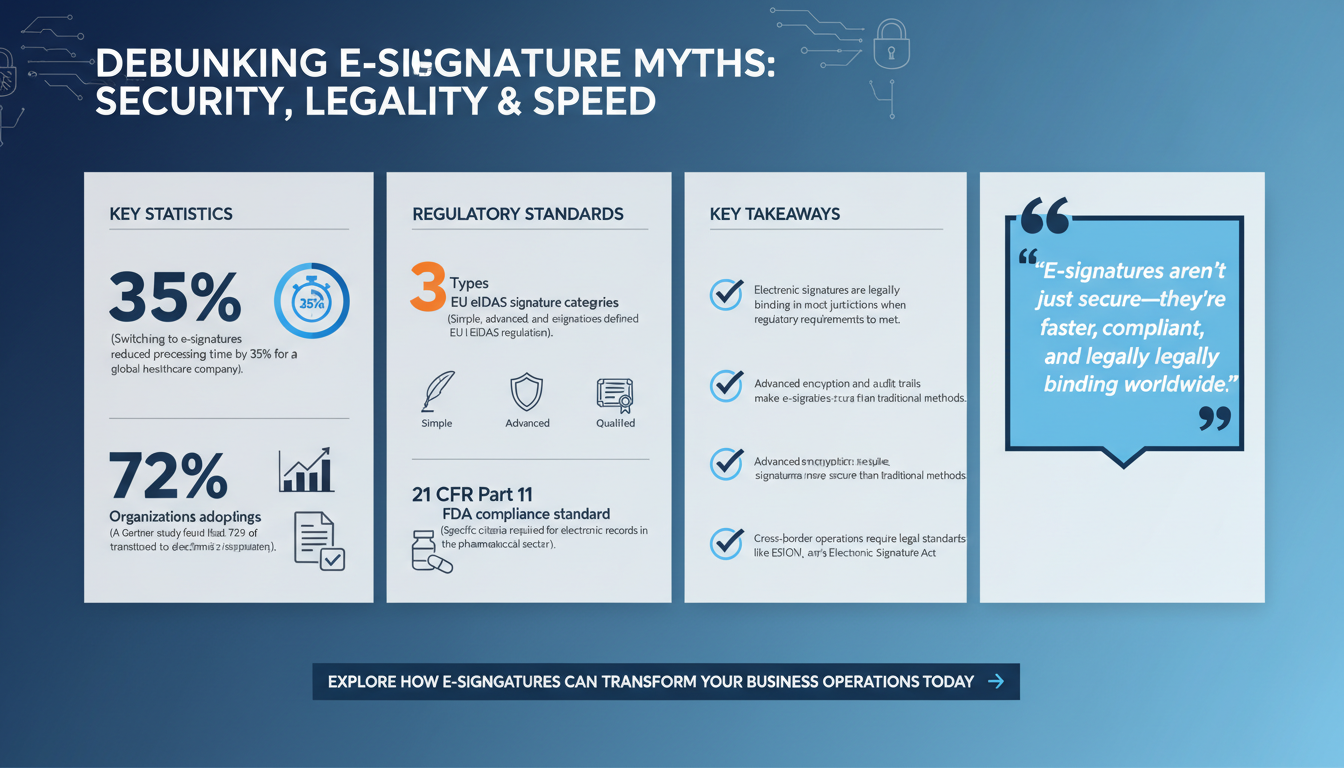
One of the most pervasive myths about electronic signatures is that they lack the legal validity of handwritten signatures. This misconception couldn’t be farther from the truth. In reality, laws like the U.S. Electronic Signatures in Global and National Commerce Act (ESIGN Act) and the European Union’s eIDAS regulation explicitly recognize the legality of electronic signatures, provided certain conditions are met.
For instance, the ESIGN Act ensures that e-signatures carry the same weight as a physical signature in most transactions. Similarly, eIDAS categorizes electronic signatures into three types: simple, advanced, and qualified, the latter being equivalent to handwritten signatures under EU law.
Here’s a real-world example: A global healthcare company recently transitioned to electronic signatures for its vendor agreements, leveraging their legality to expedite deals across international borders. The result? A 35% reduction in contract processing time.
How Legal Standards Differ Globally
It’s critical to note that legal recognition of electronic signatures can vary depending on the country. For example, while the ESIGN Act and eIDAS are comprehensive in their respective jurisdictions, countries like Japan follow their own Electronic Signature Act, which categorizes signatures into two types: electronic signatures and digital signatures. Understanding these distinctions is key for businesses operating across borders.
In addition, sectors like finance and pharmaceuticals often have additional compliance requirements. For instance, the FDA’s 21 CFR Part 11 mandates specific criteria for electronic records and signatures. This ensures that workflows involving e-signatures meet stringent security and traceability standards.

Pro Tip: Always audit your e-signature process for compliance with local and industry-specific regulations. Platforms like Zignature often provide compliance features tailored to different legal frameworks.
Key Takeaway: Electronic signatures are legally binding in most jurisdictions, provided they fulfill regulatory requirements. SMBs and enterprises can confidently use them for contracts and agreements without fear of invalidation.
Myth 2: E-Signatures Aren’t Secure
Many businesses hesitate to adopt electronic signatures due to concerns about security. They worry that e-signatures can be easily forged or tampered with. However, advanced encryption technologies and multi-factor authentication make electronic signatures far more secure than traditional pen-and-paper methods.
For example, platforms like Zignature use Public Key Infrastructure (PKI) encryption to ensure the integrity and authenticity of signed documents. Additionally, audit trails document every step of the signing process, from the initial invitation to the final signature, providing a digital footprint of every action.
According to a Gartner study, 72% of organizations that switched to electronic signatures reported improved security compared to paper-based workflows.
Breaking Down Security Features
Modern e-signature platforms offer a wide range of features designed to address specific security concerns:
- Encryption: All data is encrypted both at rest and in transit, making it nearly impossible for unauthorized parties to intercept or alter signed documents.
- Access Control: Role-based permissions ensure that only authorized individuals can view and sign documents.
- Authentication: Multi-factor authentication (MFA) adds an additional layer of security by requiring users to verify their identity beyond just a password.
- Time Stamping: Digital time stamps ensure that every signature is logged with an exact date and time, preventing backdating or manipulation.
These features collectively make e-signatures more secure than traditional methods, where physical documents can be lost, forged, or altered without detection.

Addressing Common Security Concerns
Some skeptics argue that e-signatures are vulnerable to hacking. While no system is entirely immune to cyber threats, the robust security measures employed by leading platforms significantly mitigate these risks. For example, Zignature’s system includes real-time monitoring for suspicious activity, ensuring that any potential breaches are detected and addressed immediately.
Expert Insight: "The audit trails generated by e-signature platforms are not just a security feature; they’re a compliance tool," says Sarah Lin, a cybersecurity consultant. "They offer undeniable proof of every action taken, which is invaluable for resolving disputes or meeting regulatory requirements."
Key Takeaway: Modern electronic signature platforms employ cutting-edge security features, making them more secure than traditional signatures. Businesses can trust e-signatures for sensitive transactions.
Myth 3: Electronic Signatures Are Only for Large Enterprises
Another common misconception is that electronic signatures are a luxury only large corporations can afford. In reality, e-signature solutions are highly scalable and accessible to businesses of all sizes. SMBs, in particular, stand to benefit from the cost savings and efficiency gains offered by e-signatures.
Take the example of a real estate agency that adopted electronic signatures for lease agreements. By eliminating paper-based workflows, the agency saved over $15,000 annually on printing and courier costs alone, while reducing lease turnaround times by 40%.
Moreover, platforms like Zignature offer tiered pricing models, ensuring affordability for SMBs. Smaller businesses can start with basic plans and scale up as their needs grow.
Scaling E-Signatures for SMBs
Small and medium-sized businesses often operate with limited resources, making efficiency a top priority. E-signatures enable SMBs to streamline operations without the need for significant investments in infrastructure. For instance:
- Client Contracts: Small legal firms can use e-signatures to manage client agreements, reducing the need for in-person meetings.
- Vendor Onboarding: Retail businesses can expedite vendor agreements, ensuring faster inventory replenishment.
- HR Processes: SMBs can digitize employee onboarding, from contracts to compliance forms, saving valuable time and reducing paperwork.
These use cases demonstrate that e-signatures are not just practical but transformative for smaller organizations.

Pro Tip: Look for e-signature solutions that offer free trials or freemium plans. This allows SMBs to test the platform and assess its value before committing to a paid plan.
Key Takeaway: Electronic signatures are not exclusive to large enterprises. SMBs can leverage them to cut costs, improve efficiency, and compete effectively in their markets.
Myth 4: Digital Signatures Are Difficult to Integrate
Some businesses shy away from e-signatures because they believe integrating them into their existing workflows will be complex and time-consuming. However, modern solutions are designed with seamless integration in mind, offering compatibility with popular tools like Microsoft Office, Salesforce, and Google Workspace.
For example, Zignature’s API allows businesses to integrate electronic signatures directly into their CRM systems, enabling sales teams to send contracts for signature without leaving their dashboards. This type of integration reduces friction and enhances productivity.
A Forrester report found that businesses that integrated e-signature APIs saw a 24% increase in workflow efficiency within the first year.
Steps to Simplify Integration
Integrating e-signatures doesn’t have to be daunting. Here’s a step-by-step guide to simplify the process:
- Assess Your Needs: Identify the workflows that would benefit most from e-signatures, such as contract management or approval processes.
- Choose the Right Platform: Select a solution that offers integrations with your existing tools, such as CRMs or document management systems.
- Test with a Pilot Program: Start with a small-scale implementation to identify any challenges and refine the process.
- Train Your Team: Provide training sessions to ensure all users are comfortable with the new system.
- Monitor and Optimize: Use analytics to track adoption rates and identify areas for improvement.
Expert Insight: "API-based integrations are a game-changer for businesses," notes Raj Patel, a cloud solutions architect. "They allow you to automate repetitive tasks, freeing up your team to focus on higher-value activities."
Key Takeaway: E-signature platforms are designed for easy integration, allowing businesses to incorporate them into existing workflows with minimal disruption.
Myth 5: Electronic Signatures Lack Auditability
One concern often raised is that electronic signatures don’t provide sufficient auditability compared to paper-based methods. However, this is another misconception. E-signature platforms provide detailed audit trails that record every action taken during the signing process.
These audit logs include timestamps, IP addresses, and even geolocation data, ensuring full transparency. For example, healthcare organizations use audit trails to comply with stringent regulations like HIPAA, ensuring that all signed documents meet legal and compliance standards.
A ZDNet analysis revealed that 89% of organizations using e-signatures found audit trails to be invaluable for regulatory compliance.

Pro Tip: Regularly review audit logs to ensure compliance and identify any potential anomalies in the signing process.
Key Takeaway: E-signature platforms provide robust audit trails, ensuring full transparency and compliance for SMBs and enterprises.
Myth 6: E-Signatures Aren’t Accepted Across Industries
Some believe that electronic signatures are only suitable for specific industries, such as technology or finance. In truth, e-signatures are widely accepted across diverse sectors, including healthcare, real estate, legal, and manufacturing.
For instance, healthcare providers use e-signatures for patient consent forms, while manufacturers rely on them for vendor agreements and quality assurance documentation. Legal teams use e-signatures to streamline contract management processes, reducing turnaround times by up to 50%.
A McKinsey report highlighted how e-signatures have become a critical tool for compliance in highly regulated industries.
Key Takeaway: Electronic signatures are versatile and widely accepted across industries. SMBs and enterprises in any sector can leverage them to enhance efficiency and compliance.
Myth 7: E-Signatures Are Expensive
Cost concerns often deter businesses from adopting electronic signatures. However, this myth ignores the substantial savings e-signatures provide over traditional methods. From reduced printing costs to eliminating courier fees, digital signatures can save businesses thousands annually.
For example, a financial services firm saved $120,000 in annual operational costs by transitioning to e-signatures for document approvals. Additionally, platforms like Zignature offer cost-effective pricing plans tailored to different business sizes and needs.
According to Deloitte research, organizations using e-signatures see an average ROI of 300% within two years.
Key Takeaway: E-signatures are a cost-effective solution that can save businesses significant money while improving efficiency.
Myth 8: Electronic Signatures Lack Customization
Some businesses believe that e-signatures are rigid and lack customization for specific workflows. This couldn’t be further from the truth. Modern platforms offer a range of customization options, from branding to workflow configurations.
For example, Zignature allows businesses to add logos, custom email templates, and tailored signing fields to align with their brand identity. Advanced solutions also provide options for automated reminders, conditional fields, and role-based access.
A HubSpot study found that businesses using customizable e-signature workflows improved client satisfaction scores by 18%.
Key Takeaway: E-signatures are highly customizable, allowing businesses to align workflows with their specific needs and branding.
FAQ: Common Questions About Electronic Signatures
- Q: Are electronic signatures legally valid in all countries?
A: While most countries recognize e-signatures, specific regulations like ESIGN and eIDAS govern their use. Always check local laws. - Q: Can electronic signatures be used for highly sensitive documents?
A: Yes, e-signature platforms use encryption and authentication to secure sensitive documents. - Q: How do I integrate e-signatures into my CRM?
A: Many platforms offer APIs for seamless integration with CRM tools like Salesforce or HubSpot. - Q: What happens if a signer disputes an e-signature?
A: Audit trails and authentication measures provide evidence to resolve disputes. - Q: Are e-signatures environmentally friendly?
A: Absolutely. By eliminating paper-based workflows, businesses reduce their environmental footprint.
Conclusion
Electronic signatures are a transformative technology that offers legality, security, and efficiency for SMBs and enterprises alike. By debunking these myths, we hope to empower businesses to embrace digital workflows confidently. Platforms like Zignature provide tailored solutions for businesses of all sizes, ensuring seamless integration and compliance.
Ready to take the next step? Explore our platform features or read more on our blog.
To further enhance your digital workflows, explore our sister platforms: Apparatuz for workflow automation, Applicantz for recruitment management, Schedly for scheduling and appointments, Supportly for customer support, and Zatisfied for feedback management. Together, these tools create a comprehensive ecosystem that complements your digital signature strategy.