
In the fast-paced digital landscape of 2026, secure electronic signatures have evolved from a convenient tool to a mission-critical component of business operations. As industries like legal, real estate, and financial services face mounting pressure to digitize workflows, the importance of secure, efficient, and legally binding electronic signature solutions cannot be overstated. With businesses handling increasingly sensitive information and operating in highly regulated environments, ensuring the authenticity and security of digital documents is no longer optional—it’s essential.
This article explores why secure electronic signatures are indispensable for these industries, supported by data, expert insights, and actionable guidance. From reducing transaction times to enhancing compliance, we examine how these solutions are transforming legal, real estate, and financial operations.
The Growing Importance of Secure Electronic Signatures in 2026
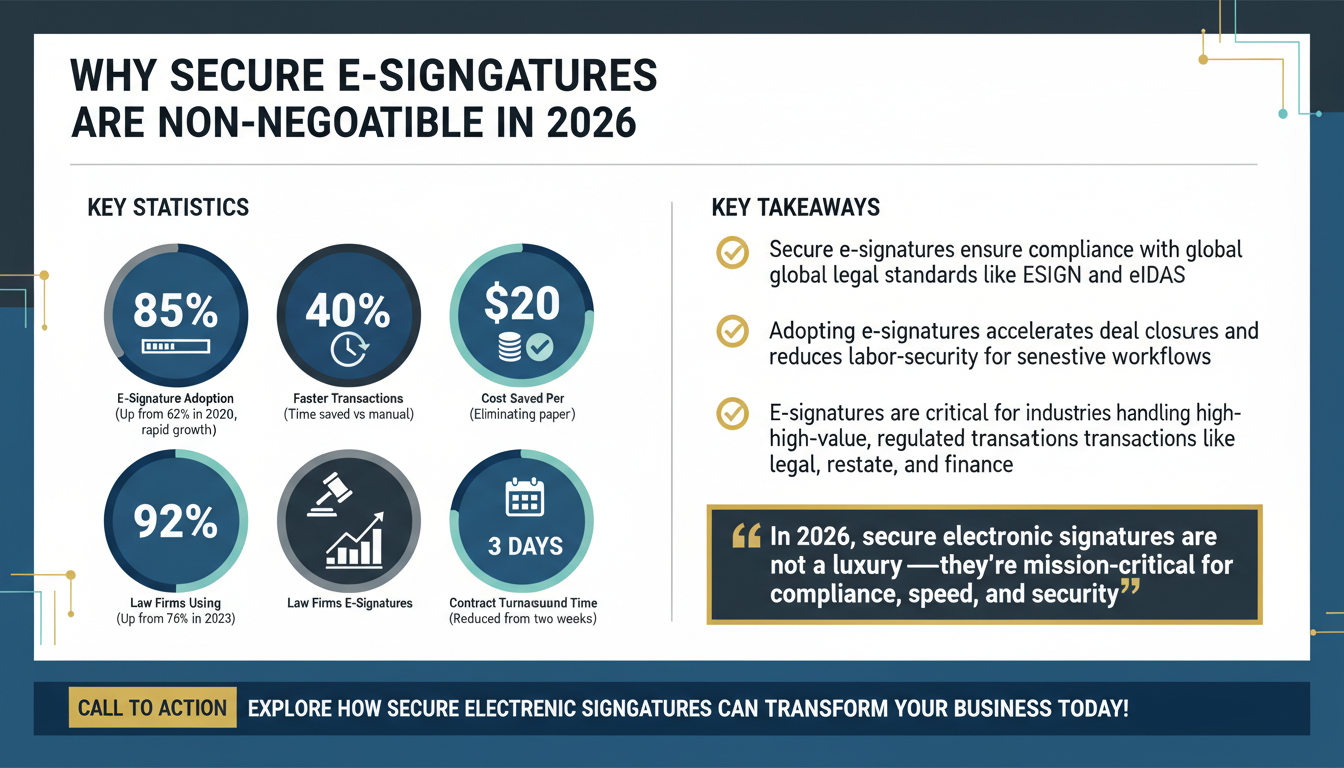
The adoption of secure electronic signatures has skyrocketed in recent years, driven by the pandemic-induced acceleration of digital transformation and the increasing need for remote collaboration. According to Gartner's 2026 Digital Transformation Trends report, 85% of organizations are now leveraging electronic signatures to streamline operations, up from just 62% in 2020. This surge highlights a dramatic shift toward digital-first business models.

Industries like legal, real estate, and finance, where compliance, security, and efficiency are paramount, have been at the forefront of this adoption. Contracts, property deeds, and loan agreements require solutions that offer tamper-proof security, legal validity, and ease of use. Without secure electronic signatures, organizations risk inefficiencies, legal complications, and data breaches.
Adopting secure electronic signatures delivers a range of tangible benefits, including:
- Faster Transactions: Digital signatures reduce deal closure times by over 40%, according to Forrester (2025).
- Cost Savings: McKinsey estimates a savings of up to $20 per document by eliminating manual processes and paper-based workflows (McKinsey, 2025).
- Enhanced Security: Advanced encryption and multi-factor authentication ensure documents remain tamper-proof and confidential.
For example, consider a mid-sized law firm processing client contracts. By transitioning to e-signature solutions, they reduced their average contract turnaround time from two weeks to three days, saving thousands of dollars annually in labor costs.
Key Insight: Secure electronic signatures are no longer a luxury but a necessity for industries handling sensitive, high-value transactions.
Legal Industry: Ensuring Compliance and Streamlining Processes
Legal professionals operate in an environment defined by strict regulatory requirements, confidentiality mandates, and the need for document integrity. Secure electronic signatures have become indispensable in helping firms navigate these demands efficiently. According to the American Bar Association's 2026 Legal Technology Trends report, 92% of law firms now rely on electronic signature solutions for executing contracts, up from 76% in 2023.

The legal sector benefits from secure electronic signatures in several ways:
- Regulatory Compliance: Platforms like DocuSign and Adobe Sign adhere to global standards, including the ESIGN Act (U.S.) and eIDAS Regulation (EU), ensuring documents are legally binding across jurisdictions.
- Audit Trails: Comprehensive digital records provide a clear, tamper-proof history of who signed what and when, which is critical for dispute resolution.
- Operational Efficiency: Contract turnaround times can be reduced by up to 80%, allowing legal teams to focus on high-value tasks rather than administrative bottlenecks.
For instance, a multinational corporation negotiating a merger leveraged secure e-signatures to finalize agreements with stakeholders across three continents. The process, which traditionally would have taken months due to in-person signings, was completed in just two weeks.
However, firms must ensure their chosen e-signature solutions align with jurisdiction-specific laws. For example, a document signed under U.S. ESIGN standards may not meet compliance requirements under EU eIDAS regulations.
Key Takeaway: Secure electronic signatures empower legal professionals to maintain compliance while enhancing operational efficiency and client trust.
Real Estate: Accelerating Deal Closures and Enhancing Client Experience
The real estate industry thrives on speed, accuracy, and trust. Transactions such as property sales, lease agreements, and mortgage approvals depend on timely and secure document execution. According to the National Association of Realtors' 2026 Digital Transformation report, 78% of real estate agents attribute faster deal closures to the adoption of digital signature solutions.

Here’s how secure electronic signatures are revolutionizing real estate:
- Remote Access: Clients can sign documents from anywhere, eliminating delays caused by geographic constraints.
- Error Reduction: Automated workflows prevent common issues like missing initials or misplaced signatures.
- Client Satisfaction: A seamless document signing process fosters trust and enhances the overall client experience.
Consider a real estate agency that transitioned from paper-based processes to digital signatures. By adopting platforms like Zignature, they reduced their average transaction timeline by 50%, enabling agents to close more deals and improve client satisfaction.
In addition, e-signatures are vital for real estate professionals managing cross-border transactions. By using globally recognized standards such as eIDAS, international clients can sign agreements confidently, knowing their documents are legally enforceable.
Key Takeaway: Secure electronic signatures enable real estate professionals to close deals faster while enhancing the client experience and reducing administrative errors.
Financial Transactions: Safeguarding Sensitive Data
The financial sector is one of the most heavily regulated industries, with stringent requirements for data protection and fraud prevention. Secure electronic signatures play a critical role in meeting these demands, offering features such as encryption, biometric authentication, and tamper-evident seals. According to Finextra's 2026 report on financial security, 90% of financial institutions now rely on secure e-signature platforms to authenticate agreements and safeguard sensitive information.

Specific use cases include:
- Loan Approvals: Digital signatures can expedite the approval process by 50%, ensuring clients receive funds faster.
- Investment Accounts: Secure workflows ensure compliance with Know Your Customer (KYC) and Anti-Money Laundering (AML) regulations.
- Cross-Border Transactions: E-signatures simplify global agreements, reducing delays caused by paper-based logistics.
For example, a leading bank implemented secure e-signatures across its loan processing division. Within six months, they reported a 60% reduction in processing times and a significant decrease in fraudulent activity due to enhanced authentication protocols.
Expert Insight: "In an era where data breaches are increasingly sophisticated, secure electronic signatures offer a critical layer of protection for financial institutions," says cybersecurity expert Dr. Elena Martell.
Key Takeaway: Secure electronic signatures are indispensable for safeguarding financial transactions and maintaining client trust in an increasingly digital economy.
Common Mistakes to Avoid When Implementing E-Signatures
While the benefits of secure electronic signatures are undeniable, improper implementation can undermine their effectiveness. Here are some common mistakes organizations must avoid:
- Neglecting Compliance: Ensure the solution complies with relevant laws like ESIGN, UETA, and eIDAS.
- Ignoring User Experience: Complicated workflows can deter users, reducing adoption and ROI.
- Overlooking Integration: Choose platforms that integrate seamlessly with your existing document management systems.
To address these challenges, organizations should conduct a thorough needs assessment before adopting an e-signature solution. Platforms like Zignature offer compliance guarantees and user-friendly features that enhance adoption rates.
Quick Win: Conduct a compliance audit of your e-signature processes today to identify gaps and areas for improvement.
Key Takeaway: Avoiding common mistakes ensures the successful adoption and long-term benefits of secure electronic signatures.
FAQ: Addressing Common Questions
Are electronic signatures legally binding?
Yes, electronic signatures are legally binding in most countries, provided they comply with regulations like ESIGN (U.S.), eIDAS (EU), and others. Always verify the platform’s compliance with local laws.
How secure are electronic signatures?
Secure electronic signatures use encryption, authentication, and tamper-evident technology to ensure document integrity. Leading solutions also provide audit trails for added transparency.
What industries benefit most from electronic signatures?
Industries like legal, real estate, finance, healthcare, and technology see the most significant benefits due to their reliance on sensitive document workflows.
Do electronic signatures work for international agreements?
Yes, provided the solution complies with global standards like eIDAS and UNCITRAL Model Law. Cross-border transactions are streamlined using internationally recognized platforms.
How do I choose the right e-signature platform?
Focus on compliance, security, user experience, and integration capabilities. Start with platforms like Zignature.
Conclusion
Secure electronic signatures are no longer optional in industries like legal, real estate, and finance. They are essential for ensuring compliance, enhancing efficiency, and safeguarding sensitive data. As digital transformation reshapes these sectors, adopting robust e-signature solutions will be a strategic imperative for organizations aiming to stay competitive.
Ready to transform your document workflows? Explore Zignature's pricing plans today or contact us for a personalized demo.
To further enhance your digital workflows, explore our sister platforms: Apparatuz for workflow automation, Applicantz for recruitment management, Schedly for scheduling and appointments, Supportly for customer support, and Zatisfied for feedback management. Together, these tools create a comprehensive ecosystem that complements your digital signature strategy.