
In today’s fast-paced, digitally driven world, effective contract management is more critical than ever. Whether you’re a small business owner, a legal professional, or part of a large enterprise, contracts form the backbone of your operations. They ensure clarity, accountability, and compliance, making them essential for day-to-day business activities. However, traditional contract management processes—rife with physical paperwork, manual workflows, and time-consuming approvals—are fraught with inefficiencies and risks. These outdated practices often lead to bottlenecks, increased operational costs, and missed opportunities.
Enter electronic signatures, a transformative technology that is redefining how businesses handle contracts. By digitizing the signing process, electronic signatures offer unparalleled efficiency, security, and scalability, enabling organizations to stay competitive in the digital age. In this guide, we’ll dive deep into how electronic signatures can streamline contract management, improve workflow automation, and mitigate risks. You’ll walk away with actionable strategies, expert insights, and best practices tailored to your business needs. Let’s explore how to harness the power of electronic signatures to unlock unparalleled efficiency.
Why Traditional Contract Management is a Bottleneck
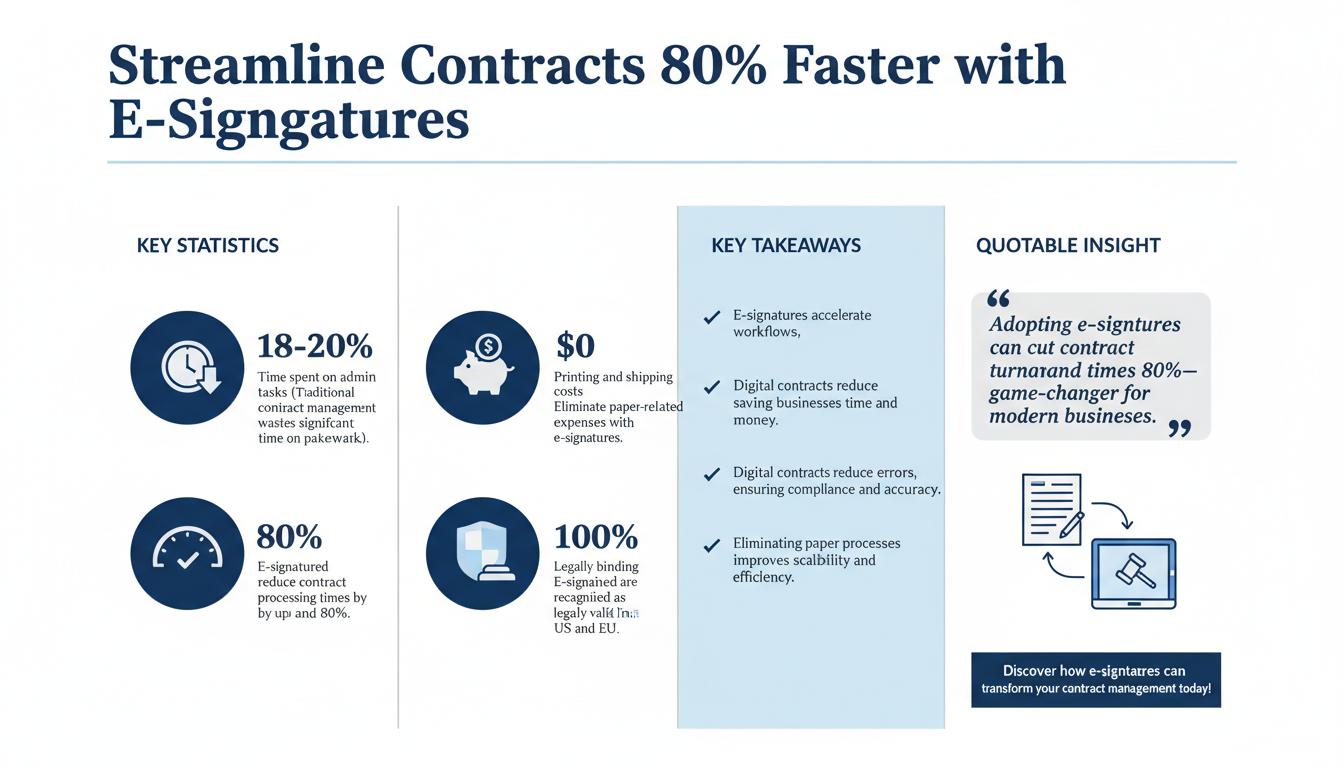
Traditional contract management processes are plagued by inefficiencies that cost businesses time, money, and opportunities. According to a 2025 McKinsey study, organizations spend an average of 18-20% of their time on administrative tasks, much of which involves managing paper contracts, chasing approvals, and mitigating errors. The reliance on physical documentation often leads to delays, especially in industries where accuracy, compliance, and timely execution are paramount, such as legal, real estate, and finance.

Common issues with traditional contract management include:
- Data Entry Errors: Manual handling increases the risk of mistakes, leading to potential legal disputes and reputational damage.
- Delayed Approvals: Physical signatures require time and coordination, slowing down critical business processes.
- High Costs: From printing to shipping, paper-based contracts incur unnecessary expenses, adding to operational overhead.
- Storage Challenges: Physical contracts require space and are harder to retrieve, leading to inefficiencies when accessing historical agreements.
For example, consider a real estate firm that needs to finalize legal contracts for property transactions. The firm spends weeks coordinating signatures between buyers, sellers, and attorneys, resulting in missed deadlines and frustrated clients. In an era where agility and speed determine success, these outdated processes can significantly hinder business growth.
How Electronic Signatures Revolutionize Contract Management
Electronic signatures, or e-signatures, are digital representations of a person’s intent to sign a document. Far from being a simple tech novelty, they are legally binding in most jurisdictions, including the United States (via the ESIGN Act) and the European Union (via eIDAS Regulation). This legal recognition has made electronic signatures a cornerstone of modern business operations.

Here are the core ways e-signatures transform contract management:
1. Speed and Efficiency
Electronic signatures eliminate the need to physically print, sign, and scan documents. This accelerates the entire workflow, reducing contract turnaround times by as much as 80%, according to Forrester Research. For instance, a small business owner can finalize agreements with vendors in hours rather than days, ensuring faster execution and improved vendor relationships.
2. Enhanced Security
Unlike traditional signatures, which can be forged or tampered with, e-signature solutions use advanced encryption, authentication, and audit trails. This ensures signed documents are tamper-proof and legally enforceable. For example, platforms like DocuSign and Zignature offer multi-factor authentication and detailed logs, making it easy to verify the authenticity of every document.
3. Cost Savings
By eliminating paper, ink, postage, and storage costs, businesses can save up to 70% annually, as highlighted in a 2025 Gartner report. A financial services firm, for instance, reduced operational expenses significantly by switching to e-signatures for loan agreements and compliance documentation.
4. Seamless Integration
Modern e-signature platforms integrate with popular tools such as CRMs, ERPs, and document management systems, creating a seamless workflow from contract creation to execution. For example, Zignature’s integration with Salesforce allows sales teams to send, sign, and track contracts directly within their CRM environment, boosting productivity.
Key Benefits of Workflow Automation in Contract Management
Contract management doesn’t stop at signing. Optimizing the entire workflow—from drafting to storage—is essential for long-term efficiency. Workflow automation, powered by e-signatures, ensures every step of the process is smooth, transparent, and error-free.

1. Standardized Processes
Automated workflows ensure that every contract follows the same approval and compliance steps, minimizing discrepancies. This standardization is especially critical in regulated industries like healthcare and finance, where adherence to legal requirements is non-negotiable.
2. Improved Collaboration
With cloud-based platforms, teams can collaborate on contracts in real time, regardless of their location. This reduces delays caused by miscommunication or waiting for reviews. For instance, a distributed marketing team can collaborate on vendor agreements without needing to physically meet, expediting project launches.
3. Real-Time Visibility
Workflow automation provides a centralized dashboard to monitor contract status, helping managers identify bottlenecks and take corrective action immediately. For example, a procurement manager can track pending approvals and ensure vendor contracts are processed on time.
4. Compliance and Audit Trails
Automated systems maintain comprehensive audit trails, ensuring compliance with legal and industry standards. This is invaluable during audits or disputes. An example is a legal firm using automation to log every interaction with a client’s contract, providing evidence in case of disputes.
Proprietary Framework: The Zignature "ACE" Model for Efficient Contract Management
To help businesses streamline contract management, we’ve developed the "ACE" model—Automate, Collaborate, Execute. This three-step framework ensures seamless integration of electronic signatures into your workflows:

Step 1: Automate
Start by automating repetitive tasks such as approvals, reminders, and document routing. Use platforms that integrate e-signatures with automation tools to reduce manual intervention. For example, automating email notifications for pending signatures can reduce delays.
Step 2: Collaborate
Enable cross-departmental collaboration by using cloud-based platforms. Ensure that all stakeholders have access to the latest version of the contract in real time. Collaboration tools like Google Workspace or Microsoft Teams can complement e-signature platforms.
Step 3: Execute
Finalize contracts with secure, legally binding electronic signatures. Post-execution, store the documents in a secure, searchable digital repository for future reference. For instance, a retail company can execute supplier contracts and store them in a shared drive for seamless access.
Best Practices for Implementing Electronic Signatures
Adopting electronic signatures is not just about technology; it’s about transforming your organizational processes. Here are some best practices to ensure successful implementation:
- Select a Secure Platform: Choose a solution like Zignature that prioritizes data encryption, compliance, and user authentication.
- Train Your Team: Conduct training sessions to familiarize employees with the new system and its benefits.
- Integrate with Existing Tools: Ensure the e-signature platform integrates seamlessly with your existing software ecosystem, such as CRMs or ERPs.
- Create Templates: Standardize frequently used contracts by creating reusable templates, saving time and reducing errors.
- Monitor and Optimize: Regularly review your workflows to identify areas for improvement.
FAQ: Common Questions About Electronic Signatures
1. Are electronic signatures legally binding?
Yes. In the United States, electronic signatures are legally binding under the ESIGN Act. Similar laws exist globally, such as eIDAS in the EU.
2. How secure are electronic signatures?
Electronic signatures use advanced encryption and authentication methods, making them more secure than traditional signatures. Platforms often include audit trails for additional security.
3. Can I integrate e-signatures with my existing software?
Most e-signature platforms, including Zignature, integrate seamlessly with CRMs, document management systems, and more.
4. What industries benefit the most from e-signatures?
Industries like legal, finance, healthcare, and real estate benefit significantly due to their reliance on contracts and compliance requirements.
Conclusion: Transform Your Contract Management Today
Electronic signatures are no longer a luxury—they are a necessity for businesses looking to streamline their contract management processes. By adopting solutions like Zignature and leveraging the ACE framework, organizations can reduce costs, improve efficiency, and enhance compliance. Whether you’re a startup or an established enterprise, the future of contract management is digital, and the time to make the leap is now.
Ready to transform your workflows? Explore Zignature’s robust features to see how our platform can help you achieve seamless, secure, and efficient contract management today.
To further enhance your digital workflows, explore our sister platforms: Apparatuz for workflow automation, Applicantz for recruitment management, Schedly for scheduling and appointments, Supportly for customer support, and Zatisfied for feedback management. Together, these tools create a comprehensive ecosystem that complements your digital signature strategy.