
In today’s fast-paced, digital-first business environment, small and medium-sized businesses (SMBs) face constant pressure to optimize operations, reduce costs, and maintain compliance with ever-evolving regulations. One of the most transformative technologies enabling SMBs to achieve these goals is digital signature software. By replacing cumbersome manual processes with secure, efficient, and legally binding electronic signatures, businesses can unlock new levels of productivity, cost savings, and customer satisfaction.
This guide will provide a comprehensive overview of how digital signature software benefits SMBs, supported by industry data, expert insights, actionable strategies, and real-world examples. Whether you’re a business owner, operations manager, or IT professional, this resource will equip you with the knowledge needed to leverage digital signatures effectively and transform your organization.
1. Enhanced Operational Efficiency
Operational efficiency is the lifeblood of any SMB. Inefficient workflows, manual processes, and paper-based systems not only waste time but also drain resources. Digital signature software addresses these challenges by streamlining document workflows, enabling faster approvals, and reducing bottlenecks.

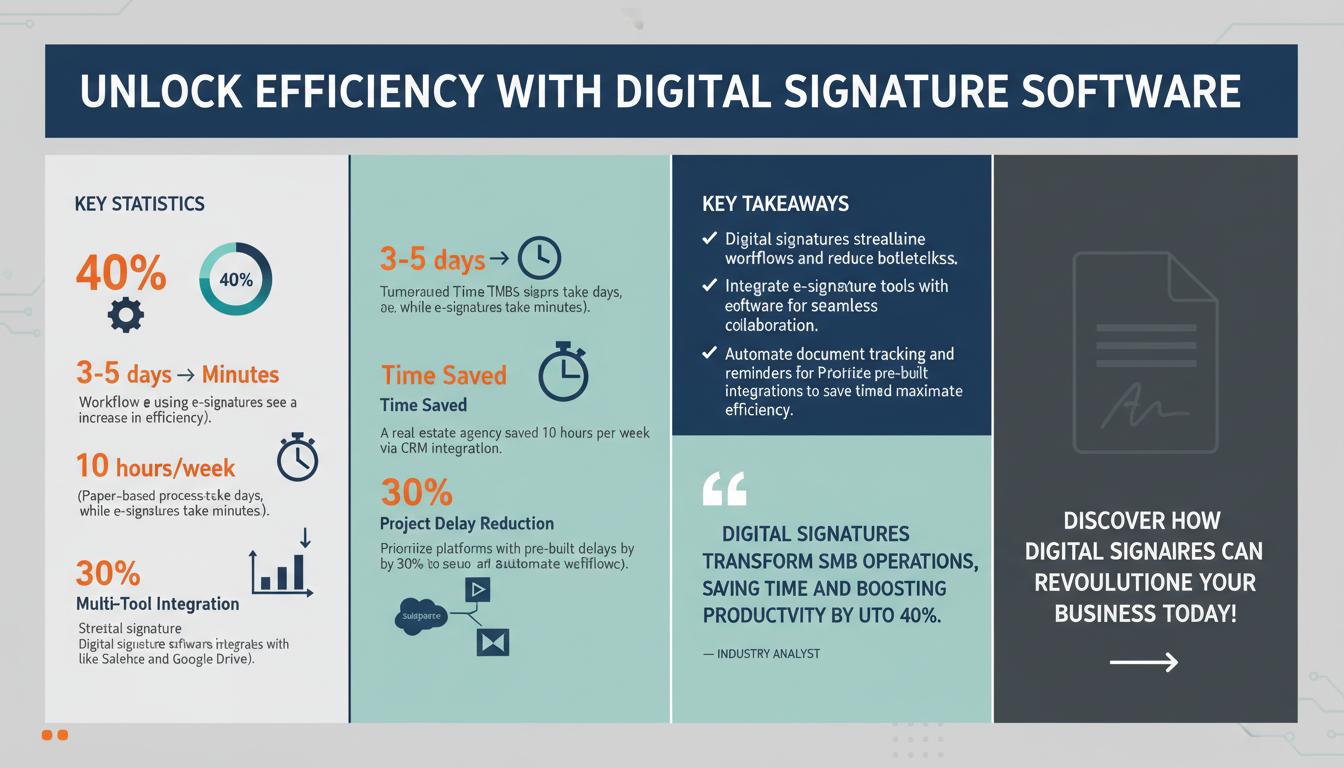
For example, consider the traditional process of signing contracts: printing, mailing, scanning, and filing documents. Studies show that paper-based workflows can take 3-5 days on average to complete. In contrast, digital signatures reduce turnaround times to mere hours or even minutes. According to Gartner's 2026 report on digital transformation, businesses that adopt e-signature solutions see a 40% increase in overall workflow efficiency.
Digital signature software also enables multi-party collaboration, allowing teams to seamlessly work on contracts, agreements, and approvals without delays caused by physical document handling. These platforms often integrate with popular tools like CRM systems, project management software, and cloud storage solutions, further enhancing operational efficiency. For example, a real estate agency in California reported reducing manual errors and saving an average of 10 hours per week after integrating digital signature software with their CRM system.
Streamlined Document Workflows
Digital signature software allows businesses to maintain seamless workflows by automating document tracking, reminders, and approvals. This automation eliminates the need for manual follow-ups, ensuring that no document is overlooked or delayed. For instance, a marketing agency that previously relied on manual document handling implemented automated workflows with digital signatures, reducing project delays by 30%.
Integration with Existing Business Tools
One of the standout features of digital signature software is its ability to integrate with existing tools such as Salesforce, Microsoft Teams, or Google Drive. This integration ensures documents are stored securely and are easily accessible for collaboration. For example, a recruitment firm used digital signature software integrated with their applicant tracking system to speed up employment contract approvals, saving valuable time during the onboarding process.
Pro Tip: When selecting digital signature software, prioritize platforms that offer pre-built integrations with your current business tools. This will minimize disruption and maximize efficiency during implementation.
Actionable Tips:
- Identify paper-based workflows in your business that could benefit from automation.
- Choose a digital signature platform that integrates easily with your existing software tools.
- Set up automated reminders to ensure timely document approvals.
2. Cost Savings and Reduced Overhead
SMBs often operate on tight budgets, making cost savings a critical priority. Traditional document management systems involve significant expenses, including printing, shipping, storage, and administrative overhead. Digital signature software offers a cost-effective alternative by eliminating many of these expenses while providing added value.

According to a study by Forrester, businesses adopting e-signature solutions save an average of $20 per document due to reductions in paper, postage, and storage costs. For SMBs handling hundreds or thousands of documents annually, these savings quickly add up, freeing resources for growth initiatives. For instance, a small legal firm in Chicago reported saving over $15,000 annually after transitioning to digital signatures for client agreements and court filings.
Additionally, digital signature platforms reduce administrative workload, enabling employees to focus on higher-value tasks instead of manual paperwork. This not only improves overall efficiency but also enhances employee satisfaction. A 2023 survey conducted by Deloitte found that SMB employees using workflow automation tools, such as digital signatures, reported a 25% increase in job satisfaction due to reduced administrative burdens.
Quantifying Savings
The financial benefits of e-signature solutions can be quantified by tracking direct cost reductions and indirect efficiency gains. For example, a retail company transitioned to digital signatures for vendor contracts and saved $10,000 annually on paper and postage alone. Additionally, streamlined workflows enabled faster contract approvals, reducing operational delays.
Reinvesting Savings for Growth
Money saved through the adoption of digital signature software can be reinvested into other areas such as marketing, employee training, or technology upgrades. A small accounting firm used cost savings from digital signatures to invest in a client relationship management tool, enhancing their customer service capabilities.
Expert Insight: "The key to maximizing cost savings is to prioritize high-volume workflows for digitization first. Start with contracts, invoices, or regulatory filings to see immediate results." – Jennifer Price, Business Process Consultant
Actionable Tips:
- Track your current spending on paper, postage, and storage to quantify potential savings.
- Implement digital signatures for high-volume document workflows first to maximize ROI.
- Use the freed resources to invest in employee training or customer acquisition strategies.
3. Improved Security and Compliance
Data security and compliance are paramount for SMBs, especially in regulated industries like healthcare, finance, and legal services. Paper-based processes are inherently risky, with challenges such as unauthorized access, document tampering, and compliance violations. Digital signature software mitigates these risks by providing robust security features and ensuring compliance with legal standards.

Most digital signature solutions utilize advanced encryption technologies, multi-factor authentication, and audit trails to safeguard sensitive information. According to IDC's 2026 report on data security, businesses using digital signature platforms experience a 70% reduction in security incidents compared to paper-based systems.
Enhancing Security Features
Digital signature platforms use cryptographic algorithms to ensure that signed documents cannot be altered without detection. This eliminates the risk of forgery and tampering. Additionally, audit trails create a log of all activities related to a document, providing traceability and accountability for every transaction.
Ensuring Compliance
Compliance with legal standards such as the ESIGN Act, UETA, and GDPR is critical, especially for businesses operating internationally. Digital signature software ensures that signed documents meet regulatory requirements, preventing costly legal disputes. For example, an international consulting firm streamlined compliance across borders using e-signature tools that adhered to global data protection standards.
Pro Tip: Regularly update your digital signature software to stay compliant with evolving regulations. Partner with vendors who provide ongoing compliance support.
Actionable Tips:
- Verify that the digital signature platform you choose complies with relevant regulations in your industry.
- Train employees on security best practices, such as using strong passwords and enabling multi-factor authentication.
- Regularly audit your document workflows to ensure compliance and identify areas for improvement.
4. Faster Customer Experience and Satisfaction
In competitive markets, delivering exceptional customer experiences is a key differentiator for SMBs. Digital signature software facilitates faster and more convenient interactions, enabling customers to sign agreements, contracts, and forms from anywhere, at any time.
For instance, real estate agencies using digital signatures can close property deals faster, while healthcare providers can streamline patient onboarding with secure electronic forms. A 2026 Salesforce report found that businesses leveraging digital processes saw a 25% improvement in customer satisfaction ratings.
Mobile Accessibility
Mobile-friendly digital signature platforms allow clients to sign documents from smartphones or tablets, creating a frictionless experience. For example, an insurance company launched a mobile app integrated with e-signature functionality, leading to a 40% increase in policy renewals.
Building Trust Through Transparency
Digital signature solutions provide customers with clear, transparent processes. Features like real-time document tracking and notifications reassure clients that their transactions are secure and timely. This builds trust and enhances long-term relationships.
Actionable Tips:
- Use digital signature software to reduce wait times for customer approvals.
- Offer mobile-friendly solutions to enhance convenience for clients on the go.
- Monitor customer feedback to identify further opportunities for process improvement.
5. Scalability and Flexibility
As SMBs grow, their needs evolve. Digital signature software provides the scalability and flexibility required to accommodate this growth. These solutions can handle increasing document volumes, integrate with existing systems, and adapt to unique business requirements.
For example, cloud-based e-signature platforms allow SMBs to scale operations without investing heavily in infrastructure. Additionally, customizable features such as branding, workflows, and templates enable businesses to tailor the software to their specific needs. A small marketing firm in Atlanta scaled their client onboarding process by automating contracts with branded digital templates, reducing onboarding time by 50%.
Cloud Scalability
Cloud-based solutions ensure scalability without requiring additional hardware or storage investments. This makes digital signatures an ideal choice for growing businesses. For example, a logistics company expanded operations internationally and used a cloud-based e-signature platform to manage contracts across multiple regions seamlessly.
Customization for Unique Needs
Customizable templates and workflows allow businesses to align digital signature solutions with their specific requirements. For instance, an event planning company created branded templates for client agreements, reducing onboarding time and enhancing professionalism.
Pro Tip: Opt for a digital signature platform that offers scalable pricing models. This ensures you only pay for what you use, making it cost-effective as your business grows.
Actionable Tips:
- Choose a solution with cloud-based scalability to avoid infrastructure limitations.
- Leverage customizable templates to align with your brand and industry requirements.
- Regularly review your software needs to ensure they match your growth trajectory.
6. Environmental Sustainability
With increasing focus on sustainability, SMBs are under pressure to adopt environmentally friendly practices. Digital signature software contributes significantly to reducing paper waste, energy consumption, and carbon footprints.
According to EPA's green business guide, transitioning to paperless workflows can reduce office waste by up to 60%. Businesses adopting e-signature solutions not only support environmental goals but also enhance their brand reputation as eco-conscious organizations. For example, a consultancy firm in Seattle promoted their reduced carbon footprint after switching to digital signatures, attracting environmentally conscious clients.
Corporate Social Responsibility
Adopting sustainable practices such as digital signatures can be highlighted in corporate social responsibility (CSR) initiatives. This not only attracts eco-conscious customers but also boosts employee morale by aligning business practices with environmental values.
Long-Term Environmental Impact
Switching to digital workflows has long-term environmental benefits, including reducing deforestation and minimizing landfill waste from discarded paper. A manufacturing company measured its environmental impact after adopting digital signatures and found a 30% reduction in paper usage annually.
Expert Insight: "Sustainability is not just about saving the planet; it’s about future-proofing your business. Customers are increasingly choosing brands that prioritize eco-friendly practices." – Sarah Green, Environmental Consultant
Actionable Tips:
- Promote your paperless initiatives in marketing efforts to highlight your commitment to sustainability.
- Track your environmental impact metrics to quantify and share your progress.
- Encourage clients to adopt digital signatures as part of their own sustainability goals.
Conclusion
Digital signature software is no longer a luxury—it’s a necessity for SMBs striving to stay competitive, efficient, and sustainable in today’s business landscape. From enhancing operational efficiency to reducing costs, improving security, and boosting customer satisfaction, the benefits of adopting this technology are undeniable.
By leveraging digital signature software, SMBs can not only streamline their workflows but also position themselves as forward-thinking organizations that prioritize innovation and environmental responsibility. Whether you’re looking to save money, scale your operations, or deliver faster customer experiences, digital signatures provide the perfect solution to meet your needs.
Take the first step toward transforming your business by exploring leading digital signature platforms, integrating them with your workflows, and empowering your team to embrace the future of document management.
To further enhance your digital workflows, explore our sister platforms: Apparatuz for workflow automation, Applicantz for recruitment management, Schedly for scheduling and appointments, Supportly for customer support, and Zatisfied for feedback management. Together, these tools create a comprehensive ecosystem that complements your digital signature strategy.