
In 2026, small and medium-sized businesses (SMBs) are navigating a rapidly evolving business landscape. With increasing competition, tighter budgets, and rising customer expectations, SMBs face mounting pressure to streamline operations, reduce costs, and enhance productivity. One solution gaining traction is the use of digital signatures—a simple yet powerful tool that is transforming workflows across departments. From HR to legal and sales, digital signatures are proving to be indispensable productivity boosters.
This article explores the transformative impact of digital signatures on SMB operations. By eliminating inefficiencies, reducing delays, and enhancing compliance, digital signatures are enabling SMBs to unlock measurable results. With detailed insights, real-world examples, and actionable advice, we’ll show you how this innovative technology is revolutionizing key business functions.
Introduction: Why Digital Signatures Are a Game-Changer for SMBs
Imagine a business environment where contracts are signed in seconds, HR onboarding processes are seamless, and compliance workflows are effortlessly maintained. This isn’t a far-off dream—it’s the reality for SMBs that have adopted digital signatures. As businesses increasingly prioritize speed, accuracy, and security, digital signatures have emerged as one of the most valuable tools for productivity enhancement. The benefits are clear, and the adoption rates are soaring.

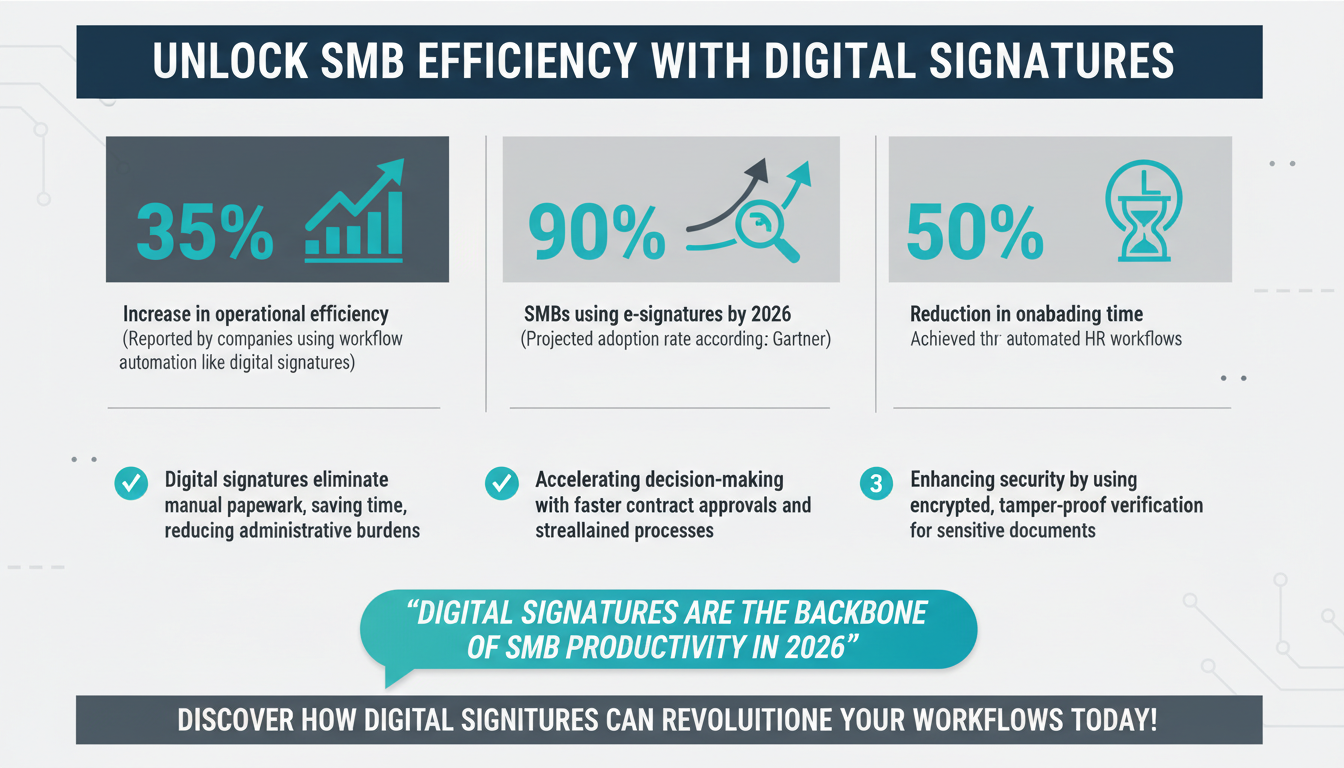
According to a McKinsey study, companies implementing workflow automation technologies, including digital signatures, report a 35% increase in operational efficiency. Gartner predicts that by 2026, 90% of SMBs will rely on electronic signatures for daily operations. These numbers highlight the growing importance of digital signatures in modern business environments.
The advantages of digital signatures extend far beyond speed and convenience. They include:
- Eliminating manual paperwork: Reduces administrative burdens and frees up valuable employee time.
- Accelerating decision-making: Speeds up contract approvals and other critical processes.
- Enhancing security: Offers encryption and tamper-proof verification to mitigate risks.
In this article, we’ll delve into how digital signatures are revolutionizing SMB workflows across departments like HR, legal, sales, procurement, and finance—providing actionable insights for businesses looking to thrive in 2026.
1. Streamlining Human Resources with Digital Signatures
Human Resources (HR) is often the backbone of any organization, but it’s also one of the most paperwork-intensive departments. From onboarding new employees to managing contracts and compliance records, HR teams face numerous challenges that can slow down productivity. Digital signatures offer a solution by automating these processes and enabling HR teams to focus on more strategic initiatives.
Onboarding Made Simple
Traditional onboarding processes are notorious for being time-consuming. They often involve printing, signing, and scanning documents—a cumbersome ordeal for both HR professionals and new hires. Digital signatures eliminate these inefficiencies, allowing employees to sign offer letters, NDAs, and compliance forms electronically. A study by Gartner found that automated HR workflows reduce onboarding time by up to 50%, leading to higher employee satisfaction and faster integration into the company.
Imagine a scenario where an HR manager in a growing startup needs to onboard 50 employees in under a month. Using traditional methods, this would involve scheduling in-person meetings, printing dozens of documents, and chasing signatures. By adopting digital signature platforms, all required paperwork can be completed remotely within hours, allowing new hires to focus on their roles immediately after joining.
Compliance and Recordkeeping
For SMBs, maintaining compliance with labor laws is non-negotiable. Digital signatures ensure all documents are tamper-proof, legally binding, and securely stored, simplifying audits and reducing legal risks. The eIDAS regulation in Europe, for example, guarantees legal recognition for electronic signatures, providing SMBs with peace of mind when dealing with international hires or regulations.
Consider the challenges faced by HR teams during audits. With traditional paperwork, retrieving signed contracts from physical storage can be both time-intensive and error-prone. Digital signatures solve this issue by centralizing all signed documents in secure, searchable repositories, ensuring that compliance checks are swift and stress-free.
Performance and Appraisal Contracts
HR teams often require signatures for performance agreements, appraisal reviews, and other internal documents. Digital signatures enable quick, transparent transactions, ensuring alignment between employees and management while reducing delays.
For example, a mid-sized marketing agency in Toronto used a digital signature platform to streamline its annual appraisal process. Employees and managers could sign performance agreements online, cutting down the entire process from three weeks to five days. This not only saved time but also boosted employee engagement, as they saw the company investing in modern, efficient tools to support their growth.
Pro Tip: Choose a digital signature platform that integrates with your existing HR management software (e.g., BambooHR or Workday) for a seamless experience. This reduces manual data entry and ensures consistency across systems.
2. Enhancing Legal Team Efficiency
Legal departments are essential for SMBs, but they are often bogged down by manual processes, lengthy contract negotiations, and strict compliance requirements. Digital signatures alleviate these challenges by streamlining contract management and improving collaboration.
Faster Contract Execution
Drafting, negotiating, and executing contracts can take weeks, causing delays in business operations. Digital signatures reduce this timeline to mere hours, ensuring faster deal closures. According to Deloitte Insights, companies using digital signatures experience a 40% reduction in contract turnaround times, enabling legal teams to focus on higher-value tasks.
For example, a small real estate firm in Atlanta used digital signatures to accelerate lease agreements with tenants. Before digitalization, signing a lease often involved back-and-forth emails, courier services, and in-person visits. After implementing digital signatures, the firm reduced its lease processing time from 10 days to just 48 hours, enabling it to close deals faster and improve client satisfaction.
Improved Collaboration
Legal teams frequently work with external stakeholders, such as vendors and clients. Digital signature platforms enable real-time sharing and signing of documents, ensuring all parties remain aligned. This is particularly beneficial for cross-border agreements, where traditional methods often result in costly delays.
Consider a scenario involving a legal consultancy managing multinational contracts. By leveraging a digital signature solution, the firm allowed stakeholders across different time zones to sign documents at their convenience, reducing approval times and avoiding disruptions to other projects.
Enhanced Security
Legal documents require airtight security to prevent fraud, tampering, or unauthorized access. Digital signatures use encryption technology and audit trails to verify authenticity and ensure compliance with industry standards.
For instance, blockchain-based digital signature solutions are emerging as a key player in ensuring document integrity. These systems provide immutable records of transaction history, offering enhanced transparency and trust for sensitive legal agreements.
Expert Insight: When selecting a digital signature platform for legal use, ensure it complies with region-specific regulations like the ESIGN Act (U.S.) or eIDAS (EU). This guarantees the legal enforceability of signed documents.
3. Accelerating Sales Cycles with E-Signatures
For sales teams, speed and efficiency are critical to closing deals and driving revenue growth. Digital signatures empower sales representatives to simplify client interactions, reduce bottlenecks, and improve overall performance.
Speeding Up Agreements
Sales contracts often stall due to manual signing processes, which can involve printing, scanning, and mailing documents. Digital signatures allow clients to sign contracts on any device, anywhere, reducing the sales cycle by up to 30%. HubSpot reported that SMBs using e-signature platforms saw a significant increase in deal closures.
For example, a software-as-a-service (SaaS) company in San Francisco integrated a digital signature solution with its CRM platform. This eliminated delays caused by manual follow-ups and reduced the average time to close contracts from four days to less than 24 hours, giving the company a competitive edge in a fast-paced market.
Improving Client Trust
Clients value a seamless experience when working with businesses. Offering secure, easy-to-use signature options builds trust and strengthens relationships. For SMBs, this can be a key differentiator in competitive markets.
In one case, a boutique consulting firm in London reported a 20% increase in client retention after adopting digital signatures. Clients appreciated the simplicity and transparency of the signing process, which reflected positively on the firm’s professionalism.
Scaling Automation
Digital signatures integrate seamlessly with CRM tools like Salesforce, enabling sales teams to automate workflows, track document statuses, and focus on high-value activities like lead generation and relationship building.
For teams handling high volumes of sales contracts, this integration can prevent bottlenecks and ensure that no deals slip through the cracks. Automated reminders and progress tracking further enhance efficiency, allowing sales reps to prioritize their efforts effectively.
Pro Tip: Look for digital signature solutions that offer mobile-friendly signing options. This is especially important when dealing with clients who may need to sign documents on the go.
4. Simplifying Procurement and Vendor Management
Procurement departments handle critical tasks like vendor contracts, purchase orders, and compliance documentation. Digital signatures streamline these workflows, ensuring timely execution and reducing errors.
Vendor Agreements
Procurement teams often face delays in finalizing vendor contracts, which can disrupt supply chains. Digital signatures enable faster completion of agreements, ensuring smooth vendor onboarding and uninterrupted business operations.
For example, a global electronics retailer in Japan adopted digital signatures to manage its vendor agreements. The time needed to finalize contracts dropped from weeks to just 48 hours, allowing the company to improve inventory management and meet customer demand more effectively.
Purchase Order Approvals
Digital signatures simplify approval workflows, minimizing delays and ensuring procurement timelines are met. Research by Forrester found that automated procurement workflows lead to a 25% increase in operational efficiency.
Imagine a manufacturing firm needing rapid approval for a bulk order of raw materials. Digital signatures facilitated immediate approvals, preventing production delays and helping the company maintain its project timelines.
Compliance Management
Procurement teams must navigate complex regulatory requirements. Digital signatures ensure all documentation meets compliance standards, reducing the risk of penalties or disputes.
A pharmaceutical company in Switzerland, for example, relied on digital signatures to meet stringent compliance requirements for vendor contracts. This not only reduced legal risks but also streamlined audit processes, saving the team significant time and effort.
5. Transforming Finance and Accounting Operations
Finance departments rely on accurate documentation and timely approvals to maintain operational efficiency. Digital signatures optimize workflows, reduce errors, and enhance accountability.
Invoice Approvals
Delays in invoice approvals can disrupt cash flow. Digital signatures ensure invoices are approved quickly, improving payment cycles and cash flow management.
Consider a logistics company in Dubai that used to experience delays in approving invoices due to manual processes. By adopting digital signatures, the company reduced the average invoice approval time from 10 days to just 48 hours, allowing for better financial planning and vendor satisfaction.
Budget Approvals
Finance teams often require executive sign-off for budgets. Digital workflows eliminate delays and provide real-time tracking of approvals, ensuring smoother financial planning.
For instance, a non-profit organization streamlined its annual budgeting process by implementing a digital signature solution. Executives could approve budgets remotely, cutting the approval timeline in half and enabling the organization to allocate funds more efficiently.
Audit Trails
Digital signatures offer built-in audit trails, simplifying compliance audits and enhancing transparency. This is particularly valuable for SMBs operating in regulated industries.
A healthcare provider in Australia leveraged digital signatures to maintain secure, accessible records for auditing purposes. During a recent compliance audit, the digital records saved the company several days of preparation time, ensuring a smooth and successful audit process.
Pro Tip: Ensure your digital signature platform integrates with accounting software like QuickBooks or Xero. This enables seamless workflows and reduces the risk of manual errors.
FAQ: Common Questions About Digital Signatures
- Are digital signatures legally binding? Yes, digital signatures are legally binding under laws like the eIDAS regulation in the EU and the ESIGN Act in the United States.
- How secure are digital signatures? Digital signatures use encryption and authentication technologies, making them highly secure and tamper-proof.
- Can digital signatures be used for international contracts? Absolutely. Many countries recognize digital signatures as valid for cross-border agreements.
- What industries benefit the most from digital signatures? Legal, healthcare, finance, real estate, and technology sectors are among the biggest adopters of digital signatures.
Conclusion: Unlocking Productivity in Every Department
Digital signatures are no longer a luxury—they’re a necessity for SMBs looking to thrive in 2026. By streamlining workflows, enhancing security, and reducing delays, digital signatures empower every department to operate more efficiently. Whether it’s HR, legal, sales, procurement, or finance, the benefits are undeniable.
Ready to revolutionize your SMB’s operations? Check out our platform features or explore how digital signatures solve industry-specific challenges.
To further enhance your digital workflows, explore our sister platforms: Apparatuz for workflow automation, Applicantz for recruitment management, Schedly for scheduling and appointments, Supportly for customer support, and Zatisfied for feedback management. Together, these tools create a comprehensive ecosystem that complements your digital signature strategy.