
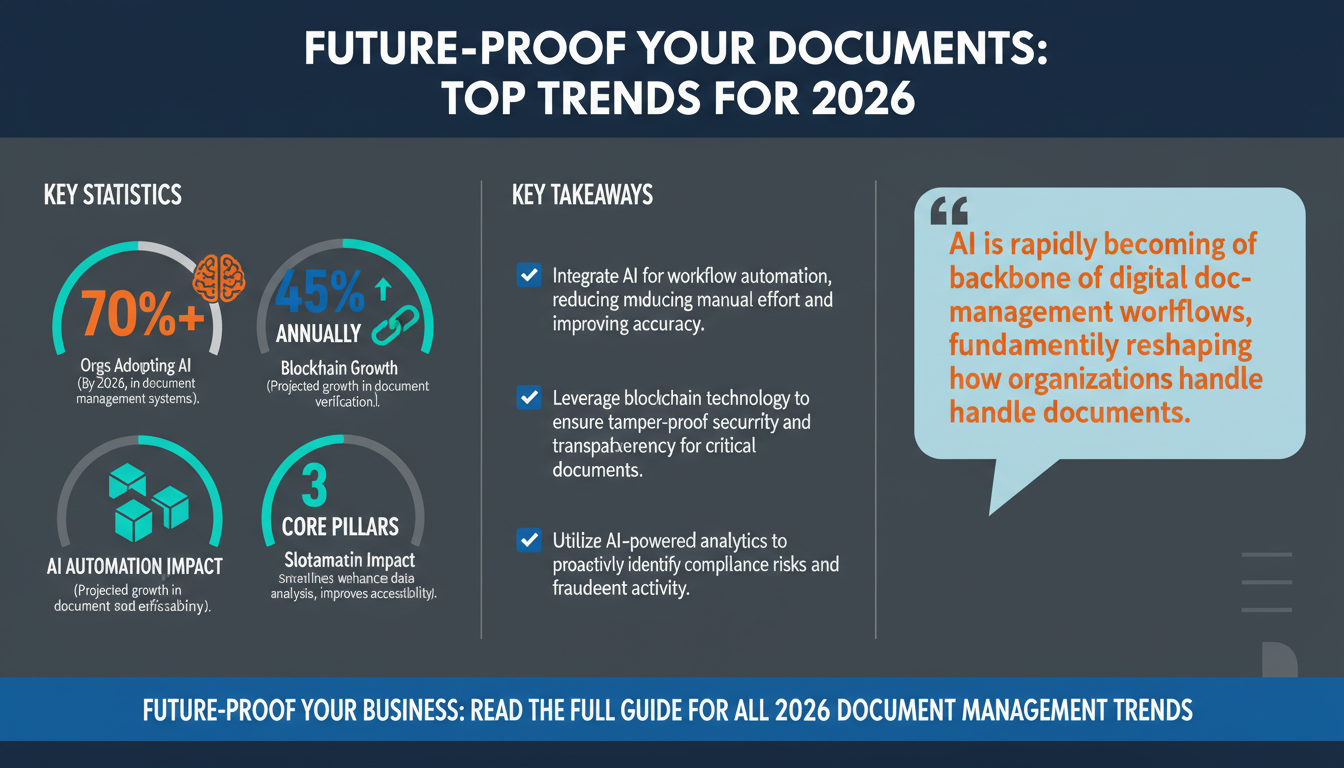
As businesses accelerate their digital transformation journeys, the role of digital document management is becoming more critical than ever. By 2026, advancements in technology, shifting workforce behaviors, and increasing regulatory demands will converge to fundamentally reshape how organizations handle, store, and secure their documents. From AI-powered automation to blockchain-enhanced security, the landscape of digital document management is evolving at an unprecedented pace, offering exciting opportunities and challenges for businesses worldwide.
In this article, we’ll explore the most significant trends shaping the future of digital document management in 2026. Whether you’re a small business owner, an enterprise IT leader, or a professional navigating compliance-heavy industries, these insights will help you prepare for and capitalize on the changes ahead.
1. AI-Driven Automation: The Backbone of Future Workflows
Artificial intelligence (AI) is rapidly becoming the backbone of digital document management workflows. By 2026, Gartner predicts that over 70% of organizations worldwide will incorporate AI into their document management systems. AI-powered tools excel at automating repetitive tasks, such as document classification, data extraction, and contract analysis, which not only reduces human error but also significantly improves efficiency.

Take invoice processing as an example. AI can quickly identify critical details like invoice amounts, due dates, and vendor names and automatically log them into enterprise resource planning (ERP) systems. This eliminates the need for manual data entry, saving time and ensuring data accuracy. Similarly, machine learning algorithms can spot anomalies or patterns in documents that signal compliance risks or fraudulent activity, enabling businesses to address issues proactively.
Beyond automation, AI is revolutionizing document accessibility through natural language processing (NLP). For instance, intelligent search engines can interpret user queries and locate relevant documents even if users don’t know the exact file name or location. Imagine an employee typing "contract with vendor X from 2023" into a document management system and instantly retrieving the precise file—this level of convenience can dramatically enhance productivity.
Moreover, AI is improving collaboration across teams by offering context-aware suggestions. For example, AI might recommend related documents during a project meeting or highlight deadlines that need attention, ensuring that teams stay on track.
Key Takeaway:
- Implement AI-powered tools to streamline document workflows and reduce manual effort.
- Leverage machine learning for advanced data analysis and compliance monitoring.
- Adopt intelligent search solutions to enhance document accessibility and retrieval.
2. The Rise of Blockchain for Secure and Tamper-Proof Documentation
Blockchain technology, once primarily associated with cryptocurrencies, is now revolutionizing the way organizations manage digital documents. By 2026, industries such as finance, healthcare, and legal will increasingly rely on blockchain for secure, tamper-proof documentation. According to a Forrester report, blockchain adoption in document verification is expected to grow by 45% annually, driven by the demand for greater transparency and trust.

At its core, blockchain creates a decentralized ledger that records transactions in an immutable and transparent manner. For document management, this means every version of a document, along with its changes and approvals, is securely timestamped and recorded. This level of traceability is invaluable in industries with stringent compliance requirements, such as pharmaceuticals, real estate, and legal services.
One notable application of blockchain is in digital signatures. Blockchain-based e-signatures provide an additional layer of security, ensuring that signed documents cannot be altered without invalidating the signature. For example, a legal contract signed and stored on a blockchain ledger offers indisputable proof of authenticity and compliance, which is critical for audits and legal disputes.
Blockchain also facilitates decentralized access to documents, reducing the risk of centralized breaches. In a world where cyberattacks are on the rise, this added security measure could be a game-changer for organizations handling sensitive data.
Key Takeaway:
- Explore blockchain-based solutions for secure document storage and verification.
- Adopt blockchain-enhanced e-signature tools to ensure document authenticity.
- Integrate blockchain into workflows to meet compliance and audit requirements.
3. The Expansion of Paperless Workflows
The transition to paperless workflows is gaining momentum as organizations recognize the significant cost, environmental, and efficiency benefits of reducing paper usage. According to a Statista survey, 83% of organizations have prioritized going paperless as part of their sustainability initiatives by 2026.

Digital document management platforms enable this shift by offering features such as cloud storage, mobile access, and collaborative tools. Remote teams, for instance, can now access, edit, and share documents in real time, eliminating the need for physical copies and traditional courier services. Furthermore, advanced security measures, such as encryption and multi-factor authentication, ensure that sensitive documents remain protected in the digital realm.
The environmental impact of going paperless is equally compelling. A medium-sized organization can save thousands of sheets of paper annually, significantly reducing its carbon footprint. Additionally, the cost savings from minimizing paper, printing, and storage expenses make the transition financially rewarding.
However, the journey to paperless workflows is not without obstacles. Common barriers include resistance to change, initial implementation costs, and concerns about data security. To address these challenges, organizations must invest in employee training and awareness campaigns, highlighting the long-term benefits and providing hands-on support during the transition.
Key Takeaway:
- Adopt digital document management platforms to reduce reliance on paper.
- Implement robust security measures to protect sensitive digital files.
- Educate employees on the benefits and use of paperless workflows.
4. Integration with Cloud Ecosystems
Cloud technology has become the cornerstone of modern document management systems. By 2026, IDC predicts that 90% of businesses will rely on cloud-based solutions for their document storage and management needs. The appeal lies in the scalability, accessibility, and cost-effectiveness offered by cloud platforms.

Cloud-based document management platforms empower businesses to store and manage unlimited files while providing remote access from any device. This capability is particularly advantageous for hybrid and remote workforces, enabling seamless collaboration across geographically dispersed teams. Employees can co-edit documents in real time, leave comments, and track changes, all within a secure cloud environment.
Additionally, cloud providers offer advanced data backup and disaster recovery features, ensuring business continuity even in the event of hardware failures or cyberattacks. For businesses operating in regulated industries, many cloud platforms include compliance certifications to simplify adherence to legal and security requirements.
Key Takeaway:
- Invest in cloud-based document management platforms for scalability and flexibility.
- Ensure integration with existing enterprise tools to streamline workflows.
- Leverage cloud security features to safeguard against data breaches.
5. Focus on Regulatory Compliance and Data Privacy
With data privacy regulations growing stricter globally, compliance is now a top priority for businesses managing digital documents. Policies like the General Data Protection Regulation (GDPR) in Europe and the California Consumer Privacy Act (CCPA) in the U.S. have set high standards for data handling. By 2026, similar laws are expected to emerge in other regions, increasing compliance challenges for businesses worldwide.
To stay ahead, many organizations are adopting document management platforms with built-in compliance features such as automated audit trails, encryption, and role-based access controls. For example, healthcare providers can securely store and share patient records using platforms that meet HIPAA requirements, ensuring both compliance and patient trust.
Businesses must also remain proactive by staying informed about legal changes and regularly reviewing their document management practices. Partnering with legal experts or consultants can provide valuable insights into evolving regulations and ensure that workflows remain compliant.
Key Takeaway:
- Choose document management platforms with robust compliance features.
- Regularly review and update workflows to align with evolving regulations.
- Invest in training to ensure employees understand compliance requirements.
6. Enhancing User Experience with Intuitive Interfaces
In 2026, user experience (UX) will be a critical factor in the adoption of digital document management platforms. As systems become increasingly feature-rich, intuitive interfaces that simplify complex workflows will set leading solutions apart. According to Nucleus Research, 68% of users list ease of use as the most important criterion when selecting a document management tool.
Modern platforms are incorporating features like drag-and-drop functionality, customizable dashboards, and AI-driven recommendations to enhance usability. For instance, some tools can suggest next steps—such as signing a document or setting a deadline reminder—based on user behavior. These features reduce learning curves and increase adoption rates.
Mobile optimization is another critical aspect. With more professionals relying on smartphones and tablets for work, document management platforms must offer seamless mobile experiences, including responsive designs and offline access.
Key Takeaway:
- Prioritize user-friendly platforms with intuitive features and AI-driven recommendations.
- Ensure mobile compatibility for on-the-go document management.
- Offer training and support to maximize user adoption.
Conclusion
As we approach 2026, digital document management is poised to become more intelligent, secure, and user-friendly than ever before. By embracing trends such as AI automation, blockchain technology, paperless workflows, and cloud integration, businesses can unlock new levels of efficiency and compliance. With a focus on intuitive interfaces and robust regulatory adherence, organizations can position themselves for success in an increasingly digital world.
Now is the time to evaluate your current document management practices and invest in the tools and strategies that will future-proof your business. The future of digital document management is here—make sure your organization is ready to thrive.
To further enhance your digital workflows, explore our sister platforms: Apparatuz for workflow automation, Applicantz for recruitment management, Schedly for scheduling and appointments, Supportly for customer support, and Zatisfied for feedback management. Together, these tools create a comprehensive ecosystem that complements your digital signature strategy.