
Vendor compliance is a cornerstone of effective supply chain management, especially in 2026, where regulatory demands, global trade complexities, and operational efficiency are paramount. Businesses—ranging from small and medium-sized businesses (SMBs) to large enterprises—face increasing pressure to ensure vendors adhere to contractual terms, compliance protocols, and industry regulations. Digital signatures have emerged as a transformative solution, streamlining the vendor compliance process while ensuring security, efficiency, and legal enforceability.
In this comprehensive guide, we’ll explore how digital signatures simplify vendor compliance in the supply chain, highlight their key benefits, and provide actionable advice for SMBs and enterprises looking to implement these solutions effectively. Whether you're navigating complex vendor agreements, optimizing procurement workflows, or ensuring compliance with ever-evolving regulations, this article will equip you with the insights needed to leverage digital signatures as a powerful compliance tool.
Let’s dive into the details of how digital signatures are revolutionizing vendor compliance in supply chain management and transforming the way businesses operate globally.
The Growing Importance of Vendor Compliance in 2026
Vendor compliance is no longer a back-office administrative task; it is a strategic priority for businesses operating in an increasingly interconnected and regulated world. Regulatory standards such as GDPR (General Data Protection Regulation), HIPAA (Health Insurance Portability and Accountability Act), SOX (Sarbanes-Oxley Act), and industry-specific mandates have heightened the stakes for organizations to maintain strict compliance with their vendor partners. Non-compliance can result in costly penalties, reputational damage, and operational disruptions, making it a critical area of focus for organizations today.

The supply chains of 2026 are more global and digitized than ever before. Businesses source materials, components, and services from vendors across multiple countries, each with its own regulatory frameworks. A single vendor’s failure to comply with regulations can cascade through the supply chain, disrupting production schedules, delaying shipments, and incurring significant financial liabilities. This interconnectedness makes vendor compliance a critical risk management function that can no longer be ignored.
However, traditional methods of managing vendor compliance—such as manual documentation, physical signatures, and email chains—are inefficient, error-prone, and vulnerable to security breaches. These outdated processes often lead to delays, missed regulatory deadlines, and increased administrative overheads. This is where digital signatures come in, offering a secure, legally binding, and streamlined alternative to traditional processes.
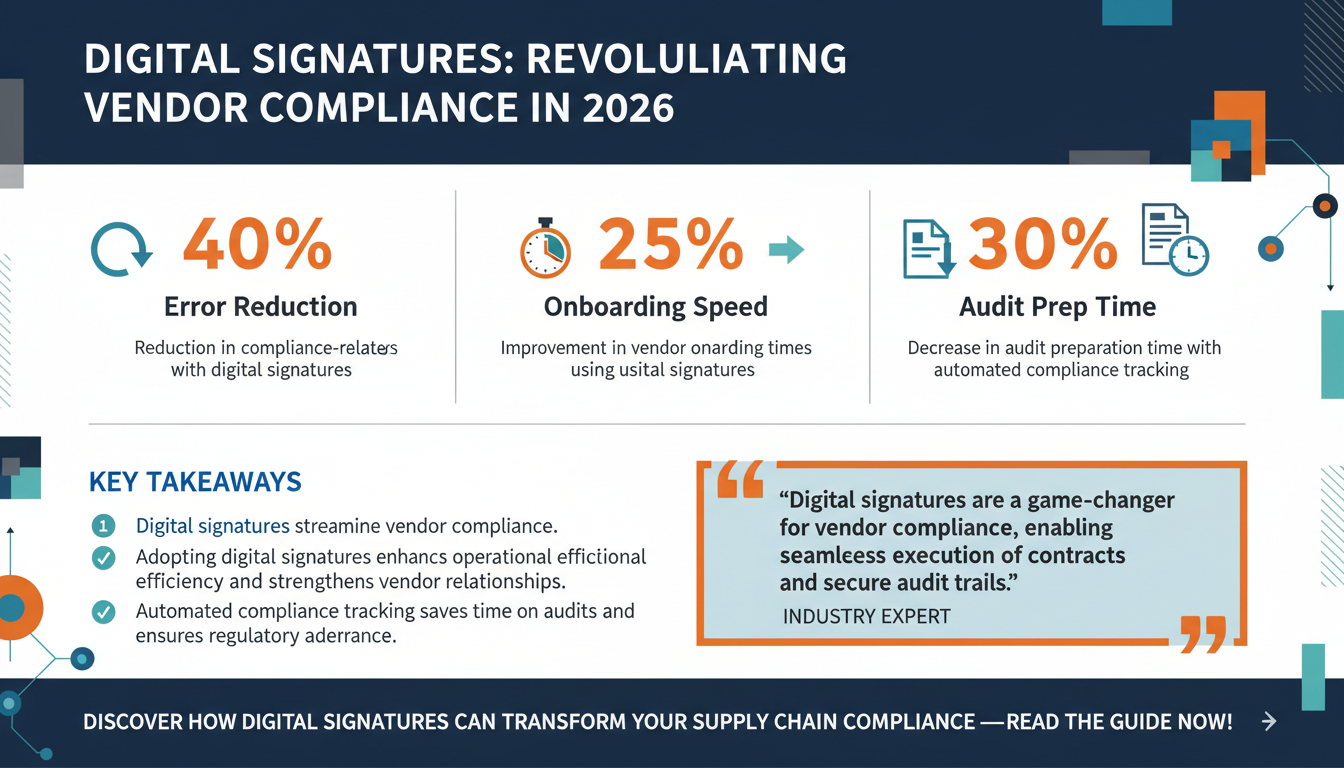
Key Statistics: According to a 2025 Gartner report, businesses that adopt digital signature solutions in their supply chain processes experience a 40% reduction in compliance-related errors and a 25% improvement in vendor onboarding times. Furthermore, a Deloitte Insights report from 2026 highlights that organizations leveraging digital signatures have seen a 30% reduction in audit preparation time due to automated compliance tracking.
By transitioning to digital signatures, companies can not only meet regulatory requirements but also enhance operational efficiency and build stronger, more transparent vendor relationships.
Expert Insight:
“Digital signatures have become a game-changer for vendor compliance,” says Sarah Cartwright, a supply chain risk management expert. “They provide a seamless way to execute contracts, track compliance, and maintain audit trails—all while ensuring security and legal enforceability. This is especially critical in industries like healthcare and finance, where non-compliance can result in severe penalties.”
How Digital Signatures Work in Vendor Compliance
At their core, digital signatures use cryptographic algorithms to verify the authenticity of a document and the identity of the signer. This technology ensures that the document has not been altered after signing, providing tamper-proof security. But how does this translate to vendor compliance in the supply chain? Let’s break it down step-by-step:

1. Vendor Onboarding
Digital signatures simplify the vendor onboarding process by enabling vendors to electronically sign contracts, compliance documents, and non-disclosure agreements (NDAs). This eliminates the need for physical copies, courier services, and in-person meetings, expediting approval timelines. For example, a vendor can review, sign, and return a compliance agreement in minutes, rather than days or weeks.
Additionally, digital signature platforms can integrate with vendor management systems to automatically track signed documents, ensuring nothing is overlooked during the onboarding process. This is particularly valuable for businesses managing hundreds or thousands of vendors across different geographies.
2. Contract Execution
Once vendors are onboarded, they often need to sign supply contracts, service level agreements (SLAs), or compliance declarations. Digital signatures ensure these documents are executed quickly, securely, and with full legal validity. Multi-party signature capabilities are another advantage, allowing all stakeholders—vendors, suppliers, and internal teams—to sign agreements seamlessly, even if they are located in different time zones.
For instance, a manufacturing company entering into a contract with multiple suppliers can use digital signatures to ensure that all parties sign off on the agreement in a coordinated and timely manner, reducing the risk of delays or miscommunication.
3. Ongoing Compliance Monitoring
Compliance doesn’t end with a signed contract. Vendors need to continuously provide updated certifications, adhere to industry standards, and comply with regulatory filings. Digital signatures enable automated workflows for document renewals, certifications, and regulatory filings. For example, a vendor’s ISO certification can be electronically verified and updated within the system, with reminders sent automatically for renewal deadlines.
These capabilities not only streamline compliance but also reduce the administrative burden on procurement and legal teams, allowing them to focus on strategic initiatives rather than repetitive tasks.
Benefits of Using Digital Signatures for Vendor Compliance
Why are digital signatures becoming the preferred choice for vendor compliance in supply chains? Let’s explore the key benefits in detail:

1. Enhanced Security and Fraud Prevention
Digital signatures use encryption and authentication protocols that make them virtually tamper-proof. This ensures the integrity of vendor documents and protects against forgery or unauthorized modifications. Additionally, many digital signature platforms include multi-factor authentication, further enhancing security by requiring users to verify their identities through additional steps, such as SMS codes or biometric scans.
In industries such as healthcare and finance, where compliance breaches can have severe consequences, these security features are invaluable. For example, a hospital working with medical equipment suppliers can use digital signatures to securely sign contracts that include sensitive patient data or proprietary technology specifications.
2. Faster Turnaround Times
Traditional compliance processes often involve printing, mailing, and manually tracking documents—a process that can take weeks. Digital signatures reduce this timeline to hours or even minutes, accelerating procurement cycles and vendor onboarding. For instance, a food and beverage company sourcing raw materials from multiple suppliers can finalize contracts in a fraction of the time it would take using manual methods.
3. Cost Savings
Printing, shipping, and storing physical documents come with significant costs. Digital signatures eliminate these expenses while also reducing the need for administrative resources. According to a 2026 Forrester study, organizations save an average of $36 per document by transitioning to digital signatures. For a business that processes thousands of documents annually, these savings can add up to millions of dollars.
Moreover, digital signatures reduce the risk of costly compliance violations, which can result in regulatory fines and legal fees. By ensuring all vendor agreements meet legal and regulatory standards, businesses can avoid these financial pitfalls.
4. Improved Audit Trails and Transparency
Digital signature platforms automatically generate detailed audit trails, capturing metadata such as timestamps, IP addresses, and user authentication logs. This makes it easy to demonstrate compliance during audits or regulatory reviews. For example, an electronics manufacturer undergoing a compliance audit can quickly retrieve signed documents with complete metadata, reducing the time and effort required for audit preparation.
5. Scalability
Whether you’re managing five vendors or 500, digital signatures are scalable to meet your needs. They integrate seamlessly with procurement software, enterprise resource planning (ERP) systems, and compliance management tools, ensuring smooth operations as your vendor network grows. This scalability is particularly valuable for fast-growing companies or those expanding into new markets.
Overcoming Common Challenges in Adoption
Despite their benefits, some organizations face challenges when adopting digital signatures for vendor compliance. Let’s address the most common obstacles and how to overcome them:

1. Resistance to Change
Many vendors and internal stakeholders are accustomed to traditional processes and may resist adopting new technologies. Overcoming this resistance requires clear communication about the benefits of digital signatures, such as faster turnaround times, cost savings, and enhanced security. Providing training, user-friendly platforms, and ongoing support can also help ease the transition.
2. Regulatory Uncertainty
Some industries have strict guidelines about the legality of electronic signatures. Businesses should ensure their digital signature solution complies with relevant regulations, such as the eIDAS Regulation in Europe or the ESIGN Act in the United States. Consulting with legal experts or compliance consultants can provide additional assurance.
3. Integration Complexities
Integrating digital signature platforms with existing systems can be technically challenging. Choosing a solution with robust API capabilities, pre-built integrations, and responsive customer support can mitigate these issues. For example, a logistics company integrating a digital signature platform with its ERP system can streamline workflows and reduce manual data entry errors.
Proprietary Framework: The COMPLY Model for Digital Signature Integration
To help businesses successfully implement digital signatures for vendor compliance, we’ve developed the COMPLY Model:
- Conduct a needs assessment: Identify pain points in your current compliance workflows.
- Optimize processes: Map out streamlined workflows enabled by digital signatures.
- Manage vendor onboarding: Use digital tools to simplify and secure onboarding.
- Prioritize security: Ensure your platform meets industry-specific compliance standards.
- Leverage integrations: Connect digital signatures with your existing tools to maximize efficiency.
- Yield measurable results: Track KPIs like turnaround time, cost savings, and compliance rates.
Case Study: How Digital Signatures Transformed a Global Supply Chain
Consider the case of a multinational electronics manufacturer that struggled with vendor compliance across its global supply chain. With over 1,000 vendors spanning multiple countries, the company faced frequent delays and audit issues due to manual processes.
After implementing a digital signature solution, the company achieved:
- A 60% reduction in contract turnaround times
- 100% compliance with global regulations, including GDPR and CCPA
- $1.2 million in annual savings from reduced administrative costs
Key Takeaways:
By adopting digital signatures, organizations can not only streamline vendor compliance but also unlock significant cost and time savings while mitigating compliance risks.
FAQ: Common Questions About Digital Signatures and Vendor Compliance
1. Are digital signatures legally binding?
Yes, digital signatures are legally binding in most countries, provided they meet regulatory standards such as the ESIGN Act, eIDAS, or UETA.
2. How secure are digital signatures?
Digital signatures use advanced encryption and authentication protocols, making them highly secure and tamper-proof.
3. Can digital signatures integrate with ERP and procurement systems?
Yes, most digital signature platforms offer APIs and integrations with popular systems like SAP, Oracle, and Microsoft Dynamics.
4. What industries benefit most from digital signatures?
Industries with high compliance demands, such as healthcare, finance, legal, and manufacturing, see the greatest benefits.
Conclusion: Unlocking the Future of Vendor Compliance
Digital signatures are not just a tool for improving efficiency; they are a strategic asset for modern supply chain management. By simplifying vendor compliance, reducing risks, and enhancing security, they empower businesses to thrive in an increasingly regulated and competitive environment.
If your organization is ready to embrace the future of vendor compliance, explore Zignature’s features and see how our secure, scalable digital signature solutions can transform your supply chain today.
To further enhance your digital workflows, explore our sister platforms: Apparatuz for workflow automation, Applicantz for recruitment management, Schedly for scheduling and appointments, Supportly for customer support, and Zatisfied for feedback management. Together, these tools create a comprehensive ecosystem that complements your digital signature strategy.