
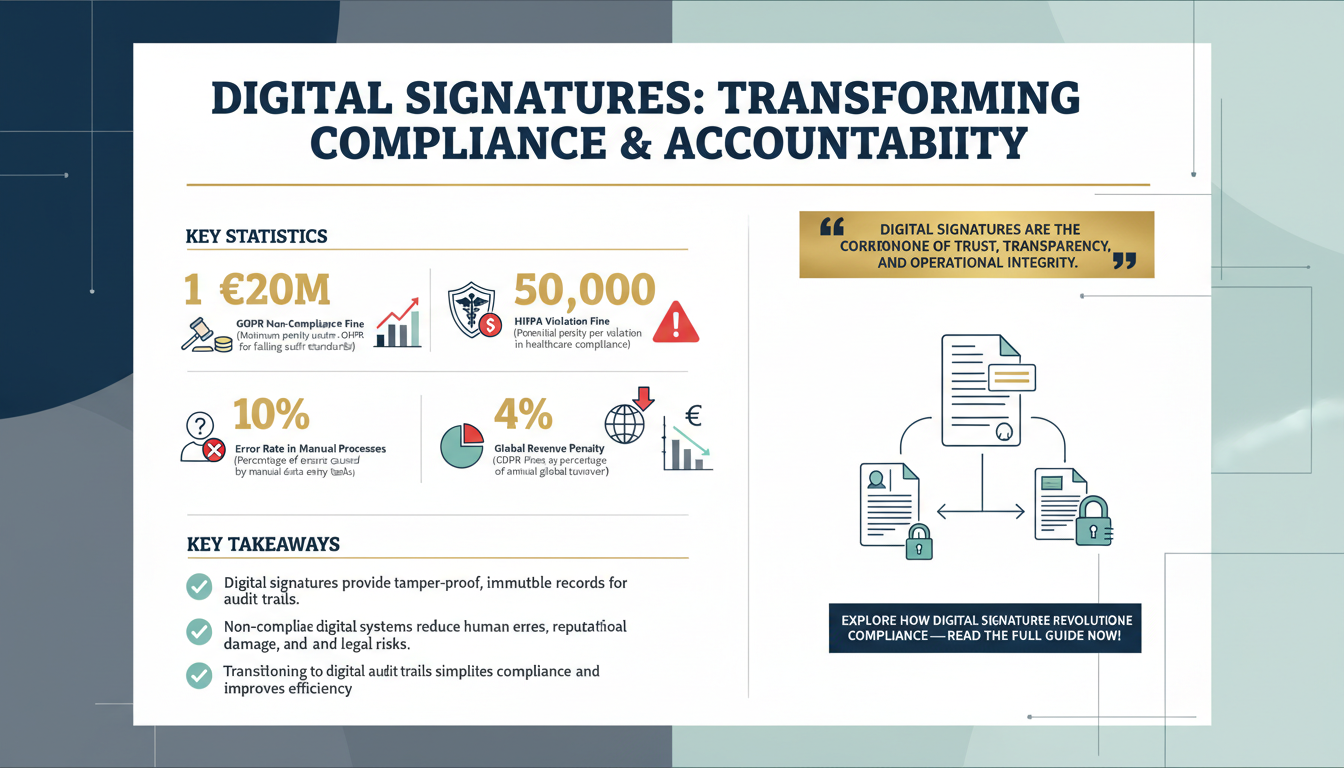
In today’s digital-first world, compliance and accountability are more than just regulatory requirements—they are the cornerstones of trust and operational integrity. Businesses across industries face increasing pressure to adopt systems that ensure transparency, security, and efficiency. One critical aspect of this is the ability to maintain robust audit trails, which serve as a record of actions, decisions, and changes within an organization. Traditionally, these processes were manual, tedious, and prone to human error. However, the advent of digital signatures has revolutionized how audit trails are created and maintained. By leveraging advanced encryption technologies, these tools streamline workflows, enhance data security, and ensure traceability, making compliance not only achievable but also efficient.
Digital signatures are no longer optional for industries like finance, healthcare, real estate, and legal services. They provide an immutable, tamper-proof record of transactions and document interactions that can withstand the highest level of scrutiny. In this article, we’ll explore how digital signatures improve audit trails for compliance and accountability by delving into their benefits, real-world applications, and strategies for successful implementation.
The Critical Role of Audit Trails in Modern Business Operations
Audit trails are the unsung heroes of organizational transparency. At their core, they are chronological records that document all activities, changes, and decisions within a system. Whether it’s tracking financial transactions, monitoring access to sensitive data, or documenting process approvals, audit trails serve as a foundation for accountability. They enable organizations to verify actions, identify errors, and demonstrate compliance with regulatory standards.

In industries governed by strict regulations—such as healthcare, finance, and pharmaceuticals—the absence of a robust audit trail can result in severe consequences. Non-compliance can lead to hefty fines, reputational damage, and, in extreme cases, legal action. For instance, under the General Data Protection Regulation (GDPR), organizations can face fines of up to €20 million or 4% of their annual global turnover for non-compliance, whichever is higher. Similarly, in the U.S., violations of the Health Insurance Portability and Accountability Act (HIPAA) can incur penalties ranging from $100 to $50,000 per violation.
The Challenges of Traditional Audit Trails
Despite their importance, traditional audit trails often fall short. Manual processes are time-consuming, error-prone, and susceptible to tampering. Paper-based systems, for instance, can easily be lost, damaged, or falsified. Even digital systems that rely on manual data entry are vulnerable to inaccuracies and unauthorized alterations. Human error is a significant factor, with studies indicating that manual processes can lead to error rates as high as 10% in data entry tasks.
For example, in the financial industry, a misplaced decimal point in a manually recorded transaction can lead to severe discrepancies, potentially resulting in regulatory scrutiny or financial losses. Similarly, healthcare providers relying on traditional methods may struggle to ensure the accuracy and security of patient records, putting sensitive data at risk and jeopardizing compliance.
The Shift to Digital: Why It Matters
The transition to digital audit trails, bolstered by digital signatures, addresses these shortcomings. With digital systems, organizations can automate the recording of actions, reducing human error and ensuring data accuracy. This shift not only simplifies compliance efforts but also enhances overall operational efficiency.
Consider the healthcare sector, where compliance with HIPAA requires meticulous documentation of patient records. A single unauthorized access or alteration can compromise patient privacy and lead to compliance violations. By implementing digital signatures, healthcare providers can ensure that every change to a patient file is logged, timestamped, and securely stored. This not only simplifies compliance efforts but also builds trust with patients and regulators.
Pro Tip:
When transitioning from traditional to digital audit trails, start with a phased implementation. Begin with high-risk processes where errors are costly, then expand to other areas once the system proves effective.
Key Benefits of Digital Signatures in Audit Trails
Digital signatures bring a plethora of advantages to audit trails, addressing the limitations of traditional systems and offering new capabilities that enhance compliance and accountability. Here are some of the key benefits:

- Immutable Records: Digital signatures use advanced encryption and hashing algorithms to create tamper-proof records. Any unauthorized alteration invalidates the signature, ensuring the integrity of the data. For instance, the National Institute of Standards and Technology (NIST) outlines that cryptographic algorithms like SHA-256 make it virtually impossible to alter a signed document without detection.
- Real-Time Tracking: Unlike traditional systems, digital signature platforms provide real-time visibility into document interactions. Organizations can monitor who accessed, edited, or signed a document, along with the exact timestamps, offering unparalleled transparency.
- Cost Efficiency: By eliminating the need for paper-based processes, reducing manual oversight, and minimizing errors, digital signatures significantly cut operational costs. According to a study by Forrester, businesses that adopt workflow automation, including digital signatures, can achieve an ROI of 176% within three years.
- Regulatory Compliance: Digital signatures are designed to meet stringent legal and industry standards, such as eIDAS (Europe), UETA, and ESIGN (United States). This makes them indispensable for compliance-heavy industries like finance, healthcare, and legal services.
- Enhanced Security: Features like multi-factor authentication (MFA), role-based access controls, and audit logs ensure that only authorized individuals can access and modify documents, further bolstering security.
Enhanced Transparency Through Detailed Logs
One of the often-overlooked benefits of digital signatures is the granularity of the audit logs they generate. These logs not only capture who signed or viewed a document but also provide insights into the sequence of events. This level of detail is invaluable for internal audits and external regulatory reviews.
For instance, a pharmaceutical company preparing for an FDA inspection can use digital signature logs to demonstrate compliance with Good Manufacturing Practices (GMP). By presenting detailed records of approvals, changes, and timestamps, the company can build a compelling case for its adherence to regulatory requirements.
Expert Insight:
"Digital signatures are more than just a compliance tool—they are a strategic asset. By providing a clear, tamper-proof record of actions, they empower organizations to make data-driven decisions and build stakeholder trust." – Sarah Johnson, Compliance Consultant
How Digital Signatures Strengthen Compliance Protocols
Compliance is a critical aspect of modern business operations, especially in regulated industries. Regulatory bodies require organizations to maintain detailed documentation of processes, approvals, and changes. Failure to do so can result in significant penalties, operational disruptions, and loss of stakeholder trust. Digital signatures simplify compliance by embedding it directly into the workflow, ensuring that every action is documented, verified, and stored securely.

Automated Compliance Checks
Many digital signature platforms come with built-in compliance features that automate the verification process. For example, in the financial sector, anti-money laundering (AML) regulations require organizations to verify customer identities and document the source of funds. Digital signatures streamline this by integrating identity verification directly into the signing process. Platforms like DocuSign and Adobe Sign offer features that automatically check documents against regulatory requirements, reducing the risk of oversight.
Additionally, these platforms can be configured to alert users when a document falls short of compliance standards, ensuring errors are caught before submission. This proactive approach minimizes risk and ensures regulatory adherence.
Secure and Verifiable Transactions
Digital signatures leverage Public Key Infrastructure (PKI) to create a unique digital fingerprint for each document. This ensures that the document is authentic, unaltered, and attributable to the signer. In the event of a dispute, the audit trail generated by digital signatures provides incontrovertible evidence of the transaction’s authenticity. For example, in the real estate industry, where contract disputes are common, a digitally signed agreement can serve as legally admissible evidence in court.
Legal Defensibility
One of the most valuable aspects of digital signatures is their legal defensibility. In jurisdictions that recognize digital signatures under laws like ESIGN and UETA in the U.S. or eIDAS in the EU, a digitally signed document is as legally binding as a handwritten signature. This is particularly beneficial for industries like healthcare and pharmaceuticals, where the validity of records is often scrutinized in legal settings.
Step-by-Step Guide to Implementing Digital Signatures
To fully leverage the benefits of digital signatures in compliance protocols, follow these steps:
- Assess Current Processes: Identify areas where manual documentation creates bottlenecks or compliance risks.
- Select a Platform: Choose a digital signature solution that aligns with your industry’s regulatory requirements.
- Integrate with Existing Systems: Ensure the platform can seamlessly integrate with your CRM, ERP, or document management systems.
- Train Employees: Provide comprehensive training to ensure all stakeholders understand how to use the system effectively.
- Monitor and Optimize: Regularly review audit logs to identify inefficiencies and optimize workflows.
By following this roadmap, organizations can ensure a smooth transition and maximize the impact of digital signatures on their compliance efforts.
The Anatomy of a Digital Signature Audit Trail
A digital signature audit trail is far more comprehensive and secure than its traditional counterpart. It captures a wide range of data points, providing a detailed account of each transaction. Here’s what a typical digital signature audit trail includes:

- Timestamps: Records the exact time when a document was created, signed, and accessed.
- Signer Details: Captures information about the signers, including their names, email addresses, and IP addresses.
- Document Versions: Tracks changes made to the document, including edits, additions, and deletions.
- Encryption Details: Provides information about the encryption algorithms used to secure the document.
This level of detail is invaluable for organizations that need to demonstrate compliance or investigate discrepancies. For example, in the pharmaceutical industry, where FDA regulations require meticulous documentation of clinical trials and drug approvals, a digital signature audit trail ensures that every step is accurately recorded and verifiable.
Challenges and Solutions in Implementing Digital Signatures
While the benefits of digital signatures are clear, implementing them is not without challenges. Common obstacles include resistance to change, concerns about data security, and integration issues with existing systems. Here’s how organizations can overcome these hurdles:
- Change Management: Educate employees about the benefits of digital signatures and provide hands-on training to ensure smooth adoption. Highlighting success stories and ROI can help build buy-in.
- Robust Security Measures: Choose a platform that offers end-to-end encryption, multi-factor authentication, and compliance with global standards to address security concerns.
- Seamless Integration: Opt for solutions that integrate easily with existing software, such as CRM or document management systems, to minimize disruptions.
Future Trends: The Evolution of Audit Trails with Digital Signatures
The landscape of digital signatures and audit trails is continuously evolving. Emerging technologies like blockchain, artificial intelligence (AI), and machine learning are set to redefine how organizations approach compliance and accountability. For example:
- Blockchain Integration: Blockchain technology is being used to create decentralized, immutable audit trails that enhance security and transparency. Companies like IBM are already exploring blockchain-enabled digital signature platforms.
- AI-Driven Analytics: Artificial intelligence is enabling predictive analytics within audit trails, helping organizations identify potential compliance risks before they escalate.
- Global Standardization: Efforts are underway to create unified global standards for digital signatures, simplifying cross-border transactions and compliance.
FAQs
What is an audit trail, and why is it important?
An audit trail is a chronological record of actions, changes, or decisions made within a system. It ensures transparency, verifies compliance, and provides accountability in business operations.
How do digital signatures enhance audit trails?
Digital signatures create tamper-proof, automated audit trails that capture comprehensive data points, including timestamps, signer details, and document versions, ensuring compliance and accountability.
Are digital signature audit trails legally valid?
Yes, audit trails generated by digital signature platforms are legally valid and admissible in court, provided they comply with relevant regulations like eIDAS, UETA, and ESIGN.
Can digital signatures be integrated with existing systems?
Most digital signature platforms offer seamless integration with systems like CRMs, ERPs, and document management tools, making implementation straightforward.
Conclusion
Digital signatures are transforming the way organizations handle audit trails, offering unparalleled security, efficiency, and compliance benefits. By automating the documentation process and providing a tamper-proof record of activities, they address the challenges of traditional audit trails head-on. As industries continue to digitize and regulatory pressures mount, the adoption of digital signature solutions will only become more critical.
For businesses seeking to streamline their compliance efforts and enhance accountability, the time to act is now. Explore how Zignature's platform features can transform your audit trails and position your organization for success in 2026 and beyond.
To further enhance your digital workflows, explore our sister platforms: Apparatuz for workflow automation, Applicantz for recruitment management, Schedly for scheduling and appointments, Supportly for customer support, and Zatisfied for feedback management. Together, these tools create a comprehensive ecosystem that complements your digital signature strategy.