
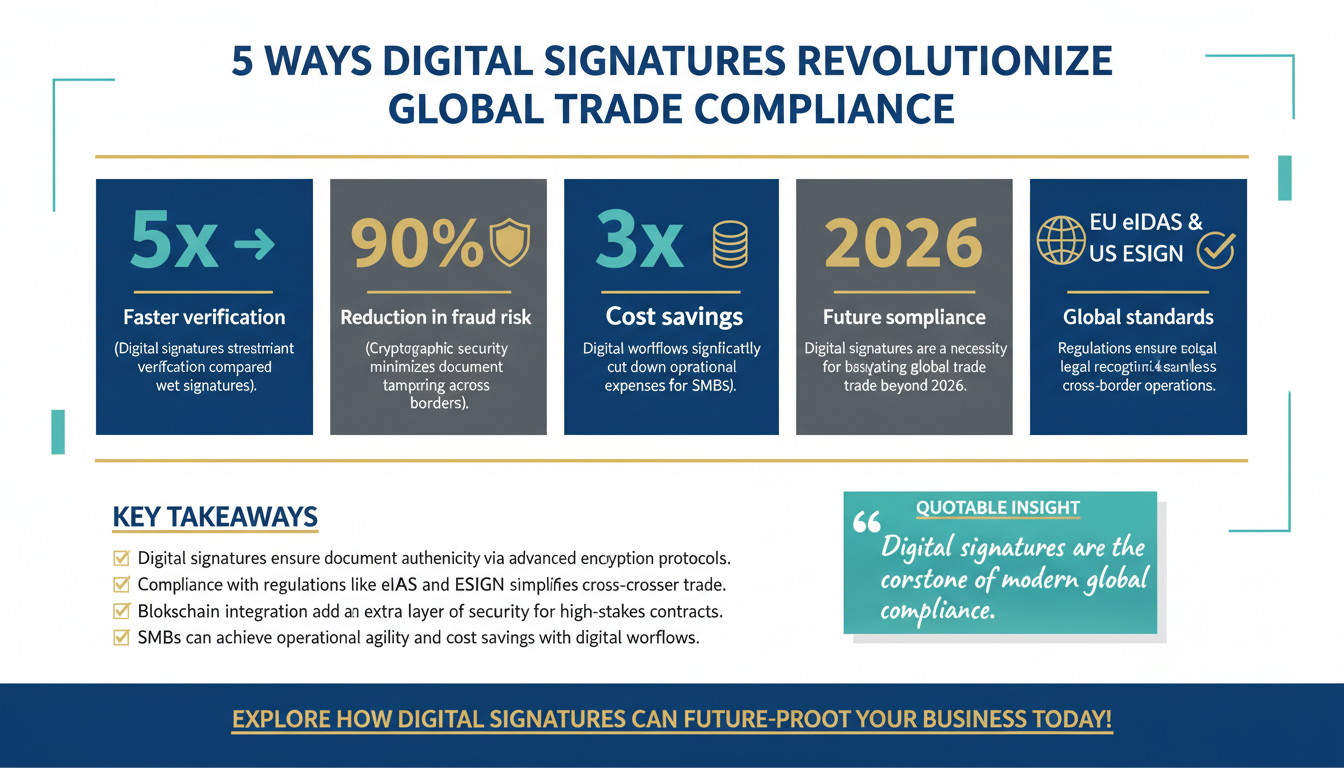
In the increasingly interconnected global economy, businesses—whether small, medium, or large—are engaging in more international transactions than ever before. These interactions are governed by intricate international trade agreements that establish rules for tariffs, intellectual property, customs procedures, and regulatory compliance. Adhering to these agreements is not just essential for avoiding penalties and legal disputes but also for maintaining a competitive edge in global markets.
However, ensuring compliance can be a daunting task, particularly for small and medium-sized businesses (SMBs) that lack the extensive resources of large enterprises. Digital signatures have emerged as a game-changing solution that simplifies compliance, reduces operational costs, and improves efficiency. By automating and securing document workflows, they enable businesses to meet the stringent requirements of international trade agreements while maintaining operational agility.
This article delves into the five critical ways digital signatures simplify compliance with international trade agreements. From ensuring document authenticity to reducing costs, these insights will demonstrate why digital signatures are a necessity for modern businesses navigating the complexities of global trade in 2026 and beyond.
1. Ensuring Document Authenticity Across Borders
One of the fundamental requirements of any trade agreement is the authenticity and integrity of legal documents, such as customs declarations, contracts, and purchase orders. Traditionally, businesses relied on wet signatures and physical stamps to verify documents. While these methods have served their purpose for centuries, they are increasingly inadequate in today's fast-paced digital world. Wet signatures are susceptible to forgery, physical documents can be lost or damaged, and the verification process is often slow and labor-intensive.
Digital signatures eliminate these challenges by offering cryptographic verification of both the signer’s identity and the document’s integrity. Advanced encryption protocols, such as RSA (Rivest-Shamir-Adleman) and SHA-256 (Secure Hash Algorithm), ensure that any attempt to alter a digitally signed document is immediately detectable. This level of security is critical for businesses operating across multiple jurisdictions, where the risk of document tampering or fraud is heightened.
Compliance with Global Standards
Take the European Union’s eIDAS (Electronic Identification, Authentication, and Trust Services) Regulation as an example. This regulation mandates that electronic signatures used in cross-border transactions meet stringent standards of authenticity and non-repudiation. Digital signature solutions like Zignature are specifically designed to comply with eIDAS, enabling seamless operations both within and beyond the EU. Similarly, the ESIGN Act in the United States ensures that electronic signatures are legally recognized, providing a solid foundation for businesses operating in North America.
Moreover, digital signatures are increasingly being integrated into trade agreements themselves. For instance, the Comprehensive and Progressive Agreement for Trans-Pacific Partnership (CPTPP) encourages member countries to adopt electronic authentication methods to facilitate trade, making digital signatures a cornerstone of modern compliance strategies.
Pro Tip: Leveraging Blockchain for Enhanced Security
Some companies are taking document authenticity a step further by integrating blockchain technology with digital signatures. Blockchain ensures that every signed document is stored in a decentralized ledger, making tampering virtually impossible. For businesses dealing with high-stakes contracts, such as those in finance or healthcare, this added layer of security can be invaluable.
Real-World Example: A mid-sized manufacturing firm in Texas faced challenges in complying with the customs documentation requirements under the United States-Mexico-Canada Agreement (USMCA, formerly NAFTA). By adopting a digital signature solution, the company was able to reduce document processing time by 45%, eliminate errors, and avoid penalties for non-compliance. This transformation not only saved operational costs but also improved the company’s reputation among its international partners.
Key Takeaways:
- Digital signatures provide cryptographic assurance of document authenticity, meeting compliance requirements in multiple jurisdictions.
- Advanced encryption ensures that signed documents remain tamper-proof, reducing the risk of fraud or forgery.
- Adopting solutions that comply with global standards like eIDAS simplifies cross-border operations.
2. Streamlining Audit Trails for Regulatory Compliance
Regulatory compliance is a cornerstone of international trade agreements, and maintaining detailed audit trails is a critical component of this process. Audit trails serve as a record of all document-related activities, capturing information such as who signed the document, when it was signed, and any subsequent modifications. Creating and maintaining these records manually is not only time-consuming but also prone to human error, especially for SMBs with limited resources.
Digital signatures address this challenge by automatically generating comprehensive audit logs. These logs are immutable, meaning they cannot be altered or deleted, which ensures transparency and accountability. Key details, such as timestamps, IP addresses, and unique transaction identifiers, are captured and stored securely, providing regulators and auditors with a complete and verifiable record of compliance.
Benefits of Automated Audit Trails
According to a 2025 Gartner report, businesses that utilize digital signature solutions experience a 30% reduction in the time required to prepare for regulatory audits. This is especially significant for industries like healthcare, finance, and logistics, where compliance requirements are stringent and penalties for violations can be severe.
Automated audit trails also allow businesses to proactively address compliance gaps. By continuously monitoring document workflows, companies can identify discrepancies before they escalate into regulatory issues. This proactive approach not only saves time but also minimizes financial and reputational risks.
Checklist for Implementing Audit Trail Solutions
- Choose a digital signature platform that offers built-in audit trail generation.
- Integrate the platform with your document management system for seamless workflow automation.
- Enable real-time reporting to monitor compliance metrics continuously.
- Regularly review audit logs to identify and address potential issues.
Practical Tip: SMBs can leverage digital signature platforms to automate the creation and storage of audit trails, reducing the burden on their administrative teams. Many platforms also offer real-time reporting features that make it easier to identify and address compliance gaps proactively.
Real-World Example: A pharmaceutical company in Germany adopted digital signatures to comply with the European Medicines Agency’s (EMA) guidelines for electronic submissions. The transition allowed the company to reduce audit preparation time by 50% and avoid regulatory fines, freeing up resources to focus on product development.
Key Takeaways:
- Digital signatures automate the creation of detailed audit trails, ensuring transparency and accountability.
- Immutability of audit logs enhances trust and simplifies regulatory inspections.
- Real-time reporting features enable businesses to monitor compliance continuously.
3. Facilitating Cross-Jurisdictional Legal Validity
One of the most complex aspects of international trade is the need to navigate varying legal frameworks. Each country has its own standards for the validity of contracts and other legal documents, and failure to meet these standards can result in invalid agreements, legal disputes, and financial losses. Digital signatures provide a standardized solution to this challenge, ensuring that documents meet the legal requirements of most jurisdictions.
The United Nations’ Model Law on Electronic Commerce, adopted by more than 50 countries, provides guidelines for the use of electronic signatures in cross-border transactions. Leading digital signature platforms like Zignature comply with these guidelines, embedding globally recognized standards such as Public Key Infrastructure (PKI) into their solutions. PKI ensures that every transaction is secure, verifiable, and legally binding.
Global Recognition of Digital Signatures
As international trade agreements evolve, the acceptance of digital signatures is becoming more widespread. For example, the ASEAN Economic Community (AEC) promotes the use of electronic documentation in member states to reduce trade barriers and enhance connectivity. Businesses leveraging compliant digital signature solutions can confidently engage in cross-border trade, knowing their documents will be legally recognized.
Expert Insight: "The adoption of digital signatures has been transformative for legal teams managing international contracts," says Dr. Emily Carter, a legal expert in international trade law. "By aligning with global standards, businesses can expedite contract finalizations and reduce the risk of disputes."
Case Study: A financial services firm in Singapore leveraged digital signatures to finalize cross-border investment agreements with partners in Canada and Germany. By doing so, the firm reduced negotiation cycles by 25% and ensured compliance with local legal frameworks without the need for additional legal reviews.
Key Takeaways:
- Digital signatures meet cross-jurisdictional legal standards, reducing the risk of disputes and invalid contracts.
- Standardized frameworks like PKI enhance the global recognition of digitally signed documents.
- Businesses can confidently expand their international operations by adopting compliant digital signature solutions.
4. Accelerating Contract Negotiations in Trade Agreements
Negotiating trade agreements often requires multiple rounds of revisions, approvals, and signatures. In traditional workflows, this process can be slowed down significantly by the need to courier physical documents or coordinate in-person meetings. These delays are not just inconvenient; they can result in missed opportunities and financial losses, especially in industries where timing is critical.
Digital signatures streamline this process by enabling instant signing and sharing of documents. Modern platforms often include collaborative features such as version control, automated notifications, and real-time editing, ensuring that all stakeholders are aligned and informed at every stage of the negotiation. This level of efficiency can dramatically reduce the time required to finalize contracts.
Tools for Faster Negotiations
Platforms like Zignature and DocuSign offer features specifically designed to optimize contract negotiation workflows. From tracking changes to setting automatic reminders for pending approvals, these tools ensure that no step in the process is overlooked. Integration with cloud storage solutions like Google Drive or Dropbox further enhances accessibility, enabling stakeholders to review and sign documents from anywhere in the world.
According to McKinsey’s 2026 digital transformation report, businesses that adopt e-signature platforms cut contract negotiation timelines by an average of 40%. This acceleration is particularly valuable in sectors like real estate, supply chain management, and technology, where the ability to act quickly often determines success.
Pro Tip: Use Templates for Common Agreements
Businesses can save even more time by creating customizable templates for frequently used agreements. This ensures consistency while reducing the need for repetitive data entry, allowing teams to focus on critical aspects of negotiations rather than administrative tasks.
Quick Win: SMBs looking to expand their supplier network can use digital signatures to expedite onboarding processes. By enabling remote signing, businesses can onboard new international suppliers in a matter of hours rather than weeks.
Key Takeaways:
- Digital signatures expedite contract negotiations by enabling instant document signing and sharing.
- Integration with document management systems facilitates real-time collaboration and efficient workflow management.
- Faster negotiations give businesses a competitive edge in time-sensitive industries.
5. Reducing Costs Associated with Compliance
Compliance with international trade agreements often entails significant costs, including legal fees, administrative expenses, and penalties for non-compliance. For SMBs operating on tight budgets, these costs can be a significant barrier to growth. Digital signatures offer a cost-effective solution by eliminating many of the expenses associated with traditional compliance methods.
For starters, digital signatures eliminate the need for physical documentation, saving on printing, storage, and courier costs. Automated compliance features reduce the need for manual oversight, allowing businesses to allocate resources to more strategic initiatives. Additionally, by minimizing errors and ensuring adherence to legal standards, digital signatures help businesses avoid costly disputes and fines.
Quantifying Cost Savings
A 2025 Forbes study found that SMBs adopting digital signature solutions save an average of $10,000 annually in compliance-related expenses. These savings can be reinvested into areas like marketing, product development, or employee training, further enhancing the company’s competitive position.
Additionally, larger enterprises report even greater savings due to economies of scale. By centralizing compliance workflows and reducing reliance on paper-based processes, these businesses can streamline operations across multiple departments and geographies.
Case Study: Cost Savings in Action
A logistics company in India transitioned to digital signatures for customs documentation and saved over $50,000 annually in compliance costs. The company reinvested these savings into technology upgrades and staff training, leading to a 20% increase in operational efficiency within a year.
Key Takeaways:
- Digital signatures reduce compliance-related costs by eliminating physical documentation and automating oversight.
- Cost savings can be reinvested into strategic initiatives, boosting overall business performance.
- SMBs can achieve significant cost efficiencies while maintaining high standards of compliance.
FAQ Section
1. Are digital signatures legally valid for international trade agreements?
Yes, digital signatures are legally valid in most jurisdictions, provided they comply with local regulations such as eIDAS in the EU or the ESIGN Act in the US.
2. How secure are digital signatures?
Digital signatures use advanced cryptographic algorithms like RSA and SHA-256, ensuring tamper-proof security and robust authentication.
3. Can SMBs afford digital signature solutions?
Absolutely. Many platforms, including Zignature, offer scalable pricing models tailored to SMBs, ensuring affordability without compromising features.
4. What industries benefit most from digital signatures in compliance?
Industries like healthcare, finance, logistics, and legal services benefit significantly due to stringent compliance requirements.
5. How do digital signatures integrate with document management systems?
Most platforms provide APIs for seamless integration, enabling workflow automation and real-time collaboration.
Conclusion
Digital signatures are revolutionizing the way businesses navigate the complexities of international trade agreements. From ensuring document authenticity to reducing compliance costs, their benefits are undeniable. As global trade continues to expand, adopting digital signatures is no longer optional—it is a strategic necessity for businesses looking to stay competitive and compliant in 2026 and beyond.
To explore how Zignature can help your business streamline compliance processes, check out our platform features and pricing plans. Complement your efforts with tools like Apparatuz for workflow automation or Zatisfied for customer feedback management. Together, these solutions create a comprehensive approach to compliance and efficiency.