
In today’s fast-paced business environment, delays in client approvals can cripple workflows, disrupt timelines, and increase costs. Traditional methods of document signing—whether paper-based or relying on scanned PDFs—are often slow, error-prone, and impractical for distributed teams. Digital signatures have emerged as a transformative solution, enabling small to medium-sized businesses (SMBs) and enterprises to streamline their approval processes, improve efficiency, and enhance client satisfaction.
This comprehensive guide explores how digital signatures eliminate bottlenecks in client approval workflows, while delivering actionable insights and strategies for adoption. From reducing turnaround times to ensuring compliance with legal standards, we’ll uncover why digital signatures are no longer a luxury but a necessity in 2026.
The Hidden Costs of Traditional Client Approval Processes
Before diving into the benefits of digital signatures, it’s essential to understand the inefficiencies of traditional client approval processes. Many businesses still rely on outdated methods that introduce significant delays and friction, particularly for SMBs and enterprises managing high volumes of documents.
Manual Processes Are Time-Consuming
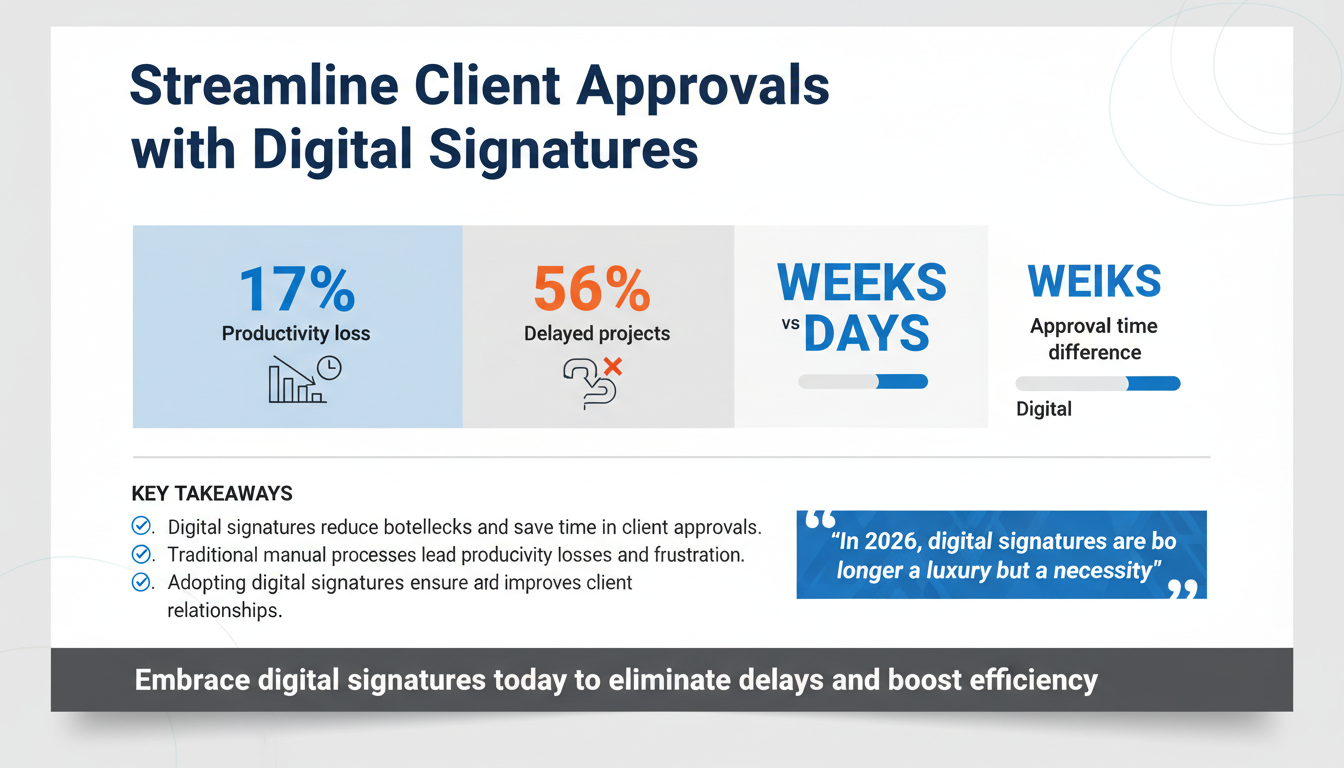
Paper-based approvals require printing, mailing, and waiting for physical signatures. Tracking the status of multiple documents becomes a logistical nightmare, especially when dealing with geographically dispersed clients. According to a study by Forrester, businesses lose an average of 17% of productivity due to manual workflows.
Beyond productivity loss, the time delays can have ripple effects across business operations. For example, contract approvals that take weeks instead of days may hinder onboarding new clients or delay the start of critical projects. This inefficiency not only affects internal teams but can also frustrate clients, leading to strained relationships.
Errors and Rework
Traditional processes are prone to errors such as missing signatures, incorrect dates, or misplaced pages. These mistakes lead to rework, further delaying approvals. Research by Gartner found that 56% of businesses experience delayed projects due to errors in manual documentation.
Consider the scenario of a critical compliance document needing multiple signatures. A single error, such as a missed field or an incorrectly dated signature, can invalidate the document and require a complete restart of the approval process. Not only does this waste time, but it also exposes businesses to compliance risks.
Lack of Transparency
With manual approvals, tracking the progress of a document often requires constant follow-ups. This lack of visibility creates frustration for both internal teams and clients, eroding trust and professional relationships. Employees spend excessive time emailing or calling stakeholders to confirm receipt or inquire about the status of a document.
An example of this can be seen in the financial services industry, where loan approvals often involve multiple departments. Without a clear system to track document progress, delays become inevitable, ultimately affecting customer satisfaction and retention rates.
These hidden costs—both tangible and intangible—underscore the need for a more efficient and reliable solution. Digital signatures address these challenges head-on, providing businesses with a tool to modernize and optimize their client approval processes.
How Digital Signatures Work: An Overview
Digital signatures are the cornerstone of secure and efficient electronic document workflows. Unlike traditional “wet” signatures, digital signatures leverage encryption and authentication technologies to verify the authenticity of a signer and the integrity of the document.
Key Components of Digital Signatures
- Public Key Infrastructure (PKI): Digital signatures use a two-key encryption system—one public and one private. The private key is used to sign the document, while the public key verifies the signature’s authenticity. This ensures that the signer cannot deny their participation (non-repudiation).
- Audit Trails: Each step of the signing process is recorded, providing a comprehensive log of who signed, when, and where. This is crucial for compliance and legal validation, especially in regulated industries like healthcare or finance.
- Tamper-Proof Seals: Once a document is signed, it is sealed to prevent unauthorized alterations. Any attempt to modify the document renders the signature invalid, ensuring the document’s integrity.
Legal Recognition Across the Globe
These features ensure that digital signatures are not only faster but also more secure and legally binding than traditional methods. According to the National Conference of State Legislatures, digital signatures are legally recognized in over 70 countries, making them ideal for global businesses.
For instance, the ESIGN Act in the United States and the eIDAS regulation in the European Union provide legal frameworks for the use of electronic signatures, ensuring their enforceability in court. This makes digital signatures a preferred choice for cross-border agreements, especially for industries like international trade and logistics.
By automating the approval process and eliminating the need for physical documentation, digital signatures enable businesses to achieve unprecedented levels of efficiency and scalability.
Benefits of Digital Signatures for SMBs and Enterprises
Digital signatures offer a wide array of benefits that extend beyond just faster approvals. Let’s explore how they impact key areas of business operations:
Speed and Efficiency
With digital signatures, documents can be signed and returned in minutes rather than days. This accelerates project timelines, reduces bottlenecks, and ensures that critical decisions are not delayed. A study by Deloitte found that businesses using e-signatures reduced their document turnaround times by up to 80%.
For example, in the legal sector, contracts often require urgent signatures to meet deadlines and avoid penalties. Digital signatures allow law firms to expedite this process, ensuring clients receive timely service without compromising on accuracy or security.
Cost Savings
Digital signatures eliminate the costs associated with printing, shipping, and storing physical documents. For SMBs, these savings can be particularly impactful, freeing up resources for growth-oriented initiatives. Businesses can redirect funds previously spent on paper, ink, courier services, and file storage to strategic areas such as marketing or product development.
According to Statista, companies spend billions annually on paper-based processes. Adopting digital workflows can cut these expenses by nearly 50%, offering significant savings over time.
Enhanced Client Experience
Clients appreciate the convenience of signing documents electronically, especially when a digital solution allows them to sign on any device, from anywhere. This seamless experience improves client satisfaction and strengthens relationships. Imagine a scenario where a client is traveling and needs to approve a critical document—digital signatures make this possible without delays.
Additionally, businesses that offer digital solutions demonstrate adaptability and innovation, traits that resonate with modern customers. For example, a tech startup can position itself as forward-thinking by implementing cutting-edge e-signature technology, attracting clients who value efficiency and convenience.
From operational efficiency to client satisfaction, the advantages of digital signatures are undeniable. Businesses that embrace this technology position themselves as agile, innovative, and client-centric.
Overcoming Common Bottlenecks with Digital Signatures
Every business faces unique challenges in its client approval workflows. However, certain bottlenecks are common across industries. Here’s how digital signatures address these pain points:
Delayed Approvals Due to Client Unavailability
Traditional methods often require clients to be physically present or have access to printers and scanners. Digital signatures enable clients to sign documents remotely, allowing approvals to proceed without delays. This is particularly valuable for industries with geographically dispersed clients, such as real estate or consulting.
Imagine a real estate agent waiting for a buyer’s signature on a home purchase agreement. Digital signatures eliminate the need for face-to-face meetings, allowing transactions to move forward quickly without logistical hurdles.
Managing Multi-Stakeholder Approvals
In enterprise settings, documents often require approval from multiple stakeholders. Digital signature platforms streamline this process by enabling parallel approvals, minimizing wait times, and ensuring that all parties are notified in real-time. This feature is especially beneficial for industries like construction, where contracts require sign-offs from contractors, subcontractors, and project managers.
Ensuring Document Security
Manual processes are vulnerable to tampering and unauthorized access. Digital signatures, with their encryption and tamper-proof features, ensure that sensitive documents remain secure throughout the approval process. This is a critical requirement for industries like healthcare, which must protect patient confidentiality under regulations like HIPAA.
By addressing these common challenges, digital signatures empower businesses to operate with greater agility and precision, paving the way for sustained growth and success.
Case Studies: Real-World Impact of Digital Signatures
To illustrate the transformative power of digital signatures, consider the following case studies:
Accelerating Real Estate Transactions
A regional real estate firm faced delays in closing deals due to manual approval processes. After implementing a digital signature solution, the firm reduced turnaround times by 75%, enabling agents to close deals faster and improve client satisfaction. This shift allowed the business to scale operations and handle higher transaction volumes without increasing overhead.
Streamlining Vendor Contracts
An enterprise in the manufacturing sector struggled with lengthy vendor contract approvals. By adopting digital signatures, the company not only reduced approval times by 60% but also achieved compliance with international regulations. This enhanced efficiency not only improved relationships with vendors but also contributed to smoother supply chain operations.
How to Integrate Digital Signatures into Your Workflow
Adopting digital signatures requires careful planning and execution. Follow these steps to ensure a smooth integration:
Assess Your Current Workflow
Identify bottlenecks in your existing approval processes and determine how digital signatures can address these issues. This often involves mapping out the entire workflow, from document creation to final approval, and pinpointing areas where delays or inefficiencies occur.
Choose the Right Solution
Select a digital signature platform that aligns with your business needs, offering features such as API integrations, audit trails, and mobile compatibility. For SMBs, cost-effectiveness and ease of use may be top priorities, while enterprises might prioritize scalability and advanced security features.
Train Your Team
Provide training to ensure that employees and clients understand how to use the platform effectively. A well-trained team is essential for maximizing the benefits of digital signatures, as it minimizes errors and fosters confidence in the new system.
Monitor and Optimize
Regularly review the impact of digital signatures on your workflows and make adjustments as needed to maximize efficiency. This could involve analyzing metrics like document turnaround times, error rates, and client feedback to identify areas for improvement.
FAQs: Common Questions About Digital Signatures
Are digital signatures legally binding?
Yes, digital signatures are legally binding in most countries, including the US, EU, and many others, provided they comply with relevant regulations such as the ESIGN Act and eIDAS.
How secure are digital signatures?
Digital signatures use advanced encryption and tamper-proof seals to ensure document integrity and security. Audit trails further enhance traceability. This makes them far more secure than traditional methods like fax or scanned images of handwritten signatures.
Can digital signatures be used for international agreements?
Absolutely. Digital signatures are recognized globally and are ideal for cross-border transactions. Their legal recognition in over 70 countries ensures that businesses can confidently use them for international contracts.
How do I get started with digital signatures?
Start by choosing a trusted solution provider like Zignature, and follow our guide to seamless integration. Begin with a pilot program to test the platform’s functionality before rolling it out across your organization.
Conclusion: The Future of Client Approvals
Digital signatures represent a paradigm shift in the way businesses handle client approvals. By eliminating bottlenecks, improving efficiency, and enhancing security, they empower SMBs and enterprises to operate at the speed of modern business. As we move further into 2026, the adoption of digital signatures will no longer be optional—it will be a competitive necessity.
Ready to transform your approval workflows? Explore how Zignature can help you streamline processes, reduce costs, and elevate client satisfaction today.
To further enhance your digital workflows, explore our sister platforms: Apparatuz for workflow automation, Applicantz for recruitment management, Schedly for scheduling and appointments, Supportly for customer support, and Zatisfied for feedback management. Together, these tools create a comprehensive ecosystem that complements your digital signature strategy.