
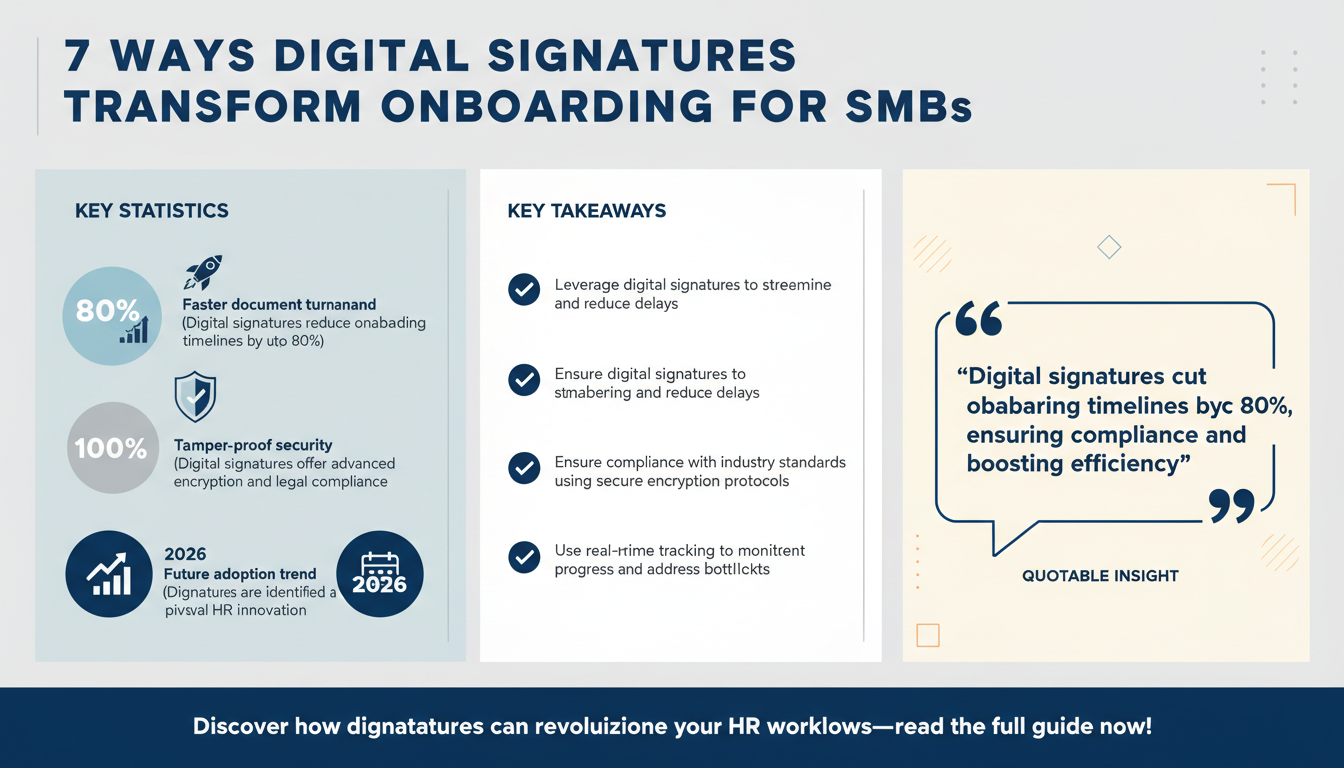
Employee onboarding is a cornerstone of HR operations, particularly for small- and medium-sized businesses (SMBs) striving to create efficient and compliant workflows. A well-designed onboarding process not only ensures legal compliance but also sets the stage for a positive employee experience, fostering long-term retention and productivity. In 2026, the adoption of digital signature technology is proving to be a pivotal innovation, helping HR teams streamline onboarding and improve operational efficiency.
The shift to digital tools, including electronic signatures, reflects broader trends toward automation and digitization in HR practices. This guide will explore seven transformative ways digital signatures enhance employee onboarding workflows, offering actionable insights and strategies for SMB HR teams. By implementing these solutions, HR professionals can reduce paperwork, improve compliance, and craft an onboarding experience that resonates with new hires—whether they are onsite or remote.
Whether you're just beginning to digitize your HR systems or seeking to refine your current workflows, this comprehensive guide provides the tools and knowledge you need to stay ahead in an increasingly competitive and fast-paced environment.
1. Accelerating Document Completion and Signing Times
One of the most immediate and tangible benefits of digital signatures is the significant reduction in the time required to complete and sign onboarding documents. Traditional paper-based processes often involve multiple steps such as printing, scanning, mailing, and waiting for physical signatures. These steps not only consume valuable time but also introduce logistical complexity that can delay the onboarding timeline by several days or even weeks.

Digital signatures eliminate these bottlenecks by enabling instant signing. For example, platforms like DocuSign and Adobe Sign allow documents to be signed electronically in mere minutes. According to a Forrester study, organizations that leverage digital signature solutions experience an average 80% reduction in document turnaround times. This acceleration is vital for HR teams managing tight schedules and compliance deadlines.
A practical example can be seen in the healthcare industry, where new hires are often required to sign HIPAA compliance documents, training acknowledgments, and other critical forms before starting work. By using digital signatures, HR teams can ensure these documents are completed promptly, allowing the employee to focus on their role from day one.
Moreover, digital signatures provide HR teams with real-time visibility into the status of documents, enabling proactive follow-ups when necessary. This is particularly useful for SMBs that may lack dedicated resources for managing delays.
Key takeaway:
- Leverage digital signatures to reduce onboarding timelines by up to 80%.
- Ensure new hires can complete critical paperwork on their first day without delays.
- Use platforms with real-time tracking to monitor document completion and address bottlenecks efficiently.
2. Enhancing Security and Compliance
In industries such as finance, healthcare, and legal services, the security of onboarding documents is non-negotiable. Sensitive documents, including employment contracts, tax forms, and compliance acknowledgments, must be securely handled to protect both the employee and the organization. Digital signatures offer advanced encryption and authentication protocols that render documents tamper-proof and legally binding.
For example, platforms like Zignature and Adobe Sign employ encryption standards compliant with regulations such as GDPR in Europe, HIPAA in the United States, and eIDAS for electronic identification across the European Union. These tools also create a robust audit trail, allowing HR teams to track every stage of the signing process and ensure compliance without manual intervention.
The National Institute of Standards and Technology (NIST) emphasizes the importance of secure digital signature standards for compliance in highly regulated industries. Digital signatures not only meet these standards but also exceed them with features like two-factor authentication and timestamping.
A case in point is a financial services company onboarding new wealth managers. These professionals must sign confidentiality agreements and compliance documents before accessing client data. By using digital signatures, the organization can ensure these documents are securely signed, stored, and accessible during audits.
Key takeaway:
- Use digital signatures to safeguard sensitive employee data and ensure regulatory compliance.
- Create a digital audit trail to simplify compliance audits and reduce legal risks.
- Implement multi-layer security features, such as encryption and two-factor authentication, for added protection.
3. Simplifying Remote Employee Onboarding
The rise of remote work has transformed employee onboarding practices, forcing HR teams to rethink traditional workflows. Remote onboarding introduces unique challenges, such as coordinating across time zones and ensuring the seamless exchange of documents without in-person meetings. Digital signatures address these challenges by enabling remote employees to sign contracts, policy acknowledgments, and other onboarding documents from any location, using any device.
According to a HubSpot report, 70% of companies now support remote work policies, making tools like digital signature platforms indispensable in modern HR workflows. Platforms such as Zignature and DocuSign offer mobile-friendly interfaces, ensuring that remote hires can complete paperwork without technical hurdles.
Take, for instance, a technology company onboarding software engineers located across different continents. Coordinating physical document exchanges would be time-consuming and impractical. By using digital signatures, HR teams can enable engineers to sign offer letters and NDAs in real-time, ensuring timely onboarding.
Additionally, digital signatures integrate seamlessly with remote collaboration tools like Slack and Zoom, creating a unified workflow that reduces friction during the onboarding process.
Key takeaway:
- Enable remote employees to sign documents from anywhere, reducing logistical hurdles.
- Improve the onboarding experience for distributed teams with mobile-friendly platforms.
- Integrate digital signature tools with remote collaboration software to streamline workflows.
4. Reducing Costs Associated with Paper-Based Processes
Paper-based onboarding workflows are not only inefficient but also costly. Hidden expenses—such as printing, shipping, storage, and labor hours spent on document management—quickly add up, especially for SMBs operating on tight budgets. Digital signatures eliminate these costs entirely, offering a cost-effective alternative that aligns with modern business practices.
According to a Gartner report, businesses that adopt digital workflows save an average of $20 per document. For an SMB onboarding 50 employees annually, this translates into savings of $1,000 or more—a substantial amount for smaller organizations.
Additionally, digital signature solutions contribute to sustainability by reducing paper waste. For SMBs pursuing Environmental, Social, and Governance (ESG) goals, digitized onboarding workflows offer a tangible way to minimize their environmental footprint.
For example, a design agency transitioning to digital workflows reduced its annual printing budget by 70%, reallocating funds to employee development programs instead.
Key takeaway:
- Save money by eliminating paper, printing, and shipping costs.
- Support sustainability goals by reducing paper waste in onboarding workflows.
- Reinvest savings in employee engagement or operational improvements.
5. Improving Employee Experience
Employee onboarding represents a new hire’s first formal interaction with their employer. A seamless and efficient onboarding process reflects positively on the organization and sets the tone for the employee-employer relationship. Conversely, a cumbersome onboarding experience can create frustration and negatively impact employee morale.
Digital signatures enhance the onboarding experience by removing friction from document workflows. Employees can sign offer letters, tax forms, and benefits enrollments quickly and conveniently, allowing them to focus on their roles instead of navigating complex paperwork.
Research by SHRM indicates that companies with structured onboarding processes experience 50% higher employee retention rates. Digital signatures are central to creating these structured, seamless workflows.
Key takeaway:
- Enhance employee satisfaction by providing an intuitive and frictionless onboarding process.
- Leverage digital tools to improve retention and engagement from day one.
- Focus on creating a positive first impression during onboarding.
6. Facilitating Cross-Department Collaboration
Onboarding is rarely limited to HR alone; it often involves collaboration with other departments such as IT, finance, and legal. Each department plays a role in ensuring the new hire has the necessary tools, permissions, and compliance documentation to succeed. Digital signatures streamline cross-department workflows, making it easier for teams to coordinate and complete tasks.
For instance, IT can approve access requests while legal ensures compliance with employment laws—all within a unified digital workflow. Platforms like Zignature allow departments to collaborate seamlessly, ensuring onboarding tasks are completed without delays or miscommunication.
A McKinsey study found that organizations adopting automation tools for cross-functional workflows experience 40% faster completion rates, emphasizing the efficiency gains offered by digital solutions.
Key takeaway:
- Streamline cross-department approvals using digital workflows.
- Ensure all stakeholders are aligned for a seamless onboarding experience.
- Use automation tools to improve inter-departmental communication and collaboration.
7. Enabling Scalability for Growing SMBs
As SMBs grow, their onboarding needs often increase in complexity. Manual processes may suffice for small teams but quickly become unsustainable as the organization scales. Digital signatures offer a scalable solution that can handle higher volumes of onboarding documentation without additional operational overhead.
For example, an SMB onboarding five employees per month may find manual processes manageable. However, when that number grows to 50 employees per month, digital workflows become indispensable. Platforms like Zignature enable HR teams to scale their processes efficiently, accommodating growth while maintaining compliance and operational efficiency.
Key takeaway:
- Prepare for organizational growth by implementing scalable onboarding workflows.
- Use digital signatures to maintain efficiency as your company expands.
- Leverage automation to handle increasing complexity without additional resources.
FAQ: Common Questions About Digital Signatures in Onboarding
1. Are digital signatures legally binding?
Yes, digital signatures are legally binding under laws such as the ESIGN Act in the U.S. and eIDAS regulations in the EU.
2. Can digital signatures be used for sensitive documents like tax forms?
Absolutely. Digital signatures are secure and compliant with regulations like GDPR and HIPAA, making them ideal for sensitive documents.
3. How do digital signatures integrate with HR software?
Most digital signature platforms integrate seamlessly with popular HR tools like Workday, BambooHR, and Zignature.
4. What happens if an employee disputes a signed document?
Digital signatures provide an audit trail that helps verify authenticity, reducing disputes and ensuring compliance.
5. Do digital signatures work for remote employees?
Yes. Remote employees can sign documents from anywhere, making digital signatures ideal for distributed teams.
Conclusion
Digital signatures are revolutionizing HR workflows for SMBs, transforming employee onboarding into a faster, more secure, and cost-effective process. From accelerating document signing times to enhancing security, simplifying remote onboarding, and reducing costs, the benefits of digital signatures are undeniable. As SMBs grow and scale, these tools become even more critical to maintaining efficiency and compliance.
To explore how digital signatures can revolutionize your HR workflows, visit our platform features. Additionally, tools like Apparatuz, Applicantz, and Schedly can complement your onboarding workflows by automating other HR functions. Together, these solutions ensure your SMB is equipped to thrive in 2026 and beyond.