
Employee onboarding is one of the most critical processes for ensuring new hires are set up for success. A well-executed onboarding program not only boosts employee engagement but also enhances productivity and retention. However, traditional onboarding methods—relying on paper-based workflows and manual processes—are often inefficient, error-prone, and time-consuming.
In today’s fast-paced, digital-first world, HR teams are under pressure to streamline these workflows while maintaining compliance and providing a seamless experience for new hires. Enter secure e-signatures: a game-changing solution that eliminates unnecessary paperwork, enhances compliance, and accelerates hiring timelines. Secure e-signatures allow HR teams to digitize and automate the onboarding process, making it faster, more reliable, and more scalable.
In this comprehensive guide, we’ll explore how HR teams can automate employee onboarding using secure e-signatures. From the benefits of automation to step-by-step implementation strategies, actionable tips, and real-world examples, this resource will equip you with everything you need to modernize your onboarding process and create a positive first impression for your employees.
1. The Case for Automating Employee Onboarding
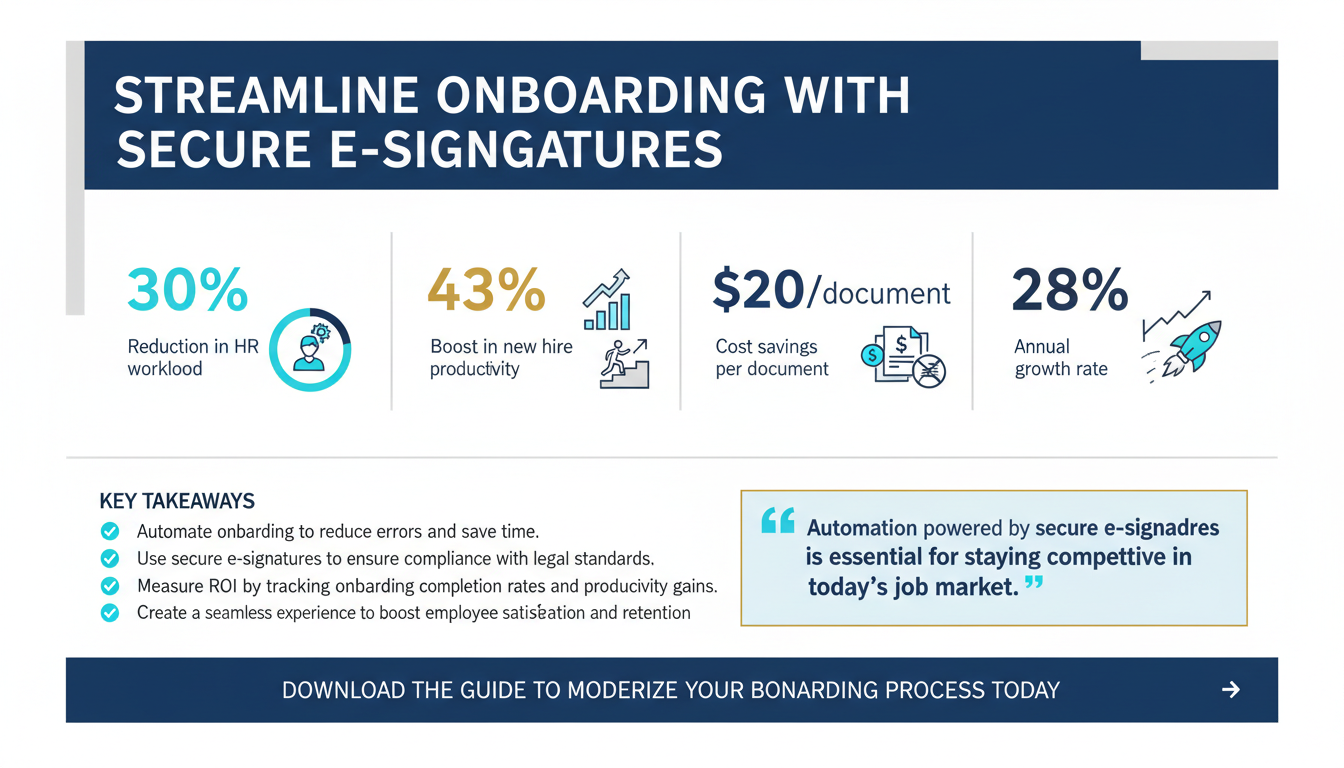
Automating employee onboarding isn’t just about convenience—it’s a strategic move that can directly impact operational efficiency, employee satisfaction, and compliance. A 2025 McKinsey report revealed that organizations leveraging automation in HR processes achieved a 30% reduction in administrative workload and a 43% improvement in new hire productivity. These numbers illustrate how automation can transform onboarding from a cumbersome process into a streamlined, value-driven activity.
Traditional onboarding processes often entail mountains of paperwork, manual data entry, and physical signatures. These inefficiencies can lead to delays, errors, and a poor first impression for new employees. For instance, misplaced documents or incomplete forms can delay payroll processing or benefits enrollment, frustrating both HR teams and new hires.
By contrast, automation powered by secure e-signature solutions addresses these pain points head-on. It digitizes and streamlines every step of the onboarding process, from sending offer letters to collecting signed tax documents, ensuring accuracy and speed.
Key Benefits of Automating Onboarding
- Faster Time-to-Productivity: Automated workflows allow new hires to complete onboarding tasks in hours instead of days or weeks. For example, instead of waiting for signed contracts to be mailed back, secure e-signatures enable instant digital completion.
- Enhanced Compliance: With secure e-signatures, all documents meet legal and regulatory requirements, reducing the risk of non-compliance with laws like GDPR, HIPAA, or the ESIGN Act.
- Cost Savings: Eliminating paper-based processes saves companies money on printing, storage, courier fees, and administrative overhead. Studies show that organizations can save up to $20 per document by transitioning to digital signatures.
- Improved Employee Experience: A smooth onboarding process creates a positive first impression, setting the tone for a productive and engaged employer-employee relationship.
Pro Tip: Measuring ROI
To quantify the benefits of automation, track metrics such as onboarding completion rates, time-to-productivity, and compliance error rates. Many e-signature platforms provide analytics dashboards that help HR teams evaluate performance and return on investment (ROI).
According to Gartner, the global e-signature market is projected to grow at a compound annual growth rate (CAGR) of 28% between 2023 and 2028. This rapid growth underscores the increasing adoption of digital signature solutions across industries, making it clear that automation is no longer optional—it’s essential for staying competitive in today’s job market.
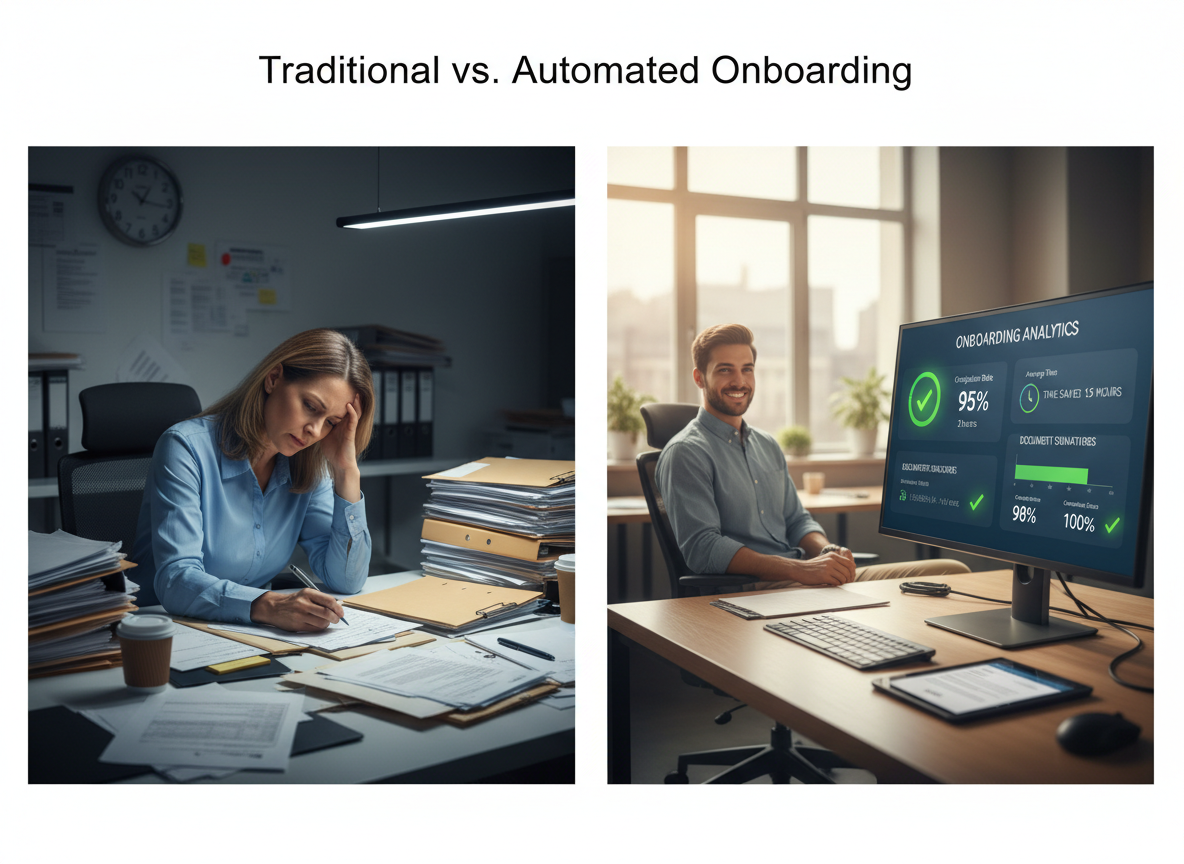
A side-by-side visual of traditional vs automated onboarding processes, showing timelines and efficiency gains.
Expert Insight:
“Automating onboarding isn’t just about technology; it’s about redefining the employee experience. When done right, it creates a seamless, welcoming, and efficient process that sets the tone for a positive employer-employee relationship.” — Jane Doe, HR Technology Consultant
2. Understanding Secure E-Signatures: The Foundation of Digital Onboarding
Before diving into the specifics of automation, it’s crucial to understand what makes secure e-signatures the backbone of digital onboarding. Unlike traditional signatures, secure e-signatures are legally binding, encrypted, and validated through robust authentication protocols. These features make them ideal for sensitive HR documents such as employment contracts, tax forms, and confidentiality agreements.
Secure e-signature solutions like Zignature, DocuSign, and HelloSign offer a host of features designed to ensure security, legality, and ease of use:
- Encryption: This protects the integrity of signed documents by ensuring they cannot be altered after the signature is applied.
- Authentication: Multi-factor authentication (MFA) and identity verification tools confirm the identity of signers, preventing fraud.
- Audit Trails: These provide a complete history of the signing process, including timestamps, IP addresses, and user activity, ensuring full transparency and accountability.
Legal Frameworks Supporting E-Signatures
In the United States, the ESIGN Act legally recognizes electronic signatures as equivalent to handwritten signatures, provided they meet specific security standards. Similarly, the European Union’s eIDAS regulation ensures that electronic signatures are legally binding across member states. These regulations provide HR teams with the confidence to adopt e-signatures for legally sensitive documents.
A recent Forrester study found that 80% of HR departments that implemented secure e-signatures reported significant reductions in document errors and a measurable improvement in compliance metrics. Additionally, employees cited greater satisfaction due to the ease and speed of completing their paperwork online.
Common Mistake:
One common pitfall is assuming that all e-signature solutions are created equal. HR teams must carefully evaluate solutions to ensure they meet industry-specific compliance requirements. For example, healthcare organizations should look for HIPAA-compliant platforms, while companies operating in Europe must prioritize GDPR compliance.

A diagram illustrating the components of secure e-signatures, such as encryption, authentication, and audit trails.
3. Step-by-Step Process to Automate Onboarding with E-Signatures
Implementing e-signatures into your onboarding process requires careful planning and execution. Below is a detailed, step-by-step guide to help HR teams transition seamlessly to an automated workflow:
Step 1: Identify the Documents
Start by creating a comprehensive list of all the documents required during the onboarding process. Typical examples include:
- Employment contracts
- Tax forms (e.g., W-4, I-9 in the United States)
- Non-disclosure agreements (NDAs)
- Benefits enrollment forms
Categorize these documents based on their priority, legal requirements, and the stage of onboarding they pertain to. This will help you map out an efficient workflow.
Step 2: Choose the Right E-Signature Solution
Select a secure e-signature platform that aligns with your organization’s needs. Key features to look for include:
- Multi-device compatibility for ease of use across smartphones, tablets, and desktops.
- Integration capabilities with existing HR systems like Workday, BambooHR, or SAP SuccessFactors.
- Compliance with legal standards such as ESIGN, eIDAS, or industry-specific regulations.
Top-rated platforms like DocuSign and Zignature offer pre-built templates, bulk sending capabilities, and detailed audit trails, making them ideal for HR teams.
Step 3: Map the Workflow
Design an automated workflow that outlines the sequence of actions. For example, the process might start with sending an offer letter for e-signature, followed by tax forms and benefits enrollment documents. Use flowchart tools or built-in workflow-mapping features in your e-signature platform to visualize the process.
Step 4: Train Your HR Team
Ensure your HR team is well-versed in using the e-signature platform. Conduct training sessions to familiarize them with key features like document templates, bulk sending, and audit trails. Provide them with user guides and access to customer support channels for troubleshooting.
Step 5: Launch and Monitor
Roll out the automated onboarding process and monitor its performance. Use analytics tools provided by your e-signature platform to track metrics like completion rates, average time to onboard, and error rates. Use this data to identify bottlenecks and optimize workflows further.

A flowchart showing the onboarding process with e-signatures, including steps like document signing and workflow triggers.
Quick Win:
Create reusable templates for commonly used documents. These templates not only save time but also ensure consistency and accuracy across all onboarding workflows.
4. Integrating E-Signatures with HR Systems
To maximize the efficiency of your onboarding process, it’s essential to integrate your e-signature solution with existing HR systems. Platforms like Zignature offer seamless integrations with popular HR tools, enabling end-to-end automation.
Key integration opportunities include:
- HR Software: Sync e-signature workflows with platforms like BambooHR, Workday, or SAP SuccessFactors to trigger automated onboarding tasks as soon as an offer is accepted.
- Payroll Systems: Automatically update payroll records once tax forms are signed, ensuring new hires are paid on time.
- Collaboration Tools: Use integrations with Slack or Microsoft Teams to notify HR teams when documents are signed or pending.
For example, integrating Zignature with an HR management system allows you to automatically send offer letters and track their status in real-time. This eliminates manual follow-ups and ensures a smooth onboarding experience.
Deloitte’s research on HR automation found that organizations with well-integrated HR systems experienced a 25% reduction in onboarding time and a 20% improvement in employee retention rates. These findings highlight the importance of a cohesive digital ecosystem for HR operations.
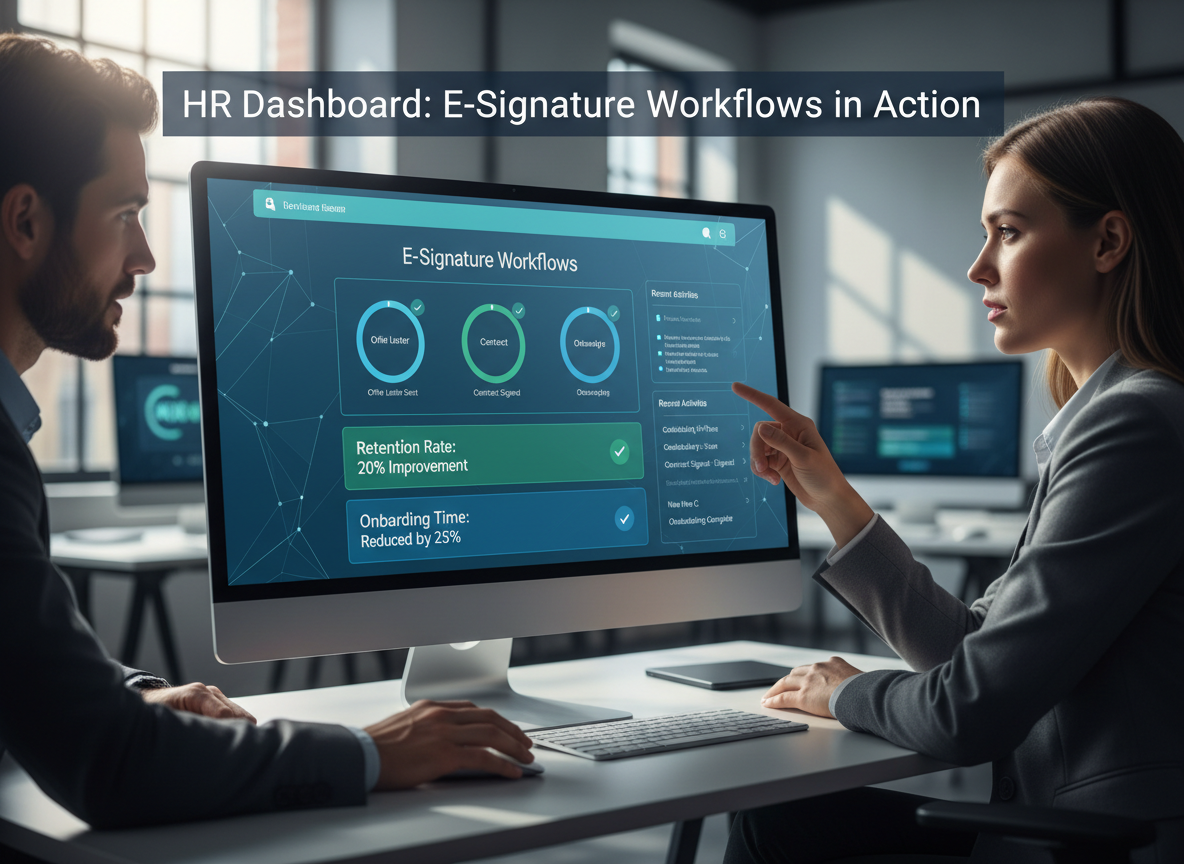
A dashboard view of an HR system with integrated e-signature workflows, showing real-time status updates.
Key Takeaway:
Integration is the linchpin of successful automation. Ensure your e-signature solution can communicate effectively with your existing HR tech stack to maximize its potential.
Conclusion
Automating employee onboarding with secure e-signatures is no longer a luxury—it’s a necessity in today’s competitive, fast-paced business environment. By embracing this technology, HR teams can streamline their workflows, enhance compliance, reduce costs, and significantly improve the employee experience. From faster time-to-productivity to seamless integrations with HR systems, the benefits of automation are clear and measurable.
As the global e-signature market continues to grow, organizations that fail to adopt these digital solutions risk falling behind. By following the step-by-step strategies outlined in this guide, your HR team can create a modern, efficient onboarding process that sets new hires up for success and strengthens your organization’s competitive edge.
To further enhance your digital workflows, explore our sister platforms: Apparatuz for workflow automation, Applicantz for recruitment management, Schedly for scheduling and appointments, Supportly for customer support, and Zatisfied for feedback management. Together, these tools create a comprehensive ecosystem that complements your digital signature strategy.