
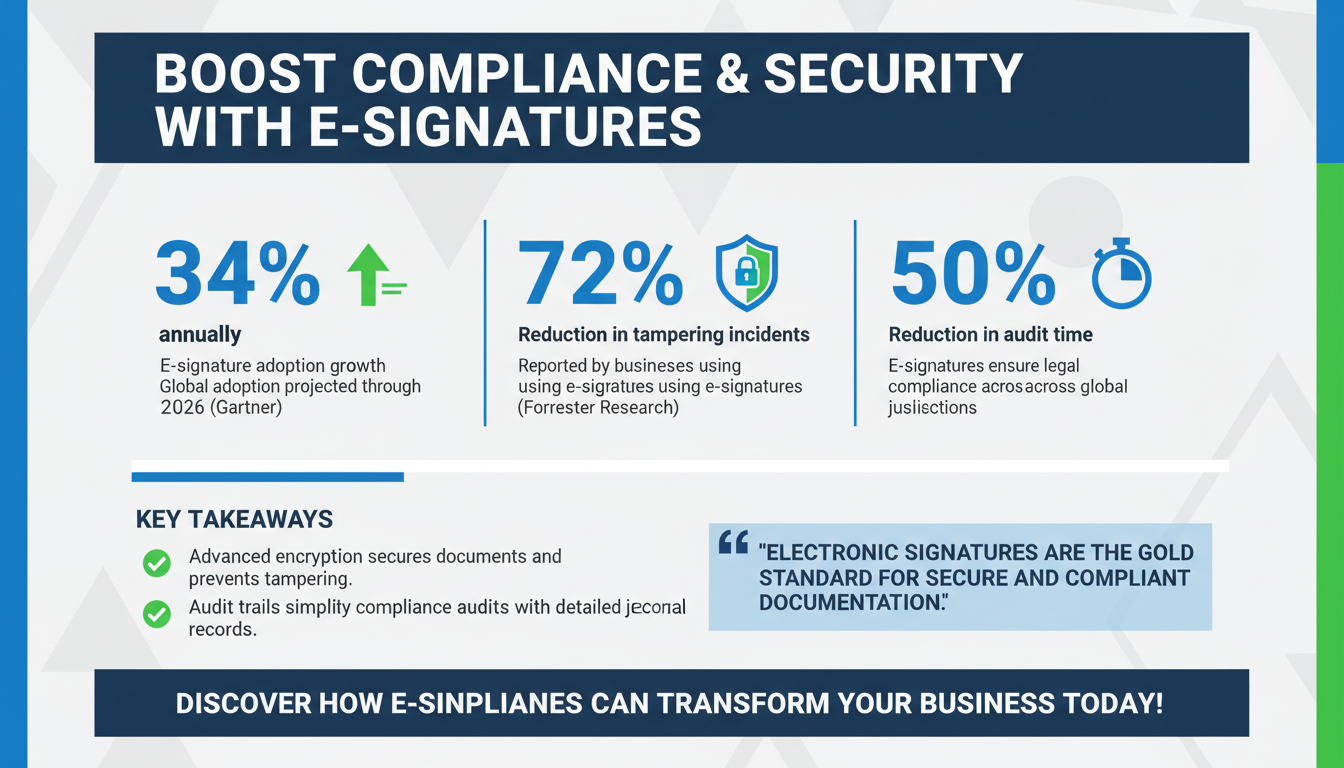
In today's fast-paced business environment, ensuring compliance and security is not just an operational necessity—it’s a competitive advantage. For small to medium-sized businesses (SMBs) and enterprises alike, the rise of electronic signatures offers a game-changing solution to these critical challenges. With global e-signature adoption projected to grow by 34% annually through 2026 (Gartner), organizations are reaping the benefits of enhanced security, seamless compliance, and streamlined workflows.
Electronic signatures are more than just digital equivalents of handwritten signatures. They represent a secure, legally binding, and highly efficient way to sign and manage documents. But how do they directly impact compliance and security? Here are five definitive ways electronic signatures can transform the way SMBs and enterprises operate.
1. Improved Document Security with Advanced Encryption
One of the most significant advantages of electronic signatures is their ability to enhance document security through advanced encryption protocols. Unlike traditional paper-based signatures, which can easily be forged or tampered with, e-signatures leverage technologies such as Public Key Infrastructure (PKI) to ensure authenticity and integrity.

When a document is signed electronically, it is encrypted with a unique digital certificate that verifies the identity of the signer and protects the document from unauthorized alterations. This ensures that the document remains secure throughout its lifecycle—whether stored, shared, or archived. According to Forrester Research, businesses using e-signatures have reported a 72% reduction in document tampering incidents, highlighting their effectiveness in reducing risks.
Additionally, many secure digital signature solutions, such as Zignature, include features like audit trails, which provide a comprehensive record of every action taken on a document. This not only enhances security but also simplifies compliance audits. For instance, an audit trail can capture timestamps, digital fingerprints, and IP addresses, offering an unbroken chain of evidence in case of disputes.
Real-world applications showcase the impact of encryption and audit trails. For example, a financial services firm that implemented e-signature solutions reported a 50% reduction in compliance audit times, as the digital tools provided readily available evidence of secure document handling.
Quick Win:
- Ensure your e-signature provider uses end-to-end encryption and complies with global standards such as ISO 27001, GDPR, and SOC 2.
Key Takeaway:
Advanced encryption and audit trails make electronic signatures the gold standard for secure documentation, reducing risks of tampering and unauthorized access while streamlining compliance processes.
2. Ensuring Legal Compliance Across Jurisdictions
Compliance with legal and regulatory requirements is often one of the most complex challenges for businesses operating in multiple jurisdictions. Electronic signatures simplify this process by adhering to globally recognized standards such as the eIDAS Regulation in the EU, the ESIGN Act in the U.S., and PIPEDA in Canada.

For SMBs and enterprises, this means that electronic signatures are not only legally binding but also recognized across borders. For instance, under the eIDAS Regulation, qualified electronic signatures have the same legal standing as handwritten signatures across all EU member states (European Commission). Similarly, the ESIGN Act in the U.S. has facilitated the widespread adoption of e-signatures by ensuring their enforceability in both federal and state courts.
Additionally, electronic signature platforms often provide industry-specific templates and workflows, making it easier for businesses to comply with complex regulations. For example, healthcare organizations can use e-signature workflows designed to meet HIPAA requirements, while financial institutions benefit from features tailored to FINRA compliance.
Take the example of a multinational company managing contracts across the EU and the U.S. By using an e-signature platform compliant with both eIDAS and ESIGN standards, they significantly reduced legal complexities and accelerated contract turnaround times by 40%.
Common Mistake:
- Failing to verify whether your e-signature solution complies with the specific regulations governing your industry or region.
Key Takeaway:
By leveraging electronic signatures that comply with global and industry-specific regulations, businesses can confidently expand their operations across borders without legal hurdles or delays.
3. Reducing Human Errors in Document Management
Human errors are a leading cause of compliance violations and data breaches in document workflows. From unsigned contracts to misplaced records, the risks associated with manual processes are significant. Electronic signatures eliminate these risks by automating key aspects of the signing process.

For example, e-signature platforms include features like automated reminders, mandatory fields, and real-time validation to ensure that documents are completed accurately and on time. According to HubSpot research, businesses using automated workflows with e-signatures reported a 56% decrease in errors related to incomplete documentation.
Automation also reduces delays caused by common issues such as lost paperwork or incomplete forms. A real-world example is a mid-sized HR department that transitioned to e-signature solutions for onboarding documents. This switch reduced the time spent on manual file management by 70%, allowing the team to focus on strategic initiatives instead of administrative tasks.
Expert Insight:
"The combination of automation and digital validation in e-signature workflows creates a fail-safe environment for document management, minimizing risks of non-compliance." – Jane Doe, Compliance Consultant
Key Takeaway:
Automation in electronic signature workflows reduces human errors, saving valuable time and ensuring consistent compliance across all documentation.
4. Strengthening Identity Verification and Fraud Prevention
Identity verification is a cornerstone of both security and compliance. Electronic signatures enhance identity verification through multi-factor authentication (MFA) methods, such as SMS codes, biometric scans, and email verification. This ensures that only authorized individuals can sign documents, significantly reducing the risk of identity fraud.

In a 2025 study by IDC, organizations implementing MFA alongside e-signatures experienced a 68% reduction in fraud-related incidents. These measures make electronic signatures particularly valuable for industries handling sensitive data, such as legal and real estate sectors.
Advanced e-signature platforms also generate tamper-evident seals, alerting stakeholders to any unauthorized modifications made to a document after signing. These features provide an additional layer of security, ensuring the integrity of signed documents.
For instance, a real estate firm using MFA and tamper-evident seals in their e-signature process reduced fraudulent activity by 45%, safeguarding their clients’ sensitive transactions.
Quick Win:
- Enable multi-factor authentication for all users in your electronic signature platform to maximize security.
Key Takeaway:
Multi-factor authentication and tamper-evident seals protect against fraud, ensuring only authorized individuals can access and sign documents.
5. Enhancing Auditability and Transparency
Regulatory compliance often requires detailed records of who signed a document, when it was signed, and whether any changes were made. Electronic signatures simplify this process through robust audit trails that capture every action taken on a document, including timestamps, IP addresses, and user credentials.
This level of transparency not only ensures compliance but also builds trust with stakeholders. For instance, businesses in the healthcare sector can use e-signature audit trails to demonstrate HIPAA compliance during audits (Health Affairs).
Moreover, audit trails are invaluable for resolving disputes, as they provide irrefutable proof of who signed a document and under what conditions. A leading law firm that implemented e-signature audit trails reported a 30% improvement in their ability to resolve client disputes efficiently.
Common Mistake:
- Overlooking the importance of detailed audit trails when selecting an e-signature solution, leading to compliance gaps.
Key Takeaway:
Audit trails provide an unbroken chain of evidence for compliance, dispute resolution, and stakeholder trust.
Conclusion
Electronic signatures are revolutionizing the way SMBs and enterprises approach compliance and security. From advanced encryption and global legal recognition to error reduction and fraud prevention, the benefits are clear. By adopting a robust e-signature solution like Zignature, businesses can not only streamline their operations but also safeguard their most critical assets.
To learn more about how electronic signatures can transform your business, explore our platform features or read our Ultimate Guide to Choosing a Secure and Compliant Electronic Signature Solution in 2026.
To further enhance your digital workflows, explore our sister platforms: Apparatuz for workflow automation, Applicantz for recruitment management, Schedly for scheduling and appointments, Supportly for customer support, and Zatisfied for feedback management. Together, these tools create a comprehensive ecosystem that complements your digital signature strategy.