
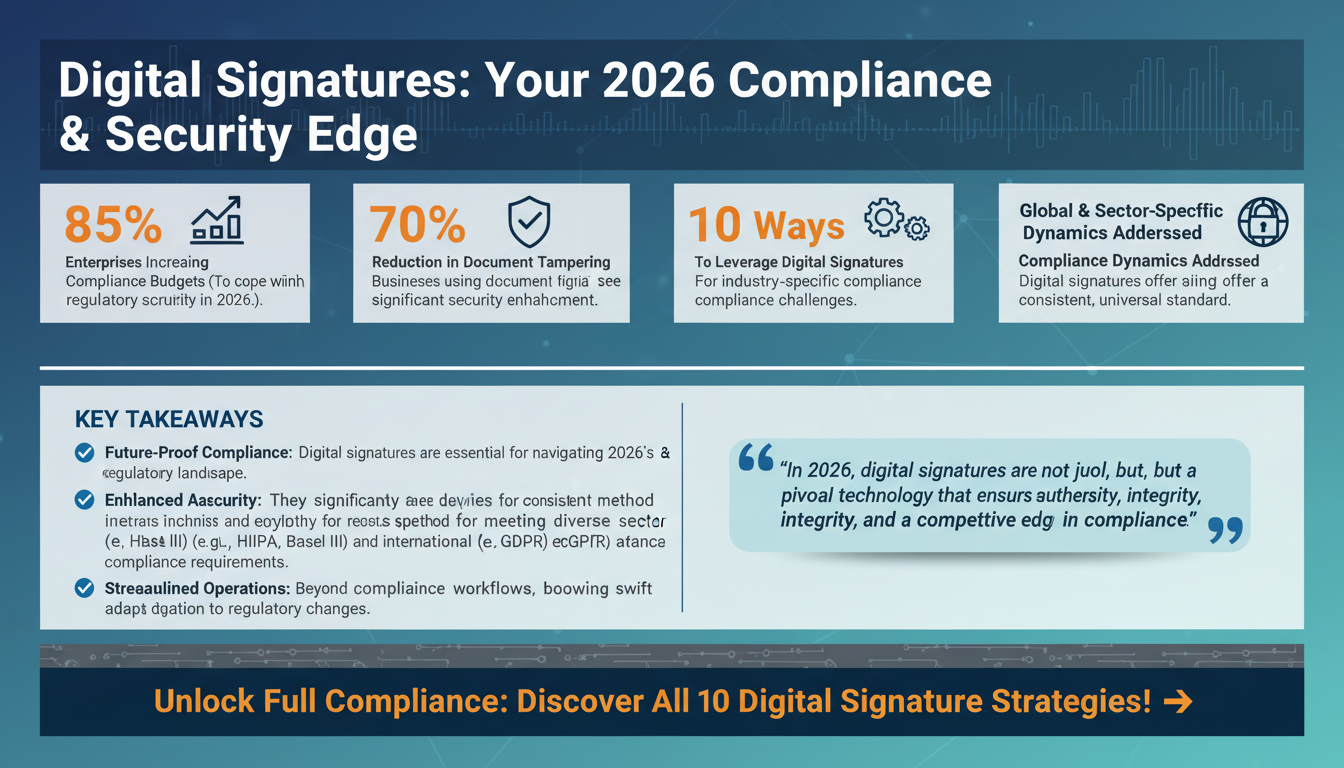
In the rapidly evolving digital landscape of 2026, businesses face the dual challenge of managing large volumes of documents while ensuring stringent compliance with industry regulations. Digital signatures have emerged as a pivotal technology, offering secure and efficient solutions for document management. By understanding and leveraging digital signatures, businesses can gain a competitive edge, ensuring authenticity, data integrity, and compliance with ever-changing regulations.
Understanding the Compliance Landscape in 2026
The compliance landscape in 2026 is marked by increased regulatory scrutiny across various industries. Organizations must navigate a complex web of regulations that govern data privacy, financial transactions, healthcare records, and more. According to a Gartner report, 85% of enterprises are expected to increase their compliance budgets to cope with these challenges. The rise in compliance requirements is driven by increasing global data breaches, which have pushed regulators to enforce stricter data protection laws.
Sector-Specific Regulations
Different sectors face unique compliance challenges that require tailored strategies. For instance, the financial industry must adhere to complex regulations like Dodd-Frank and Basel III, which necessitate meticulous record-keeping and transparency in transactions. Healthcare organizations, on the other hand, must comply with HIPAA regulations that protect patient information and govern how it is shared and stored. This diversity in compliance needs underscores the importance of adaptable solutions like digital signatures, which can be customized to meet specific regulatory requirements.
Global Compliance Dynamics
As businesses expand globally, understanding and complying with international regulations becomes crucial. The GDPR in Europe, for example, sets stringent standards for data protection that businesses must adhere to when dealing with EU citizens. Similarly, China's Cybersecurity Law imposes unique requirements on data storage and cross-border transfer. Digital signatures offer a consistent method to ensure compliance across various jurisdictions, providing a universal standard that simplifies international operations.
Incorporating digital signatures into compliance strategies is a pragmatic approach that ensures documents are legally binding and tamper-proof. As regulations become more stringent, digital signatures offer a robust solution to meet compliance requirements efficiently. They not only reduce the risk of non-compliance but also streamline workflows, allowing organizations to adapt to regulatory changes swiftly. The integration of advanced encryption technologies further enhances the security of digital transactions, mitigating the risks associated with data breaches and unauthorized access.
Enhancing Security Measures with Digital Signatures
In an era where data breaches are increasingly common, enhancing security measures is a top priority for businesses. Digital signatures play a crucial role in fortifying document security by providing a layer of encryption and verification that traditional signatures cannot match. Forrester's research indicates that businesses using digital signatures experience a 70% reduction in document tampering incidents. This significant reduction underscores the effectiveness of digital signatures in safeguarding sensitive information.

Cryptographic Algorithms and Security
At the heart of digital signature security are cryptographic algorithms such as RSA and ECC, which provide complex mathematical functions that secure data. These algorithms create a unique hash for each document, which acts as a digital fingerprint. Any alteration in the document after signing will change this hash, signaling tampering. This mechanism is crucial for maintaining the integrity of signed documents, especially in high-stakes industries like finance and healthcare.
Pro Tip: Layered Security Approach
Experts recommend adopting a layered security approach when implementing digital signatures. This includes using multi-factor authentication (MFA) to verify the identity of signers, employing secure sockets layer (SSL) for data transmission, and conducting regular audits to ensure compliance. By combining these security measures, businesses can create a robust defense against potential breaches and unauthorized access.
One of the key benefits of digital signatures is their ability to verify the identity of the signer and ensure the integrity of the signed document. This is achieved through cryptographic algorithms that create a unique fingerprint for each document, making it virtually impossible to alter without detection. By leveraging digital signatures, organizations can confidently handle sensitive information, knowing that their documents are protected against unauthorized alterations. This level of security is particularly critical in industries such as healthcare and finance, where the integrity of documents is paramount.
Streamlining Workflow Efficiency
Digital signatures significantly enhance workflow efficiency by automating the signing process and reducing the time spent on document management. According to a McKinsey report, businesses that have adopted digital signatures have seen a 40% improvement in processing times. The traditional process of obtaining physical signatures is often cumbersome and time-consuming, involving multiple rounds of printing, scanning, and mailing documents.

Remote Work and Digital Signatures
With the rise of remote work, digital signatures have become indispensable. They allow employees to sign documents from anywhere, at any time, without the need for physical presence. This flexibility not only accelerates business processes but also supports the growing trend of remote and hybrid work environments. Companies like Dropbox and Adobe have integrated digital signatures into their platforms, enabling seamless remote document management.
Checklist: Implementing Digital Signatures for Workflow Efficiency
- Choose a reliable digital signature platform that integrates with your existing document management systems.
- Train staff on the use of digital signatures to ensure smooth adoption and minimize resistance.
- Set up automated workflows where documents are routed for signatures automatically, reducing manual intervention.
- Regularly review and optimize your digital signature process to identify bottlenecks and areas for improvement.
Digital signatures eliminate these inefficiencies by enabling remote signing, thus accelerating the entire workflow. For industries where speed and efficiency are critical, such as real estate and legal sectors, digital signatures offer a competitive advantage by ensuring faster turnaround times and reducing operational costs. Furthermore, the ability to sign documents remotely is particularly beneficial in today's globalized business environment, where stakeholders may be spread across different locations.
Addressing Industry-Specific Compliance Challenges
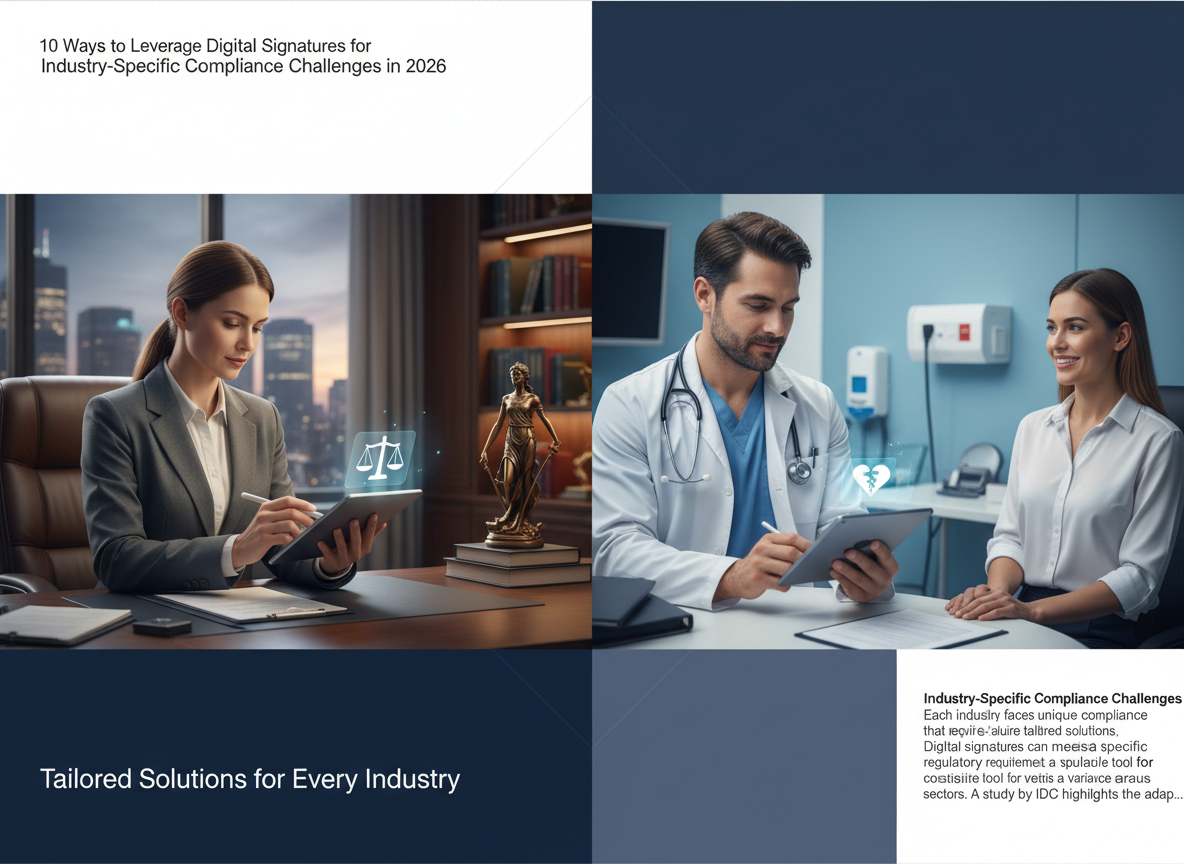
Each industry faces unique compliance challenges that require tailored solutions. Digital signatures can be customized to meet specific regulatory requirements, making them a versatile tool for compliance across various sectors. A study by IDC highlights the adaptability of digital signatures in addressing sector-specific compliance needs.
Healthcare Industry
In the healthcare industry, maintaining patient privacy and data security is critical. Digital signatures help ensure compliance with HIPAA by securely encrypting patient records and verifying the identity of authorized personnel accessing sensitive information. This is crucial for preventing data breaches, which can result in hefty fines and damage to reputation. By using digital signatures, healthcare providers can streamline patient onboarding and consent processes, reducing administrative burden and enhancing patient care.
Financial Services
Financial institutions are subject to rigorous compliance requirements, including KYC (Know Your Customer) and AML (Anti-Money Laundering) regulations. Digital signatures provide a secure method for verifying client identities and ensuring transaction integrity. They also facilitate audit trails, making it easier to track and report compliance. In an industry where trust is paramount, the ability to offer secure and efficient digital transactions enhances customer confidence and loyalty.
For instance, in the healthcare industry, digital signatures ensure compliance with HIPAA regulations by safeguarding patient data and maintaining confidentiality. Similarly, in the financial sector, digital signatures facilitate adherence to stringent KYC and AML requirements by providing a secure and verifiable method of authentication. In the legal industry, digital signatures help in maintaining the integrity and confidentiality of legal documents, ensuring compliance with evidentiary laws. By aligning digital signature solutions with industry-specific regulations, organizations can effectively mitigate compliance risks and ensure adherence to legal standards.
Reducing Operational Costs
Adopting digital signatures can lead to significant cost savings by reducing the reliance on paper-based processes. A BCG analysis found that companies implementing digital signatures reduce their document management costs by up to 50%. Eliminating the need for physical storage and transportation of documents drastically lowers operational expenses and minimizes the environmental impact. Additionally, digital signatures reduce the risk of errors and discrepancies, which can incur costly legal fees and penalties.
Environmental Impact and Corporate Responsibility
Reducing paper consumption aligns with corporate social responsibility goals and appeals to environmentally conscious consumers. By adopting digital signatures, companies demonstrate a commitment to sustainability, which can enhance brand reputation and customer loyalty. In fact, a study by Nielsen found that 66% of global consumers are willing to pay more for environmentally friendly products and services, highlighting the business case for sustainable practices.
Pro Tip: Leveraging Digital Transformation
Embrace digital transformation holistically by integrating digital signatures with other digital tools like cloud storage and collaboration platforms. This not only enhances efficiency but also provides a cohesive and streamlined digital environment that supports innovation and growth.
For SMBs and enterprises alike, embracing digital signatures is a cost-effective strategy that not only streamlines operations but also aligns with sustainability goals. By reducing paper consumption and waste, businesses can also enhance their corporate social responsibility profiles, appealing to environmentally conscious consumers and stakeholders.
Ensuring Legal Validity and Enforceability
One of the primary concerns with digital signatures is their legal validity and enforceability. However, advancements in digital signature technology have addressed these concerns, ensuring that digitally signed documents hold the same legal weight as their traditional counterparts. According to Law.com's analysis, over 95% of countries recognize digital signatures as legally binding.
Comparison of Legal Frameworks
| Region | Legal Framework | Key Features |
|---|---|---|
| European Union | eIDAS Regulation | Standardizes electronic identification and trust services, ensuring cross-border recognition. |
| United States | ESIGN Act | Grants legal validity to electronic signatures and records in commerce. |
| Asia-Pacific | Various National Laws | Countries like Australia and Singapore have specific laws recognizing digital signatures. |
Digital signatures are backed by robust legal frameworks such as the eIDAS regulation in the EU and the ESIGN Act in the United States, which provide a solid foundation for their legal acceptance worldwide. This legal recognition empowers businesses to confidently use digital signatures in international transactions, fostering cross-border trade and collaboration. As global commerce continues to expand, the ability to use digital signatures across borders will become increasingly important, ensuring seamless and legally compliant operations.
Overcoming Common Misconceptions
Despite their numerous benefits, digital signatures are often misunderstood or underutilized due to prevalent misconceptions. A report by Accenture identifies several misconceptions that hinder adoption, including concerns about security and complexity. Many businesses mistakenly believe that digital signatures are complicated to implement or that they compromise security. In reality, digital signatures are designed to be user-friendly and enhance security through encryption and verification mechanisms.
Addressing Security Concerns
Businesses often fear that digital signatures may be vulnerable to cyberattacks. However, the use of advanced encryption technologies and secure authentication methods ensures that digital signatures are among the most secure forms of electronic authentication. Educating stakeholders about these security features can help dispel fears and increase adoption rates.
Myth-Busting: Simplifying Implementation
Implementing digital signatures is simpler than many imagine. Most digital signature providers offer intuitive interfaces and comprehensive support during the integration process. Additionally, cloud-based solutions eliminate the need for complex on-premises installations, making it easier for businesses of all sizes to transition to digital signatures.
By educating stakeholders and addressing these misconceptions, organizations can unlock the full potential of digital signatures and harness their transformative power. Seminars, workshops, and comprehensive guides can be effective in dispelling myths and demonstrating the practical benefits of digital signatures, encouraging wider adoption across industries.
Implementing Digital Signatures: A Step-by-Step Guide
Implementing digital signatures involves a strategic approach that ensures seamless integration with existing systems. A successful implementation begins with selecting a reliable digital signature provider that aligns with the organization's needs. Capterra's comparison of digital signature solutions can aid in this decision-making process. Once a provider is selected, the next step is to integrate the digital signature solution with existing document management systems. This integration should be accompanied by staff training to ensure a smooth transition and maximize adoption.
Step-by-Step Integration Process
- Assess your organization's specific needs and regulatory requirements to choose the right digital signature solution.
- Conduct a pilot program to test the solution in a controlled environment and gather feedback.
- Develop a comprehensive implementation plan that includes timelines, responsibilities, and success metrics.
- Train employees on the new system, focusing on security protocols and operational benefits.
- Launch the solution company-wide, providing support and resources to address any issues that arise.
Expert Insight: Continuous Improvement
Digital signature implementation is not a one-time project but an ongoing process. Regularly review your digital signature usage and gather feedback from users to identify areas for improvement. This continuous improvement approach ensures that your solution remains effective and aligned with evolving business needs and regulatory changes.
Continuous monitoring and evaluation of the digital signature solution are essential to identify areas for improvement and ensure ongoing compliance with regulatory changes. Organizations should establish clear metrics for success and regularly review their digital signature processes to ensure they are meeting both operational and compliance objectives.
Future Trends in Digital Signature Technology
The future of digital signature technology is marked by continued innovation and adaptation to emerging trends. As artificial intelligence and blockchain technologies advance, digital signatures are expected to become even more secure and efficient. A MIT Technology Review article explores these future trends and their implications for businesses.
AI-Driven Enhancements
Artificial intelligence is set to revolutionize digital signatures by automating complex tasks such as signature verification and fraud detection. AI algorithms can analyze patterns and detect anomalies, providing an additional layer of security and reducing the potential for human error. Businesses can leverage AI-driven insights to optimize their digital signature workflows and enhance decision-making processes.
Blockchain's Role in Digital Signatures
Blockchain technology offers a decentralized and immutable platform for digital signatures, ensuring transparency and traceability. By recording signatures on a blockchain, organizations can create tamper-proof audit trails that are accessible and verifiable by all parties involved. This is particularly beneficial for industries that require high levels of trust and accountability, such as supply chain management and legal services.
AI-powered digital signatures can automate the verification process, reducing the likelihood of human error and enhancing overall security. Meanwhile, blockchain technology offers a decentralized and immutable ledger for storing digital signatures, ensuring transparency and traceability. By staying abreast of these trends, organizations can future-proof their digital signature strategies and remain compliant in an ever-evolving regulatory landscape.
FAQs: Addressing Common Questions
What industries benefit most from digital signatures? Digital signatures are particularly beneficial for industries with high compliance requirements, such as healthcare, finance, and legal sectors.
Are digital signatures legally recognized worldwide? Yes, digital signatures are legally recognized in most countries, with frameworks like eIDAS and the ESIGN Act providing legal support.
How do digital signatures enhance security? Digital signatures use encryption and unique identifiers to ensure document integrity and verify signer identity, reducing the risk of tampering.
What are the cost benefits of digital signatures? Digital signatures reduce costs associated with paper-based processes, storage, and transportation, offering significant operational savings.
How can I implement digital signatures in my organization? Start by selecting a reliable provider, integrate the solution with existing systems, and provide staff training for smooth adoption.
Conclusion: Embrace the Future of Compliance with Digital Signatures
As industries continue to navigate complex compliance landscapes in 2026, digital signatures offer a powerful solution to meet these challenges head-on. By enhancing security, streamlining workflows, and reducing operational costs, digital signatures empower businesses to thrive in an increasingly regulated world. To maximize the benefits of digital signatures, consider exploring complementary tools like Apparatuz for workflow automation, Applicantz for recruitment efficiency, and Schedly for seamless scheduling. Together, these tools create a comprehensive solution for achieving compliance and operational excellence.
For more insights on digital signature solutions, visit our platform features to discover how Zignature can support your compliance needs.