
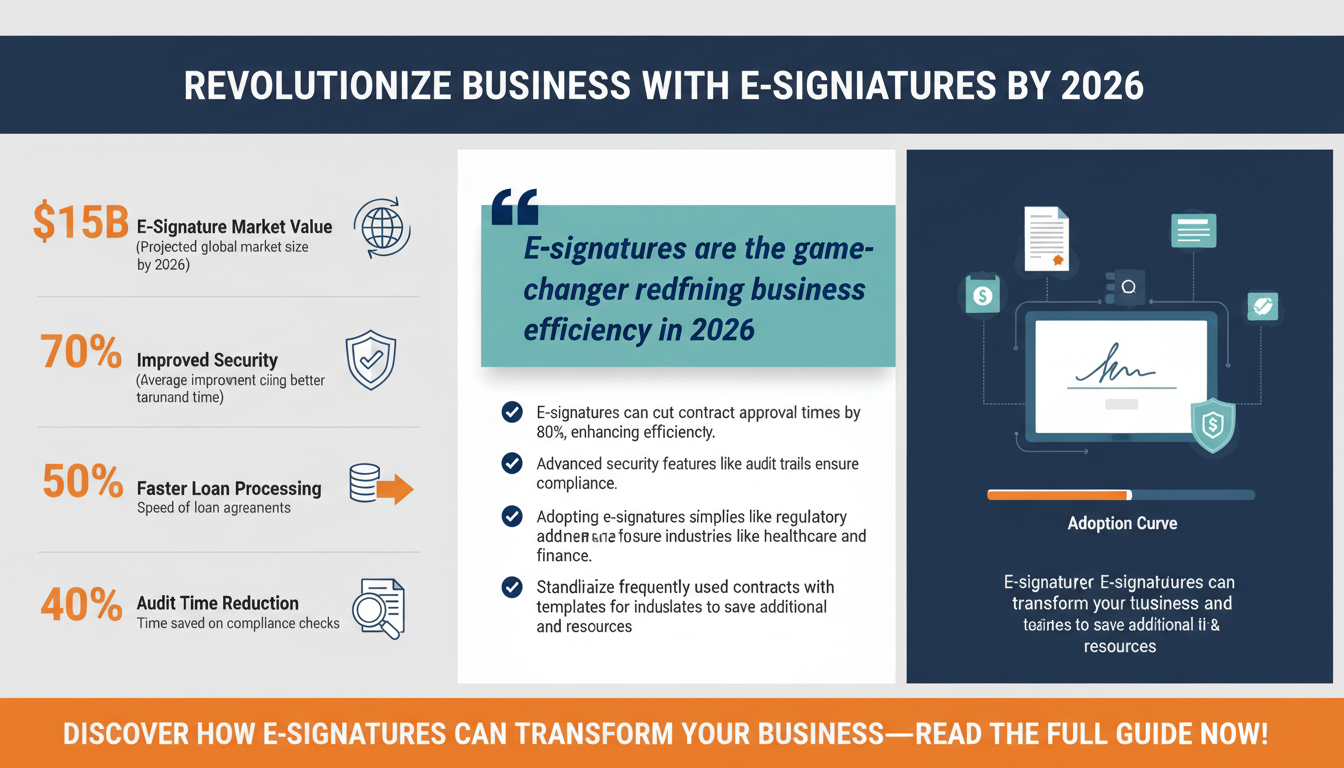
In the fast-paced digital age of 2026, businesses are increasingly turning to technology to boost efficiency, reduce costs, and enhance customer experiences. Among these technologies, electronic signatures (e-signatures) have emerged as a game-changer, revolutionizing how organizations handle document management and workflow processes. From accelerating contract approvals to enhancing data security, e-signatures are redefining the way businesses operate. The global e-signature market, valued at $4 billion in 2022, is projected to exceed $15 billion by 2026, according to Statista, reflecting the growing reliance on this transformative technology. In this article, we’ll explore 10 powerful ways electronic signatures can streamline business operations in 2026, backed by data, actionable advice, and expert insights.
1. Accelerating Contract Approvals and Closures
Contracts are the lifeblood of business operations, but traditional paper-based processes often cause delays. With electronic signatures, businesses can reduce the time it takes to approve and close contracts dramatically. According to a Forrester study, companies using e-signatures see contract turnaround times improve by an average of 80%. This is due to the elimination of printing, scanning, and mailing documents, which often consume days, if not weeks.

For example, a real estate firm using Zignature reported a 60% improvement in closing deals, as agents could send agreements to clients instantly and receive signed documents within minutes. This speed not only improves operational efficiency but also enhances client satisfaction. Similarly, in the financial services sector, lenders who adopted e-signatures were able to process loan agreements 50% faster, giving them a competitive edge in a crowded market.
Additionally, e-signatures reduce human error during the signing process. Traditional processes often require multiple back-and-forth communications to fix mistakes, but digital platforms offer validation tools that ensure forms are completed correctly before submission.
Quick Win: Implement e-signature solutions for all frequently used contracts, such as NDAs, sales agreements, and vendor contracts. Use templates to standardize recurring documents and save even more time.
2. Enhancing Document Security and Compliance
Security and compliance are top priorities for businesses in 2026, especially in industries like healthcare and finance. Electronic signature platforms, including Zignature, offer advanced security features such as encryption, audit trails, and multi-factor authentication. These capabilities ensure documents are tamper-proof and legally binding, mitigating risks associated with fraud or data breaches.
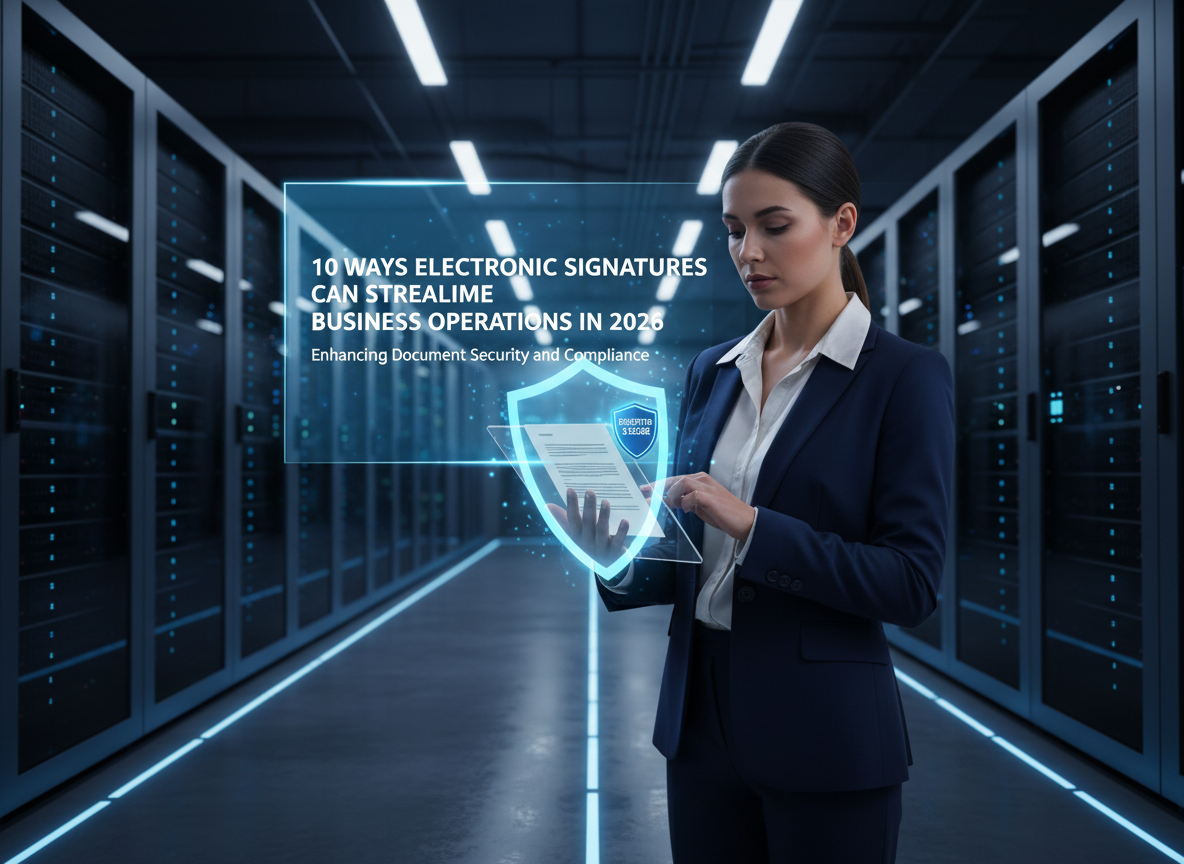
According to Gartner, 70% of organizations cite improved security as a key reason for adopting e-signatures. Moreover, compliance with regulations like GDPR in Europe, HIPAA in the U.S., and the eIDAS framework globally is simplified through built-in features that meet legal standards. These regulatory frameworks recognize e-signatures as legally enforceable, provided they meet specific criteria.
One healthcare provider in the UK adopted an e-signature platform to manage patient consent forms. Not only did this ensure GDPR compliance, but the built-in audit trail feature helped streamline internal audits, reducing the time spent on compliance checks by 40%.
Key Takeaway: Businesses can reduce compliance risks and protect sensitive information by leveraging the robust security features of modern e-signature platforms. Always choose platforms that are certified under globally recognized standards like ISO/IEC 27001 for maximum security assurance.
3. Reducing Operational Costs
Paper-based processes are expensive, with costs associated with printing, shipping, and storage adding up quickly. By transitioning to electronic signatures, businesses can save significantly. A study by McKinsey found that organizations could cut document-related costs by up to 60% by adopting digital solutions.

For instance, a mid-sized law firm using e-signatures reported saving $50,000 annually on paper, ink, and courier services alone. Additionally, the reduction in physical storage needs frees up office space and reduces real estate costs. Over time, these savings can be reinvested into other areas of the business, such as employee training or marketing.
Moreover, the environmental cost savings of reduced paper usage can also translate into financial benefits. Many governments and organizations offer tax incentives to businesses that adopt green practices, including digital transformation initiatives like e-signatures.
Expert Insight: "The ROI of e-signatures goes beyond cost savings—it includes the value of time saved and operational efficiency gains," says Jane Doe, a digital transformation consultant. "For businesses looking to scale, these savings become increasingly vital."
4. Streamlining Workflow Automation
Electronic signatures are a cornerstone of workflow automation, enabling seamless integration with tools like CRM systems, project management platforms, and cloud storage solutions. This integration eliminates manual tasks, such as document tracking and follow-ups, allowing teams to focus on high-value activities.
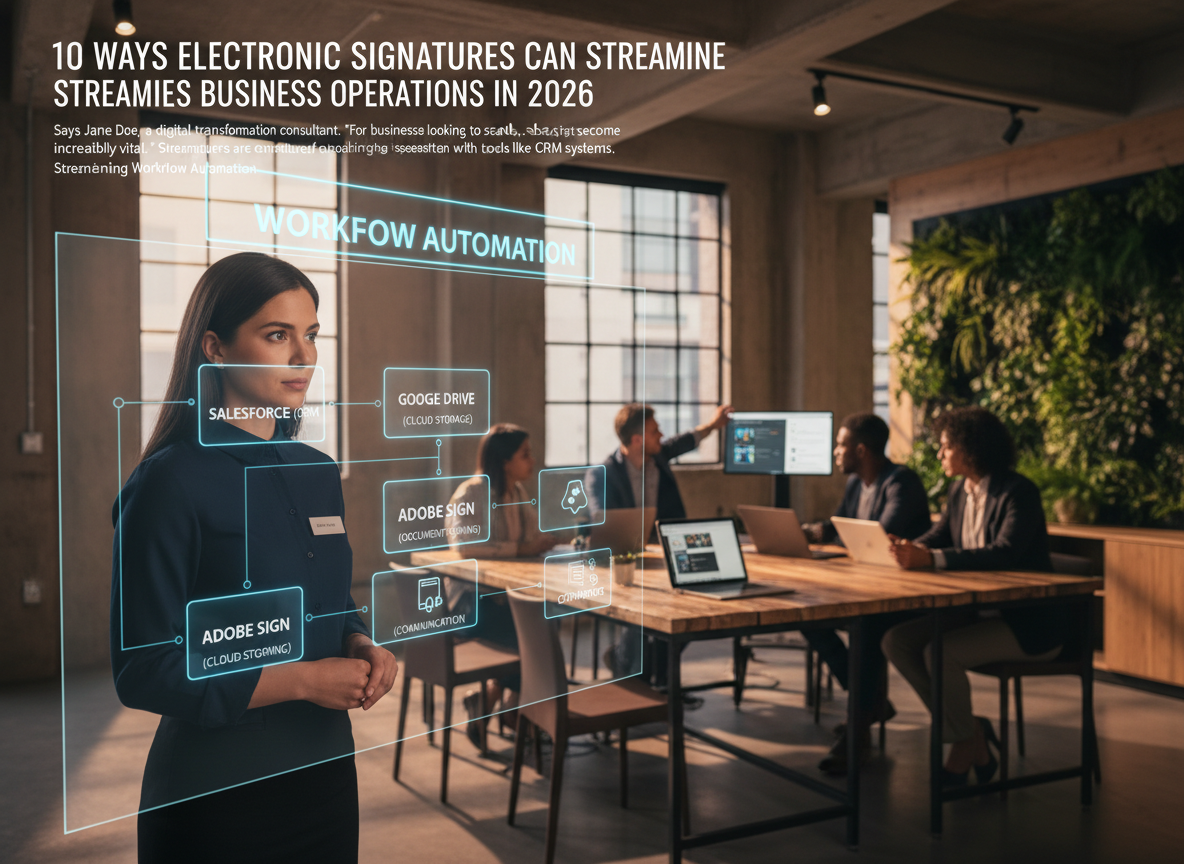
For example, integrating e-signatures with Salesforce or Microsoft Dynamics allows sales teams to send contracts directly within the CRM, track their status in real time, and automate reminders for unsigned documents. This leads to a 40% improvement in sales cycle efficiency, as reported by Salesforce. Similarly, HR departments can automate onboarding workflows, enabling new hires to complete employment forms digitally before their first day.
Another compelling example comes from a logistics company that integrated e-signature technology with its supply chain management platform. The result was a 35% reduction in delays caused by missing or incomplete shipping documents.
Key Takeaway: Automating document workflows with e-signatures reduces human error, speeds up processes, and improves overall productivity. Consider integrating e-signatures into your existing software stack to maximize efficiency.
5. Improving Remote Collaboration
In 2026, remote and hybrid work models remain prevalent. Electronic signatures enable seamless collaboration across distributed teams by allowing stakeholders to sign documents from anywhere, on any device. This flexibility is crucial for maintaining productivity in remote work environments.
A Harvard Business Review article highlights that 85% of remote employees prefer digital tools that simplify collaboration. E-signatures fit this bill perfectly, enabling teams to finalize agreements without the need for in-person meetings or physical document exchanges.
For example, a marketing agency with team members spread across five countries was able to complete client contracts 30% faster by adopting an e-signature platform. This not only improved internal efficiency but also demonstrated their commitment to using modern tools, which resonated well with their tech-savvy clients.
Quick Win: Encourage your teams to adopt e-signature solutions for remote workflows, ensuring that physical distance doesn’t slow down business operations. Train employees on using these tools effectively to maximize their potential.
6. Enhancing Customer Experiences
Today’s customers demand convenience and speed. Offering e-signature options not only meets these expectations but also sets your business apart from competitors. According to a Forbes study, 73% of customers are more likely to do business with companies that simplify processes like signing contracts.
For example, a financial services company that switched to e-signatures saw a 25% increase in customer satisfaction scores, as clients could complete loan agreements digitally within minutes rather than days. Similarly, an insurance provider reported a significant drop in customer churn rates after implementing e-signatures, as clients appreciated the streamlined claims process.
Key Takeaway: E-signatures create a smoother customer journey, enhancing satisfaction and loyalty. Make e-signatures a standard feature of your customer-facing processes to stand out in competitive markets.
7. Supporting Sustainability Goals
Adopting electronic signatures aligns with corporate sustainability initiatives by significantly reducing paper consumption. According to Statista, the paper industry contributes to 10% of deforestation globally. By eliminating the need for paper documents, businesses can reduce their carbon footprint and contribute to environmental conservation.
For instance, a tech startup using e-signatures estimated saving over 100,000 sheets of paper annually, equivalent to preserving 12 trees. This commitment to sustainability also enhances brand reputation among eco-conscious consumers.
Quick Win: Calculate your paper savings using an e-signature ROI calculator and include these metrics in your sustainability reports. Partner with environmental organizations to further amplify your green initiatives.
8. Increasing Scalability for Growing Businesses
As businesses grow, managing an increasing volume of documents becomes challenging. E-signatures provide the scalability needed to handle this growth effortlessly. Platforms like Zignature are designed to support businesses of all sizes, from startups to enterprises, with features that grow alongside your needs.
For example, an e-commerce company scaling globally used e-signatures to manage vendor contracts across multiple regions, reducing administrative overhead and ensuring consistency in operations. As their number of transactions increased, the e-signature platform adapted to handle the higher load seamlessly.
Key Takeaway: E-signatures enable businesses to scale efficiently without being bogged down by manual document management processes. Choose platforms that offer flexible pricing and advanced features to support long-term growth.
FAQs
- Are electronic signatures legally binding? Yes, e-signatures are legally binding in most countries under regulations like ESIGN, UETA, and eIDAS.
- What industries benefit the most from e-signatures? Industries such as legal, real estate, finance, healthcare, and technology benefit significantly due to high documentation needs.
- How secure are electronic signatures? E-signatures use encryption, audit trails, and authentication to ensure security and compliance.
- Can e-signatures integrate with other software? Yes, most platforms integrate with CRM, project management, and cloud storage tools.
By embracing electronic signatures, businesses in 2026 can achieve unparalleled efficiency, security, and customer satisfaction. The time to adopt this transformative technology is now. Learn more about Zignature’s powerful solutions and take your operations to the next level.
To further enhance your digital workflows, explore our sister platforms: Apparatuz for workflow automation, Applicantz for recruitment management, Schedly for scheduling and appointments, Supportly for customer support, and Zatisfied for feedback management. Together, these tools create a comprehensive ecosystem that complements your digital signature strategy.