
In today’s fast-paced and highly competitive business environment, effective vendor management is no longer a luxury—it is a necessity. For small and medium-sized businesses (SMBs) and enterprises alike, managing vendor relationships efficiently can mean the difference between operational excellence and costly inefficiencies. Historically, vendor management has relied on traditional methods like paper-based contracts, wet signatures, and in-person meetings. However, these outdated methods are increasingly incapable of meeting the demands of modern business. Enter electronic signatures—a transformative tool that is revolutionizing how businesses handle vendor agreements by making them faster, more secure, and more scalable. This comprehensive guide explores the growing importance of vendor management, the functionality of electronic signatures, their legal and security benefits, and actionable ways businesses can integrate this technology into their workflows to unlock unprecedented efficiencies.
The Growing Importance of Vendor Management in 2026
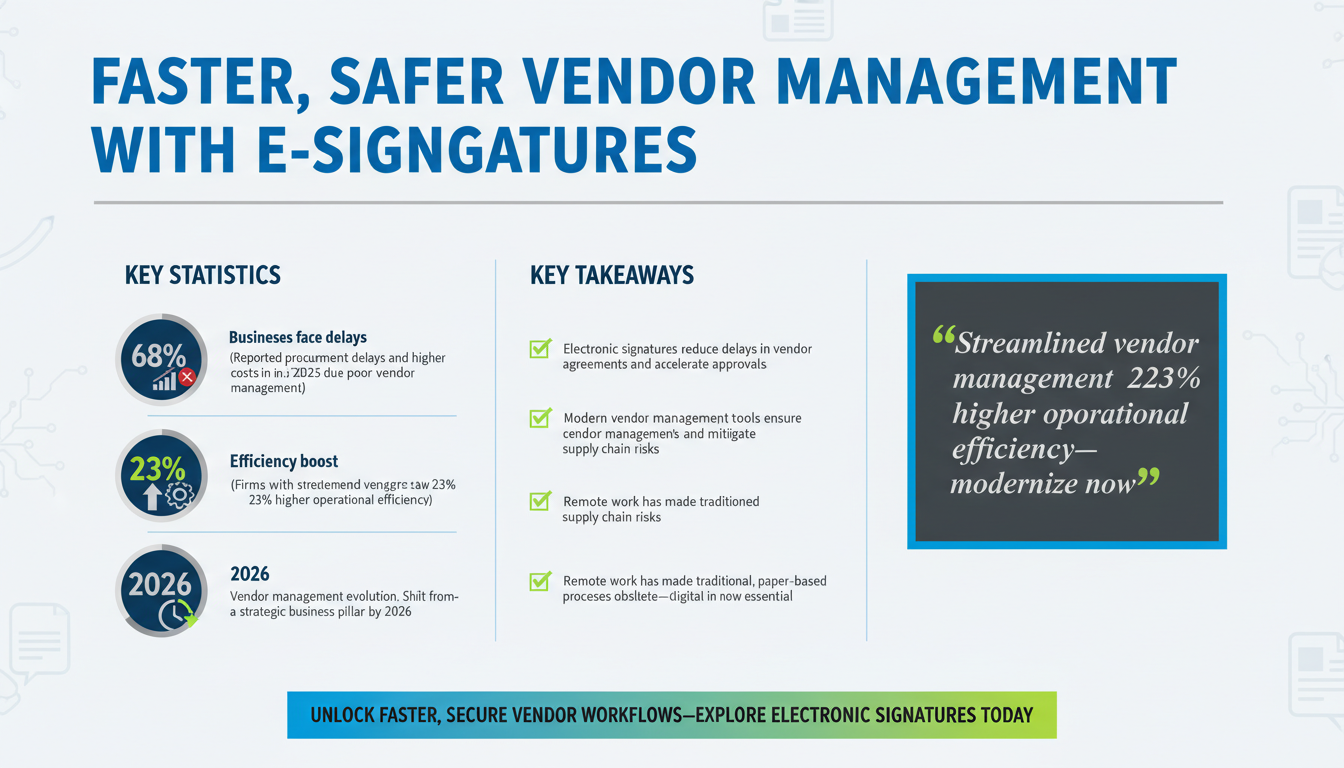
Vendor management has evolved from being a back-office function to a strategic pillar that directly influences an organization’s profitability and operational efficiency. The global economy is more interconnected than ever before, and companies are increasingly dependent on a wide array of vendors for everything from raw materials to IT services. As a result, managing these relationships effectively has become critical. According to a Forrester study, 68% of businesses reported experiencing delays in procurement and higher operational costs due to inefficient vendor management in 2025 alone. These inefficiencies often stem from challenges such as delayed contract approvals, mismanagement of vendor data, and difficulties in staying compliant with ever-evolving regulations.

How Vendor Management Shapes Business Success
Vendor relationships are not just transactional; they are foundational to business success. In industries like retail, manufacturing, and technology, vendors provide essential components and services that fuel growth. For example, a retail company depends on logistics vendors to ensure timely delivery of goods to customers. If vendor agreements are delayed due to slow contract approvals or miscommunication, the ripple effect can harm customer satisfaction and brand reputation. A 2025 report by Deloitte highlighted that businesses with streamlined vendor management processes reported 23% higher operational efficiency compared to those relying on outdated methods.
Moreover, effective vendor management ensures that businesses can adapt to market changes and mitigate risks. In the wake of global supply chain disruptions, companies that maintained strong vendor relationships were able to pivot quickly, sourcing alternative suppliers to keep operations running smoothly. This agility underscores the importance of having a robust vendor management framework supported by modern tools like electronic signatures.
Impact of Remote Work on Vendor Management
The rise of remote work has added a layer of complexity to vendor management. With teams distributed globally, relying on physical processes like wet signatures has become impractical. Remote work has accelerated the adoption of digital solutions, pushing businesses to rethink traditional workflows. For instance, remote teams often rely on cloud-based platforms to collaborate efficiently. Integrating electronic signatures into these platforms ensures that vendor agreements are handled seamlessly, regardless of geographic location.
Take the example of an IT services company with vendors in multiple countries. Without electronic signatures, the company would face challenges like mailing contracts internationally—a process that is both time-consuming and expensive. By switching to e-signatures, the company can finalize agreements in hours instead of weeks, enabling faster onboarding of vendors and quicker project launches.
Pro Tip: Establish Vendor Management KPIs
To maximize the benefits of electronic signatures, businesses should establish clear Key Performance Indicators (KPIs) for vendor management. Examples include average contract approval time, vendor satisfaction scores, and compliance audit success rates. Tracking these metrics can help organizations identify bottlenecks and continuously optimize their processes.
What Are Electronic Signatures and How Do They Work?
An electronic signature, or e-signature, is a digital method of signing documents that carries the same legal weight as a handwritten signature. Governed by laws such as the Electronic Signatures in Global and National Commerce Act (ESIGN Act) in the United States and the EU’s eIDAS regulation, electronic signatures are legally enforceable and widely recognized across industries and jurisdictions.

Types of Electronic Signatures
Electronic signatures come in different forms, each suited to specific use cases:
- Basic Electronic Signature: Includes typed names or scanned images of handwritten signatures. While simple, it lacks advanced security features.
- Advanced Electronic Signature: Provides enhanced security through encryption and identity verification mechanisms, ensuring authenticity and integrity.
- Qualified Electronic Signature: The highest level of security, often requiring certification from a trusted authority. These signatures are legally equivalent to handwritten signatures in most jurisdictions.
Businesses should choose the type of e-signature that aligns with their compliance requirements and security needs.
Step-by-Step Process of Using E-Signatures
Here’s a breakdown of how electronic signatures work:
- Document Creation: Prepare the contract or agreement using word processing or vendor management software.
- Upload to Platform: Use an e-signature platform to upload the document securely.
- Define Signature Fields: Specify areas in the document where signatures, initials, or other inputs are required.
- Send to Recipients: Distribute the document to vendors via email or a secure link.
- Recipient Verification: Ensure recipients verify their identity using multi-factor authentication (MFA) methods.
- Sign and Submit: Recipients digitally sign the document and submit it back to the sender.
- Store and Track: Save the signed document in the platform, which automatically generates an audit trail for transparency.
Expert Insight: Choosing the Right E-Signature Platform
Not all e-signature platforms are created equal. Look for features like integration with your existing vendor management tools, robust security protocols, and scalability for growing operations. Popular platforms like DocuSign, Adobe Sign, and HelloSign offer varying features tailored to different business needs.
The Benefits of Electronic Signatures in Vendor Management
Electronic signatures offer a plethora of advantages that can transform vendor management processes. Below are some of the most significant benefits:

1. Accelerated Contract Approvals
Time is a critical factor in business operations. Traditional contract approvals often involve multiple steps, such as printing, signing, scanning, and mailing, each of which adds delays. With electronic signatures, these steps are eliminated, allowing contracts to be completed in a fraction of the time.
For example, a Gartner report revealed that organizations using e-signatures experienced an average 80% reduction in contract approval times. This acceleration can have a profound impact on a company’s ability to respond to market opportunities and meet customer demands.
2. Enhanced Compliance
In industries like healthcare, finance, and manufacturing, compliance with regulations is non-negotiable. Electronic signatures simplify compliance by automatically generating detailed audit trails for every signed document. These records include information such as who signed the document, when they signed it, and any changes made to the document during the signing process. This level of transparency not only ensures compliance but also streamlines the auditing process.
For instance, a pharmaceutical company can use e-signatures to ensure that contracts with suppliers meet FDA requirements, avoiding costly penalties and potential legal challenges.
3. Cost Savings
Traditional paper-based processes come with hidden costs, including printing, mailing, and storage expenses. These costs can quickly add up, especially for businesses that manage hundreds or even thousands of vendor contracts annually. By transitioning to electronic signatures, businesses can significantly reduce these expenses. According to a McKinsey study, companies that digitized their vendor management processes reduced operational costs by up to 25%.
Pro Tip: Leverage Bulk Signing
If your business frequently sends contracts to multiple vendors, opt for an e-signature platform that supports bulk signing. This feature allows you to send a single document to multiple recipients simultaneously, saving time and effort.
How to Implement Electronic Signatures: A Step-by-Step Guide
Implementing electronic signatures can seem daunting, but it doesn’t have to be. Here’s a step-by-step guide:
- Assess Your Needs: Identify the specific challenges in your current vendor management process that e-signatures can address.
- Select a Platform: Choose a reliable e-signature provider that meets your business’s security and compliance requirements.
- Train Your Team: Ensure all relevant team members are trained on how to use the e-signature platform effectively.
- Integrate With Existing Systems: For maximum efficiency, integrate the e-signature platform with your existing vendor management software.
- Monitor and Optimize: Track key performance metrics like contract approval times and vendor satisfaction to measure the impact of your e-signature implementation.
Conclusion
In an era where speed, security, and compliance are paramount, electronic signatures are a game-changer for vendor management. By streamlining contract workflows, enhancing security, and reducing costs, e-signatures empower businesses to focus on what truly matters—building strong, strategic vendor relationships. Whether you’re an SMB looking to scale or an enterprise aiming for operational excellence, adopting electronic signatures is a step in the right direction.