

In 2026, electronic signature solutions have become indispensable for businesses across industries. Whether you’re finalizing a real estate deal, onboarding new employees, or signing critical healthcare documents, selecting the right platform ensures security, compliance, and operational efficiency. Yet, with a plethora of options on the market, how do you choose the best solution for your organization?
This comprehensive guide will walk you through the key considerations, pitfalls to avoid, and expert recommendations to ensure you invest in a secure and compliant electronic signature platform tailored to your needs.
1. Why Security and Compliance Are Non-Negotiable in 2026
In an era marked by rising cybercrime and stricter regulatory frameworks, security and compliance are paramount in choosing an electronic signature solution. According to McKinsey, global cybercrime costs are expected to exceed $10.5 trillion annually by 2026. Additionally, regulations like GDPR, HIPAA, and eIDAS demand that businesses prioritize secure and compliant digital workflows.
Security encompasses encryption standards, secure storage, and user authentication. Platforms that offer multi-factor authentication (MFA), role-based access controls, and AES-256 encryption are the gold standard. Compliance, on the other hand, ensures that your digital signatures are legally valid and meet jurisdictional requirements.

When evaluating a platform, ask these critical questions:
- Does it comply with global and local regulations (e.g., UETA, eIDAS, ESIGN Act)?
- What encryption protocols and authentication methods does it use?
- How does it handle data storage and transfer?
Key takeaway: A secure and compliant platform protects your business from legal risks, data breaches, and reputational damage. Don’t compromise on these features.
2. Understanding the Core Features of a Modern E-Signature Solution
Not all electronic signature solutions are created equal. In 2026, the best platforms go beyond basic signature capabilities to offer a suite of advanced features that streamline workflows and enhance productivity.
Here’s what to look for:
- Customizable Templates: Pre-built templates save time and ensure consistency across contracts.
- Integration Capabilities: Seamless integration with tools like CRM systems (e.g., Salesforce), cloud storage (e.g., Google Drive), and project management software (e.g., Trello).
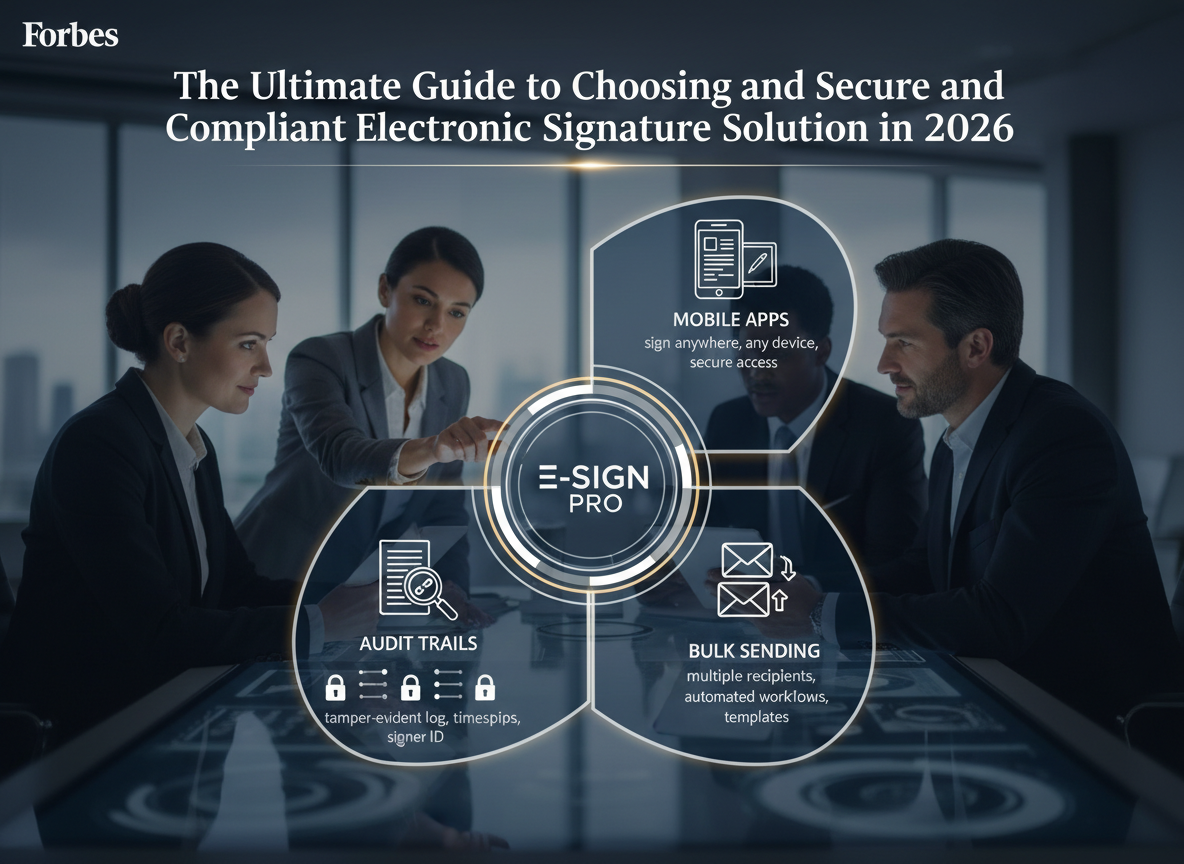
- Audit Trails: Comprehensive logs that track every step of the signing process for legal defensibility.
- Mobile Accessibility: Ensure the platform is optimized for smartphones and tablets for on-the-go signing.
- Bulk Sending: Efficiently send documents to hundreds of recipients simultaneously.
According to Gartner, businesses that adopt e-signature solutions with advanced automation features see a 35% increase in workflow efficiency.
Key takeaway: Choose a platform that aligns with your workflow needs and integrates seamlessly with your existing ecosystem.
3. Evaluating Costs Without Compromising Quality
Cost is a major factor when selecting an electronic signature solution, but the cheapest option isn’t always the most cost-effective. Hidden fees, lack of scalability, or missing features can lead to increased costs in the long run.
Here’s how to evaluate pricing effectively:
Key Pricing Models
- Subscription-based: Pay a monthly or annual fee based on the number of users or documents.
- Pay-per-use: Ideal for businesses with infrequent signing needs.
- Enterprise Plans: Custom pricing for large organizations requiring advanced features and dedicated support.
A study by Forrester found that businesses save an average of $36 per document when switching from manual signatures to digital platforms.
Don’t forget to account for hidden costs such as:
- Setup and onboarding fees
- Additional costs for integrations or API access
- Support or training charges

Key takeaway: Opt for a solution that balances affordability with value. Consider the total cost of ownership (TCO) over the long term.
4. Avoiding Common Mistakes When Choosing an E-Signature Solution
Despite the growing adoption of e-signatures, many businesses make critical missteps during the selection process. Here are the top mistakes to avoid:
1. Focusing Solely on Cost: While cost is important, prioritizing it over security and functionality can backfire.
2. Ignoring Compliance: Non-compliant solutions expose your business to legal risks. Always verify compliance with relevant regulations.
3. Overlooking Scalability: Choose a platform that can grow with your business to avoid costly migrations later.
4. Neglecting User Experience: A clunky interface can lead to poor adoption rates among employees and clients.
Avoiding these pitfalls ensures a smoother implementation and maximizes ROI.

Key takeaway: Conduct a thorough analysis of your business needs and involve key stakeholders in the decision-making process.
5. Proprietary Framework: The SECURE E-Signature Selection Model
To simplify the decision-making process, we’ve developed the SECURE framework. This proprietary model ensures you evaluate all critical aspects of an e-signature solution:
- S: Security – Ensure robust encryption, authentication, and compliance.
- E: Ease of Use – Intuitive interfaces and streamlined workflows.
- C: Compatibility – Integrates seamlessly with your existing tech stack.
- U: User Support – Offers reliable customer support and training.
- R: ROI – Delivers measurable value through cost savings and efficiency.
- E: Expandability – Scales with your business needs.
By following the SECURE model, you can confidently select a solution that meets your organizational objectives.

Key takeaway: Use the SECURE framework as a checklist during vendor evaluations to make an informed choice.
6. FAQs: Addressing Top Concerns About E-Signature Platforms
Q1: Are electronic signatures legally binding?
A: Yes, electronic signatures are legally binding in most countries, provided they meet regulatory requirements like the ESIGN Act in the U.S. or eIDAS in the EU.
Q2: How secure are e-signatures?
A: Leading platforms use AES-256 encryption, multi-factor authentication, and tamper-proof audit trails to ensure security.
Q3: What industries benefit most from e-signatures?
A: Industries such as legal, healthcare, real estate, and finance see the greatest benefits due to their reliance on document-intensive workflows.
Q4: Can e-signature platforms integrate with other software?
A: Yes, most modern platforms offer APIs and pre-built integrations with popular tools like Salesforce, Google Workspace, and Microsoft 365.
For more insights, explore our blog on digital signature best practices.
Conclusion
Choosing a secure and compliant electronic signature solution in 2026 is a critical decision that impacts your business’s efficiency, security, and legal standing. By prioritizing security, evaluating core features, and leveraging frameworks like SECURE, you can confidently select a platform that meets your needs.
Ready to transform your workflows? Discover Zignature’s secure and compliant e-signature solutions today.
To further enhance your digital workflows, explore our sister platforms: Apparatuz for workflow automation, Applicantz for recruitment management, Schedly for scheduling and appointments, Supportly for customer support, and Zatisfied for feedback management. Together, these tools create a comprehensive ecosystem that complements your digital signature strategy.