
The adoption of digital signature solutions has been steadily rising, particularly in regulated industries such as healthcare, finance, legal services, and real estate. These sectors face complex challenges, including strict compliance requirements, handling vast amounts of sensitive data, and ensuring the highest levels of security. As organizations transition to digital workflows, selecting the right digital signature solution becomes not just a matter of convenience but a critical business decision that directly influences operational efficiency, regulatory compliance, legal standing, and customer trust.
However, choosing a digital signature solution can be daunting due to the wide variety of available options. Companies in regulated industries must carefully evaluate solutions to ensure they meet stringent security and compliance requirements while seamlessly integrating into existing workflows. This guide explores the seven essential features that regulated industries must prioritize when selecting a digital signature solution. Whether you're managing contracts in a legal firm, adhering to HIPAA guidelines in healthcare, or navigating financial regulations, these insights will help you make an informed decision tailored to your industry needs.
1. Ironclad Security and Encryption
Security is a cornerstone of digital signature solutions, especially in industries where sensitive information is exchanged. Regulated industries such as healthcare, finance, and legal services must comply with stringent regulations including GDPR, HIPAA, and FINRA, all of which emphasize robust protection of client and organizational data. A breach or unauthorized access to documents can lead to severe financial penalties, legal repercussions, and irreparable damage to an organization's reputation.

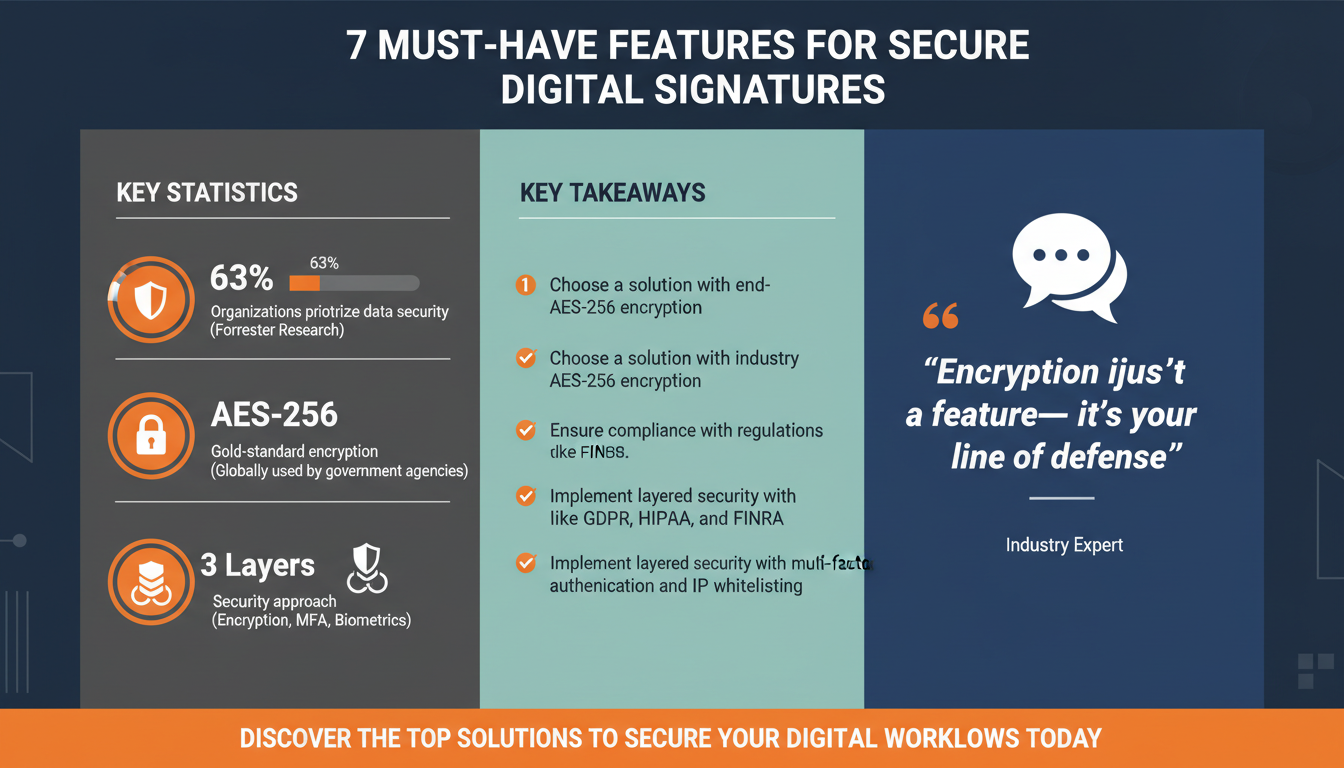
An effective digital signature solution must employ enterprise-grade security measures to safeguard every phase of the document lifecycle—from creation to signing and storage. End-to-end encryption, such as the gold-standard AES-256 encryption, ensures that data cannot be intercepted or tampered with during transmission. Additionally, secure certificate-based signatures, multi-factor authentication (MFA), and IP whitelisting provide extra layers of protection against unauthorized access.
A report by Forrester Research found that 63% of organizations prioritize data security when adopting digital tools. Detailed audit logs, which track every interaction with a document, are vital for meeting compliance requirements. These logs provide transparency and traceability, ensuring that organizations are prepared for audits and legal inquiries.
Why Encryption Matters
Encryption is not just a buzzword; it is the backbone of secure digital workflows. AES-256 encryption, often regarded as the "gold standard," is used globally by government agencies and major corporations to protect sensitive information. Unlike weaker encryption methods, AES-256 creates a virtually impenetrable barrier, making it the ideal choice for industries handling confidential data such as patient records or financial transactions.
Pro Tip: Layered Security Approach
Ensure your digital signature solution adopts a layered security approach by combining encryption with authentication protocols like MFA and biometric verification. This combination creates multiple checkpoints for unauthorized users, significantly reducing risks of data breaches.
Actionable Tips:
- Choose a solution that offers end-to-end encryption, preferably AES-256.
- Implement multi-factor authentication and IP whitelisting for added security.
- Ensure audit logs are immutable and provide detailed insights into document activity.
2. Compliance with Industry Regulations
In regulated industries, compliance is not optional—it's a legal mandate. Digital signature solutions must adhere to industry-specific regulations to ensure that electronic agreements are legally valid and enforceable. For example, healthcare organizations need solutions that comply with HIPAA, while financial institutions must meet the standards of eIDAS, ESIGN, and UETA.
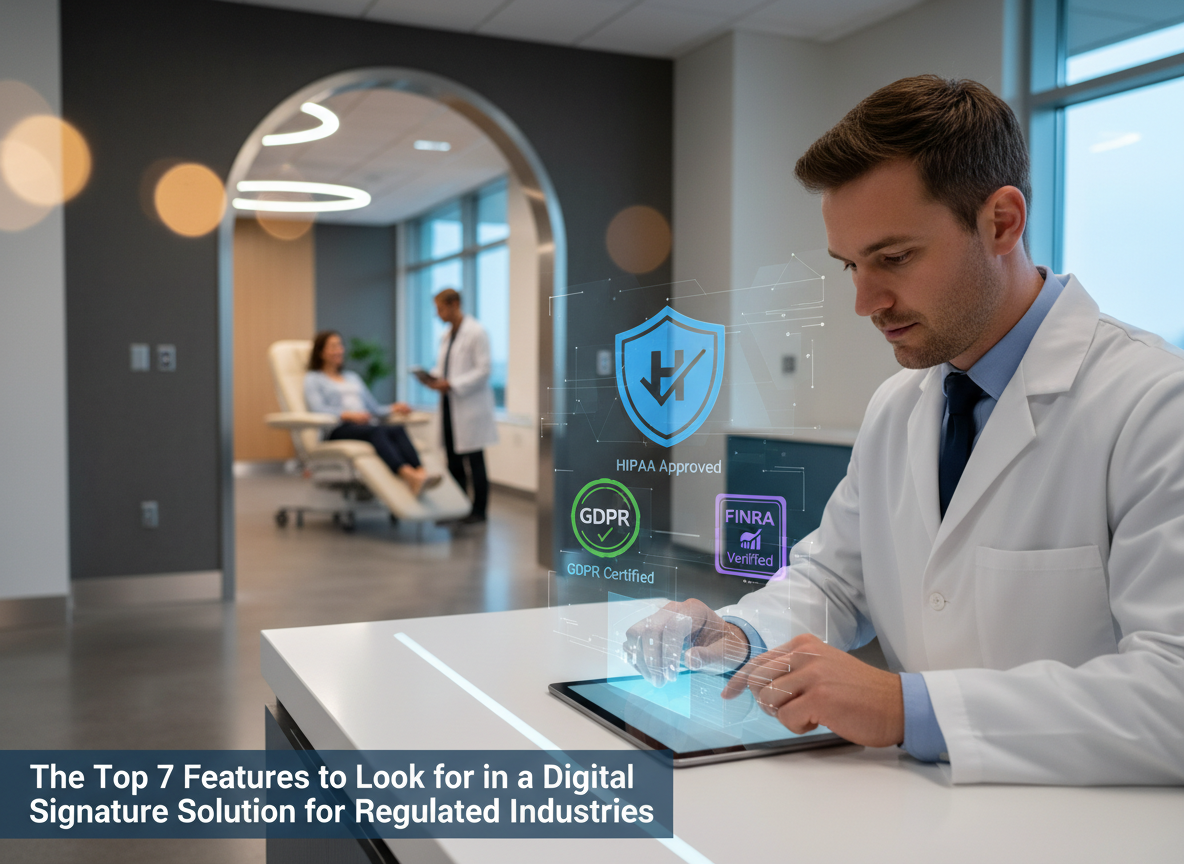
Key compliance features include secure storage options, audit trails, and timestamping capabilities, all of which provide proof of authenticity and integrity for signed documents. Many digital signature platforms also offer templates tailored to specific regulations, minimizing the risk of human error and ensuring that agreements meet compliance requirements.
Global organizations must also consider cross-border compliance. Leading platforms support international standards such as ISO/IEC 27001 for information security and SOC 2 for data privacy, allowing businesses to confidently engage in international transactions. Solutions like Zignature provide built-in compliance settings for various industries, ensuring audit readiness.
Real-World Example:
A multinational pharmaceutical company used a digital signature solution to streamline compliance with both HIPAA and GDPR across its operations in the U.S. and Europe. By leveraging templates and automated workflows, the company reduced the time spent on compliance checks by 40%, while maintaining audit readiness.
Understanding Local and Global Regulations
Compliance needs vary significantly by region. For example, the European Union enforces eIDAS regulations for electronic transactions, while the United States adheres to ESIGN and UETA laws. If your organization operates internationally, it’s critical to select a solution that accommodates these differences seamlessly.
Expert Insight: The Cost of Non-Compliance
Failing to adhere to regulations isn't just a legal issue—it’s also a financial one. Non-compliance can result in fines, lawsuits, and loss of customer trust. For example, a healthcare provider fined $1.5 million for HIPAA violations lost 20% of its client base within six months due to reputational damage.
Actionable Tips:
- Verify that the solution complies with regulations specific to your industry (e.g., HIPAA, GDPR).
- Look for international certifications like ISO/IEC 27001 and SOC 2.
- Use platforms with pre-built compliance templates to simplify workflows.
3. Seamless Integration with Existing Systems
Efficiency is crucial in regulated industries, where time-sensitive workflows can directly impact operational success. A digital signature solution should integrate seamlessly with the software tools your organization already uses. Whether it's a customer relationship management (CRM) platform, enterprise resource planning (ERP) system, or document management tool, integration ensures that digital signing becomes a natural part of your existing processes.

For instance, healthcare providers often use Epic to manage patient data, while financial institutions rely on Salesforce for client relationship management. A digital signature solution that integrates with these platforms allows users to initiate and complete signing processes without switching systems. According to Gartner, 78% of organizations cite integration capabilities as a top priority when selecting software solutions.
Solutions that offer APIs and pre-built integrations reduce the need for custom development, saving time and resources. Single sign-on (SSO) capabilities further streamline workflows by enabling users to access the platform with existing credentials, minimizing login-related issues and enhancing security.
Checklist for Seamless Integration:
- Assess compatibility with your current CRM and ERP systems.
- Look for solutions offering robust API documentation for custom integrations.
- Prioritize tools with pre-built integrations to reduce implementation time.
Pro Tip: Leveraging SSO for Security and Convenience
Single sign-on (SSO) not only simplifies access but also reduces password-related risks. By linking digital signing tools to your organization's identity provider, you can enhance both security and productivity.
Actionable Tips:
- Ensure the solution integrates with your CRM, ERP, or document management tools.
- Prioritize platforms with APIs or pre-built integrations for ease of implementation.
- Opt for solutions with single sign-on (SSO) capabilities to enhance user experience.
4. Advanced User Authentication
Verifying the identity of signers is critical for maintaining the integrity of digital agreements in regulated industries. Advanced user authentication methods ensure that only authorized individuals can access and sign sensitive documents, reducing the risk of fraud and legal disputes.

Authentication options to look for include multi-factor authentication (MFA), biometric verification (such as fingerprint or facial recognition), and knowledge-based authentication (KBA) questions. These features provide multiple layers of security, making it difficult for unauthorized users to gain access.
According to a report by IDC, businesses that implement advanced identity verification methods see a 35% reduction in fraud-related costs annually. Additionally, platforms that offer detailed audit trails of the authentication process provide further assurance and transparency.
Real-World Example:
A financial institution implemented biometric authentication for its digital signature solution, enabling clients to sign agreements using facial recognition. This not only improved security but also enhanced customer experience, reducing signing errors by 25%.
Checklist for Strong Authentication:
- Implement multi-factor authentication for added security.
- Consider biometric verification for high-risk transactions.
- Ensure the platform complies with KYC standards and offers transparent audit trails.
Conclusion
Digital signature solutions have become indispensable for regulated industries, where compliance, security, and efficiency are paramount. By prioritizing features such as ironclad security, regulatory compliance, seamless integrations, and advanced authentication, organizations can not only meet legal obligations but also optimize their workflows and build trust with clients.
Choosing the right solution requires careful evaluation of your industry's specific needs and challenges. By following the actionable tips outlined in this guide, businesses can confidently select a platform that aligns with their goals and safeguards their operations in an increasingly digital world.
To further enhance your digital workflows, explore our sister platforms: Apparatuz for workflow automation, Applicantz for recruitment management, Schedly for scheduling and appointments, Supportly for customer support, and Zatisfied for feedback management. Together, these tools create a comprehensive ecosystem that complements your digital signature strategy.