
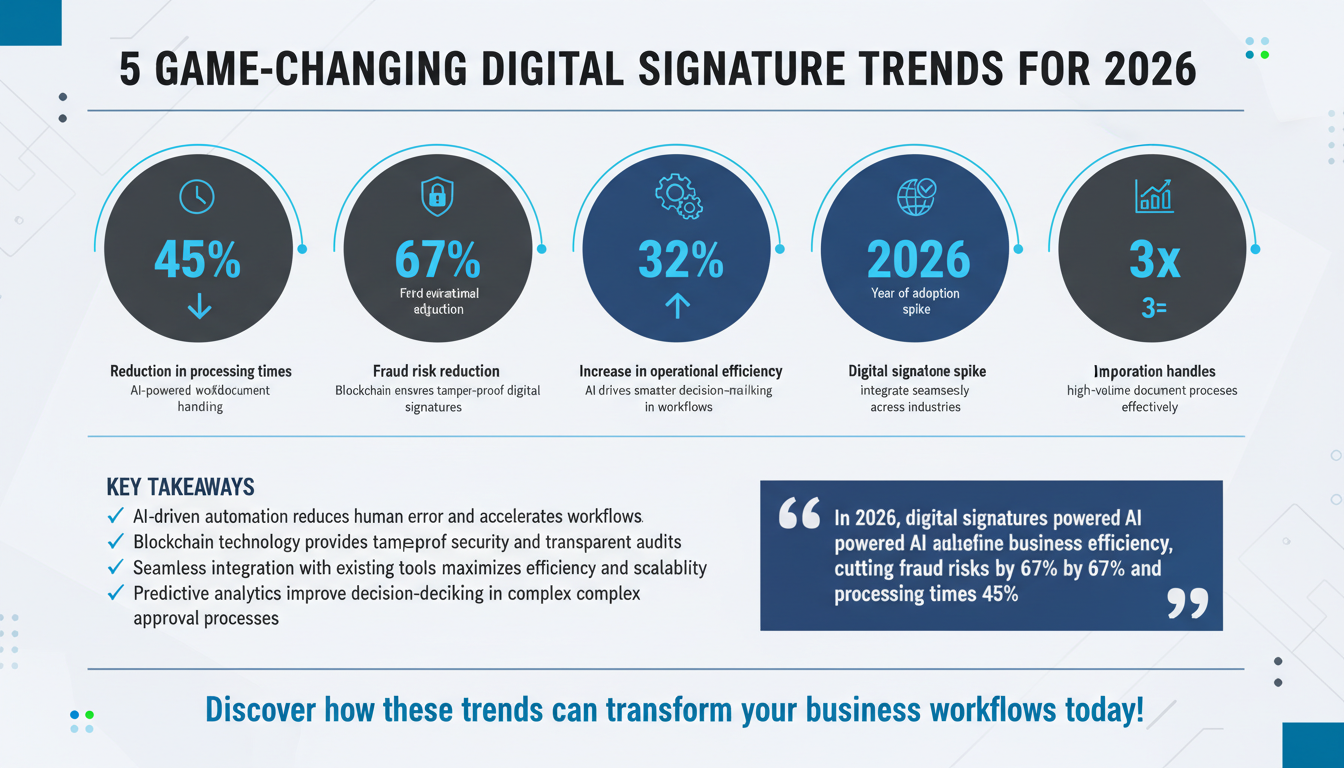
The digital signature landscape has evolved dramatically over the past decade, and in 2026, it continues to play a pivotal role in transforming business efficiency across industries. From enabling seamless workflows to enhancing security and compliance, digital signature solutions have become indispensable tools for businesses worldwide. This article dives deep into the top trends redefining how organizations adopt and leverage digital signatures to drive performance, streamline operations, and stay competitive in a digitally-driven era.
1. AI-Driven Automation in Digital Workflows
Artificial intelligence (AI) is revolutionizing digital workflows, and its integration with digital signature technology is no exception. In 2026, AI-powered digital signature platforms are enabling businesses to automate repetitive processes, improve document accuracy, and reduce turnaround times. For instance, advanced AI models can now analyze documents for errors, suggest corrections, and even initiate approval workflows automatically.
According to Forrester's 2026 AI Workflow Automation Report, organizations leveraging AI in their digital signature workflows have seen a 45% reduction in processing times and a 32% increase in overall operational efficiency. This is particularly impactful for industries like legal and finance, where accuracy and timeliness are critical.

One example of AI application in digital signatures is intelligent routing. AI algorithms can determine the optimal signatory sequence based on organizational hierarchies or compliance requirements, eliminating manual intervention. Moreover, sentiment analysis tools are aiding customer-facing teams in gauging client satisfaction during contract negotiations, making the signing experience more personalized and efficient.
Key Takeaways:
- AI-driven platforms reduce human error and accelerate document processing.
- Automation enhances scalability for businesses managing high document volumes.
- Predictive analytics improve decision-making in approval workflows.
2. Blockchain-Enhanced Security for Digital Signatures
As cyber threats grow more sophisticated, ensuring the authenticity and integrity of digital signatures has become paramount. In 2026, blockchain technology is emerging as a cornerstone of digital signature security. Blockchain’s decentralized ledger system provides an immutable record of every transaction, making it nearly impossible to alter or forge signatures.
A study by McKinsey reveals that blockchain-integrated digital signature solutions enhance trust by providing a transparent audit trail, reducing fraud risks by 67%. For businesses in regulated industries such as healthcare and real estate, this level of security is a game-changer.

For example, a healthcare organization can use blockchain-based digital signatures to securely share patient records while maintaining compliance with HIPAA regulations. Similarly, real estate firms can rely on blockchain to verify property ownership and ensure tamper-proof contracts during transactions.
Key Takeaways:
- Blockchain ensures tamper-proof, verifiable digital signatures.
- Enhanced compliance with industry regulations across sectors.
- Strengthened trust among stakeholders through transparent audit trails.
3. Seamless Integration with Cross-Platform Tools
In 2026, businesses are prioritizing tools that integrate seamlessly with their existing tech stacks. Digital signature platforms are increasingly offering robust APIs and integrations with popular software tools like CRM systems, project management platforms, and cloud storage services. This trend is enabling organizations to create unified workflows that maximize productivity and minimize disruptions.
Gartner’s 2026 Digital Ecosystem Integration Report highlights that 78% of enterprises now prefer digital signature solutions that integrate with at least five core business applications. This demand for interoperability underscores the need for platforms that adapt to diverse operational requirements.

For instance, a sales team using a CRM system like Salesforce can now generate contracts, send them for signature, and track their status—all within the same platform. Similarly, HR departments benefit from integration with payroll and employee management systems, streamlining processes like onboarding and performance reviews.
Key Takeaways:
- Integration drives efficiency by reducing the need for manual data entry.
- Cross-platform compatibility ensures a smoother user experience.
- Custom APIs enable tailored solutions for unique business needs.
4. Growing Adoption of Mobile-First Solutions
Mobile technology continues to dominate the business landscape, and in 2026, digital signature providers are focusing on mobile-first solutions to cater to an increasingly remote and on-the-go workforce. Mobile-optimized platforms allow users to sign, share, and manage documents directly from their smartphones or tablets, ensuring uninterrupted workflows.
A recent survey by Statista found that 65% of business leaders consider mobile accessibility a top priority when selecting digital signature tools. This shift is driven by the need for agility in industries like real estate, where agents frequently finalize contracts in the field.

Mobile-first solutions also incorporate advanced features like biometric authentication, ensuring secure access and compliance. Additionally, offline functionality enables users to complete transactions even in areas with limited connectivity, which is particularly valuable for businesses operating in rural or underserved regions.
Key Takeaways:
- Mobile-optimized platforms enhance flexibility for remote and field teams.
- Biometric authentication strengthens security for mobile transactions.
- Offline functionality supports seamless operations in low-connectivity areas.
5. Sustainability and Green Initiatives
As businesses strive to meet sustainability goals, digital signatures are playing a crucial role in reducing paper usage and lowering carbon footprints. In 2026, this trend is gaining momentum as organizations embrace eco-friendly practices to align with Environmental, Social, and Governance (ESG) criteria.
According to a report by Deloitte, companies using digital signature solutions have reduced their paper consumption by 85%, saving an average of 10,000 sheets per year per organization. This not only translates to cost savings but also demonstrates a commitment to environmental responsibility.

For example, financial institutions are leveraging digital signatures to eliminate paper-intensive processes like loan applications and account openings. Similarly, educational institutions are digitizing enrollment forms and consent letters, significantly reducing waste.
Key Takeaways:
- Digital signatures contribute to corporate sustainability goals.
- Paperless processes reduce operational costs and waste.
- Eco-friendly practices enhance brand reputation among stakeholders.
FAQs: Common Questions About Digital Signature Trends in 2026
1. Why is blockchain important for digital signatures?
Blockchain provides an immutable and transparent record of transactions, ensuring the authenticity and security of digital signatures. It is especially useful for industries requiring strict compliance.
2. How does AI improve digital signature workflows?
AI automates repetitive tasks, predicts workflow bottlenecks, and ensures error-free document processing, significantly enhancing efficiency and reducing turnaround times.
3. Are digital signatures legally binding?
Yes, in most jurisdictions worldwide, digital signatures are recognized as legally binding under laws such as the ESIGN Act in the U.S. and eIDAS Regulation in the EU.
4. Can digital signature platforms integrate with existing tools?
Yes, leading platforms offer robust APIs and pre-built integrations with tools like CRMs, project management platforms, and cloud storage systems, enabling seamless workflows.
5. How do digital signatures support sustainability?
By eliminating the need for paper-based processes, digital signatures help organizations reduce their carbon footprint, save costs, and align with ESG goals.
For more insights on digital signature solutions, explore our blog or learn about our platform features.
To further enhance your digital workflows, explore our sister platforms: Apparatuz for workflow automation, Applicantz for recruitment management, Schedly for scheduling and appointments, Supportly for customer support, and Zatisfied for feedback management. Together, these tools create a comprehensive ecosystem that complements your digital signature strategy.