
In today’s fast-paced business environment, speed, efficiency, and agility are no longer optional—they are essential components for success. Yet, many businesses, especially those experiencing rapid growth, struggle with internal approval bottlenecks. These inefficiencies can lead to delayed decisions, decreased productivity, and even missed opportunities to capitalize on market trends. The good news is that technology offers a powerful solution: digital signatures.
Digital signatures are a transformative tool that simplifies and accelerates internal approval processes by replacing outdated, paper-based systems. In this comprehensive guide, we’ll dive deep into why internal approvals are critical for business success, how digital signatures function, and the tangible benefits they offer to fast-growing companies. Additionally, we’ll outline actionable best practices for implementing digital signatures effectively and share real-world examples of businesses that have reaped the rewards of this change.
Why Internal Approval Processes Are Critical for Business Success
Internal approval processes play a foundational role in maintaining organizational order, accountability, and compliance. They ensure that decisions are made transparently, that policies are followed, and that tasks flow seamlessly from one department to another. However, traditional approval systems often rely on manual, inefficient methods such as paper forms, email chains, or physical sign-offs. These outdated methods come with a host of problems that can stifle growth and innovation.

The Cost of Inefficiency
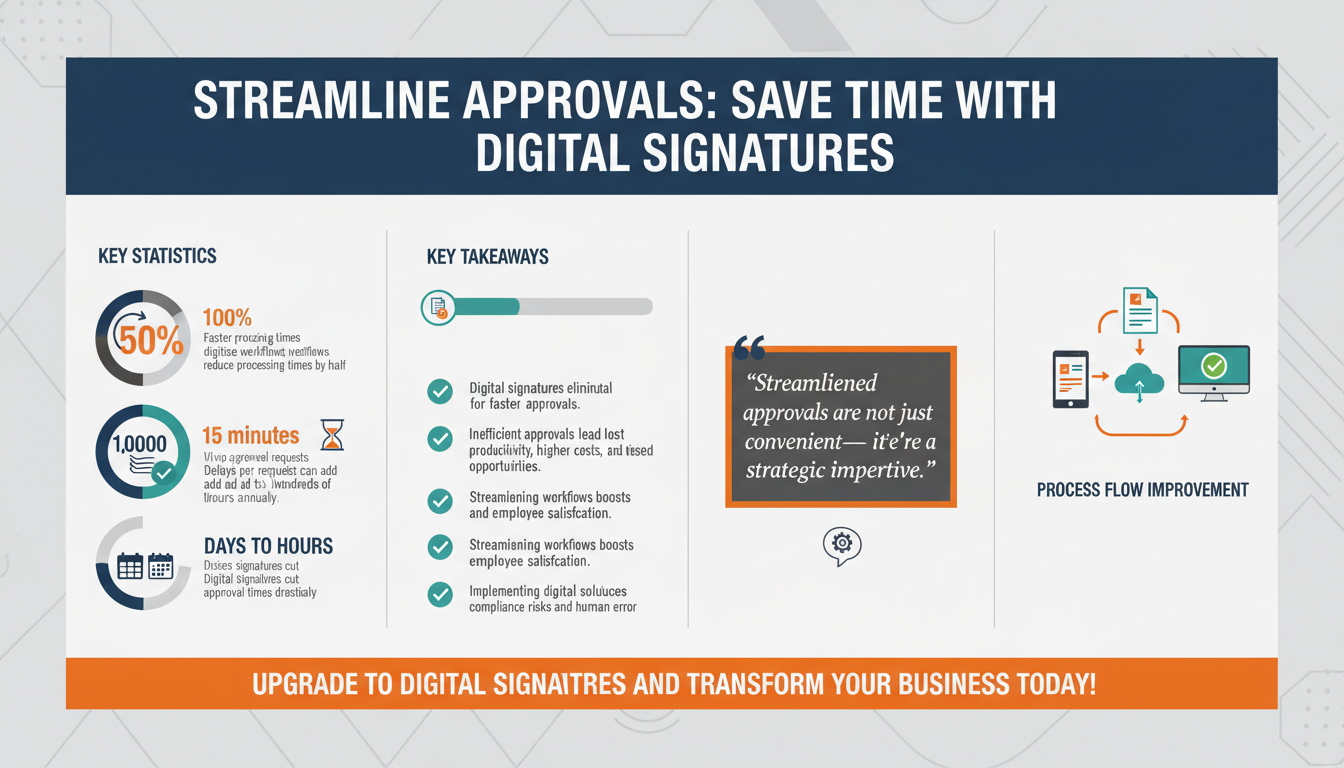
According to a McKinsey study, companies that digitize internal workflows can reduce processing times by up to 50%. For fast-growing businesses, where every second counts, these savings in time translate directly into greater competitiveness and profitability.
Consider this: a medium-sized company handling 1,000 approval requests per month could lose hundreds of man-hours if each approval is delayed by just 15 minutes due to inefficiencies. Compound this over a year, and the lost productivity is staggering. This is why streamlining approval processes isn’t just a matter of convenience—it’s a strategic imperative.
Real-World Example: Contract Approvals Gone Awry
Let’s take a hypothetical scenario: A sales team needs a contract approved by three departments—legal, finance, and operations. Using a manual system, the process involves printing the document, physically walking it to each department, waiting days for each sign-off, and finally scanning it back into the system. If one stakeholder is unavailable or misplaces the document, the entire process grinds to a halt. Now imagine this same situation with digital signatures: the contract is shared electronically, and each stakeholder can review and sign it within minutes from their computer or mobile device. The result? A process that once took days now takes hours or less.
The Ripple Effect of Inefficiency
The consequences of inefficient approvals extend beyond delays:
- Lost Productivity: Employees spend valuable time tracking down approvals instead of focusing on their core responsibilities.
- Decreased Morale: Frustration from repeated delays can lead to disengagement and dissatisfaction among employees.
- Missed Opportunities: In industries where timing is critical, slow approvals can result in lost deals or compromised competitiveness.
- Higher Costs: Reprinting documents, courier services, and error correction add up quickly.
- Compliance Risks: Manual processes are more prone to human error, which can lead to regulatory violations or legal disputes.
By adopting digital solutions like digital signatures, businesses can turn these challenges into opportunities for innovation and growth.
Pro Tip: Quantify the Costs of Inefficiency
Take the time to calculate the true costs of your current approval process. Include factors like average time spent per approval, employee wages, and any additional expenses (e.g., printing, storage). This data can help justify the investment in digital signature technology to key stakeholders.
What Are Digital Signatures and How Do They Work?
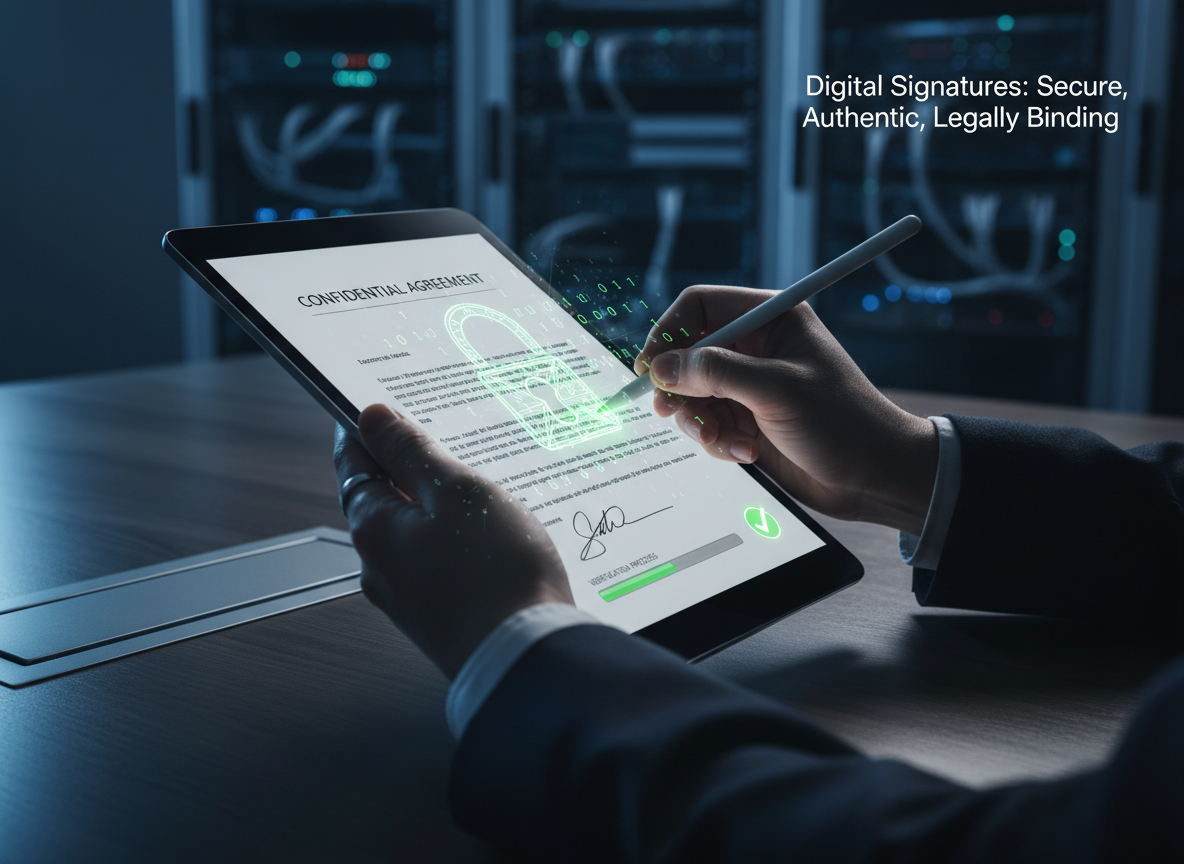
Digital signatures are more than just an electronic scribble. They are a sophisticated technology that leverages cryptographic techniques to verify the authenticity and integrity of electronic documents. Unlike simple electronic signatures, digital signatures are legally binding and offer robust security features, making them ideal for businesses that handle sensitive or high-stakes transactions.
The Technology Behind Digital Signatures
Here’s a simplified breakdown of how digital signatures work:
- Document Creation: A document is created and prepared for signing using a digital signature platform.
- Encryption: When the signer adds their digital signature, the platform generates a unique cryptographic hash based on the document’s contents.
- Authentication: The signer’s private encryption key is used to encrypt the hash, creating a tamper-proof seal.
- Verification: When the document is received, the recipient’s system uses the signer’s public key to decrypt the hash and verify that the document hasn’t been altered.
This process ensures three critical elements:
- Authentication: Confirms the identity of the signer.
- Integrity: Verifies that the document remains unchanged.
- Non-repudiation: Prevents the signer from denying their involvement.
According to Gartner research, the digital signature market is growing by 35% annually, underscoring its increasing importance in modern business operations.
Legal and Regulatory Compliance
Digital signatures are recognized as legally binding under global regulations such as the Electronic Signatures in Global and National Commerce Act (ESIGN) in the U.S., the Uniform Electronic Transactions Act (UETA), and the European Union’s eIDAS regulation. These frameworks ensure that digital signatures hold the same legal weight as traditional handwritten signatures, making them a secure and legitimate option for businesses worldwide.
Expert Insight: The Role of Public Key Infrastructure (PKI)
Digital signatures rely on Public Key Infrastructure (PKI), a framework of encryption and cybersecurity technologies. PKI assigns each user a unique pair of keys—a public key and a private key. The private key is used to create the digital signature, while the public key is shared with others to verify the authenticity of the document. This dual-key system ensures maximum security and reliability.
Benefits of Digital Signatures for Fast-Growing Businesses
Fast-growing businesses face unique challenges, from managing higher volumes of approvals to scaling operations effectively. Digital signatures address these pain points by offering tangible benefits.

1. Accelerated Approval Cycles
Speed is often the difference between success and failure in fast-paced industries. Digital signatures enable instantaneous approvals, allowing stakeholders to sign documents from anywhere, at any time. For instance, a Forrester study found that businesses using digital workflows experienced a 70% reduction in approval times.
Real-world example: A marketing agency that adopted digital signatures reduced its client onboarding time from five days to less than 24 hours, enabling the team to start projects faster and improve client satisfaction.
2. Enhanced Security
With features like encryption, tamper-proof audit trails, and identity verification, digital signatures provide a level of security that far surpasses traditional methods. This is particularly crucial for industries like finance, healthcare, and legal services, where confidentiality is non-negotiable.
3. Cost Savings
Eliminating paper, printing, and courier costs is just the beginning. Digital signatures also reduce expenses associated with storage, document retrieval, and error correction. According to Statista, organizations save an average of 30% on operational expenses after transitioning to digital signature solutions.
4. Scalability
Digital signature platforms are designed to handle high volumes of documents and users, making them ideal for scaling businesses. Whether you’re onboarding hundreds of new employees or managing contracts for a global client base, these solutions can grow with your organization.
Best Practices for Implementing Digital Signatures
Implementing digital signatures requires strategic planning to maximize their impact. Here are some best practices to guide your adoption process:
1. Select the Right Platform
Not all digital signature solutions are created equal. Look for platforms that offer integrations with your existing tools (e.g., CRM, ERP), ensure legal compliance, and provide advanced security features like multi-factor authentication and audit trails.
2. Train Your Team
Employee buy-in is crucial for successful implementation. Conduct training sessions to demonstrate the platform’s features and benefits, and address any concerns about usability or security.
3. Standardize Approval Workflows
Define clear approval workflows and automate them wherever possible. Standardized processes ensure consistency, reduce errors, and improve transparency across teams.
Conclusion
In a world where speed and efficiency are paramount, digital signatures have emerged as a must-have tool for fast-growing businesses. By streamlining internal approvals, enhancing security, and reducing costs, these solutions empower organizations to operate at their full potential. The transition to digital signatures is not just a technological upgrade—it’s a strategic investment in the future of your business.
Ready to revolutionize your workflows? Explore our pricing plans and take the first step toward a more efficient, productive, and scalable organization.
To further enhance your digital workflows, explore our sister platforms: Apparatuz for workflow automation, Applicantz for recruitment management, Schedly for scheduling and appointments, Supportly for customer support, and Zatisfied for feedback management. Together, these tools create a comprehensive ecosystem that complements your digital signature strategy.