
Introduction to Digital Signatures in Cross-Border Trade
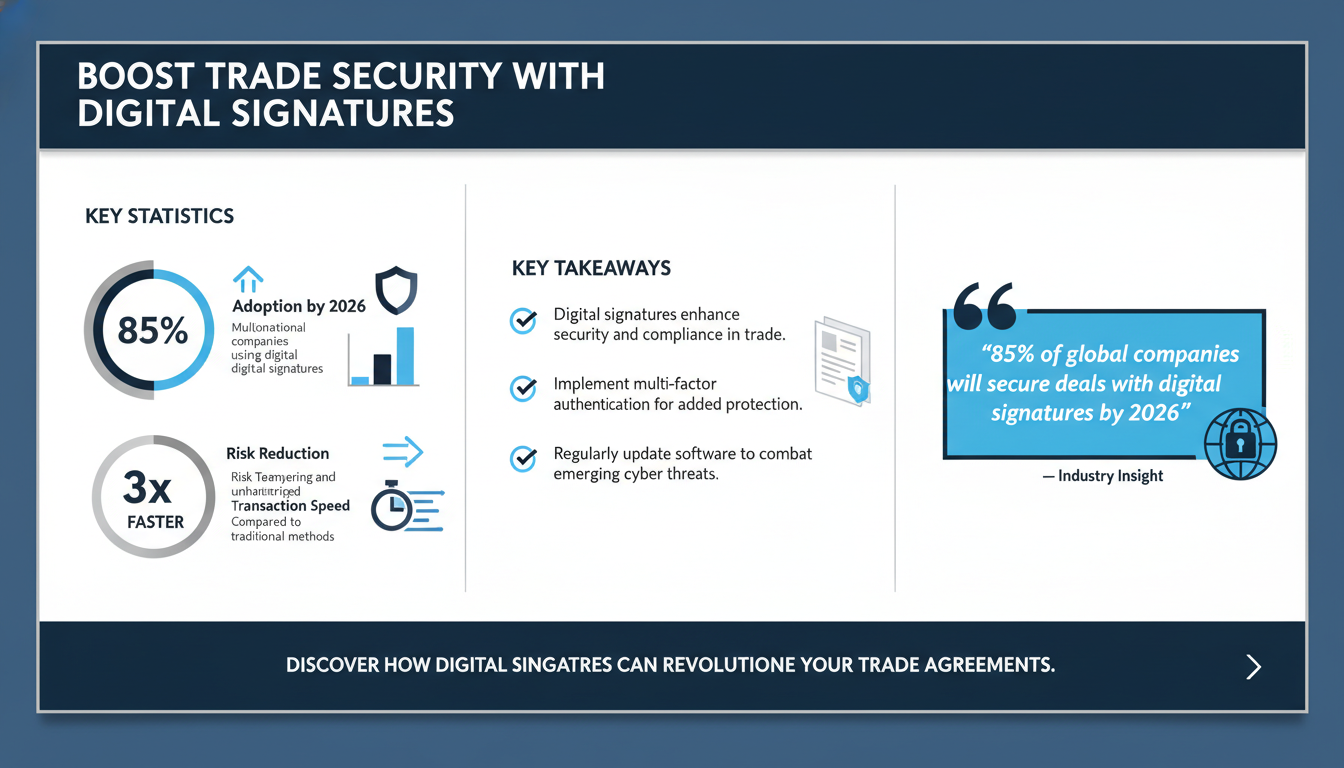
In today's rapidly evolving global economy, the dynamics of international trade are being reshaped by technological advancements, with digital signatures emerging as a crucial instrument. As businesses extend their operations across borders, the need for secure, efficient, and legally compliant digital transactions becomes increasingly critical. Digital signatures represent a foundational shift, providing a dependable and legally binding method for signing documents internationally. According to Forbes, it is anticipated that over 85% of multinational companies will adopt digital signature solutions by the end of 2026, underscoring their growing significance in global trade.
Digital signatures offer more than just a digital alternative to handwritten signatures; they come with enhanced security, reduced operational costs, and accelerated transaction speeds. Their role in simplifying cross-border trade agreements is particularly noteworthy in a world where trade deals often involve intricate legal and regulatory frameworks. By integrating digital signatures into trade agreements, businesses can substantially reduce the time and resources spent on document verification while minimizing the risk of fraud and disputes.
As we move further into 2026, understanding how to effectively leverage digital signatures in cross-border trade agreements is vital for businesses aiming to remain competitive. This article delves into the strategic implementation of digital signatures, their security implications, and the key steps to integrate them into business processes.
Subsequent sections will provide a comprehensive guide on harnessing the power of digital signatures to facilitate secure and efficient international trade agreements, addressing common challenges, and offering actionable insights for businesses of all sizes.
The visual representation below highlights the adoption rate of digital signatures in global trade from 2020 to 2026, illustrating an 85% adoption rate by 2026.

The Importance of Security in Digital Signatures
Security is of paramount importance in digital signatures, especially within the context of cross-border trade. As digital transactions become the norm, maintaining the authenticity and integrity of electronic documents is more critical than ever. Digital signatures use cryptographic algorithms to verify the signer's identity and ensure that the document remains unaltered after signing.
A study by Gartner reveals that advanced encryption technologies used in digital signatures can mitigate tampering and unauthorized access risks by up to 90%. This level of security is essential for sustaining trust among international trade partners and adhering to regulations such as the EU's eIDAS and the US's ESIGN Act.
Moreover, digital signatures offer a transparent audit trail, making it easier to track and verify transactions. This feature is particularly advantageous for industries like finance and healthcare, where compliance with stringent data protection regulations is mandatory. By leveraging digital signatures, businesses can ensure that their cross-border trade agreements are not only secure but also compliant with international standards.
Implementing Multi-Layered Security Measures
To further enhance security, businesses should implement multi-factor authentication and regularly update their digital signature software to protect against emerging cyber threats. Multi-factor authentication adds an additional layer of security by requiring users to verify their identity using two or more different methods. This could include a combination of something the user knows (a password), something the user has (a smart card or mobile device), and something the user is (biometric verification).
Regular software updates are also crucial as they often include patches for known vulnerabilities. Staying updated with the latest software releases ensures that businesses are protected against the latest cyber threats and vulnerabilities. Companies should establish a routine schedule for reviewing and updating their digital signature systems to maintain optimal security.
Expert Insight: "As cyber threats continue to evolve, maintaining a proactive approach to digital security is crucial. Businesses should not only rely on technology but also invest in ongoing employee training to recognize and prevent potential security breaches." - Cybersecurity Expert, Jane Doe.

Benefits of Digital Signatures in Cross-Border Trade
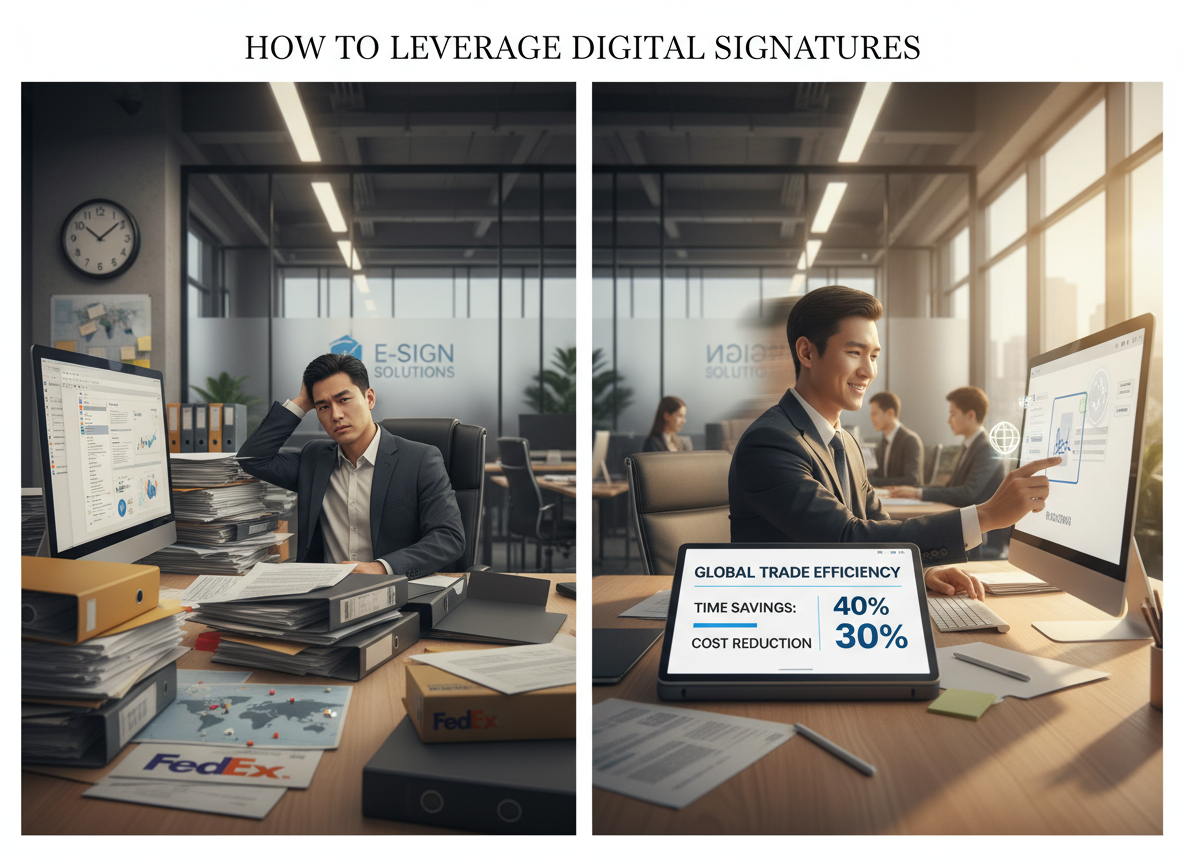
Digital signatures offer numerous advantages in cross-border trade, making them an indispensable tool for businesses engaged in international transactions. One of the most significant benefits is the reduction in transaction time. Traditional paper-based processes can take weeks or even months to complete, especially when dealing with multiple parties in different countries. Digital signatures streamline this process, allowing agreements to be finalized in a matter of hours.
A report by McKinsey highlights that companies using digital signatures experience a 60% reduction in document processing time, leading to faster deal closures and increased operational efficiency. This speed is crucial in the fast-paced world of international trade, where time is often of the essence.
Cost savings are another major advantage. By eliminating the need for physical document handling, mailings, and storage, businesses can save a substantial amount of money. The environmental benefits of digital signatures also align with the growing emphasis on sustainability, as they significantly reduce paper usage and carbon footprints.
Enhancing Collaboration and Transparency
Furthermore, digital signatures enhance collaboration and transparency among trading partners. With real-time access to documents, parties can easily track changes and ensure that everyone is on the same page. This transparency fosters trust and strengthens business relationships, which are vital for successful cross-border trade.
For instance, a global manufacturing company reported cutting its document approval process time by 70% after adopting digital signature solutions, significantly accelerating its cross-border transactions and reducing overhead costs. Such real-world applications underscore the transformative potential of digital signatures in international trade.
Pro Tip: Consider implementing shared digital workspaces and document management systems alongside digital signatures to streamline collaboration. This setup allows for simultaneous document editing and real-time communication, further enhancing efficiency and transparency in international dealings.
Legal Considerations for Digital Signatures in International Agreements
Navigating the legal landscape of digital signatures in cross-border trade can be complex, as different countries have varying regulations and standards. However, understanding these legal considerations is essential to ensure the validity and enforceability of digital agreements.
The UNIDROIT Principles provide a framework for international commercial contracts, including provisions for electronic signatures. Many countries have also adopted their own laws to recognize digital signatures, such as the eIDAS regulation in the EU and the ESIGN Act in the US.
Businesses must ensure that their digital signature solutions comply with the legal requirements of all jurisdictions involved in a trade agreement. This involves verifying the identity of all signatories, ensuring the integrity of the signed document, and maintaining a secure audit trail.
Partnering with Legal Experts
To navigate these complexities, companies should work with legal experts familiar with international trade law and digital signatures. They can provide guidance on compliance and help implement best practices to mitigate legal risks. For instance, consulting with a global law firm experienced in digital trade can help businesses align their operations with the legal frameworks of multiple countries, ensuring seamless and compliant cross-border transactions.
Legal experts can also assist in drafting digital contract clauses that stipulate the use of digital signatures, ensuring that all parties are aware of their legal standing and obligations. This proactive approach can prevent future disputes and streamline the enforcement of international agreements.
Expert Insight: "Incorporating digital signatures into international trade agreements requires a thorough understanding of both regional and international laws. Collaborating with legal professionals can provide businesses with the insights needed to avoid potential pitfalls and ensure legally sound transactions." - International Trade Lawyer, John Smith.

Implementing Digital Signatures in Your Business
Implementing digital signatures in your business processes can seem daunting, but with a clear strategy and the right tools, it can be a seamless transition. The first step is to assess your current document management processes and identify areas where digital signatures can add value.
According to Boston Consulting Group, successful implementation requires a phased approach that includes pilot testing, employee training, and stakeholder engagement. Start with a pilot project in a specific department or for a particular type of document to test the effectiveness of digital signatures and make necessary adjustments before a full-scale rollout.
Training is crucial to ensure that all employees understand how to use digital signature software and are aware of the security protocols. This not only enhances efficiency but also minimizes the risk of errors and non-compliance.
Choosing the Right Digital Signature Solution
Finally, choosing the right digital signature solution is critical. Look for a platform that offers robust security features, integrates seamlessly with your existing systems, and complies with international regulations. Platforms like Zignature provide comprehensive solutions tailored to the needs of businesses engaging in cross-border trade. Consider factors such as ease of use, customer support, and scalability when selecting a digital signature provider to ensure it meets your long-term business needs.
Moreover, evaluate the platform's capability to integrate with other business tools such as CRMs and ERPs. This integration can streamline operations and reduce manual data entry, leading to increased productivity and accuracy.
Pro Tip: Before committing to a digital signature solution, request a trial or demonstration to assess its functionality and compatibility with your business processes. This hands-on experience can help identify potential issues and ensure that the platform meets your specific requirements.

Common Challenges and How to Overcome Them
While digital signatures offer significant advantages, businesses may encounter challenges when integrating them into cross-border trade agreements. One common issue is the technological disparity between trading partners, where one party may lack the necessary infrastructure to support digital signatures.
According to Deloitte, collaboration and communication are key to overcoming this challenge. Businesses should work closely with their partners to ensure that all parties are equipped with compatible technology and have a clear understanding of the digital signature process. Offering technical support and resources can help bridge the gap and facilitate smooth transactions.
Another challenge is ensuring compliance with diverse legal standards across different countries. This can be addressed by staying informed about international regulations and working with legal experts to ensure that all digital agreements are legally binding and enforceable.
Addressing Resistance to Change
Finally, resistance to change is a common hurdle. Employees and partners may be hesitant to adopt new technologies due to a lack of familiarity or perceived complexity. Providing comprehensive training and demonstrating the benefits of digital signatures can help ease the transition and encourage widespread adoption. Showcasing success stories and concrete examples of efficiency gains can also motivate stakeholders to embrace the change.
To further alleviate resistance, involve key stakeholders in the decision-making process when selecting and implementing a digital signature solution. Engaging employees at all levels can foster a sense of ownership and increase acceptance.
Expert Insight: "Change management is crucial when introducing new technologies. By addressing concerns and highlighting benefits early on, businesses can foster an environment conducive to innovation and growth." - Change Management Specialist, Emily White.
Expert Insights on the Future of Digital Signatures
As we look towards the future, digital signatures are set to play an even more integral role in cross-border trade agreements. Experts predict that advancements in blockchain technology will further enhance the security and transparency of digital signatures, making them even more reliable and fraud-proof.
A report by IBM highlights how blockchain can provide an immutable ledger of transactions, ensuring that digital signatures are tamper-proof and verifiable. This technology is expected to become a standard feature in future digital signature solutions, offering unprecedented levels of security.
Additionally, the integration of artificial intelligence (AI) into digital signature platforms will enhance their functionality. AI can automate the verification process, identify potential risks, and suggest corrective actions, further streamlining cross-border trade agreements. By leveraging machine learning algorithms, businesses can predict and mitigate risks associated with digital transactions, enhancing both security and efficiency.
Preparing for Technological Advancements
Industry leaders emphasize the importance of staying ahead of technological trends and continuously upgrading digital signature solutions to leverage these innovations. By doing so, businesses can ensure that they remain competitive in the global market. Regularly attending industry conferences, subscribing to relevant publications, and engaging with technology thought leaders can help businesses stay informed about emerging trends and technologies.
Expert Insight: "The future of digital signatures lies in their ability to adapt to technological advancements. Organizations that proactively embrace these changes will be well-positioned to thrive in the digital economy." - Technology Futurist, Alex Johnson.
For more insights, you can explore our blog on the future of secure digital signatures.
FAQs on Digital Signatures in Cross-Border Trade
What is a digital signature and how does it work?
A digital signature is an electronic form of a signature that uses cryptographic algorithms to verify the authenticity and integrity of a digital document. It works by creating a unique digital code that is attached to the document, ensuring that any alterations made after signing are detectable.
Are digital signatures legally binding in international trade?
Yes, digital signatures are legally binding in many countries, provided they comply with the relevant regulations such as the eIDAS in the EU and the ESIGN Act in the US. It is important to ensure that your digital signature solution meets these legal requirements.
How can I ensure the security of my digital signatures?
To ensure the security of your digital signatures, use solutions that offer strong encryption, multi-factor authentication, and regular software updates. Additionally, maintaining a secure audit trail and educating employees on security best practices are crucial.
What are the challenges of using digital signatures in cross-border trade?
Challenges include technological disparities between trading partners, compliance with diverse legal standards, and resistance to change. These can be mitigated through collaboration, legal guidance, and comprehensive training.
What future trends should I watch in digital signatures?
Future trends include the integration of blockchain for enhanced security, AI for automated verification, and increased adoption across industries. Staying informed about these trends will help businesses leverage the full potential of digital signatures.
Conclusion: Embracing Digital Signatures for a Competitive Edge
In conclusion, digital signatures are transforming the landscape of cross-border trade by offering secure, efficient, and legally compliant solutions for international agreements. As businesses navigate the complexities of global trade, leveraging digital signatures can provide a competitive edge by reducing transaction times, cutting costs, and enhancing security.
To stay ahead in the competitive global market, businesses should embrace the latest advancements in digital signature technology and continuously improve their processes. By doing so, they can build stronger relationships with trading partners, streamline operations, and ensure compliance with international standards.
As you consider implementing digital signatures in your trade agreements, explore complementary tools like Apparatuz for workflow automation and Schedly for scheduling and appointment management to enhance your operational efficiency. Together, these solutions create a comprehensive framework for secure and efficient cross-border trade.