
Introduction: The Transformative Power of E-Signatures
In an era where digital transformation is no longer a futuristic concept but a current necessity, e-signatures have revolutionized the way organizations handle document management. The digitalization of business processes demands that documents are managed with both speed and security, and e-signatures meet these needs perfectly. Traditionally, the process of signing documents involved a significant amount of time and resources, including printing, mailing, and storing physical copies. However, e-signatures have drastically reduced these demands, offering a streamlined, cost-effective, and environmentally friendly alternative.

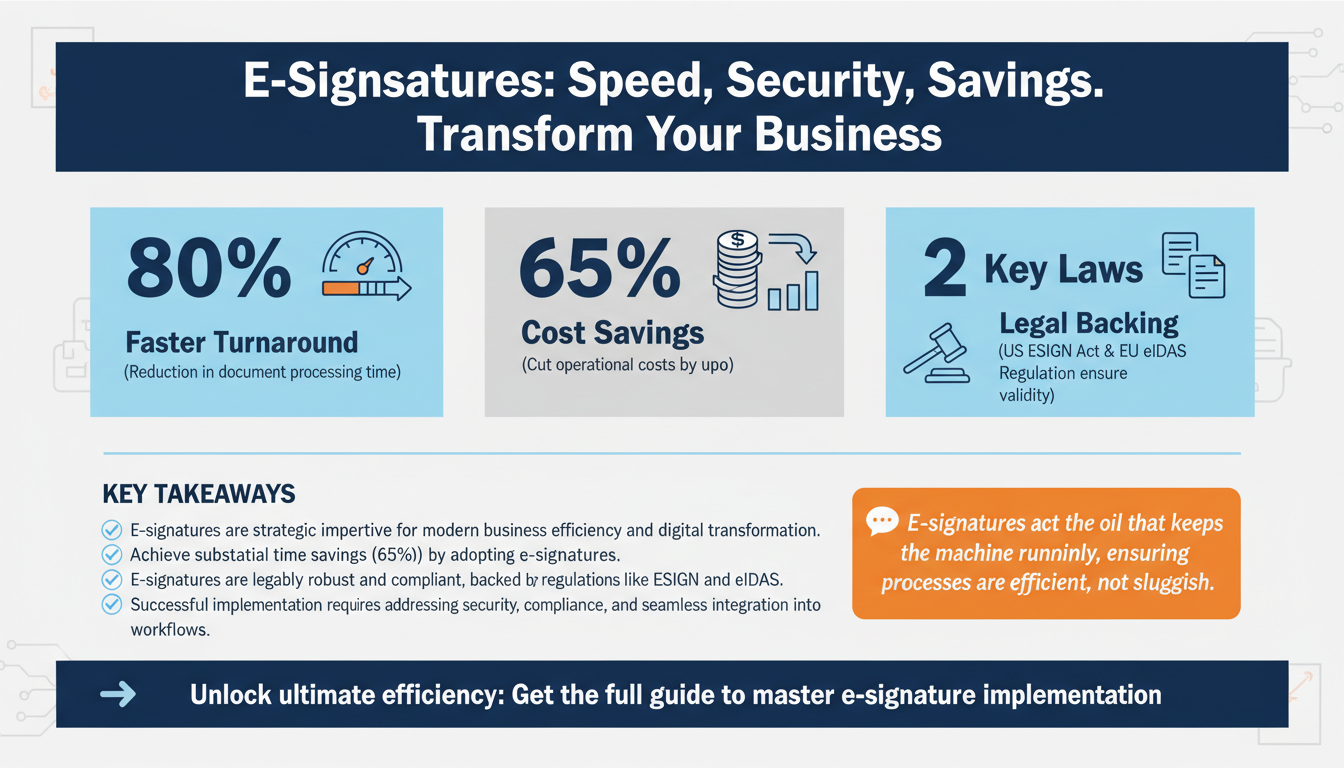
The numbers speak for themselves. According to a 2025 study by Forrester, organizations that have embraced e-signatures have witnessed an impressive 80% reduction in document turnaround time. Additionally, they have managed to cut costs by up to 65%. Standing in 2026, the adoption of e-signatures is not merely a choice but a strategic imperative for any organization aiming to thrive in the competitive business landscape.
Despite these advantages, some businesses hesitate to implement e-signatures due to concerns about security, legal compliance, and integration with existing systems. This guide addresses these concerns by providing a comprehensive roadmap for effectively implementing e-signatures, ensuring your organization fully benefits while avoiding common pitfalls. From selecting the right solution to integrating it seamlessly into workflows, this guide covers all aspects of e-signature implementation.
To appreciate the necessity of e-signatures, imagine a machine where each document is a cog. E-signatures act as the oil that keeps the machine running smoothly. Without them, processes can become sluggish and error-prone, leading to inefficiencies and increased costs. This article will equip you with the knowledge to implement e-signatures confidently and efficiently, ensuring your business operates like a well-oiled machine.
Understanding the Fundamentals of E-Signatures
Before diving into the implementation process, it's crucial to understand what e-signatures are and how they function within the broader context of document management. At their core, e-signatures are electronic symbols or processes attached to a document, signifying a person's intent to sign. They are legally binding in most jurisdictions, thanks to laws such as the U.S. ESIGN Act and the EU's eIDAS Regulation, which provide the legal framework for their use.
 ISOr explaining the legal frameworks of e-signatures, highlighted on a digital display." class="w-full rounded-lg shadow-md" />
The Role of Legislation in E-Signatures
The legal acceptance of e-signatures is a pivotal factor in their widespread adoption. Laws like the U.S. ESIGN Act and the EU's eIDAS Regulation ensure that electronic signatures are just as enforceable as their handwritten counterparts. These regulations outline specific criteria that e-signatures must meet, such as proving the signer's identity and demonstrating intent to sign, which fortifies their legal standing. For example, the eIDAS Regulation provides a comprehensive framework that categorizes e-signatures into different levels, offering varying degrees of security and legal recognition across EU member states.
Moreover, industry-specific regulations often dictate additional standards for e-signature usage. In healthcare, the Health Insurance Portability and Accountability Act (HIPAA) requires stringent measures to protect patient information, influencing how e-signatures are used to ensure compliance. Similarly, in finance, the Sarbanes-Oxley Act demands robust security and auditability, which e-signatures must support to be compliant.
Types of E-Signatures
The primary advantage of e-signatures is their ability to streamline processes that traditionally required physical signatures. This capability not only accelerates workflows but also significantly reduces the need for physical storage and handling of documents. According to Gartner's 2026 E-Signature Market Report, the global e-signature market is poised to reach $5.5 billion by 2026, driven by the increasing demand for efficient and secure document management solutions.
Understanding the different types of e-signatures is crucial for businesses. There are three main categories: simple electronic signatures, advanced electronic signatures, and qualified electronic signatures. Each type offers varying levels of security and legal assurance, with qualified electronic signatures providing the highest level of trust and compliance. For instance, in highly regulated industries such as finance, qualified electronic signatures may be necessary to meet stringent compliance standards, whereas sectors with less stringent requirements might find advanced electronic signatures sufficient for their needs.
Simple electronic signatures are the most basic form, often involving a typed name or image of a handwritten signature. They are suitable for low-risk transactions where security is not a primary concern. Advanced electronic signatures offer enhanced security through encryption and identity verification, making them more appropriate for sensitive documents. Qualified electronic signatures, on the other hand, are backed by a digital certificate issued by a trusted service provider, ensuring the highest level of security and legal validity.
Choosing the Right E-Signature Solution
Choosing an appropriate e-signature solution is a critical step that can significantly impact the success of your implementation. With numerous options available, ranging from basic plug-ins to comprehensive enterprise solutions, making the right choice requires careful consideration of several key factors.

Assessing Organizational Needs
Firstly, assess your organization's specific needs. Consider the volume of documents processed, the complexity of workflows, and the required level of security. An SMB might prioritize cost-effectiveness and ease of use, while a large enterprise could focus on scalability and advanced security features. According to a report by IDC, businesses can increase their efficiency by up to 30% with the right e-signature tools.
For instance, a real estate firm processing hundreds of property agreements monthly may require a solution that integrates seamlessly with their CRM and offers robust mobile capabilities for on-the-go signing. Conversely, a government agency handling sensitive citizen data may prioritize solutions that offer advanced encryption and compliance with government regulations.
Integration and Future-Proofing
Integration capabilities are another crucial factor. The chosen solution should seamlessly integrate with your existing document management systems, CRM, and other business applications. This ensures that e-signatures enhance productivity rather than disrupt existing workflows. Additionally, consider the solution's ability to adapt to future technological advancements and changes within your organization.
Pro Tip: Opt for solutions with open APIs and modular architectures to facilitate easy integration and scalability. This approach allows your organization to quickly adapt to new technologies or business needs without significant disruptions.
Evaluating Security Features
Security features should also be top of mind. Look for solutions that offer encryption, multi-factor authentication, and audit trails to ensure the integrity and confidentiality of signed documents. As highlighted by Deloitte's Digital Security Insights, robust security measures are non-negotiable in today's cyber threat landscape. Furthermore, ensure that the solution complies with industry-specific regulations, which is especially crucial for sectors like healthcare and finance.
Finally, consider the vendor's reputation and support services. A reliable vendor with a strong track record and responsive customer support can make a significant difference in the smooth implementation and ongoing use of your e-signature solution. Look for vendors that offer comprehensive training and support to help your team get the most out of the solution.
Integrating E-Signatures into Existing Workflows
Integration is where the rubber meets the road. To maximize the benefits of e-signatures, they must be embedded seamlessly into your existing document management processes. This requires a strategic approach that considers the unique aspects of your organization's workflows.

Mapping Current Workflows
Begin by mapping out your current document workflows. Identify key stages where e-signatures can provide the most value, such as contract approvals, employee onboarding, or client agreements. According to McKinsey's Insights on Workflow Automation, integrating e-signatures at these critical points can reduce processing times by up to 50%.
For example, in a legal department, e-signatures can streamline the approval process for contracts, allowing for quicker turnaround times and reducing the risk of errors. Similarly, in HR departments, e-signatures can expedite the onboarding process by enabling new hires to sign documents electronically before their start date.
Leveraging Automation
Next, leverage automation to streamline processes further. Implementing e-signatures in conjunction with workflow automation tools can eliminate manual steps, reduce errors, and ensure consistency. Tools like Apparatuz, a workflow automation platform, can be particularly beneficial in this regard. By automating repetitive tasks, your team can focus on more strategic activities, thereby enhancing overall productivity.
Consider creating automated workflows that trigger specific actions based on certain conditions. For instance, once a contract is signed, an automated workflow could notify relevant parties, update the CRM, and store the document in the appropriate folder, all without manual intervention.
Training and Change Management
Training and change management are also essential components of successful integration. Ensure that all stakeholders, from IT staff to end-users, are adequately trained on the new processes and understand the benefits of the transition. Clear communication and support can alleviate resistance and promote a smooth adaptation. Regularly update training materials to reflect any changes in processes or technology.
Monitor and evaluate the integration process regularly. Collect feedback from users and make adjustments as needed to optimize the workflows further. Continual improvement is key to maximizing the value of your e-signature investment. Establish a feedback loop that encourages employees to share their experiences and suggestions for further refinement.
Ensuring Security and Compliance
Security and compliance are paramount when implementing e-signatures, especially given the sensitive nature of many documents involved. It's crucial to establish a robust security framework that protects against unauthorized access and ensures compliance with relevant regulations.
Building a Secure Infrastructure
Start by selecting an e-signature solution that meets industry standards for security and compliance. Look for certifications such as ISO 27001 for information security management and compliance with regulations like GDPR for data protection. According to ISO, adherence to these standards is critical for maintaining trust and security.
Implement multi-factor authentication (MFA) to add an extra layer of security. This ensures that only authorized individuals can access and sign documents. Additionally, ensure that all documents are encrypted both in transit and at rest to protect sensitive information. Regularly update encryption protocols to guard against evolving cyber threats.
Creating an Audit Trail
An audit trail is another essential feature. It provides a detailed record of all actions taken on a document, including who signed it, when, and where. This not only enhances security but also provides a necessary compliance measure for audits and legal disputes. Make sure the audit trail is easily accessible and can be exported for review when needed.
Regularly review and update your security policies to address emerging threats and vulnerabilities. Engage with cybersecurity experts to conduct periodic assessments and ensure that your systems remain robust and secure. Stay informed about the latest security patches and updates to maintain a secure infrastructure.
Overcoming Common Implementation Challenges
Implementing e-signatures is not without its challenges. Organizations often encounter resistance to change, integration difficulties, and concerns over security and compliance. Addressing these challenges proactively can ensure a smoother implementation process.
Addressing Resistance to Change
Resistance to change is a common hurdle. Employees may be accustomed to traditional methods and skeptical about new technologies. To combat this, emphasize the benefits of e-signatures, such as increased efficiency, reduced errors, and enhanced security. Providing training and support can also ease the transition. Highlight case studies and success stories from similar organizations to demonstrate the positive impact of e-signatures.
Pro Tip: Involve employees in the decision-making process when selecting an e-signature solution. Their input can provide valuable insights into potential challenges and increase buy-in for the new technology.
Overcoming Integration Issues
Integration issues can arise when e-signatures are not compatible with existing systems. Conduct thorough compatibility assessments before implementation and choose solutions that offer flexible integration options. Collaborating with IT teams can help address technical challenges effectively. Engage with vendors early in the process to ensure a smooth integration.
Security concerns are legitimate, but they can be mitigated by selecting a reputable e-signature provider and implementing comprehensive security measures. Communicate these measures clearly to stakeholders to build confidence in the new system. Conduct regular security audits and involve your IT department in monitoring potential vulnerabilities.
Navigating Compliance Complexities
Finally, compliance with legal and regulatory requirements can be complex. Stay informed about relevant laws and work with legal teams to ensure that your e-signature implementation meets all necessary standards. Regularly review compliance guidelines and adjust processes to align with legal changes.
Key Takeaway: Proactive planning, clear communication, and robust training are essential to overcoming implementation challenges and ensuring long-term success.
Measuring Success and ROI
Once e-signatures are implemented, measuring their success and return on investment (ROI) is crucial to ensure continued alignment with business goals. Establishing clear metrics and benchmarks can provide valuable insights into the effectiveness of your e-signature solution.
Defining Key Performance Indicators
Start by identifying key performance indicators (KPIs) that align with your organization's objectives. These might include document processing times, error rates, cost savings, and user satisfaction levels. According to Deloitte's Tech Trends Report, businesses that track these metrics can achieve up to 35% higher ROI from digital transformation initiatives.
Utilizing Analytics Tools
Use analytics tools to collect and analyze data on these KPIs. Solutions with built-in analytics capabilities can provide real-time insights into document workflows, allowing you to make data-driven decisions. Regularly review these metrics to identify areas for improvement and optimize processes further.
Gathering User Feedback
Gather feedback from users to assess the impact of e-signatures on their workflows. User satisfaction surveys and feedback sessions can reveal valuable insights into the effectiveness of the solution and highlight areas for enhancement. Encourage open communication to foster a culture of continuous improvement.
Finally, compare the costs and benefits of your e-signature implementation. Calculate the total savings achieved through reduced processing times, paper use, and storage requirements, and weigh these against the costs of the solution and implementation. Present these findings to stakeholders to demonstrate the value and impact of e-signatures on your organization.
Key Takeaway: Regularly evaluating the success of your e-signature implementation ensures that it continues to deliver value and align with your organization's strategic goals.
Future Trends in E-Signature Technology
As technology continues to evolve, so too do the possibilities for e-signatures. Staying informed about emerging trends can help your organization remain at the forefront of digital transformation and leverage new opportunities for growth and efficiency.
AI and Machine Learning Advancements
One significant trend is the integration of artificial intelligence (AI) and machine learning (ML) with e-signature solutions. These technologies can enhance document analysis, automate repetitive tasks, and improve decision-making processes. According to McKinsey's Research on AI, AI-driven automation can boost productivity by up to 40%.
Blockchain Integration
Blockchain technology is also gaining traction in the e-signature space. It offers an immutable and transparent ledger for recording transactions, enhancing security and trust. By integrating blockchain with e-signatures, organizations can ensure the authenticity and integrity of documents. This technology is particularly valuable for industries that require high levels of data security and transparency.
Additionally, the rise of remote work and global teams is driving demand for mobile e-signature solutions. These tools enable seamless signing and document management from anywhere, at any time, supporting flexible and agile work environments. As more businesses adopt remote work policies, mobile e-signatures will continue to play a crucial role in maintaining productivity and collaboration.
Biometric Authentication
Biometric authentication is another emerging trend, offering an additional layer of security through fingerprint or facial recognition. This technology can enhance user experience while ensuring the highest level of security for sensitive documents. As biometric technology becomes more widespread, it may become a standard feature in e-signature solutions.
Key Takeaway: Embracing future trends in e-signature technology can position your organization for continued success and innovation in an increasingly digital world.
FAQs on E-Signature Implementation
What are the legal requirements for e-signatures?
E-signatures are legally recognized in most jurisdictions, provided they meet specific criteria for authenticity and consent. Laws such as the U.S. ESIGN Act and the EU's eIDAS Regulation define these requirements, ensuring that e-signatures are as legally binding as traditional signatures. It's important to understand the legal framework in your specific region and industry to ensure compliance.
How can I ensure my e-signature solution is secure?
To ensure security, select a solution with robust encryption, multi-factor authentication, and audit trails. Regularly review security policies and conduct assessments to address potential vulnerabilities. Work closely with your IT and security teams to maintain a secure environment and respond swiftly to any security incidents.
Can e-signatures integrate with my existing systems?
Yes, many e-signature solutions offer integration capabilities with popular document management systems, CRMs, and other business applications. Ensure compatibility before implementation to facilitate seamless integration. Evaluate the technical requirements and work with your IT team to select a solution that aligns with your existing infrastructure.
What industries benefit most from e-signatures?
E-signatures are beneficial across various industries, including legal, real estate, finance, healthcare, and technology. Any industry that relies on document management and approvals can benefit from the efficiency and security of e-signatures. Organizations that handle high volumes of contracts, agreements, and other documents stand to gain the most from implementing e-signature solutions.
How do I measure the ROI of e-signature implementation?
Measure ROI by tracking metrics such as processing times, error rates, cost savings, and user satisfaction. Use analytics tools to collect data and compare pre- and post-implementation performance. Regularly present these findings to stakeholders to showcase the tangible benefits of e-signatures and secure ongoing support for the initiative.
Conclusion: Embracing the E-Signature Revolution
The implementation of e-signatures is a pivotal step towards secure and efficient document management. By following best practices and addressing common challenges, organizations can unlock the full potential of e-signature technology and drive significant improvements in productivity, security, and compliance.
As you embark on this journey, consider leveraging complementary tools such as Apparatuz for workflow automation and Supportly for customer support management. Together, these solutions create a comprehensive ecosystem that enhances your document management capabilities.
Explore our platform's workflow automation features and see how digital signatures empower ESG compliance within your organization. Embrace the e-signature revolution and position your business for continued success in the digital age.