
The modern business landscape thrives on speed, efficiency, and informed decision-making. In an era where data drives almost every strategic move, tools that streamline processes while ensuring security and transparency are indispensable. One such tool is the digital signature. Once perceived as a niche solution for tech-savvy organizations, digital signatures have evolved into a cornerstone of operational excellence. Their ability to simplify workflows, enhance compliance, and empower data-driven insights has made them an essential asset for small and medium-sized businesses (SMBs) and enterprises alike.
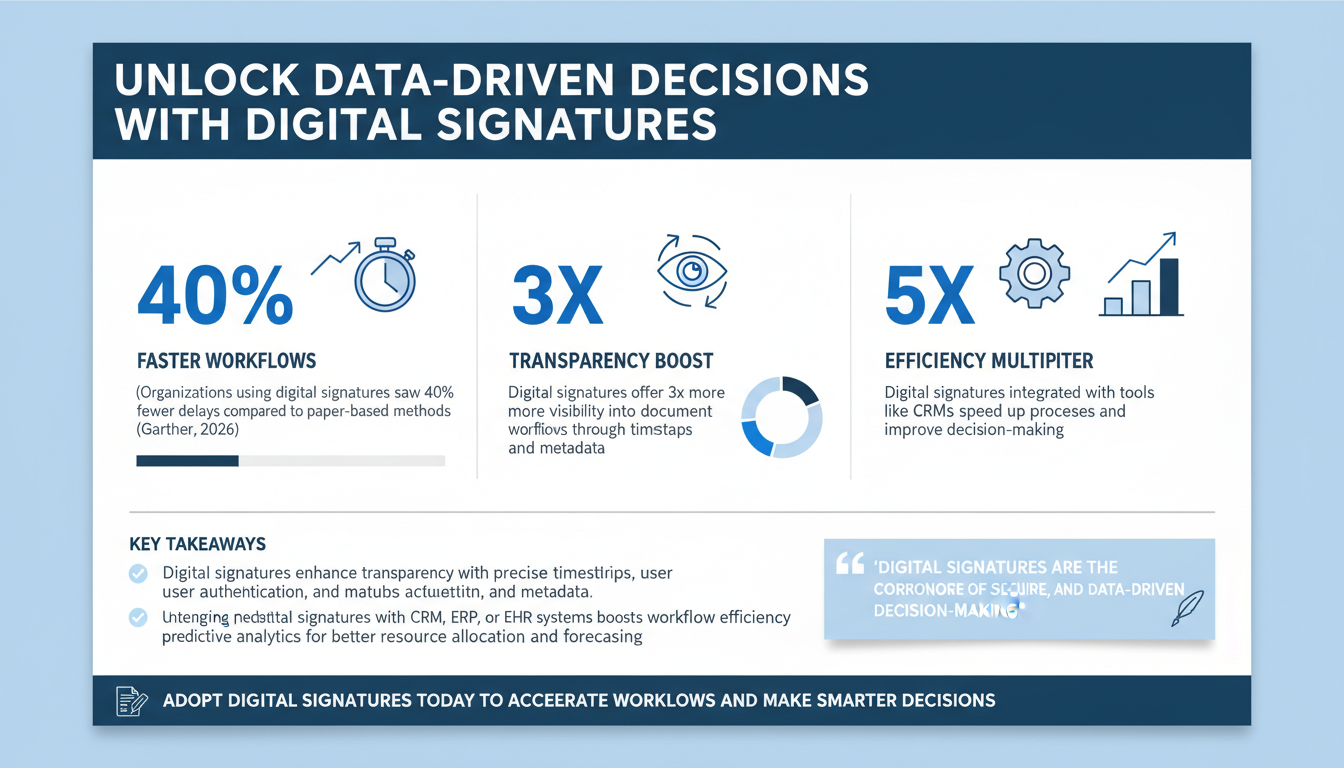
As we progress deeper into the digital age, the importance of adopting solutions like digital signatures cannot be overstated. A 2026 report by Gartner revealed that organizations leveraging digital workflows, including e-signatures, saw a 40% reduction in process delays compared to those reliant on traditional paper-based methods. This guide explores how digital signatures contribute to data-driven decision-making, their transformative impact across industries, and practical insights to implement them effectively.
The Role of Digital Signatures in Modern Business Decision-Making
Digital signatures have evolved from being a convenience to becoming a critical enabler of modern business operations. Their primary function—authenticating documents securely and efficiently—has far-reaching implications for decision-making processes. By enabling organizations to authenticate, timestamp, and track documents with precision, digital signatures provide the foundation for transparent, data-driven decisions.
Enhanced Data Transparency
One of the most significant contributions of digital signatures is their ability to enhance data transparency. Every digitally signed document comes with a verifiable timestamp, user authentication, and metadata. These elements create a robust audit trail, giving organizations real-time visibility into their document workflows. For instance, tracking the approval times for contracts can highlight workflow bottlenecks, enabling managers to take corrective actions proactively. This level of transparency ensures that decision-makers have access to accurate and up-to-date information when making strategic choices.
Beyond internal insights, transparency also builds trust with external stakeholders. For instance, a manufacturing company that uses digital signatures in its supply chain agreements can provide its partners with real-time tracking and approvals. This transparency reduces disputes, enhances collaboration, and fosters long-term partnerships.
Integration with Data-Centric Tools
Digital signatures are not standalone tools; they integrate seamlessly with systems like customer relationship management (CRM) platforms, enterprise resource planning (ERP) software, and workflow automation solutions. This integration allows decision-makers to pull actionable insights directly from signed documents into centralized dashboards. For example, a sales leader can use CRM data integrated with digital signatures to analyze the time taken to close deals, identify delays, and streamline the sales cycle.
Consider the healthcare industry, where patient consent forms are critical for operations. Integrating digital signatures with electronic health record (EHR) systems ensures that consent is tracked, stored, and readily available. This not only speeds up processes but also improves patient care by reducing administrative overhead.
Pro Tip: Leverage Metadata for Predictive Analytics
Organizations can use metadata from digitally signed documents to identify patterns and predict future outcomes. For example, analyzing the average time it takes to secure approvals for contracts can help forecast project timelines and resource allocation needs. Use this data to implement predictive analytics tools that enhance decision-making at both strategic and operational levels.
According to Gartner’s 2026 automation success study, organizations using digital workflows and e-signatures reported a 25% increase in decision-making speed due to improved data availability and transparency.
Key Takeaways:
- Digital signatures generate critical data points like timestamps, user authentication, and metadata that enhance decision-making.
- Integrations with CRM, ERP, and workflow tools amplify the role of digital signatures in data-driven strategies.
- Real-time tracking and logging foster transparency, enabling faster and more accurate decisions.
How Digital Signatures Improve Workflow Efficiency
Workflow efficiency is one of the most tangible benefits of adopting digital signatures. Traditional paper-based systems are often plagued with delays caused by lost documents, manual errors, and bureaucratic red tape. Digital signatures eliminate these inefficiencies, enabling businesses to achieve operational excellence.
Faster Document Turnaround
In industries where time is of the essence, such as legal services, real estate, and healthcare, the ability to expedite approvals can be a game-changer. Legal teams, for example, can implement automated signature workflows to process contracts in minutes rather than weeks. Procurement teams can finalize vendor agreements without the need for physical meetings or mailing documents, saving both time and money.
Consider a multinational retail chain that uses digital signatures for supply chain management. By digitizing its vendor contracts, the company reduced its document turnaround time by 60%, ensuring that inventory replenishment processes remained on schedule. This efficiency directly contributed to improved customer satisfaction and reduced operational costs. Similarly, startups with limited resources can use digital signatures to scale their operations faster by reducing bottlenecks in their approval processes.
Reduction in Errors
Manual document workflows are prone to human error, including missing signatures, incorrect dates, or misplaced files. Digital signatures automate these processes, ensuring that all fields are completed correctly before a document can be finalized. This reduction in errors not only saves time but also prevents costly delays caused by rework.
For example, a mid-sized construction firm implemented digital signatures across its project management workflows. By automating the approval process for budget approvals and project milestones, the firm reduced errors by 45% and avoided project delays that could have cost upwards of $500,000 annually.
Actionable Metrics
Digital signature platforms often come with built-in analytics tools that track document progress and user interactions. These metrics can help organizations identify inefficiencies and optimize their workflows. For instance, analyzing the time taken for each approval stage can reveal which departments or individuals are causing delays, enabling targeted interventions.
Expert Insight: Focus on High-Impact Workflows First
When implementing digital signatures, start with workflows that directly impact revenue or customer satisfaction. For example, prioritize sales contracts, customer onboarding documents, or supplier agreements. This approach ensures quick ROI and builds internal support for broader implementation.
According to Forrester’s ROI study on workflow automation, businesses using digital signatures and automation tools reported a 312% ROI within three years, driven by time savings, error reduction, and enhanced productivity.
Quick Win:
Identify a high-volume process, such as employee onboarding or contract approvals, and implement digital signatures to automate and streamline the workflow. Monitor results to identify further optimization opportunities.
Common Mistakes:
Avoid rolling out digital signatures without thoroughly integrating them into your existing workflows. Failure to do so can result in redundancies and limited efficiency gains.
Enhancing Data Transparency with Digital Signatures
Data transparency is a cornerstone of effective decision-making. Without access to clear and reliable data, organizations risk making decisions based on incomplete or inaccurate information. Digital signatures inherently embed transparency into document workflows by providing traceable and verifiable records of every transaction.
Audit Trails for Compliance
Digital signatures create automatic audit trails that detail every step of a document’s lifecycle, including who signed it, when, and where. This feature is particularly valuable for industries with stringent regulatory requirements, such as healthcare and finance. For example, healthcare organizations can use digital signatures to ensure compliance with HIPAA regulations while maintaining a clear record of patient consent forms.
In financial services, audit trails generated by digital signatures simplify compliance with regulations like Sarbanes-Oxley (SOX) and GDPR. Banks and investment firms can provide regulators with detailed documentation to demonstrate adherence to protocols, thereby reducing the risk of penalties.
Improved Accountability
When every action within a workflow is logged and timestamped, accountability naturally improves. Team members are more likely to adhere to deadlines and follow established protocols when they know their actions are being monitored. This cultural shift towards greater accountability can have a positive ripple effect across the organization, fostering a more disciplined and performance-driven work environment.
Comparison Table: Paper-Based vs. Digital Signature Transparency
| Feature | Paper-Based Workflows | Digital Signature Workflows |
|---|---|---|
| Audit Trail | Manual and prone to errors | Automated and tamper-proof |
| Data Accessibility | Limited and siloed | Centralized and real-time |
| Accountability | Low visibility | High visibility with timestamps |
Pro Tip: Use Transparency to Foster Trust
Share the benefits of data transparency with your customers and partners. For example, provide clients with access to real-time updates on document approvals or project milestones. This transparency can differentiate your business and build stronger relationships.
Transparency is not just about compliance; it’s also about trust. According to PwC’s 2026 compliance trends report, 87% of organizations cited digital signatures as a key enabler for building trust with stakeholders through transparent and reliable document workflows.
Key Takeaways:
- Digital signatures provide an automatic audit trail for unparalleled transparency.
- Industries like healthcare, finance, and legal benefit significantly from compliance-ready workflows.
- Transparent data fosters trust and enables confident decision-making.
Proprietary Framework: The D.E.S.I.G.N Model for Leveraging Digital Signatures
To help organizations maximize the impact of digital signatures, we propose the D.E.S.I.G.N framework—a systematic approach to optimizing document workflows for smarter decision-making:
- Document: Digitize all critical files to enable seamless signature workflows.
- Evaluate: Assess bottlenecks in your current processes to prioritize areas for improvement.
- Secure: Implement robust authentication protocols to safeguard sensitive documents.
- Integrate: Connect digital signatures with CRM, ERP, and data analytics tools for comprehensive insights.
- Generate Insights: Monitor performance metrics, such as turnaround times and approval rates, to measure efficiency gains.
- Navigate: Use dashboards to visualize, track, and optimize workflows continuously.
Each step of the D.E.S.I.G.N framework is designed to address specific challenges associated with traditional document workflows, ensuring that every decision is supported by reliable and actionable data.
Checklist for Implementing the D.E.S.I.G.N Framework
- Identify and digitize key documents.
- Audit existing workflows to pinpoint inefficiencies.
- Choose a secure digital signature platform.
- Integrate the platform with your existing tools.
- Set measurable KPIs for workflow improvements.
- Regularly review analytics and adjust processes as needed.
Quick Win:
Start with the “Evaluate” step by identifying one bottleneck in your workflow. Implement digital signatures in that specific area and track the impact over 30 days.
FAQ: Common Questions About Digital Signatures
Q1: Are digital signatures legally binding?
Yes, digital signatures are legally binding in most countries, including those governed by the eIDAS regulation (Europe) and the ESIGN Act (United States). They meet authentication and compliance requirements, making them a trusted replacement for traditional handwritten signatures.
Q2: How do digital signatures improve decision-making?
By providing real-time data, transparency, and automation, digital signatures streamline workflows and reduce delays, enabling faster and more informed decisions. They also integrate with analytics tools, offering actionable insights for strategic planning.
Q3: What industries benefit most from digital signatures?
Industries like healthcare, finance, legal, real estate, and technology see significant benefits due to their reliance on secure and compliant document workflows. For example, digital signatures help healthcare providers maintain HIPAA compliance while streamlining patient consent processes.
Q4: Can digital signatures integrate with existing tools?
Yes, leading platforms like Zignature offer integrations with popular CRMs, ERPs, and cloud storage systems. These integrations enhance overall workflow efficiency by centralizing data and automating document-related processes.
Q5: Are digital signatures secure?
Digital signatures use encryption and authentication protocols to ensure security. Advanced solutions also offer multi-factor authentication and tamper-proof audit trails, safeguarding sensitive information from unauthorized access.
Conclusion
Digital signatures are no longer optional—they are a strategic imperative for SMBs and enterprises seeking to make faster, smarter, and more data-driven decisions. By enhancing transparency, automating workflows, and integrating with data-centric tools, digital signatures empower organizations to unlock new levels of efficiency and insight.
As you evaluate how digital signatures can transform your workflows, consider platforms like Zignature, which specializes in secure and seamless solutions tailored to your industry needs. For further optimization, explore complementary tools like Apparatuz for workflow automation, Applicantz for recruitment, and Schedly for scheduling. Together, these tools empower businesses to achieve operational excellence and remain competitive in an increasingly data-driven world.