
In today’s fast-paced digital era, the adoption of electronic signatures (e-signatures) has revolutionized the way businesses operate, particularly in regulated industries such as healthcare, finance, legal, and real estate. These industries operate under tight controls, with compliance and security being non-negotiable aspects of their operations. While the convenience and efficiency of e-signatures are well-known, their transformative role in enhancing security and ensuring compliance with industry regulations often receives less attention. This article dives deep into how electronic signatures provide robust security measures and simplify compliance requirements, making them indispensable tools for organizations navigating complex regulatory landscapes.
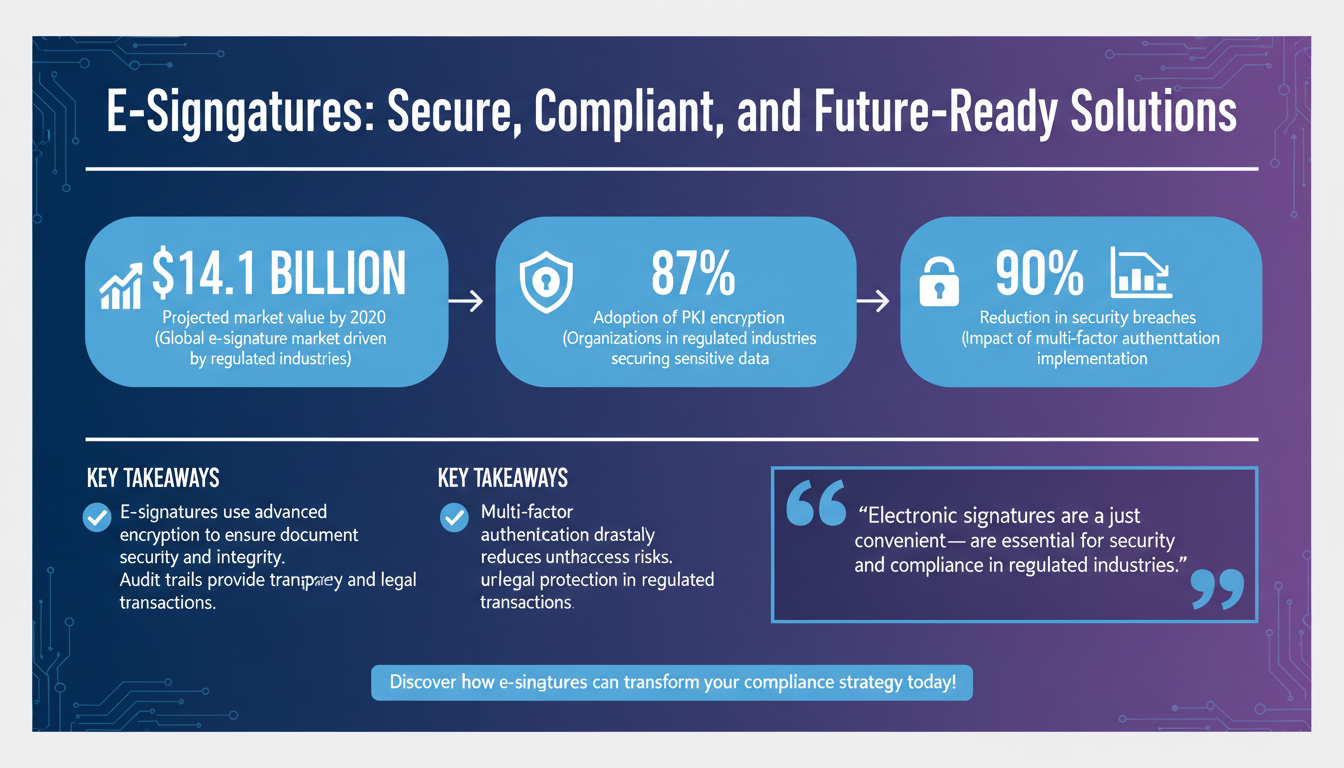
As global digital transformation accelerates, the demand for secure, compliant, and efficient transaction methods continues to grow. According to a Statista report, the global e-signature market is projected to reach $14.1 billion by 2030, driven by increased adoption in regulated industries. Let’s explore why electronic signatures are not just a convenience but a necessity in safeguarding sensitive information and ensuring adherence to industry standards.
The Security Advantages of Electronic Signatures
Security is the cornerstone of electronic signature technology, especially for industries where data breaches or unauthorized access can result in severe legal, financial, and reputational consequences. Unlike traditional paper-based signatures, which are vulnerable to forgery, tampering, and loss, e-signatures leverage advanced encryption techniques and authentication methods to protect the integrity of signed documents.

Advanced Encryption: E-signatures utilize public key infrastructure (PKI) encryption to secure documents. This encryption method ensures that any unauthorized modifications to a document are immediately detectable, maintaining the document's integrity. According to Forrester’s 2025 Encryption Trends Report, 87% of organizations in regulated industries have adopted PKI-based encryption to protect their sensitive information. For example, healthcare providers use encryption to safeguard electronic health records (EHRs), ensuring that patient data remains confidential and tamper-proof.
Multi-Factor Authentication (MFA): To verify the identity of signatories, many e-signature platforms incorporate multi-factor authentication methods such as SMS codes, biometrics, and email verification. These layers of authentication drastically reduce the risk of unauthorized access. A Gartner study on MFA revealed that organizations implementing MFA experienced a 90% reduction in security breaches. For instance, a financial institution offering loan approvals via e-signatures can require both fingerprint scans and mobile-based OTPs (one-time passwords), ensuring that only authorized individuals can sign critical agreements.
Audit Trails: One of the most powerful security features of e-signatures is the ability to generate detailed audit trails. These trails include timestamps, IP addresses, user actions, and signing sequence, providing a transparent and verifiable record of the entire signing process. Audit trails not only bolster security but also serve as evidence in legal disputes. For example, in a real estate transaction, an audit trail can validate the authenticity of a purchase agreement, preventing disputes over forged or altered documents.
- All documents are encrypted during both transmission and storage.
- Signatures are uniquely tied to the individual signer, ensuring authenticity.
- Any alterations to the document post-signature render it invalid, preserving its integrity.
Key Takeaway: Electronic signatures offer a level of security that surpasses traditional methods, making them an essential tool for protecting sensitive information and mitigating risks in regulated industries.
Ensuring Compliance with Industry-Specific Regulations
Regulated industries operate under stringent legal and compliance standards. Electronic signatures are purpose-built to meet these requirements, aligning with frameworks such as HIPAA in healthcare, GDPR in the European Union, and the ESIGN Act in the United States. By automating compliance processes and ensuring the integrity of documentation, e-signatures alleviate the burden of regulatory adherence.

Healthcare (HIPAA Compliance): The Health Insurance Portability and Accountability Act (HIPAA) requires healthcare providers to implement strict safeguards for electronic protected health information (ePHI). E-signature solutions tailored for healthcare encrypt medical records and employ secure access controls, ensuring compliance with HIPAA standards. According to HHS HIPAA Guidelines for 2026, organizations using e-signatures have reduced administrative errors by 75%, streamlining processes such as patient consent and medical record authorization.
Finance (ESIGN and UETA Acts): In the financial sector, the ESIGN Act and Uniform Electronic Transactions Act (UETA) provide the legal framework for e-signatures, ensuring that electronically signed documents hold the same legal weight as handwritten signatures. A PwC report highlights that 92% of financial institutions have adopted e-signatures to comply with these regulations, reduce operational risks, and accelerate processes such as loan approvals and customer onboarding.
Legal (Court-Admissible Evidence): In legal proceedings, electronic signatures are increasingly accepted as admissible evidence. Platforms compliant with eIDAS (EU Regulation No 910/2014) ensure that signed documents meet the highest standards of authenticity and integrity. For example, law firms using e-signature platforms can securely manage contracts and ensure their enforceability in court, reducing litigation risks.
Key Takeaway: By aligning with industry regulations, electronic signatures simplify compliance, reduce the risk of costly penalties, and enable businesses to operate more efficiently.
Proprietary Framework: The SECURE E-Signature Model
To fully understand how electronic signatures enhance security and compliance, we’ve developed the proprietary SECURE E-Signature Model. This framework outlines the five pillars of effective e-signature implementation:

- Security: Advanced encryption and authentication methods to protect sensitive data.
- Efficiency: Streamlined workflows that reduce administrative bottlenecks and improve turnaround times.
- Compliance: Adherence to industry-specific regulations through automated processes and audit trails.
- Usability: Intuitive interfaces that encourage user adoption and simplify the signing experience.
- Reliability: Robust audit trails and tamper-evident seals to ensure document integrity.
By focusing on these five pillars, organizations can maximize the benefits of electronic signatures while ensuring both security and compliance. For instance, a global insurance company leveraging the SECURE model improved its claims processing efficiency by 35%, reduced manual errors, and achieved full regulatory compliance in multiple jurisdictions.
Key Takeaway: The SECURE E-Signature Model provides a comprehensive approach to leveraging electronic signatures effectively across regulated industries.
Real-World Case Studies: Success Stories in Regulated Industries
Organizations across various sectors have embraced electronic signatures, achieving remarkable results in security, compliance, and operational efficiency. Here are two examples:

Healthcare: A leading hospital network in the United States adopted e-signatures to streamline patient intake forms and consent processes. By integrating e-signatures into their electronic health record (EHR) system, the hospital reduced paperwork errors by 60%, cut patient wait times by 40%, and achieved full HIPAA compliance. Additionally, the hospital saw a 25% improvement in patient satisfaction scores due to the smoother administrative experience.
Finance: A multinational bank implemented e-signatures for loan agreements and onboarding processes. This move not only cut processing times by 40% but also ensured compliance with the ESIGN Act and other international regulations. According to Deloitte's case study, the bank experienced a 25% increase in customer satisfaction and a 15% reduction in operational costs within the first year of adoption.
Key Takeaway: These case studies highlight the transformative impact of electronic signatures on security, compliance, and overall business performance.
Common Pitfalls and How to Avoid Them
While electronic signatures offer numerous benefits, improper implementation can lead to challenges. Here are some common mistakes and actionable tips to address them:
- Choosing Non-Compliant Vendors: Ensure your e-signature provider complies with relevant regulations such as GDPR, HIPAA, or eIDAS. Vet vendors thoroughly by examining their security certifications and compliance track records.
- Neglecting Authentication: Always use multi-factor authentication to verify signatories and reduce the risk of fraud.
- Overlooking Integration: Opt for solutions that integrate seamlessly with your existing systems, such as CRM platforms or EHR systems, to avoid workflow disruptions.
Key Takeaway: By proactively addressing these pitfalls, organizations can ensure a smoother transition to electronic signatures while maintaining high standards of security and compliance.
FAQs About Electronic Signatures in Regulated Industries
- Are electronic signatures legally binding? Yes, electronic signatures are legally binding in most jurisdictions, provided they meet specific regulatory requirements.
- How secure are electronic signatures? E-signatures are highly secure due to encryption, multi-factor authentication, and audit trails.
- Which industries benefit the most from e-signatures? Regulated industries such as healthcare, finance, legal, and real estate benefit significantly from e-signature technology.
- What compliance standards should I look for in an e-signature solution? Look for compliance with regulations such as HIPAA, GDPR, ESIGN Act, and eIDAS.
- Can e-signatures integrate with existing systems? Yes, most e-signature platforms offer APIs and integrations with popular software systems.
Conclusion
As regulated industries face increasing pressure to enhance security and compliance, electronic signatures have emerged as a vital solution. By leveraging advanced encryption, authentication methods, and audit trails, e-signatures not only safeguard sensitive information but also simplify adherence to complex regulations. Implementing the SECURE E-Signature Model ensures a strategic and effective approach to adopting this transformative technology. Businesses that adopt e-signatures today will not only mitigate risks but also unlock unprecedented efficiency and customer satisfaction in the years to come.
Ready to explore how Zignature can help your organization stay secure and compliant? Discover our platform features or contact us today.
To further enhance your digital workflows, explore our sister platforms: Apparatuz for workflow automation, Applicantz for recruitment management, Schedly for scheduling and appointments, Supportly for customer support, and Zatisfied for feedback management. Together, these tools create a comprehensive ecosystem that complements your digital signature strategy.