
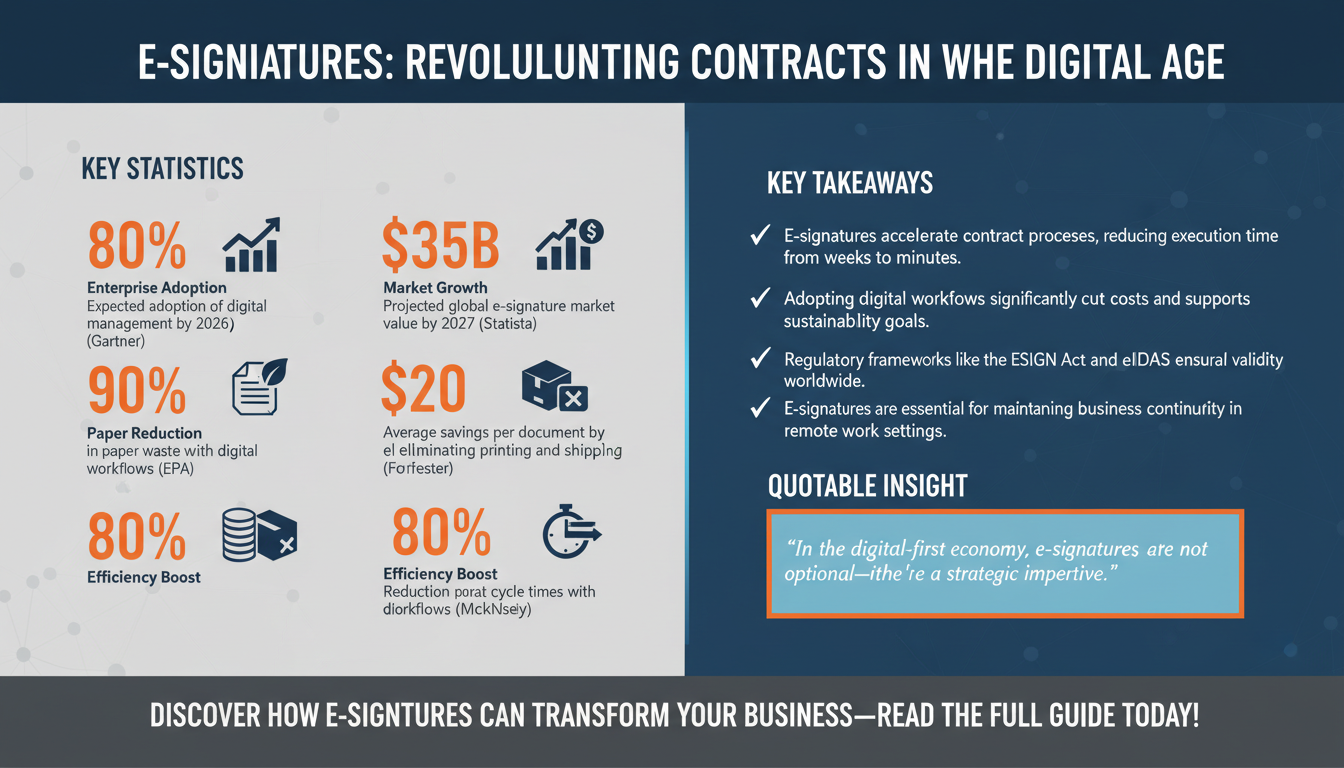
In today’s fast-paced, digital-first economy, the way businesses handle contracts has undergone a seismic shift. Gone are the days of printing, signing, scanning, and mailing endless sheets of paper. Instead, electronic signatures (or e-signatures) have emerged as a transformative tool for businesses of all sizes, streamlining workflows, enhancing security, and improving efficiency. With over 80% of enterprises expected to adopt digital contract management by 2026 (Gartner), understanding the benefits, use cases, and best practices of e-signatures is no longer optional—it’s a necessity.
This article provides a comprehensive guide to how electronic signatures are revolutionizing business contracts, supported by actionable insights, real-world examples, and expert advice to help you seamlessly integrate this technology into your workflows.
The Rise of Electronic Signatures: Why Now?
Electronic signatures have been around for decades, but their adoption has skyrocketed in recent years due to several converging factors. The COVID-19 pandemic accelerated the need for remote workflows, and global e-commerce growth has demanded faster and more secure methods of executing contracts. This momentum shows no signs of slowing, with the global e-signature market projected to reach $35 billion by 2027, growing at a CAGR of 31.1% (Statista).

Electronic signatures are also benefiting from growing regulatory frameworks that recognize their legal validity. For instance, the ESIGN Act in the United States (2000) established the legal equivalence of e-signatures and handwritten signatures. Similarly, the European Union’s eIDAS regulation (2016) provided a standardized approach to electronic signature usage across member states, further accelerating adoption.
Key drivers behind the rise of e-signatures include:
- Regulatory support: The ESIGN Act and eIDAS have made e-signatures legally valid and enforceable worldwide.
- Sustainability goals: Companies are moving toward paperless workflows to reduce environmental impact. According to the EPA, switching to digital workflows can reduce paper waste by up to 90% (EPA).
- Cost savings: businesses save an average of $20 per document by eliminating printing, shipping, and storage costs (Forrester).
- Remote work adoption: With the rise of remote work, e-signatures provide an essential solution for ensuring business continuity.
These factors have made e-signatures not just a convenience but a strategic imperative for modern businesses.
Top Benefits of Electronic Signatures for Businesses
Electronic signatures are more than just a digital replacement for pen-and-paper processes—they are a cornerstone of digital transformation. Below are the key benefits businesses can achieve:

1. Enhanced Efficiency
E-signatures reduce the time required to execute agreements from days or weeks to mere minutes. A report by McKinsey found that digitizing contract workflows can reduce contract cycle times by up to 80% (McKinsey). This improved speed allows businesses to close deals faster, onboard employees more efficiently, and respond rapidly to changing market conditions.
Consider the case of a real estate agency that adopted e-signature technology for lease agreements and sales contracts. Before implementation, processing a single contract took an average of five business days due to manual processes. After integrating e-signatures, the agency reduced this time to less than 24 hours, enabling them to close deals faster and improve customer satisfaction.
2. Improved Security
Contrary to the misconception that digital is less secure, e-signatures often offer superior security compared to traditional methods. Features like multi-factor authentication (MFA), tamper-proof audit trails, and encryption ensure the integrity of signed documents. According to the National Institute of Standards and Technology (NIST), e-signatures are 50% less likely to be forged than handwritten signatures (NIST).
Organizations in highly regulated industries, such as healthcare and finance, benefit significantly from the security features of e-signatures. For example, a financial institution implemented a digital contract solution to meet compliance requirements under GDPR and PCI DSS. The system’s audit trail capabilities allowed them to track every signature’s origin, ensuring full accountability and reducing legal risks.
3. Cost Reduction
Paper-based workflows are expensive. Beyond the cost of paper, ink, and storage, hidden costs such as employee time spent on administrative tasks add up quickly. A Deloitte study found that switching to e-signatures can save companies $1.3 million annually for every 10,000 documents processed (Deloitte).
Small businesses, in particular, can benefit from these savings. For example, a boutique marketing agency transitioned to e-signatures for client contracts and saw a 35% reduction in administrative overhead within the first year.
4. Better Customer Experience
In industries like real estate and finance, where customer satisfaction is directly tied to speed and convenience, e-signatures provide a seamless experience. Clients can sign documents from any device, at any time, without needing to visit a physical location. This convenience fosters trust and loyalty in an increasingly competitive marketplace.
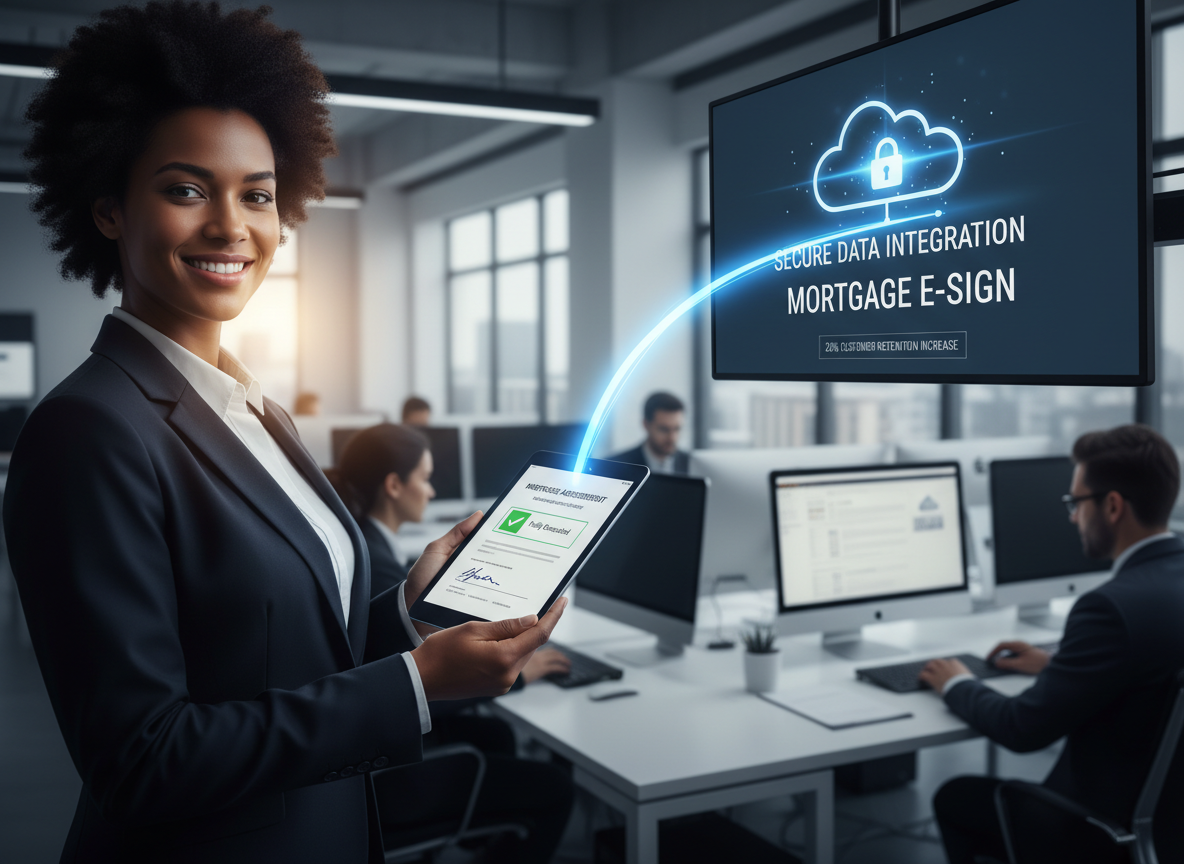
For instance, a mortgage company that implemented e-signature technology reported a 20% increase in customer retention rates within six months.
Common Use Cases for Electronic Signatures
While the utility of e-signatures spans countless industries, here are some of the most impactful use cases:
1. Legal Agreements
From non-disclosure agreements (NDAs) to client contracts, electronic signatures are transforming the legal landscape by ensuring faster execution and airtight compliance. A global law firm that adopted e-signatures for international contracts significantly reduced the time spent on cross-border agreements, improving client satisfaction and reducing legal risks.
2. Real Estate Transactions
E-signatures simplify real estate processes by enabling buyers, sellers, and agents to finalize deals remotely. This has been a game-changer in competitive markets where speed is crucial. For example, a real estate agency in New York City used e-signatures to close deals during the pandemic, maintaining business continuity despite lockdown restrictions.
3. HR Processes
From onboarding to performance reviews, HR departments leverage e-signatures to handle documentation efficiently, especially in remote work environments. A multinational corporation improved its employee onboarding process by transitioning to e-signatures, reducing delays and enhancing the overall experience for new hires.
Best Practices for Implementing Electronic Signatures
To fully realize the benefits of e-signatures, businesses must adopt them strategically. Here’s how:

1. Choose the Right Solution
Select a platform that aligns with your business needs. Consider factors like scalability, compliance features, and integration capabilities. For guidance, check out our comprehensive guide.
2. Ensure Legal Compliance
Make sure your chosen solution complies with regulations such as eIDAS, ESIGN, or industry-specific rules like HIPAA. Failure to comply could lead to legal vulnerabilities, especially in highly regulated industries.
3. Train Your Team
Provide training to employees to ensure smooth adoption and to address any concerns about security or usability. A well-trained team ensures faster implementation and transition.
FAQs About Electronic Signatures
1. Are electronic signatures legally binding?
Yes. In most countries, e-signatures are legally recognized under laws like the ESIGN Act (U.S.) and eIDAS (EU).
2. How secure are electronic signatures?
Top-tier e-signature solutions use encryption, audit trails, and multi-factor authentication to ensure document security.
3. What industries benefit most from e-signatures?
Industries such as legal, healthcare, real estate, and finance see significant gains due to their reliance on contracts and compliance requirements.
4. Can e-signatures save money?
Yes. Companies save an average of $20 per document by switching to digital workflows, according to Forrester.
Ready to transform your business workflows? Explore our platform features to see how Zignature can help.
To further enhance your digital workflows, explore our sister platforms: Apparatuz for workflow automation, Applicantz for recruitment management, Schedly for scheduling and appointments, Supportly for customer support, and Zatisfied for feedback management. Together, these tools create a comprehensive ecosystem that complements your digital signature strategy.