
In today’s fast-paced, digitally driven healthcare landscape, ensuring compliance with the Health Insurance Portability and Accountability Act (HIPAA) is a critical mandate. Healthcare providers are increasingly tasked with balancing the need for operational efficiency with the stringent requirements of safeguarding patient data. Digital signatures, a secure and legally binding alternative to traditional wet ink signatures, have emerged as a game-changing solution for healthcare organizations. Yet, many providers remain unaware of how digital signatures can simplify HIPAA compliance while increasing productivity.
In this definitive guide, we’ll explore how digital signatures work, the specific ways they align with HIPAA requirements, and actionable strategies for integrating them into your healthcare workflows. Whether you’re a hospital administrator, an IT director, or a private practice owner, this guide will equip you with the knowledge to harness digital signatures to protect patient data and streamline operations.
Understanding HIPAA Compliance: A Quick Overview
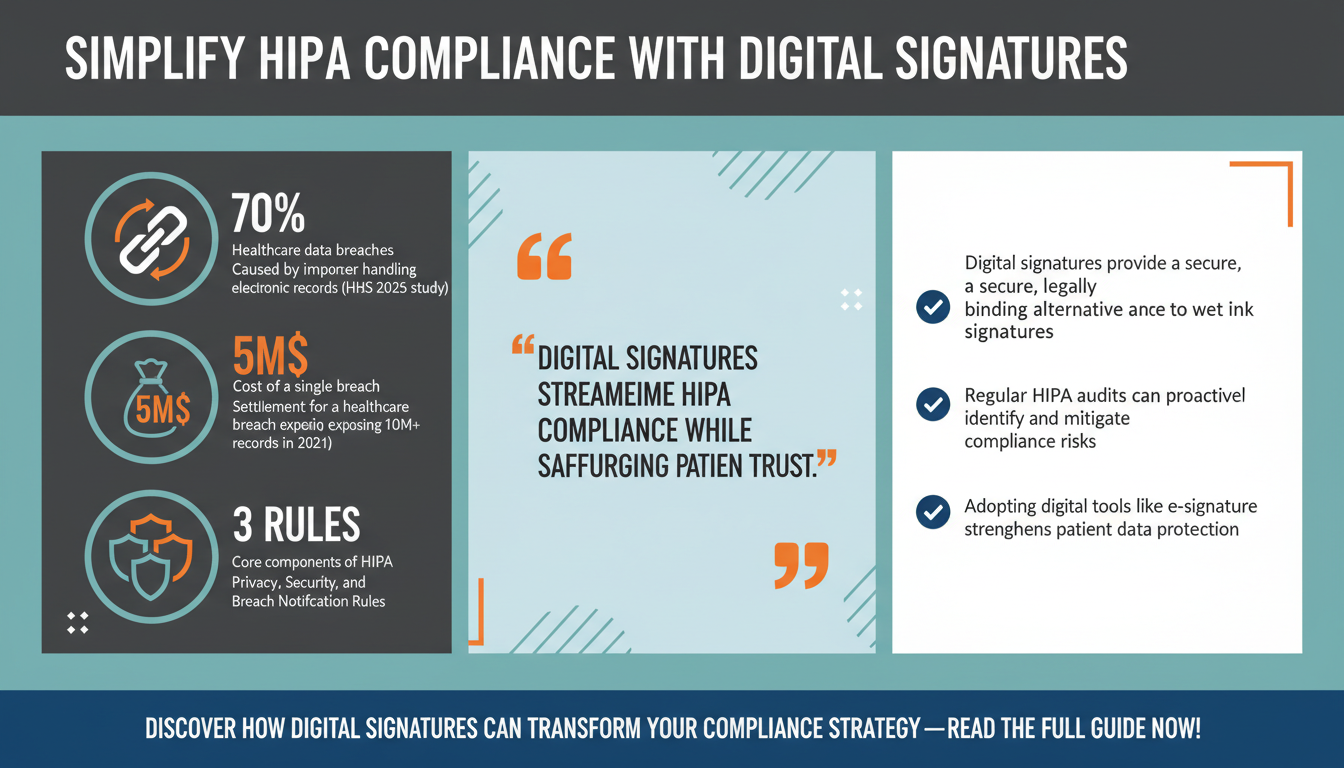
Before diving into the specifics of digital signatures, it’s essential to understand what HIPAA compliance entails. HIPAA, enacted in 1996, sets the standard for protecting sensitive patient information. Healthcare organizations, including hospitals, clinics, and health insurance providers, must comply with these regulations to ensure the confidentiality, integrity, and availability of protected health information (PHI).

Key components of HIPAA compliance include:
- Privacy Rule: Governs the use and disclosure of individuals’ health information. It ensures that patients have rights over their health data, including the ability to request access to or corrections of their records.
- Security Rule: Establishes standards for electronic PHI (ePHI), requiring administrative, physical, and technical safeguards to prevent unauthorized access or breaches. This includes controls like encryption, user authentication, and regular security assessments.
- Breach Notification Rule: Requires covered entities to notify affected individuals, the Department of Health and Human Services (HHS), and, in some cases, the media, of data breaches involving PHI.
The Importance of HIPAA Compliance in the Digital Age
As healthcare organizations continue to digitize their operations, the risks associated with mishandling electronic health information have grown exponentially. The rapid adoption of telehealth, electronic health records (EHRs), and cloud storage solutions has made compliance more complex but also more critical. A breach not only compromises patient trust but can lead to significant financial and reputational damage. For example, in 2021, a U.S. health system faced a $5 million settlement for a data breach that exposed the records of over 10 million patients. Such incidents highlight the need for stringent compliance measures, including the use of secure technologies like digital signatures.
Pro Tip: Conduct Regular HIPAA Audits
Healthcare organizations should conduct regular internal and external HIPAA audits to identify vulnerabilities in their compliance strategies. These audits can assess everything from employee training programs on patient privacy to the security of digital tools like EHR systems and digital signature platforms. By addressing weak points proactively, organizations can avoid costly penalties and data breaches.
According to a 2025 study by HHS, over 70% of healthcare data breaches were due to improper handling of electronic records. Implementing secure digital signature solutions can significantly mitigate such risks, offering a robust layer of compliance.
What Are Digital Signatures, and How Do They Work?
Digital signatures are a subset of electronic signatures that use cryptographic algorithms to ensure the authenticity, integrity, and non-repudiation of a signed document. Unlike basic e-signatures that may simply involve typing a name or inserting an image of a signature, digital signatures rely on Public Key Infrastructure (PKI) to provide a higher level of security.
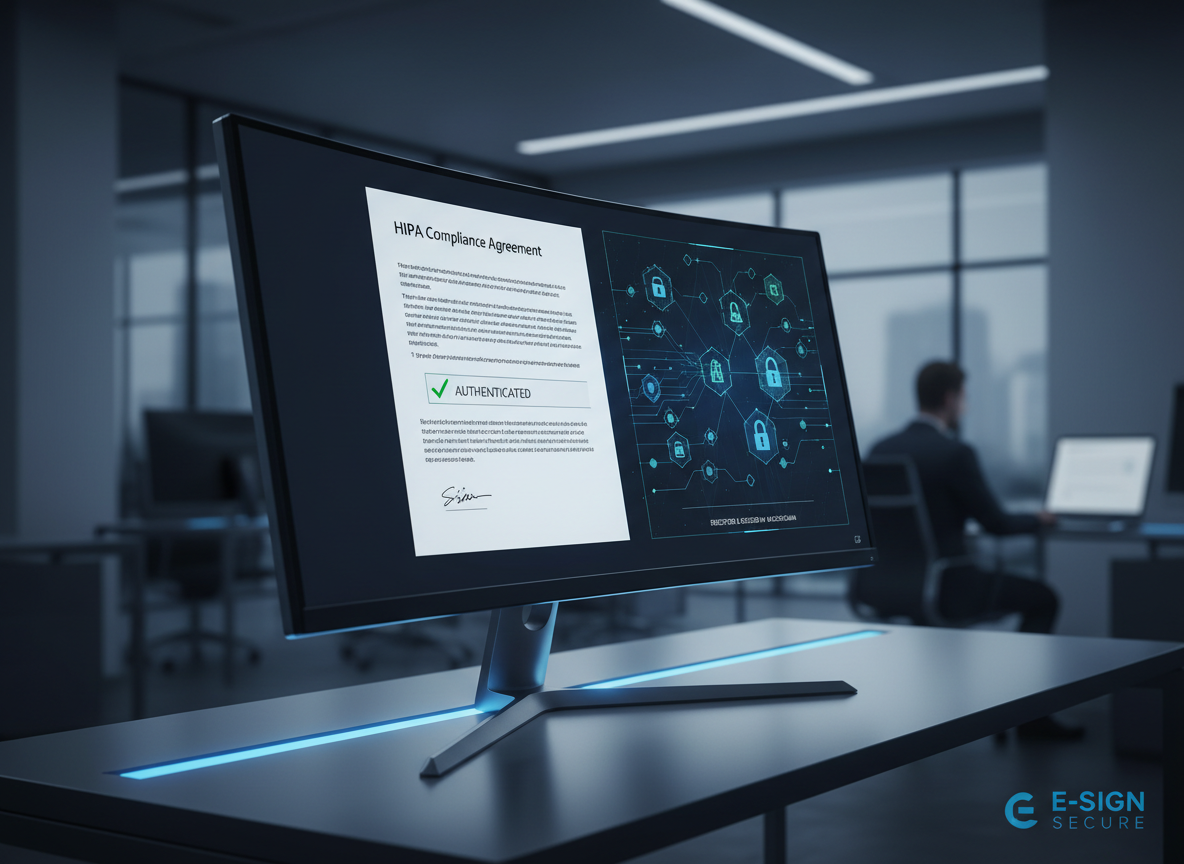
Here’s how a digital signature works:
- Hashing: The document is hashed, which means it is converted into a fixed-length string of characters that uniquely represents the document’s content. Even a minor change to the document would result in a completely different hash.
- Encryption: The signer’s private key encrypts the hash, creating the digital signature. This encryption binds the signature to the document and ensures that only the signer’s public key can decrypt it.
- Verification: The recipient uses the signer’s public key to decrypt the hash and verify that it matches the original document. If the hashes match, the document is confirmed as authentic and unaltered.
Key Advantages of Digital Signatures
Digital signatures offer several advantages over traditional methods of document authentication and security:
- Enhanced Security: The cryptographic algorithms used in digital signatures make them nearly impossible to forge, providing unparalleled security for sensitive documents.
- Time Efficiency: Digital signatures eliminate the need for physical paperwork, reducing the time it takes to process documents.
- Cost Savings: By reducing reliance on paper, ink, and physical storage, digital signatures can significantly cut operational costs.
Expert Insight: The Role of PKI in Digital Signatures
Public Key Infrastructure (PKI) is the backbone of digital signature technology. It involves a combination of hardware, software, policies, and procedures to manage digital certificates and public-private key pairs. PKI ensures that digital signatures are not only secure but also legally admissible in court. For healthcare providers, choosing a digital signature solution that adheres to PKI standards is critical for maintaining HIPAA compliance.
According to Gartner, the adoption of digital signatures in healthcare is expected to grow by 35% annually through 2026, driven by their ability to meet compliance and security standards.
How Digital Signatures Fulfill HIPAA Security Requirements
HIPAA’s Security Rule mandates that healthcare entities implement safeguards to protect ePHI. Digital signatures align with these requirements in several ways:

1. Authentication
Digital signatures ensure that the person signing a document is who they claim to be. Through multi-factor authentication (MFA), such as passwords, biometric scans, or security tokens, digital signature platforms provide robust identity verification. For instance, a healthcare professional signing a prescription may be required to input a password and scan their fingerprint, ensuring that only authorized individuals can sign sensitive documents.
2. Integrity
The cryptographic hashing process used in digital signatures ensures that the document remains unchanged after signing. If any alterations are made, the signature is invalidated, protecting the integrity of sensitive healthcare records. This is particularly important for critical documents like patient consent forms or medical records, where even minor changes could have significant implications.
3. Audit Trails
Digital signature solutions generate detailed audit trails, capturing metadata like timestamps, IP addresses, and user actions. These logs can be invaluable during HIPAA audits or in the event of a dispute. For example, if a patient disputes the validity of a signed consent form, the audit trail can provide concrete evidence of when and where the signature was applied, as well as the identity of the signer.
For example, HealthIT.gov highlights that audit trails are a critical component of HIPAA compliance, ensuring transparency and accountability.
Checklist: Key Features to Look for in a Digital Signature Solution
- PKI-based encryption for secure signatures
- Multi-factor authentication options
- Detailed audit trail generation
- Cloud compatibility for seamless integration
- Compliance with HIPAA and other relevant regulations
By ensuring these features, healthcare providers can choose a solution that not only simplifies workflows but also meets regulatory requirements.
Real-World Applications of Digital Signatures in Healthcare
Digital signatures are transforming various healthcare processes by enhancing security, efficiency, and compliance. Here are some common use cases:
1. Patient Consent Forms
Obtaining patient consent for treatments, telehealth services, or data sharing is a routine yet critical task. Digital signatures streamline this process, allowing patients to sign forms electronically from anywhere, while ensuring HIPAA compliance. For instance, during the COVID-19 pandemic, many healthcare providers adopted digital signature solutions to quickly and securely obtain patient consent for telehealth services.
2. Prescription Approvals
In 2026, e-prescriptions account for over 90% of all prescriptions in the U.S., according to a Statista report. Digital signatures add an extra layer of security to this process, ensuring that prescriptions are authorized by licensed professionals. This not only reduces the risk of fraud but also streamlines the workflow for pharmacies and healthcare providers.
3. Vendor Agreements
Healthcare providers often collaborate with third-party vendors for equipment, software, or services. Digital signatures ensure that contracts and agreements are securely executed, reducing the risk of data breaches or non-compliance. For example, a hospital entering into a contract with a software vendor for an electronic health record (EHR) system can use digital signatures to finalize the agreement securely and efficiently.
For more on how digital signatures simplify vendor compliance, check out this guide.
Conclusion
As the healthcare industry continues to embrace digital transformation, the importance of secure and compliant solutions cannot be overstated. Digital signatures offer a powerful tool for healthcare providers, enabling them to streamline operations, enhance security, and ensure HIPAA compliance. By understanding how digital signatures work and their alignment with HIPAA requirements, providers can confidently integrate this technology into their workflows, safeguarding sensitive patient data while improving efficiency.
Whether you’re digitizing patient consent forms, securing prescription approvals, or finalizing vendor agreements, digital signatures can help you achieve compliance and operational excellence. Now is the time to explore how this technology can transform your organization and strengthen your commitment to patient privacy.
To further enhance your digital workflows, explore our sister platforms: Apparatuz for workflow automation, Applicantz for recruitment management, Schedly for scheduling and appointments, Supportly for customer support, and Zatisfied for feedback management. Together, these tools create a comprehensive ecosystem that complements your digital signature strategy.