
The healthcare industry is no stranger to regulatory complexities, mountains of paperwork, and the need for airtight security. In recent years, the rise of digital signatures has unlocked a new era of efficiency, compliance, and patient care. By simplifying documentation processes, improving data security, and reducing manual errors, digital signatures are transforming how healthcare organizations manage their workflows. This article delves into the revolutionary impact of digital signatures on the healthcare industry and provides actionable insights for professionals ready to embrace this change.
The Role of Digital Signatures in Healthcare: A Game-Changer for Document Management
Healthcare organizations handle sensitive information daily, from patient consent forms to insurance claims and medical records. Traditionally, these processes relied heavily on wet signatures, leading to inefficiencies, delays, and compliance risks. Digital signatures, however, have emerged as a secure and legally binding alternative that streamlines document management.
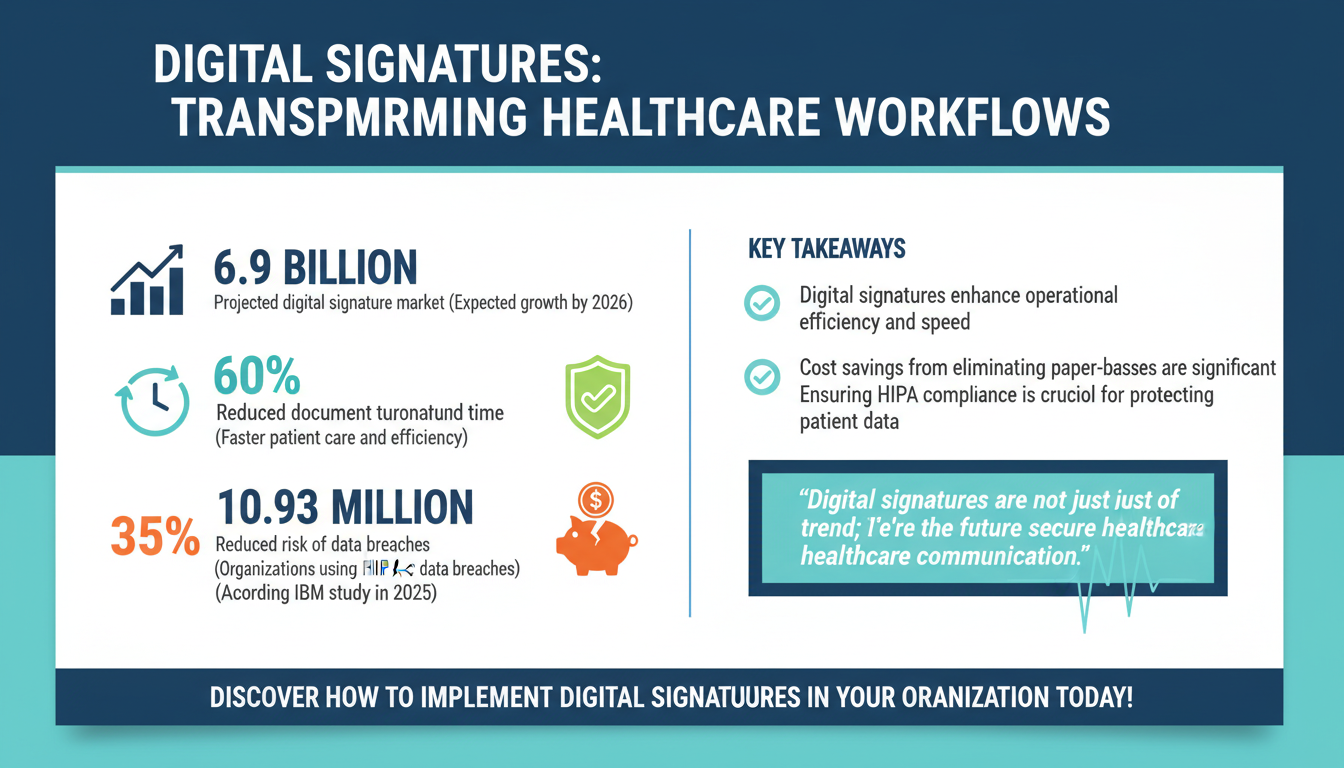
According to a Forrester report, the global digital signature market is expected to reach $6.9 billion by 2026, with healthcare being one of the top adopters. This technology is particularly impactful in reducing document turnaround times by as much as 60%, enabling faster patient care and administrative efficiency.
Beyond efficiency, digital signatures also enhance patient trust. By ensuring documents are tamper-proof and compliant with regulations like HIPAA, healthcare providers demonstrate their commitment to safeguarding patient information.
Key Benefits of Digital Signatures in Healthcare:
- Speed: Immediate signing and sharing of documents improve operational efficiency.
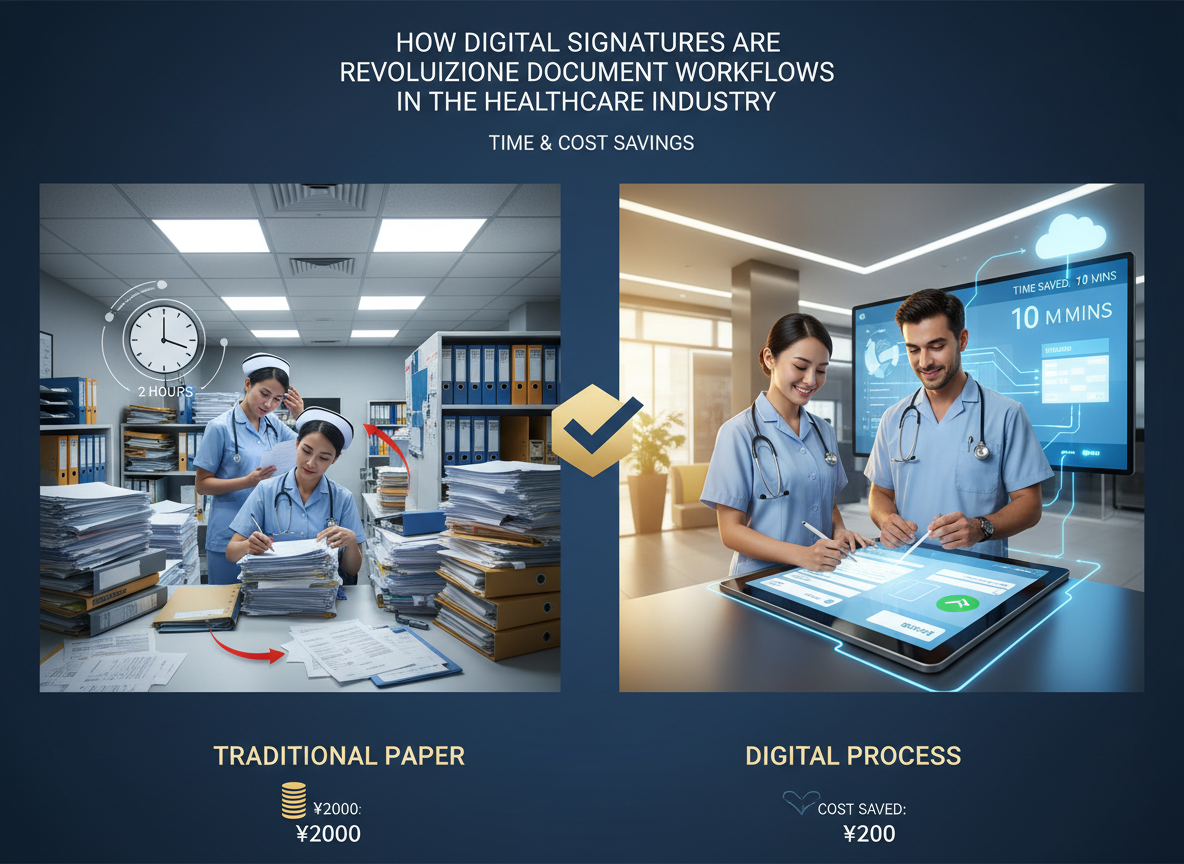
- Cost Savings: Eliminate printing, shipping, and storage costs associated with paper-based workflows.
- Security: Advanced encryption ensures data integrity and prevents unauthorized access.
- Compliance: Meet regulatory requirements such as HIPAA and FDA’s 21 CFR Part 11.
Ensuring HIPAA Compliance with Secure E-Signatures
In the healthcare industry, compliance is non-negotiable. The Health Insurance Portability and Accountability Act (HIPAA) mandates strict standards for protecting electronic health information (ePHI). Digital signatures must meet specific criteria to be considered HIPAA-compliant, including data encryption, audit trails, and secure identity verification.
For instance, a HIPAA Journal study highlights that organizations using compliant digital signature solutions reduce the risk of data breaches by 35%. This is critical in an era where healthcare data breaches cost an average of $10.93 million per incident, according to a 2025 IBM study.

Healthcare providers must ensure their digital signature solution includes features like multi-factor authentication, timestamping, and secure storage. These capabilities not only ensure compliance but also build patient confidence in the organization’s data privacy measures.
Streamlining Administrative Workflows: From Patient Intake to Insurance Claims
Administrative tasks in healthcare are notoriously time-consuming. From onboarding patients to processing claims, these workflows often involve multiple parties and layers of approval. Digital signatures simplify these processes by enabling seamless collaboration and reducing bottlenecks.
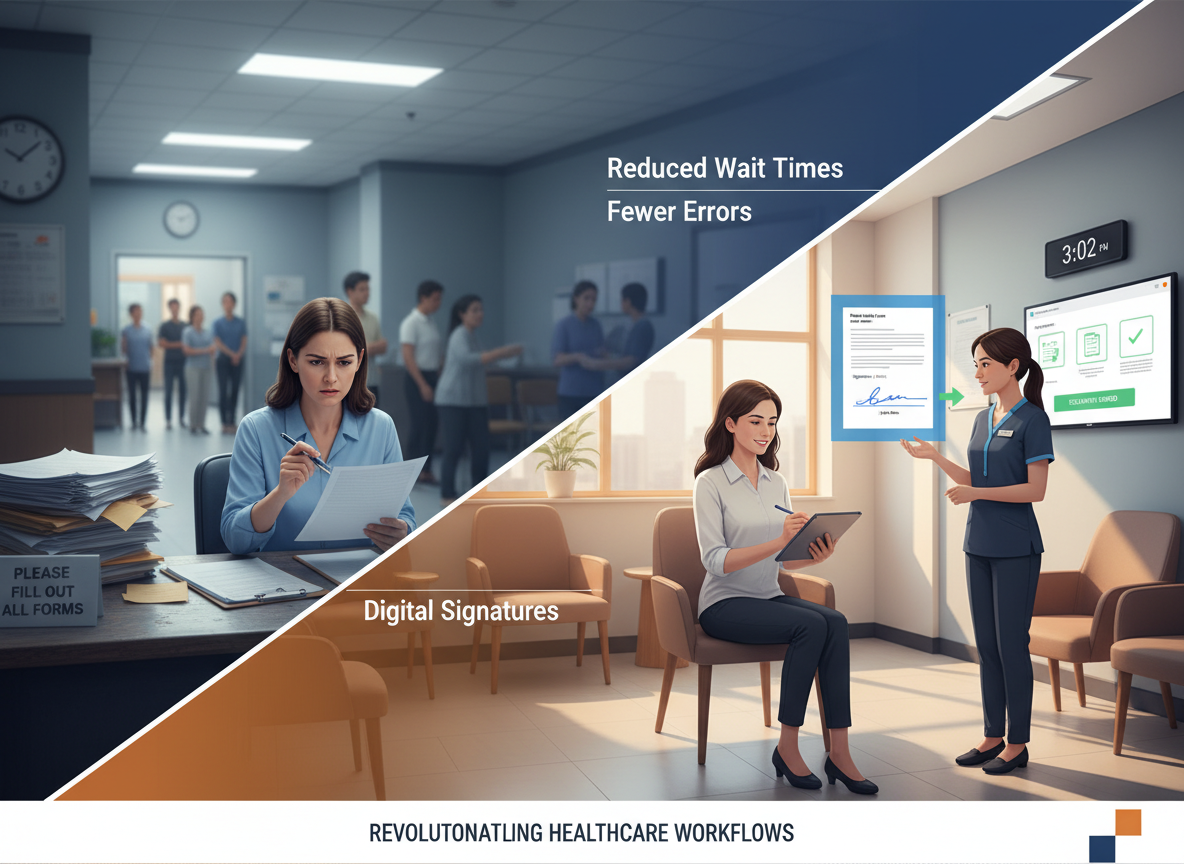
Consider the patient intake process. Traditionally, patients fill out paper forms upon arrival, which are then manually entered into electronic health record (EHR) systems. With digital signatures, patients can complete and sign forms online before their appointment, saving time for both patients and staff. A Health IT report reveals that clinics adopting digital intake forms saw a 50% reduction in patient wait times.
Similarly, insurance claims processing benefits from digital signatures. By automating approvals and eliminating manual errors, claims are processed faster, reducing delays in reimbursement. This is especially valuable for healthcare providers operating on tight margins.
Enhancing Patient Experience with Digital Workflows
Today’s patients expect convenience and transparency in their healthcare interactions. Digital signatures play a crucial role in meeting these expectations by enabling faster, more efficient processes.
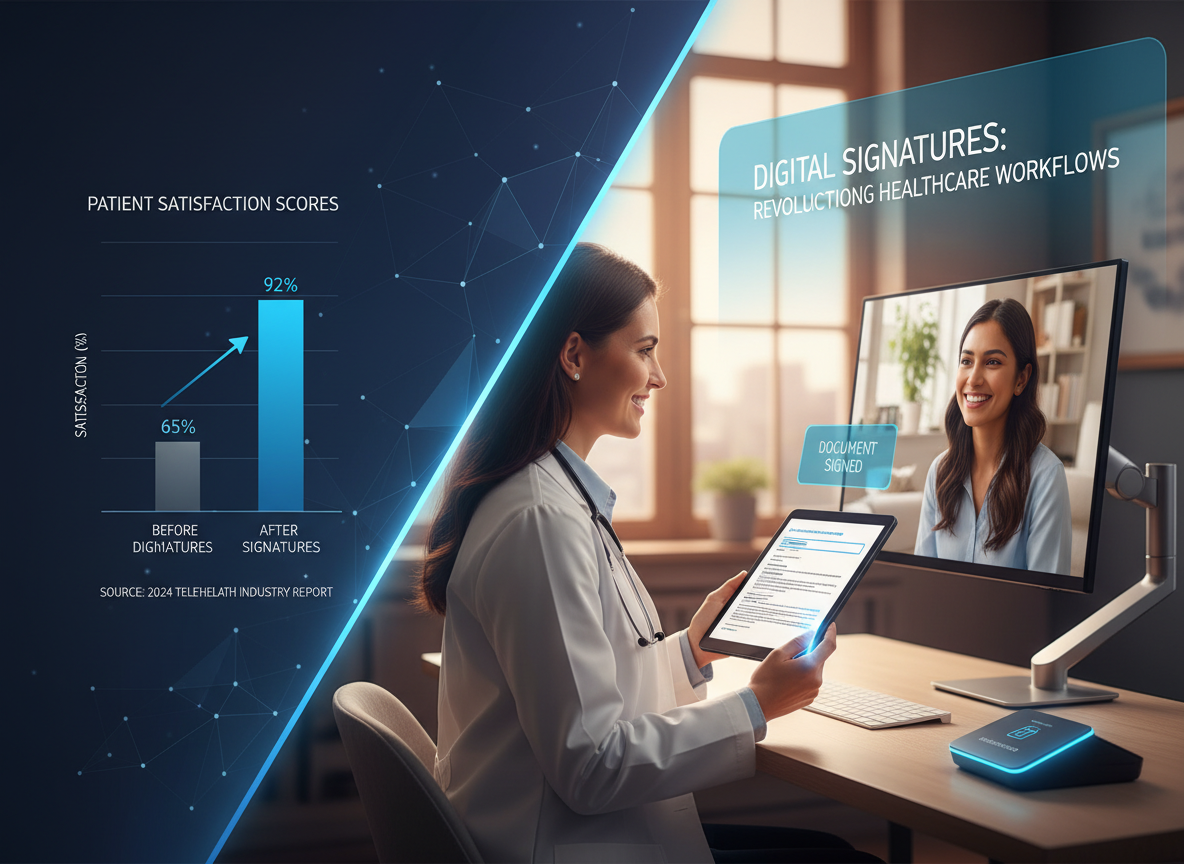
For example, telehealth services have surged in popularity, with 76% of patients using telemedicine platforms in 2025, according to McKinsey. Digital signatures allow patients to sign consent forms and prescriptions remotely, ensuring a seamless virtual care experience.
Moreover, digital signatures enhance accessibility for patients with disabilities. Electronic forms can be designed with screen reader compatibility, larger fonts, and other accessibility features, ensuring inclusivity in healthcare services.
Overcoming Common Challenges in Digital Signature Adoption
Despite their benefits, implementing digital signatures in healthcare comes with challenges. Common obstacles include resistance to change, concerns about security, and integration with legacy systems.
One of the most significant barriers is the fear of data breaches. However, modern digital signature solutions employ robust encryption and secure storage to mitigate these risks. For example, public key infrastructure (PKI) ensures that only authorized parties can access and verify signed documents. A Gartner study confirms that PKI-based systems are among the most secure options available.
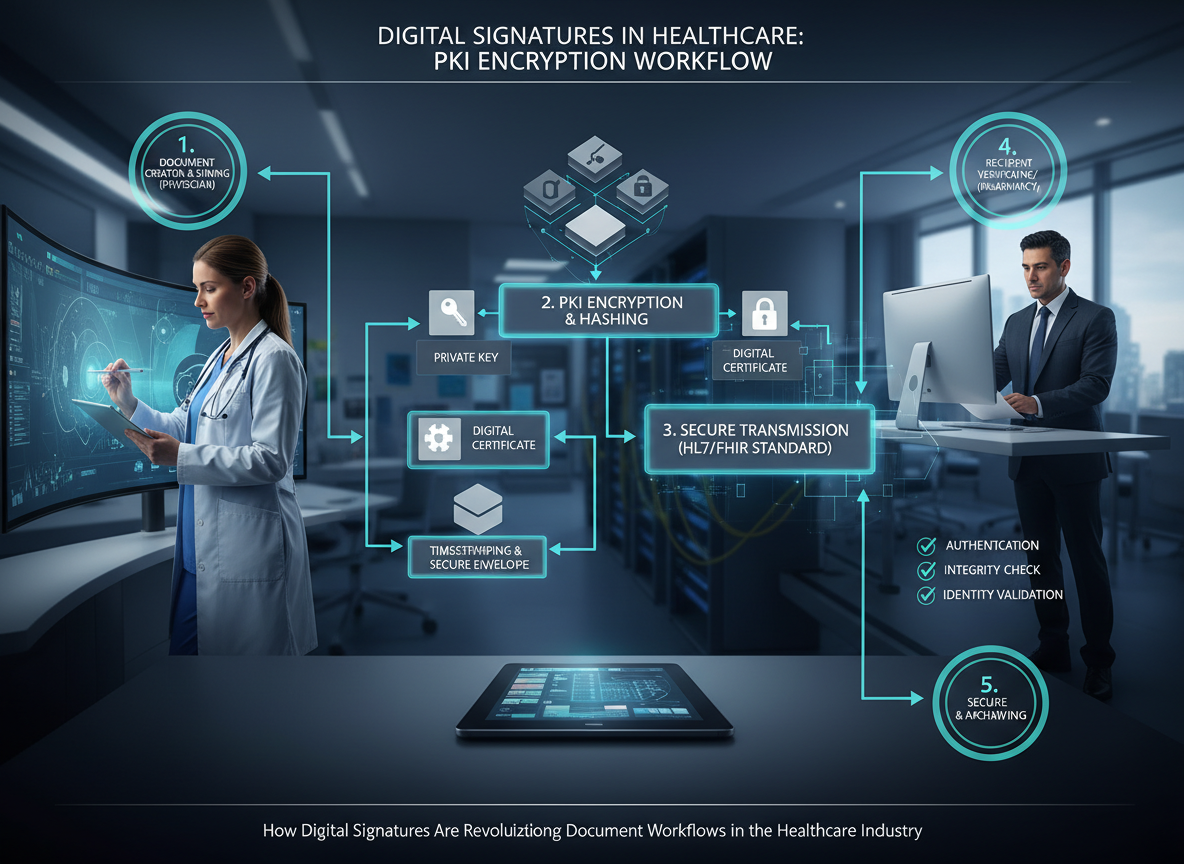
Another challenge is integrating digital signatures with existing EHR systems. To address this, healthcare organizations should select solutions that offer seamless integrations with popular EHR platforms like Epic, Cerner, and Allscripts. For guidance on choosing the right solution, read our article on must-have features for digital signature solutions.
Case Studies: How Healthcare Organizations Are Benefiting
Real-world examples highlight the transformative power of digital signatures in healthcare. One notable case is a large hospital network that implemented a digital signature solution to manage its consent forms. Within six months, the network reduced its documentation errors by 45% and saved over $500,000 in administrative costs.
Another example involves a telemedicine provider that integrated digital signatures into its platform. By enabling patients to sign documents electronically, the provider increased its appointment completion rate by 30% and reduced no-shows by 20%.
These examples underscore the potential of digital signatures to drive tangible results in the healthcare sector, from cost savings to improved patient outcomes.
How to Implement Digital Signatures in Your Healthcare Organization
Adopting digital signatures requires careful planning and execution. Here is a step-by-step guide to ensure a smooth transition:
- Assess Your Needs: Identify the key areas where digital signatures will have the most impact, such as patient intake, consent forms, or billing processes.
- Choose a Compliant Solution: Select a digital signature platform that meets HIPAA requirements and integrates with your existing systems. Explore our platform features for secure and compliant solutions.
- Train Your Team: Provide training for staff to ensure they understand how to use the new system effectively.
- Monitor and Optimize: Track the performance of your digital workflows and make improvements as needed.
By following these steps, healthcare organizations can maximize the benefits of digital signatures while minimizing disruptions during implementation.
FAQs About Digital Signatures in Healthcare
- Are digital signatures legally binding in healthcare? Yes, digital signatures are legally binding under laws such as the ESIGN Act and UETA.
- How do digital signatures ensure data security? They use advanced encryption and audit trails to protect data integrity and prevent unauthorized access.
- Can digital signatures integrate with EHR systems? Most modern solutions offer seamless integrations with leading EHR platforms.
- What are the cost savings of using digital signatures? Organizations can save on printing, shipping, and storage costs, with some reporting up to 70% cost reductions.
- How do I ensure HIPAA compliance? Choose a solution with encryption, audit trails, and secure identity verification.
Conclusion
Digital signatures are not just a technological upgrade—they are a revolution in how healthcare organizations manage their document workflows. By enhancing efficiency, ensuring compliance, and improving patient experiences, this technology is setting the stage for a more streamlined and secure future in healthcare. Organizations that embrace digital signatures today will be better equipped to navigate the complexities of tomorrow’s healthcare landscape.
Ready to transform your workflows? Learn more about Zignature’s secure and compliant digital signature solutions.
To further enhance your digital workflows, explore our sister platforms: Apparatuz for workflow automation, Applicantz for recruitment management, Schedly for scheduling and appointments, Supportly for customer support, and Zatisfied for feedback management. Together, these tools create a comprehensive ecosystem that complements your digital signature strategy.