
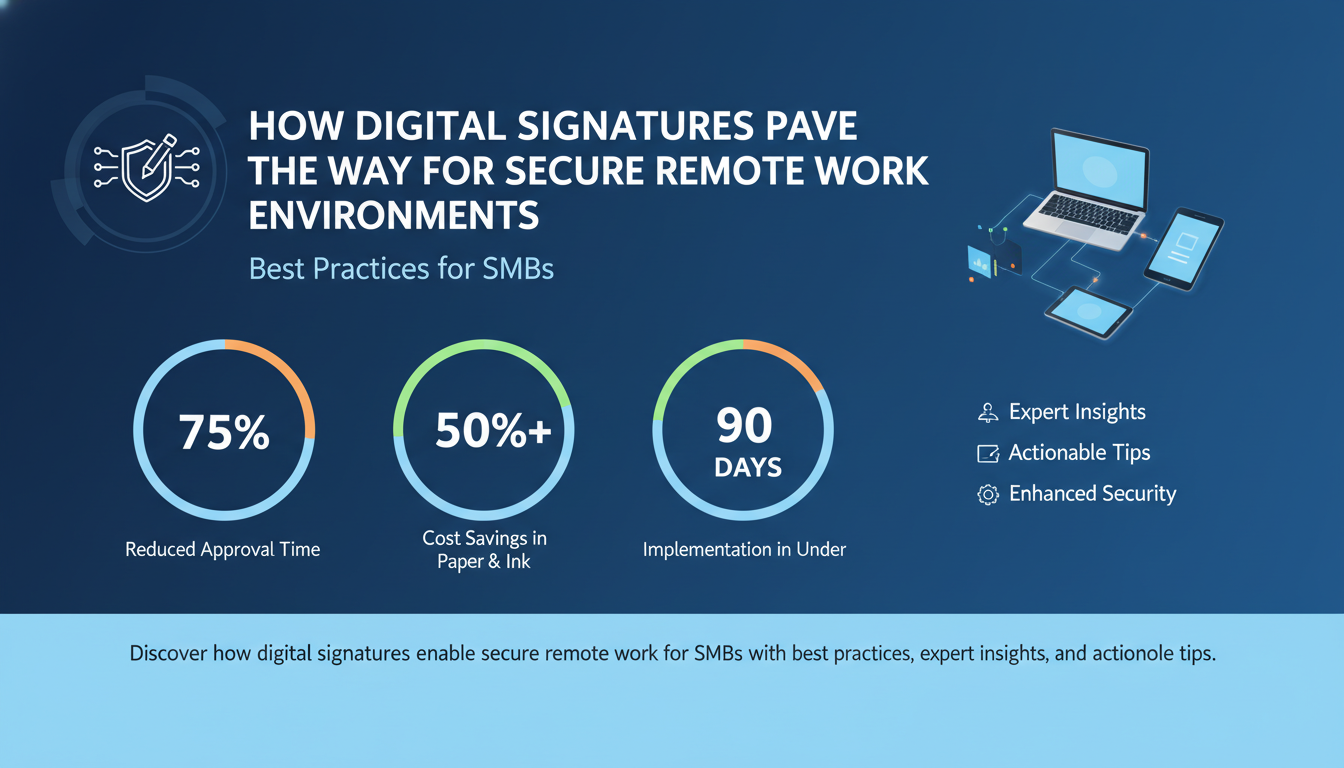
Introduction: The New Era of Secure Remote Work
In an era defined by digital transformation and remote work, the need for secure and efficient methods to manage documents has never been more critical. Digital signatures have emerged as a pivotal tool in this landscape, providing not only the means to sign documents electronically but also ensuring that these signatures are legally binding and secure. For small to medium-sized businesses (SMBs), embracing digital signatures can streamline operations, enhance security, and foster a culture of trust and efficiency. As remote work becomes the norm rather than the exception, understanding how digital signatures facilitate this transition is essential.
According to a Forrester report, over 75% of SMBs have adopted digital signature solutions to bolster their remote work capabilities by 2025. This trend underscores the growing recognition of digital signatures as a critical component of modern business operations. As SMBs navigate the complexities of remote work, digital signatures provide a reliable and secure method to manage contracts, approvals, and other critical documents from anywhere in the world.
In this comprehensive guide, we will explore how digital signatures pave the way for secure remote work environments and outline best practices for SMBs to implement these solutions effectively. We will delve into proprietary frameworks, examine common pitfalls, and provide actionable checklists to ensure your business reaps the full benefits of digital signatures. Additionally, we will discuss emerging trends that will shape the future of digital signatures and remote work, empowering SMBs to stay ahead of the curve.
Understanding Digital Signatures: A Secure Foundation
Digital signatures are more than just electronic scribbles on a screen; they are cryptographic keys that verify the authenticity and integrity of a document. This ensures that the document has not been altered after signing, providing a layer of security that traditional paper signatures cannot match. The encryption technology behind digital signatures is what makes them legally binding and secure, making them indispensable in today's remote work landscape.
According to Gartner's research, digital signatures are expected to become a compliance standard across industries by 2026, with an adoption rate of 85% among regulated businesses. This shift is driven by the need for secure, efficient, and accessible document management solutions that support remote workflows.
For SMBs, the implementation of digital signatures can lead to significant cost savings and operational efficiencies. By eliminating the need for physical paperwork, businesses can reduce overhead costs related to printing, mailing, and storage. Moreover, digital signatures enable faster turnaround times, as documents can be signed and returned in minutes rather than days.
The security of digital signatures is rooted in their use of public key infrastructure (PKI). This technology involves a pair of keys—a public key and a private key—that work together to encrypt and decrypt information. The private key is used to sign a document, while the public key verifies the signature's authenticity. This system ensures that only the intended recipient can access the document's contents, mitigating the risk of unauthorized access or tampering.
Beyond technical specifications, digital signatures offer an unprecedented level of traceability and accountability. Every signature is timestamped, making it easy to track document history and verify the chain of custody. This is particularly valuable for industries with stringent compliance requirements, such as finance and healthcare, where maintaining a clear audit trail is essential.
Pro Tip: To enhance security, consider using multi-factor authentication (MFA) in conjunction with digital signatures. This adds an extra layer of protection by requiring additional verification, such as a one-time password (OTP) sent to a mobile device, before a signature can be applied.
The Business Case for Digital Signatures in Remote Work
As remote work becomes more prevalent, the business case for digital signatures becomes increasingly compelling. They offer a range of benefits that directly address the challenges faced by SMBs in managing remote teams and workflows. From enhancing security and compliance to improving productivity and collaboration, digital signatures are a critical enabler of successful remote work environments.
A study by IDC found that businesses implementing digital signatures experienced a 30% increase in document processing speed, leading to faster decision-making and improved operational efficiency. This is particularly beneficial for SMBs, where agility and responsiveness can be key competitive advantages.
In addition to speed, digital signatures offer robust security features that protect sensitive information from unauthorized access. This is crucial in a remote work setting, where employees may be accessing documents from personal devices or unsecured networks. By encrypting documents and verifying signers' identities, digital signatures help maintain the confidentiality and integrity of business communications.
Enhanced Integration Capabilities: Another advantage of digital signatures is their ability to integrate with existing business systems and workflows. Many digital signature solutions offer APIs and pre-built integrations with popular software platforms, making it easy for SMBs to incorporate them into their operations without significant disruption or investment.
Moreover, digital signatures support environmental sustainability, a growing concern for businesses worldwide. By reducing reliance on paper, they contribute to lower carbon footprints and align with corporate social responsibility goals. This adds an additional layer to the business case for digital signatures, appealing to eco-conscious consumers and stakeholders.
Expert Insight: An increasing number of companies are realizing the marketing potential of digital signatures as part of their sustainability initiatives. By publicly committing to paperless processes, businesses can enhance their brand image and attract environmentally conscious clients.
Best Practices for Implementing Digital Signatures in SMBs
Implementing digital signatures effectively requires a strategic approach that considers the unique needs and challenges of SMBs. Here are some best practices to ensure a successful deployment:
1. Conduct a Needs Assessment: Before implementing digital signatures, assess your current document workflows and identify areas where digital signatures can add value. Consider factors such as document volume, turnaround times, and security requirements. Understand the specific pain points in your document management processes and how digital signatures can address them.
2. Choose the Right Solution: Select a digital signature solution that aligns with your business needs and integrates seamlessly with your existing systems. Look for features such as mobile access, multi-factor authentication, and audit trails to enhance security and usability. Evaluate potential vendors based on their track record, customer support, and scalability to accommodate future growth.
3. Train Your Team: Provide training and resources to ensure your team understands how to use digital signatures effectively. This includes educating employees on best practices for document security and compliance. Create user-friendly guides and conduct workshops to demonstrate the practical benefits and ease of use of digital signatures.
4. Monitor and Optimize: Regularly review your digital signature processes to identify areas for improvement. Use analytics and feedback to optimize workflows and ensure your solution continues to meet your business needs. Set key performance indicators (KPIs) to measure success and drive continuous improvement in your document management practices.
By following these best practices, SMBs can maximize the benefits of digital signatures and create a secure, efficient remote work environment. Additionally, consider forming a cross-functional team to oversee the implementation process, ensuring that all departments are aligned and that the transition is as smooth as possible.
Pro Tip: Consider conducting a pilot program to test the effectiveness of digital signatures within a small team or department before a full-scale rollout. This allows you to identify potential challenges and make necessary adjustments in a controlled environment.
Overcoming Common Challenges with Digital Signatures
Despite their many advantages, implementing digital signatures can present certain challenges. Here are some common obstacles and how to overcome them:
Integration Difficulties: Integrating digital signatures with existing systems can be complex, particularly for businesses with legacy software. To address this, work with your IT team or solution provider to ensure compatibility and smooth integration. Conduct thorough testing and pilot programs to identify potential issues before full-scale deployment.
User Adoption: Encouraging users to adopt new technologies can be difficult, especially if they are accustomed to traditional processes. Provide comprehensive training and support to ease the transition and highlight the benefits of digital signatures. Showcase success stories and testimonials from other organizations to build confidence and buy-in among employees.
Compliance Concerns: SMBs operating in regulated industries may have specific compliance requirements. Ensure your digital signature solution meets industry standards and provides the necessary audit trails and security features. Collaborate with legal and compliance teams to address any regulatory challenges and ensure seamless adherence to industry mandates.
Managing Change: Change management is crucial for the successful implementation of digital signatures. Communicate clearly with all stakeholders about the benefits and changes involved, and ensure ongoing support is available to address any concerns or challenges that arise during the transition.
By proactively addressing these challenges, SMBs can ensure a smooth and successful implementation of digital signatures. Regularly update your digital signature policies and procedures to reflect changes in regulations and industry standards, maintaining compliance and security over time.
Proprietary Framework: The SIGN Framework for Digital Signature Success
To guide SMBs in implementing digital signatures effectively, we introduce the SIGN Framework, which consists of four key components:
- Simplify: Streamline document workflows by eliminating unnecessary steps and automating processes where possible. Simplification reduces the complexity of workflows, making them more efficient and less prone to errors.
- Integrate: Ensure your digital signature solution integrates seamlessly with existing business systems and tools. Integration allows for a more cohesive technology ecosystem, enabling data to flow smoothly between systems and enhancing overall efficiency.
- Guard: Prioritize security by implementing robust encryption and authentication measures to protect sensitive data. Security should be at the forefront of your implementation strategy, safeguarding confidential information and maintaining trust with clients and partners.
- Navigate: Continuously assess and optimize your digital signature processes to adapt to changing business needs. Monitor industry trends and technological advancements to keep your digital signature practices up-to-date and competitive.
The SIGN Framework provides a structured approach to implementing digital signatures, ensuring that SMBs can achieve maximum efficiency and security in their remote work environments. Regularly revisit each component of the framework to identify opportunities for improvement and ensure that your digital signature strategy remains aligned with your business objectives.
Expert Insight: Implementing the SIGN Framework requires commitment across all organizational levels. Engage leadership in the process to champion the initiative and allocate necessary resources for training and technology upgrades.
Real-World Examples: Digital Signatures in Action
Let's explore some real-world examples of SMBs that have successfully implemented digital signatures to enhance their remote work environments:
Case Study 1: A Legal Firm's Transformation: A mid-sized law firm implemented digital signatures to streamline its contract management process. By digitizing their workflows, they reduced document turnaround time by 50% and enhanced client satisfaction. The firm also improved collaboration among remote teams, allowing lawyers to work seamlessly from different locations.
Case Study 2: Remote Real Estate Transactions: A real estate agency adopted digital signatures to facilitate remote property transactions. This allowed them to close deals faster and improve collaboration with clients and partners. Digital signatures enabled agents to provide a more flexible and convenient service, increasing client satisfaction and competitive advantage.
Case Study 3: Healthcare Compliance: A healthcare provider used digital signatures to comply with industry regulations and protect patient data. This not only ensured compliance but also improved operational efficiency. By integrating digital signatures into their electronic health record (EHR) systems, the provider enhanced data accuracy and reduced administrative overhead.
Case Study 4: International Business Expansion: An SMB in the technology sector leveraged digital signatures to expand its operations internationally. By using digital signatures, they were able to efficiently manage cross-border contracts and agreements, significantly reducing the time and cost associated with international transactions while maintaining compliance with diverse regulatory requirements.
These examples demonstrate the versatility and effectiveness of digital signatures in various industries, highlighting their potential to transform business operations. By learning from these success stories, other SMBs can gain insights into how to implement digital signatures in their own operations effectively.
Future Trends: The Evolving Role of Digital Signatures
As technology continues to evolve, so too will the role of digital signatures in enabling secure remote work environments. Here are some trends to watch for in the coming years:
Increased Automation: Digital signatures will become increasingly integrated with automation technologies, streamlining workflows and reducing manual interventions. According to McKinsey's automation success research, businesses that adopt automation can achieve up to 30% cost savings and significantly enhance productivity.
Enhanced Security Measures: As cyber threats evolve, digital signature solutions will incorporate advanced security features such as biometric authentication and blockchain technology to protect sensitive data. These innovations will provide additional layers of security, making digital signatures even more robust and trustworthy.
Wider Adoption Across Industries: As more businesses recognize the benefits of digital signatures, adoption will continue to grow across various sectors, from finance to healthcare and beyond. According to G2's overview of digital signature software, the digital signature market is expected to experience a compound annual growth rate (CAGR) of over 20% by 2026, driven by increased demand for secure and efficient document management solutions.
Integration with Emerging Technologies: Digital signatures will increasingly integrate with emerging technologies like artificial intelligence (AI) and machine learning to further streamline document management processes. These technologies can offer predictive analytics to anticipate user needs and automate routine tasks, making digital signature solutions even more efficient and user-friendly.
By staying informed about these trends, SMBs can position themselves to take advantage of the latest advancements in digital signature technology. Continuously monitoring industry developments will enable businesses to adapt their strategies and remain competitive in an increasingly digital world.
FAQ: Common Questions About Digital Signatures
1. Are digital signatures legally binding?
Yes, digital signatures are legally binding and recognized in most countries. They provide the same legal standing as traditional handwritten signatures. In the United States, the Electronic Signatures in Global and National Commerce (ESIGN) Act of 2000 grants electronic signatures legal recognition.
2. How secure are digital signatures?
Digital signatures use encryption technology to ensure the authenticity and integrity of a document, making them highly secure. The use of PKI and advanced cryptographic algorithms ensures that digital signatures cannot be forged or tampered with.
3. Can digital signatures be used for all types of documents?
Yes, digital signatures can be used for a wide range of documents, including contracts, agreements, and approvals. They are versatile enough to accommodate various industries and document types, providing a standardized approach to electronic signing.
4. What should I look for in a digital signature solution?
Look for features such as integration capabilities, security measures, user-friendliness, and compliance with industry standards. Ensure that the solution supports mobile devices and offers robust customer support to assist with any technical issues.
5. How can I ensure compliance with digital signatures?
Choose a solution that offers audit trails, encryption, and meets your industry's regulatory requirements. Work closely with legal and compliance teams to ensure that your digital signature practices adhere to all applicable laws and regulations.
6. What are the cost implications of implementing digital signatures?
While there may be initial costs associated with purchasing and integrating digital signature software, the long-term savings in terms of reduced paper usage, faster processing times, and improved efficiency often outweigh these costs. Consider the potential return on investment when evaluating digital signature solutions.
Conclusion: Embracing the Future of Secure Remote Work
As SMBs continue to adapt to the demands of remote work, digital signatures will play an increasingly vital role in ensuring secure and efficient business operations. By implementing best practices and leveraging the SIGN Framework, businesses can harness the full potential of digital signatures to enhance productivity, security, and collaboration in their remote work environments.
To further streamline your operations, consider integrating digital signatures with complementary solutions such as Apparatuz for workflow automation, Schedly for appointment management, and Supportly for customer support. Together, these tools create a comprehensive ecosystem that empowers SMBs to thrive in the digital age.
By embracing digital signatures and related technologies, SMBs can position themselves for success in an increasingly remote and digital world. As the landscape of work continues to evolve, staying informed and proactive will be key to navigating the challenges and opportunities ahead.
For more information on enhancing security and efficiency with digital signatures, explore our comprehensive guide on digital signatures for finance and legal professionals and discover how our platform features can support your business needs.