
The global push towards environmental, social, and governance (ESG) compliance has transformed the way businesses operate, with sustainability becoming a core component of corporate strategies. As climate change and social responsibility issues gain prominence on the global stage, companies are increasingly compelled to align their operations with ESG principles. Among the various technological solutions facilitating this shift, digital signatures have emerged as a powerful tool, facilitating ESG compliance and enabling sustainable business practices. With the adoption of digital signatures, companies can reduce their carbon footprint, enhance operational efficiency, and meet regulatory requirements with ease. In this comprehensive guide, we will explore the myriad ways digital signatures empower ESG compliance and sustainability in business operations, backed by data, expert insights, and actionable strategies.
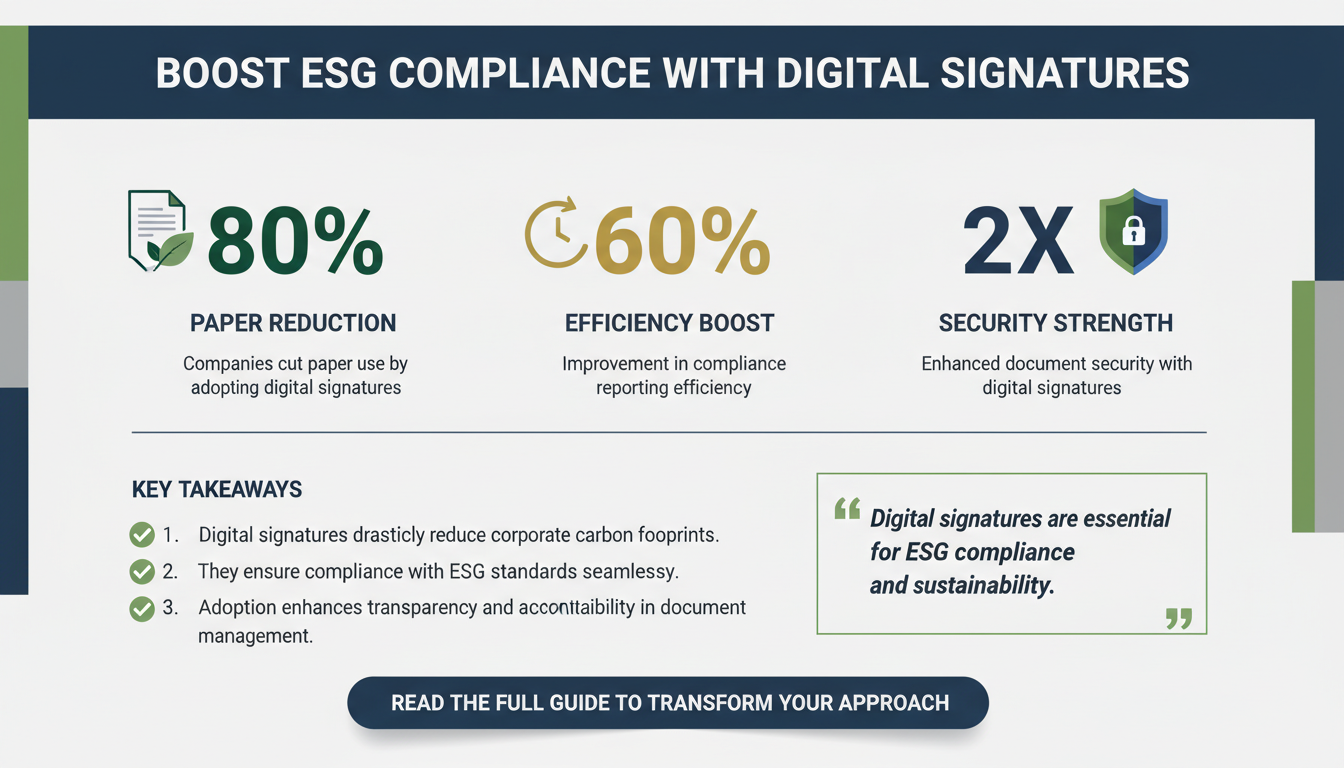
Digital signatures play a pivotal role in transforming how businesses manage documentation, offering a secure, efficient, and environmentally friendly alternative to traditional paper-based processes. According to a McKinsey report, organizations that embrace digital solutions can reduce their paper consumption by up to 80%, significantly cutting down on waste and supporting sustainability initiatives. As regulatory bodies increasingly mandate ESG disclosures, the adoption of digital signatures has become not only advantageous but essential for businesses aiming to stay compliant and competitive in today’s market. The transformation to digital processes marks a significant step forward in modernizing business operations while adhering to crucial environmental and social standards.
The Role of Digital Signatures in ESG Compliance
ESG compliance has become a top priority for businesses, driven by regulatory requirements and investor expectations. Digital signatures offer a seamless way to ensure compliance with ESG standards by providing a secure and tamper-proof method for document execution. The integration of digital signatures into business workflows ensures that all documents are signed, stored, and managed in compliance with ESG guidelines, reducing the risk of non-compliance and associated penalties. This reduces not only legal risks but also fosters trust among stakeholders who are increasingly vigilant about corporate social responsibility.

Ensuring Transparency and Accountability
One of the key aspects of ESG compliance is transparency, which is significantly enhanced through the use of digital signatures. By digitizing document workflows, companies can easily track and audit all signature activities, providing clear evidence of compliance for regulators and stakeholders. According to Forrester's research, firms that adopt digital signatures as part of their ESG strategy see a 60% improvement in compliance reporting efficiency. This efficiency not only saves time and resources but also enhances the company's reputation as a responsible and forward-thinking entity.
Moreover, digital signatures support social governance by ensuring the integrity and authenticity of signed documents. This is particularly important in industries such as finance and healthcare, where the protection of sensitive information is paramount. By leveraging advanced encryption technologies, digital signatures provide a robust layer of security, ensuring that documents have not been altered or forged after signing. This security aspect is crucial as it underpins the trust that stakeholders place in digital transactions, reinforcing the ethical standards that are central to ESG principles.
Expert Insight: Building Trust with Digital Signatures
"Incorporating digital signatures into ESG compliance frameworks not only streamlines operations but also significantly enhances trust with stakeholders," says Dr. Emily Chen, a leading ESG consultant. "Companies that prioritize transparency and integrity in their documentation processes are more likely to foster long-term relationships with investors and customers, which is critical in today's market driven by social responsibility." This insight underscores the strategic importance of digital signatures in strengthening corporate governance and ethical business practices.
Enhanced Environmental Practices
Adopting digital signatures contributes significantly to environmental sustainability by reducing reliance on paper. Paper production is a major source of deforestation and energy consumption, contributing to greenhouse gas emissions. By transitioning to digital signatures, businesses can drastically cut their paper usage, supporting global efforts to combat climate change. The environmental impact is profound when considering the scale at which large corporations operate, where even small reductions in paper use can lead to significant environmental benefits.

Case Study: Corporate Environmental Impact
Consider the case of a multinational corporation that implemented digital signatures across its operations. According to an article by GreenBiz, the company reduced its paper consumption by 75%, resulting in a decrease of 250 metric tons of CO2 emissions annually. This demonstrates the tangible environmental benefits of digital signatures, aligning with the broader goals of ESG initiatives. Such cases serve as powerful testimonials to the efficacy of digital solutions in meeting sustainability goals.
Moreover, digital signatures enable remote work and virtual collaboration, further reducing the environmental impact associated with commuting and physical meetings. Businesses can leverage digital platforms to conduct meetings, sign agreements, and manage projects, minimizing their carbon footprint. This shift not only supports environmental goals but also enhances work-life balance for employees, contributing to social sustainability.
Pro Tip: Leveraging Technology for Greater Impact
To maximize the environmental benefits of digital signatures, organizations should integrate them with other digital tools such as cloud storage and project management software, advises Sarah Green, an environmental policy expert. "This integration not only minimizes paper usage but also ensures that all organizational processes are aligned with sustainability objectives, creating a holistic approach to environmental responsibility," she explains.
Streamlining Operations and Enhancing Efficiency
Beyond compliance and environmental benefits, digital signatures significantly enhance operational efficiency. They streamline the document signing process, eliminating the need for physical signatures, printing, and mailing. This not only saves time but also reduces costs associated with paper handling and storage. In a fast-paced business environment, the ability to quickly execute agreements can provide a competitive edge.

Integrating Digital Workflows
Research conducted by Gartner indicates that companies adopting digital signatures can achieve up to a 60% reduction in document processing time. This efficiency gain enables businesses to allocate resources more effectively, focusing on value-added activities rather than administrative tasks. The swift execution of contracts and agreements accelerates project timelines, enhancing overall productivity. This contributes to a more agile organizational structure capable of responding promptly to market demands.
Additionally, digital signatures facilitate seamless integration with existing digital workflows and enterprise systems. This ensures that documents are automatically routed, signed, and archived, reducing the risk of errors and ensuring data consistency across the organization. As a result, businesses can maintain accurate records and facilitate compliance audits more efficiently. This integration is particularly beneficial for large organizations where data management is a complex and resource-intensive task.
Cost Savings and Economic Benefits
The economic advantages of adopting digital signatures extend beyond operational efficiency. By transitioning to digital document management, businesses can realize significant cost savings, particularly in sectors with high document volumes such as legal, finance, and healthcare. These savings are derived from reduced paper, printing, and postage costs, as well as lower storage and retrieval expenses.
According to a study by IDC, organizations can save approximately $20 per document by utilizing digital signatures, resulting in substantial annual savings. These financial benefits contribute to a healthier bottom line, allowing companies to reinvest in sustainable initiatives and further their ESG commitments. The ability to allocate financial resources to sustainability initiatives not only enhances corporate responsibility but also strengthens brand image in the eyes of consumers and investors.
Moreover, digital signatures can enhance customer satisfaction by providing a faster and more convenient signing experience. Clients and partners appreciate the ease of signing documents digitally, leading to improved business relationships and increased customer loyalty. The convenience of digital processes aligns with the growing consumer preference for seamless and user-friendly interactions, further solidifying a company’s reputation as customer-centric.
Facilitating Cross-Industry Compliance
Digital signatures are versatile tools that support compliance across various industries. Whether in finance, healthcare, or real estate, digital signatures provide a standardized method for executing legally binding agreements. This ensures that businesses can meet industry-specific regulatory requirements while maintaining the integrity and security of their documents.
Regulatory Compliance Across Sectors
In the financial sector, digital signatures enable compliance with stringent regulations such as the Sarbanes-Oxley Act and the Dodd-Frank Act. By providing an auditable trail of document activities, digital signatures help financial institutions demonstrate compliance with these regulations, reducing the risk of fines and reputational damage. The ability to quickly and accurately respond to audit requests is a significant advantage in maintaining regulatory compliance.
The healthcare industry benefits from digital signatures by ensuring compliance with the Health Insurance Portability and Accountability Act (HIPAA). Digital signatures protect patient information and ensure that medical records are securely managed and shared, supporting both compliance and patient confidentiality. This is particularly critical as healthcare organizations increasingly move towards digital health records and telemedicine solutions.
Boosting Social Governance and Ethical Practices
Digital signatures play a crucial role in enhancing social governance by promoting ethical business practices and ensuring accountability. They enable organizations to maintain transparent and auditable records of all document transactions, fostering a culture of trust and integrity. Transparency and accountability are key tenets of good governance, which are increasingly demanded by stakeholders.
By automating document workflows, digital signatures reduce the risk of human error and fraud, safeguarding against unethical practices. This is particularly important for industries like legal and financial services, where the accuracy and authenticity of documents are paramount. The ability to prevent fraud and ensure the accuracy of documents enhances the ethical standards of an organization.
Furthermore, digital signatures support diversity and inclusion by enabling remote work and collaboration. By facilitating virtual interactions, they provide equal opportunities for individuals regardless of location, promoting a diverse and inclusive workforce that aligns with ESG principles. This inclusivity is not only socially responsible but also enriches the workplace with diverse perspectives and ideas.
Overcoming Challenges in Digital Signature Adoption
Despite the numerous benefits, some businesses face challenges in adopting digital signatures. Common obstacles include resistance to change, concerns about security, and integration with existing systems. However, these challenges can be overcome with strategic planning and effective implementation. The transition to digital signatures is not just a technological change but a cultural one that requires buy-in from all stakeholders.
Addressing Adoption Barriers
One effective strategy is to provide comprehensive training and support to employees, ensuring they understand the benefits and functionalities of digital signatures. By addressing concerns and demonstrating the value of digital signatures, organizations can foster a culture of acceptance and enthusiasm. Training programs should emphasize the ease of use, security features, and compliance benefits of digital signatures to build confidence among users.
Additionally, partnering with a reputable digital signature provider, like Zignature, ensures access to secure and compliant solutions. These providers offer robust security measures and seamless integration options, addressing concerns about data protection and compatibility with existing systems. A reliable partner can provide ongoing support and updates to ensure that the digital signature system remains secure and efficient.
Expert Insight: The Future of Digital Signatures
The future of digital signatures is promising, with advancements in technology continuing to enhance their capabilities and applications. Emerging technologies such as blockchain and artificial intelligence are poised to revolutionize digital signatures, offering even greater security, efficiency, and compliance. These technologies will further integrate digital signatures into broader digital ecosystems, enhancing their utility and effectiveness.
Blockchain technology, for example, can provide an immutable ledger of all signature activities, enhancing transparency and traceability. This is particularly beneficial for industries with complex regulatory requirements, as it ensures a tamper-proof record of all transactions. The decentralized nature of blockchain adds an additional layer of security, making tampering nearly impossible.
Artificial intelligence can further streamline digital signature processes by automating document analysis and verification. This reduces the need for manual intervention, accelerating transaction times and improving accuracy. AI can also enhance user experience by providing intuitive interfaces and predictive text, making digital transactions faster and more user-friendly.
Common Mistakes and How to Avoid Them
When implementing digital signatures, businesses often encounter common pitfalls that can hinder their success. One frequent mistake is failing to customize digital processes to align with specific business needs. To avoid this, organizations should conduct a thorough assessment of their workflows and tailor digital signature solutions accordingly. A one-size-fits-all approach is unlikely to meet the diverse needs of different departments and business units.
Mitigating Implementation Risks
Another common error is neglecting to update existing policies and procedures to reflect the digital transition. It is essential to revise internal protocols to ensure they accommodate digital signatures and address compliance requirements. Documenting these changes and providing training ensures that all employees are informed and compliant with the new processes.
Finally, businesses sometimes overlook the importance of security measures. To protect sensitive information, companies should implement robust encryption technologies and access controls, minimizing the risk of data breaches. Regular security audits and updates are essential to maintaining the integrity of digital signature systems.
Quick Wins for Successful Implementation
To ensure a successful digital signature implementation, businesses can focus on several quick win strategies:
- Start with a pilot project: Select a small department or process to test digital signatures, gather feedback, and refine the approach before company-wide adoption. This allows for adjustments based on real-world use and builds confidence in the system.
- Engage stakeholders: Involve key stakeholders in the decision-making process to ensure buy-in and support from all levels of the organization. Stakeholder engagement is crucial for overcoming resistance and ensuring successful adoption.
- Leverage existing technology: Integrate digital signatures with current software and systems to streamline implementation and reduce complexity. Using familiar platforms reduces training time and increases user acceptance.
By adopting these strategies, businesses can successfully transition to digital signatures, reaping the benefits of enhanced ESG compliance and sustainability.
Conclusion: Empowering Sustainable Business Practices
The integration of digital signatures into business operations represents a significant step towards achieving ESG compliance and promoting sustainability. By reducing paper usage, enhancing operational efficiency, and ensuring regulatory compliance, digital signatures empower businesses to align with global sustainability goals. As companies continue to prioritize ESG initiatives, the role of digital signatures will become increasingly critical, providing a secure and efficient means of managing documents in a rapidly changing world. Embracing digital signatures is not just a technological upgrade; it is a strategic move towards a more sustainable and responsible business model.
To further enhance your business operations, consider complementing your digital signature efforts with platforms like Apparatuz for workflow automation and Schedly for appointment management. Additionally, Zatisfied can help manage customer feedback, ensuring a holistic approach to business improvement and customer satisfaction. These tools, coupled with digital signatures, can create a comprehensive and sustainable approach to modern business management.