
Introduction: The New Era of Digital Signature Integration
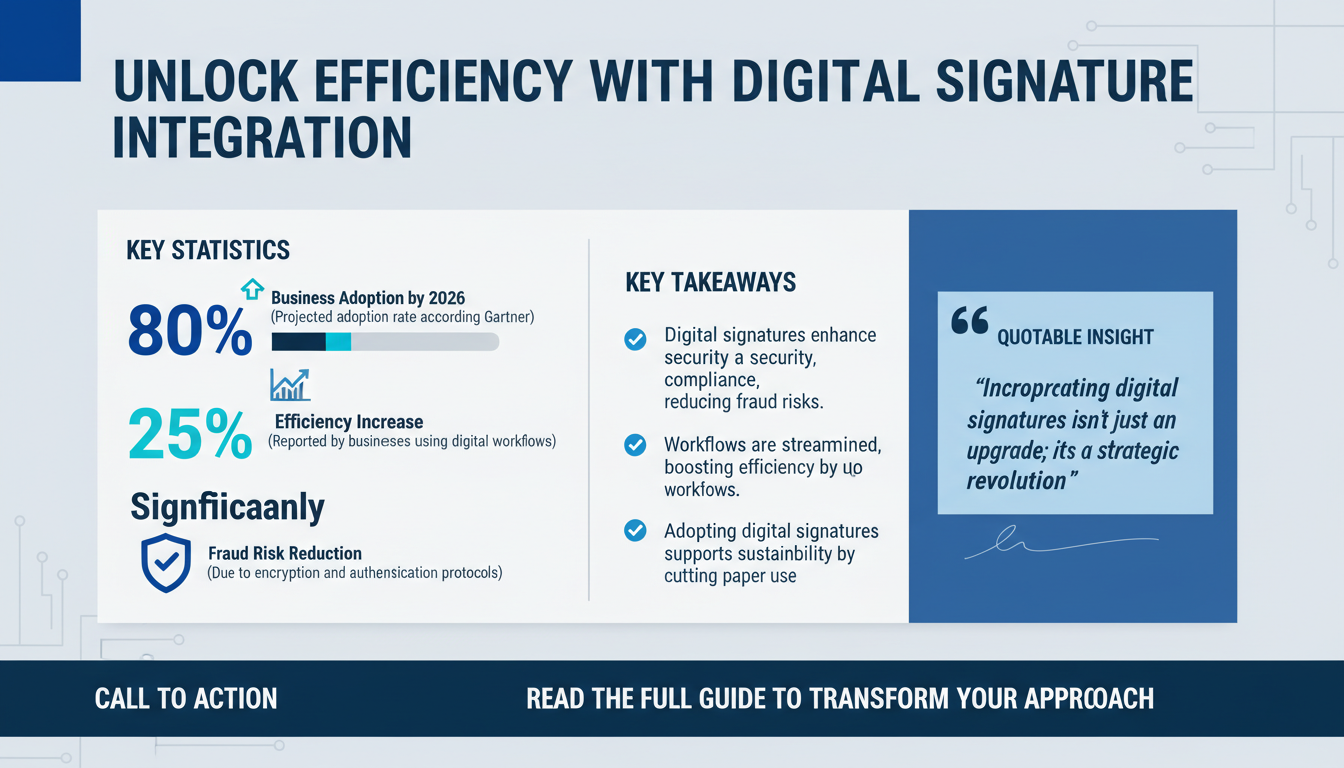
In today's fast-paced digital landscape, businesses are constantly seeking ways to optimize their operations, reduce costs, and enhance security. The integration of digital signatures into existing business workflows has emerged as a pivotal strategy for achieving these objectives. By 2026, it is estimated that over 80% of businesses will have adopted some form of electronic signature solution, according to Gartner's 2026 technology adoption report. This transition is not only about replacing ink with pixels but about transforming how organizations manage documents, ensure compliance, and improve overall efficiency.

However, the journey towards seamless digital signature integration is fraught with challenges. From selecting the right technology to aligning it with existing systems, businesses must navigate a complex landscape. In this definitive guide, we will explore ten proven strategies that ensure a smooth transition, drawing insights from industry leaders and real-world applications.
Incorporating digital signatures is more than a technological upgrade; it's a strategic move that can redefine business operations. With the right approach, companies can leverage this technology to unlock new levels of productivity and innovation. As we delve into each strategy, you'll discover actionable insights, expert advice, and practical steps to implement digital signature solutions effectively.
The integration of digital signatures into business processes is akin to weaving a new thread into a complex tapestry. It requires not only an understanding of the technology itself but also a strategic approach to change management and user adoption. Each section of this guide will help you address these challenges holistically, ensuring that your transition is both smooth and successful.
Understanding the Business Benefits of Digital Signature Integration
Digital signatures offer numerous advantages that extend beyond the immediate convenience of paperless transactions. One of the most significant benefits is the enhancement of security and compliance. As businesses increasingly handle sensitive information, ensuring that documents are signed, stored, and accessed securely is paramount. Forbes highlights that digital signatures use encryption and authentication protocols that significantly reduce the risk of fraud and unauthorized access.

Enhancing Security and Compliance
Secure handling of documents is critical in sectors such as finance, healthcare, and legal services where breaches can result in significant financial and reputational damage. For example, a healthcare provider ensuring compliance with HIPAA regulations can use digital signatures to secure patient information and reduce the risk of data breaches. Advanced encryption methods employed by digital signature solutions ensure that documents remain confidential and tamper-proof, thus maintaining the integrity of sensitive information.
Streamlining Workflows and Reducing Errors
Moreover, digital signatures streamline workflows by eliminating the need for physical document handling. This not only accelerates the signing process but also reduces errors associated with manual entries. According to a McKinsey report, businesses that have adopted digital workflows report a 25% increase in process efficiency. This efficiency translates into cost savings and improved customer satisfaction, as transactions are completed more swiftly and with greater accuracy.
Environmental Benefits
Another critical benefit is the environmental impact. By reducing the reliance on paper, businesses contribute to sustainability efforts. The EPA notes that paper production is a significant contributor to deforestation and pollution, making digital alternatives a greener choice. In fact, a typical office worker uses about 10,000 sheets of paper annually, a substantial figure that can be dramatically reduced through digital alternatives.
Expert Insight: "Transitioning to digital signatures is not only a step towards efficiency but also a commitment to environmental stewardship. Companies that prioritize sustainable practices can enhance their brand reputation and appeal to eco-conscious consumers." - Laura Green, Sustainability Consultant
Improving Transparency and Traceability
Furthermore, digital signatures enhance transparency and traceability in business processes. Each signed document comes with a detailed audit trail that captures who signed the document, when, and where. This feature is crucial for industries that require stringent compliance with regulatory standards, such as finance and healthcare. By providing an auditable trail, digital signatures help businesses maintain high levels of accountability and trust with their clients and stakeholders.
Identifying the Right Digital Signature Solution for Your Business
Choosing the right digital signature solution is a critical step in the integration process. With a plethora of options available, businesses must evaluate products based on their specific needs, industry requirements, and scalability. According to HubSpot's analysis, the key factors to consider include user-friendliness, integration capabilities, security features, and cost-effectiveness.

Assessing Business Needs
Start by assessing your current workflow and identifying pain points that digital signatures can address. For instance, if your organization deals with high volumes of contracts, opt for a solution that offers robust contract management features. Furthermore, consider the integration capabilities of the solution. It should seamlessly connect with existing software such as CRM systems, document management platforms, and cloud storage solutions. A seamless integration ensures that your digital signature solution enhances existing workflows rather than disrupting them.
Security and Compliance Considerations
Security is non-negotiable. Ensure that the digital signature solution complies with legal standards such as eIDAS in Europe or the ESIGN Act in the United States. These regulations ensure the legality and enforceability of digital signatures. DocuSign's guide on compliance can be a valuable resource, although alternative providers should be considered. Additionally, consider solutions that offer advanced security features such as blockchain technology, which provides an immutable record of document transactions.
Pro Tip: "When evaluating digital signature solutions, prioritize those that offer customizable security settings to align with your specific industry standards. This flexibility can be a game-changer in adhering to compliance and protecting sensitive data." - Mark Thompson, Cybersecurity Expert
Cost-Effectiveness and Scalability
Cost is another crucial factor. While some solutions offer comprehensive features, they may be priced beyond the reach of small to medium-sized businesses. Consider the total cost of ownership, including subscription fees, implementation costs, and potential savings from increased efficiency. Pilot testing several solutions can help you determine the best fit for your budget and needs.
Ensuring Seamless Integration with Existing Systems
The success of digital signature integration largely depends on how well the solution integrates with existing business systems. A seamless integration ensures that workflows remain uninterrupted, and employees can transition smoothly to the new system. Capterra's integration guide suggests starting with a thorough audit of your current IT infrastructure to identify compatibility issues.

Phased Integration Approach
One effective strategy is to adopt a phased integration approach. Begin by integrating digital signatures into non-critical processes to test the waters. This allows IT teams to identify and resolve integration issues without impacting core operations. Gradually expand the integration to more critical workflows as confidence in the system grows. This approach not only minimizes disruptions but also provides valuable insights into how the new system interacts with existing processes.
Leveraging API and Middleware Solutions
Another consideration is API support. Solutions that offer robust APIs enable custom integrations tailored to your business's specific needs. This flexibility ensures that digital signatures can be embedded directly into your existing platforms, providing a seamless user experience. Software Advice offers insights into best practices for API integration. Additionally, investing in middleware solutions can facilitate smoother integration between disparate systems, reducing the risk of data silos and enhancing overall system interoperability.
Continuous Monitoring and Optimization
Regularly update and test your integration points to ensure they remain functional and secure. As your business grows and your systems evolve, continuous monitoring and optimization of integration points are necessary to maintain efficiency and reduce the risk of system failures.
Training and Engaging Your Team for Successful Adoption
Human factors are often the most significant barriers to successful digital signature integration. Employees may resist change due to a lack of understanding or fear of new technology. To overcome this, businesses must invest in comprehensive training programs that educate staff on the benefits and functionalities of digital signatures. According to Gallup, organizations with engaged employees are 17% more productive and 21% more profitable.
Building a Supportive Culture
Begin by identifying key stakeholders and early adopters who can champion the integration process. These individuals can serve as role models and provide support to peers. Additionally, use a variety of training methods, including workshops, webinars, and interactive tutorials, to cater to different learning preferences. Ensure that training is hands-on and relevant to the employees' daily tasks, as this increases retention and encourages practical application of new skills.
Fostering Continuous Engagement
Engagement doesn't end with training. Continuously gather feedback and address concerns to ensure that the solution meets user needs. This iterative process fosters a culture of continuous improvement and innovation. As Forrester notes, employee feedback is crucial in refining digital transformation strategies. Consider establishing a feedback loop where employees can share their experiences and suggest enhancements, creating a sense of ownership and inclusion in the transformation process.
Pro Tip: "Encourage a culture of feedback by implementing regular check-ins and open forums. This not only helps refine the system but also empowers employees by making them feel heard and valued." - Dr. Emily Carter, Organizational Psychologist
Incentivizing Adoption
Incentivize adoption by recognizing and rewarding employees who embrace the new technology and demonstrate improvements in efficiency and productivity. Highlight success stories and case studies to illustrate the positive impact of digital signatures on day-to-day operations.
Maintaining Compliance and Security Standards
Compliance and security are paramount when integrating digital signatures into business workflows. With increasing regulatory scrutiny and cyber threats, businesses must ensure that their digital signature solutions adhere to legal standards and best practices. According to Accenture's Cybersecurity Report, businesses face an average of 22 cyberattacks per month, highlighting the need for robust security measures.
Ensuring Compliance with Standards
Ensure that your digital signature solution complies with international standards such as ISO/IEC 27001 for information security management. This not only protects sensitive data but also enhances your organization's credibility and trustworthiness. Moreover, implement multi-factor authentication to add an extra layer of security to the signing process. Multi-factor authentication can significantly reduce the risk of unauthorized access by requiring users to verify their identity through multiple means.
Conducting Regular Audits
Regular audits and security assessments are essential to maintaining compliance and identifying vulnerabilities. Partner with third-party security experts to conduct penetration tests and risk assessments. ISACA's COBIT framework provides a comprehensive approach to governance and management of enterprise IT. Additionally, ensure that your digital signature provider regularly updates its software to address emerging security threats and vulnerabilities.
Data Protection and Employee Education
Establish clear policies and procedures for handling signed documents to ensure compliance with data protection regulations such as GDPR. Educate your employees about these policies and the importance of data security in maintaining compliance and protecting the company's reputation.
Leveraging Analytics to Optimize Workflow Performance
Analytics play a crucial role in optimizing workflows post-integration. By leveraging data insights, businesses can identify bottlenecks, measure performance, and make informed decisions to enhance efficiency. A study by IBM found that companies using analytics achieve a 13% higher ROI on digital initiatives compared to those that don't.
Real-Time Analytics for Immediate Insights
Implement analytics tools that provide real-time insights into document flows and user interactions. These tools can highlight areas where processes slow down, enabling managers to implement corrective measures. Additionally, monitor user adoption rates and satisfaction levels to ensure that the digital signature solution is delivering its intended benefits. By measuring these key metrics, businesses can gain a deeper understanding of their workflow dynamics and identify opportunities for further optimization.
Predictive Analytics for Future Planning
Use predictive analytics to forecast trends and plan for future workflow enhancements. This proactive approach ensures that your business remains agile and responsive to changing market demands. For further reading on analytics in digital transformation, McKinsey's digital revolution insights offer valuable perspectives. Moreover, consider using machine learning algorithms to automatically detect anomalies and predict potential issues before they impact operations.
Continuous Review and Collaboration
Regularly review and refine your analytics strategy to ensure it aligns with your business goals and provides actionable insights. Engage with cross-functional teams to collaboratively analyze data and develop targeted improvement plans.
Overcoming Common Pitfalls in Digital Signature Integration
Despite the clear benefits, digital signature integration can encounter several pitfalls that hinder success. One common mistake is underestimating the complexity of integration with existing systems. Businesses often assume that digital signatures can be seamlessly added without considering the need for customization and alignment with current processes. Bain & Company's research emphasizes the importance of aligning technology initiatives with business objectives to avoid such pitfalls.
Addressing Integration Complexities
Another mistake is neglecting user experience. A cumbersome or unintuitive interface can deter users and reduce adoption rates. To counter this, involve end-users in the design and testing phases to ensure the solution meets their needs and expectations. Conduct usability testing and gather feedback to identify and address pain points, ensuring a user-friendly experience that encourages adoption.
Planning for Scalability
Finally, failing to plan for scalability can limit the long-term benefits of digital signature integration. As your business grows, the solution must be able to accommodate increased volumes and complexity. Regularly review your digital signature strategy to ensure it scales with your business needs. For insights into avoiding these pitfalls, Accenture's digital transformation guide offers practical advice. Additionally, consider future-proofing your digital signature solution by selecting a provider with a strong track record of innovation and adaptability.
Expert Insight: "Avoiding pitfalls in digital signature integration starts with a thorough understanding of your business processes and proactive planning. Engage stakeholders early and ensure that your chosen solution is not only fit for current needs but adaptable for future growth." - Sarah Lee, Digital Transformation Consultant
Conducting Thorough Research and Planning
Address these common pitfalls by conducting thorough research, planning, and testing before fully implementing a digital signature solution. Engage with industry experts and peers to learn from their experiences and apply best practices to your integration efforts.
Conclusion: Embracing the Future of Business with Digital Signatures
Integrating digital signatures into business workflows is not merely a trend but a fundamental shift towards more efficient, secure, and sustainable operations. By following the strategies outlined in this guide, businesses can navigate the complexities of integration and unlock the full potential of digital transformation. As technology continues to evolve, staying ahead of the curve requires proactive planning, continuous learning, and adaptation.
As you embark on this transformative journey, consider complementing your efforts with tools like Apparatuz for workflow automation, Applicantz for recruitment, and Schedly for scheduling. Together, these approaches create a comprehensive solution for your business needs.
In the realm of digital transformation, the integration of digital signatures is a catalyst for change. Leverage this opportunity to enhance your business workflows, secure your transactions, and drive innovation. For more insights and resources, explore our blog on seamless integration with digital signature solutions and discover how Zignature can support your digital journey.
Digital signatures represent a significant step forward in the evolution of business processes. By embracing this technology, businesses can achieve greater efficiency, reduce environmental impact, and enhance their competitive edge. Stay informed, be proactive, and take full advantage of the opportunities presented by digital signature integration.