

In today’s hyper-competitive business landscape, customer experience (CX) has emerged as the ultimate differentiator. According to a 2025 Gartner study, 89% of companies now compete primarily on the basis of CX—a dramatic rise from just 36% in 2010. In this context, seamless e-signature workflows represent a game-changing opportunity for small-to-medium-sized businesses (SMBs) and enterprises alike. By streamlining document approvals, digitizing contracts, and eliminating mundane bottlenecks, businesses can elevate their service delivery and build stronger customer loyalty. This guide explores actionable strategies, best practices, and the latest insights for leveraging e-signatures to transform CX.
Whether you’re a legal team aiming to simplify client onboarding, a real estate agent closing deals faster, or an SMB leader looking to optimize workflows, this article will equip you with the tools and knowledge to succeed. Let’s dive deep into how e-signatures can become a cornerstone of your CX strategy.
1. The Business Case for E-Signatures in Customer Experience
E-signatures are more than a convenience—they are a strategic asset. A 2026 report by Forrester found that companies using e-signature solutions saw a 91% reduction in document turnaround time, leading to significant improvements in customer satisfaction and retention. But why do e-signatures have such a profound impact on CX?
First, consider the frustration caused by traditional paper-based workflows. Customers often face delays, misplaced documents, and cumbersome manual processes that create friction. E-signatures eliminate these pain points by offering instant, secure, and legally binding approvals from any device, anywhere in the world.
Second, e-signatures align with the digital-first preferences of modern customers. According to a McKinsey study, 75% of customers prefer companies that offer fully digital services. E-signatures enable businesses to meet these expectations while enhancing efficiency and accuracy.
Finally, e-signatures streamline internal operations, freeing up employees to focus on higher-value tasks. This operational efficiency translates into faster response times and a more personalized customer experience.
Why Speed Matters in CX
In the digital age, speed is a critical component of customer satisfaction. According to PwC, 80% of customers consider speed an essential element of a positive experience. Traditional methods of collecting signatures often involve back-and-forth communication, delays in mail delivery, and the risk of lost paperwork. E-signatures eliminate these inefficiencies by enabling near-instantaneous approvals.
For instance, consider a loan application process. A customer filling out a loan application manually may wait days or even weeks for approval due to postal delays or incomplete submissions. With e-signatures, the entire process can be completed in hours, significantly improving customer satisfaction and reducing churn.
Global Reach with E-Signatures
Another compelling advantage is the ability to serve a global customer base seamlessly. Businesses operating internationally often face challenges related to differing time zones, language barriers, and logistical complexities. E-signatures remove these barriers by providing a standardized, digital solution that works across borders. Platforms like DocuSign and Adobe Sign support multiple languages and comply with international regulations, making them ideal for businesses with global ambitions.
For example, an international SaaS company can use e-signatures to onboard clients from various countries without the need for physical documentation. This not only speeds up the process but also ensures compliance with local laws, such as the EU’s eIDAS regulation.
2. Key Features of Seamless E-Signature Workflows
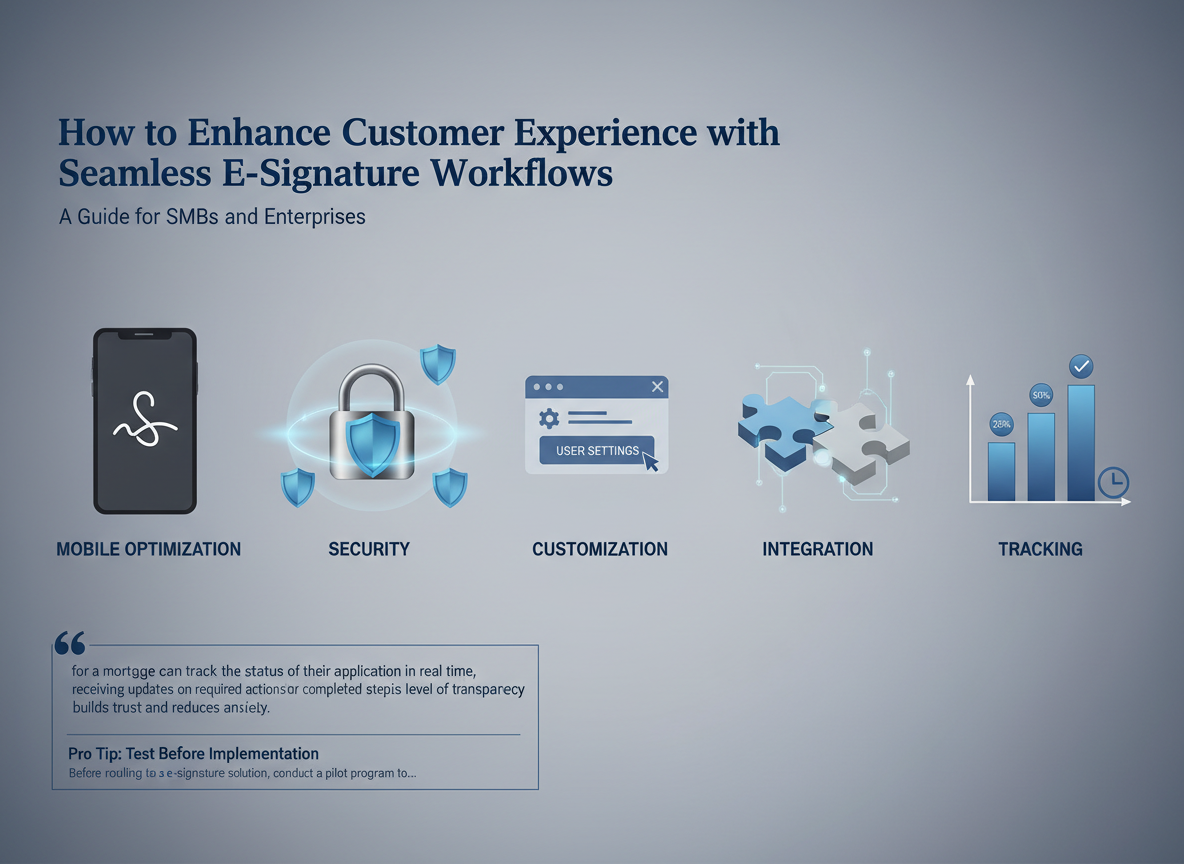
Not all e-signature solutions are created equal. To truly enhance customer experience, your chosen platform must offer specific features that ensure a smooth and intuitive process. Here are the five must-have features:
1. Mobile Optimization
In 2026, mobile devices account for over 60% of all digital interactions. An e-signature solution that isn’t mobile-friendly risks alienating a significant portion of your customer base. Ensure that your platform supports responsive design, mobile apps, and touch-based signing for a seamless experience.
Mobile optimization also benefits industries with on-the-go professionals, such as real estate agents and field service technicians. A real estate agent, for example, can close deals faster by allowing clients to sign contracts directly on their smartphones during property tours.
2. Security and Compliance
Customers need to trust that their sensitive information is secure. Look for solutions that offer end-to-end encryption, multi-factor authentication, and compliance with global standards like GDPR, HIPAA, and ISO 27001. A secure platform reassures customers and strengthens brand credibility.
One real-world example is the healthcare industry, where compliance with HIPAA is non-negotiable. A healthcare provider using an e-signature solution with built-in compliance ensures that patient consent forms are securely processed and stored, avoiding potential legal repercussions.
3. Workflow Customization
Every business has unique needs, and your e-signature solution should adapt accordingly. Features like automated reminders, custom branding, and multi-party signing ensure that workflows align with your processes and customer expectations.
For instance, a financial institution may require multi-level approvals for loan agreements. By customizing workflows to include multiple signatories and automated notifications, the institution can enhance efficiency without compromising compliance.
4. Integration Capabilities
The best e-signature solutions integrate seamlessly with existing tools like CRM systems, document management platforms, and workflow automation software. This connectivity eliminates silos and creates a unified experience for both employees and customers.
Consider a sales team using Salesforce to manage customer relationships. Integrating an e-signature solution with Salesforce allows sales representatives to send contracts for signature directly from the CRM, reducing administrative tasks and accelerating deal closures.
5. Real-Time Tracking and Notifications
Transparency is key to a great customer experience. Features like real-time tracking, status updates, and automated notifications keep customers informed, reducing uncertainty and enhancing satisfaction.
For example, a customer applying for a mortgage can track the status of their application in real time, receiving updates on required actions or completed steps. This level of transparency builds trust and reduces anxiety.
Pro Tip: Test Before Implementation
Before rolling out an e-signature solution, conduct a pilot program to test its features and gather feedback from end-users. This ensures that the platform meets your specific requirements and delivers the desired customer experience improvements.
3. The Zignature Framework for Streamlined E-Signature Workflows
To help SMBs and enterprises implement effective e-signature workflows, we’ve developed the proprietary Zignature Framework. This four-step model simplifies adoption and ensures maximum impact on customer experience:
Step 1: Assess Current Workflows
Start by mapping your existing document processes. Identify bottlenecks, redundancies, and pain points that hinder customer satisfaction. For example, are clients frequently emailing to check the status of approvals? Are delays in internal reviews causing frustration?
Use tools like process mapping software to visualize workflows and pinpoint inefficiencies. Engage employees and customers in this assessment to gain a comprehensive understanding of the challenges.
Step 2: Design a Digital-First Workflow
Next, reimagine your workflows with e-signatures at the core. Define clear steps for document creation, review, signing, and storage. Incorporate automation where possible to minimize manual intervention and errors.
For instance, a legal firm can automate the process of sending contracts for review and signature, ensuring that each step follows a predefined sequence. This reduces the risk of errors and accelerates turnaround times.
Step 3: Implement and Test
Choose an e-signature platform that aligns with your goals and integrates seamlessly with your existing tools. Pilot the solution with a small team or department before scaling. Gather feedback from both employees and customers to refine the process.
During the pilot phase, measure key performance indicators (KPIs) such as document turnaround time, error rates, and customer satisfaction scores. Use these insights to make data-driven improvements.
Step 4: Monitor and Optimize
Customer needs and expectations evolve over time. Continuously monitor your e-signature workflows for performance metrics like turnaround time, error rates, and customer satisfaction scores. Use this data to make ongoing improvements.
Leverage analytics tools provided by your e-signature platform to gain actionable insights. For example, identify documents that frequently require corrections and address the root causes to improve efficiency.

4. Real-Life Case Studies: E-Signatures Transforming CX
To illustrate the impact of e-signatures on customer experience, let’s explore two real-world examples:
Case Study 1: Real Estate
A mid-sized real estate agency was struggling with paper-based contracts, which often delayed property closings by weeks. By implementing a seamless e-signature solution, the agency reduced contract turnaround time by 80%. Clients appreciated the convenience of signing documents remotely, leading to a 25% increase in client referrals.
Additionally, the agency integrated the e-signature platform with its customer relationship management (CRM) software, enabling agents to track contract statuses directly within the CRM. This streamlined workflow allowed agents to focus more on client interactions, further enhancing customer satisfaction.
Case Study 2: Healthcare
A healthcare provider needed a secure and compliant way to obtain patient consent forms. By adopting an e-signature platform with HIPAA compliance, the provider improved patient satisfaction scores by 30% while ensuring regulatory adherence. The time saved allowed staff to focus more on patient care.
Moreover, the provider used the platform’s real-time tracking features to monitor the status of consent forms, ensuring that critical documents were completed promptly. This proactive approach minimized delays in patient care and improved overall efficiency.

To further enhance your digital workflows, explore our sister platforms: Apparatuz for workflow automation, Applicantz for recruitment management, Schedly for scheduling and appointments, Supportly for customer support, and Zatisfied for feedback management. Together, these tools create a comprehensive ecosystem that complements your digital signature strategy.