
In today’s fast-paced, digital-first world, industries such as legal, real estate, and healthcare are under increasing pressure to streamline operations, reduce inefficiencies, and maintain rigorous compliance standards. One transformative technology that has emerged as a game-changer is the digital signature. Unlike traditional pen-and-paper signatures, digital signatures leverage advanced encryption techniques to ensure security, authenticity, and legality in document signing processes. For small and medium-sized businesses (SMBs), adopting digital signatures is no longer just a convenience—it’s a strategic imperative.
This article dives deep into the industry-specific benefits of digital signatures for legal, real estate, and healthcare SMBs. By understanding how this technology addresses unique challenges in these sectors, businesses can position themselves to thrive in the increasingly competitive digital economy. Whether it’s enhancing compliance, accelerating transactions, or improving operational efficiency, digital signatures are a critical tool for SMBs aiming for sustainable growth and profitability.
1. Enhanced Security and Compliance in Legal SMBs
Legal SMBs operate in a highly regulated environment where document integrity and compliance are paramount. The nature of legal work involves sensitive information, high-value contracts, and often strict deadlines. Digital signatures address these challenges by providing robust security and ensuring that signed documents meet stringent legal standards.

How Digital Signatures Secure Legal Documents
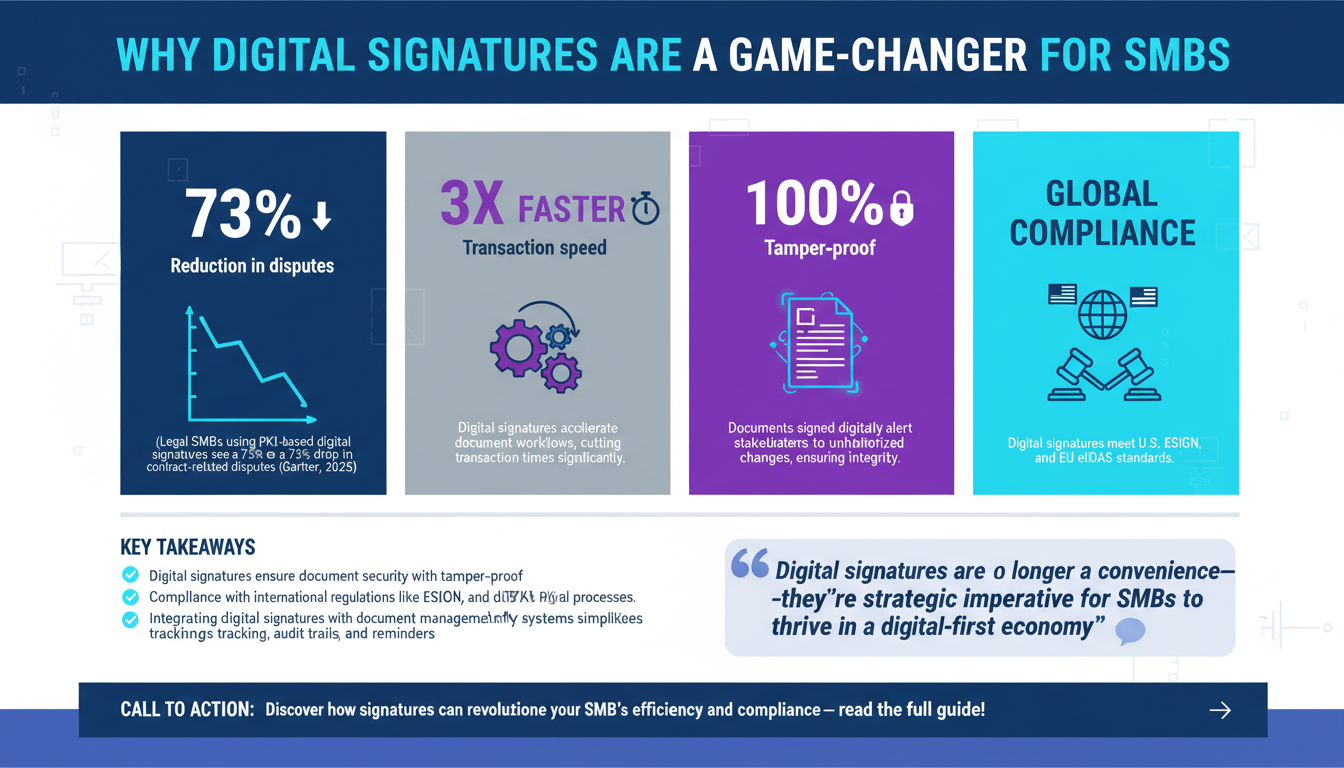
First, digital signatures use Public Key Infrastructure (PKI) to authenticate signers and protect documents from tampering. PKI works by assigning unique cryptographic keys to each user, ensuring that every signature is verifiable and linked to the signer’s identity. This significantly reduces the risk of forgery or fraud. According to Gartner’s 2025 report on digital signature security, businesses that adopt PKI-based digital signatures experience a 73% reduction in contract-related disputes. This statistic underscores the importance of adopting secure technologies in legal practices where trust and authenticity are non-negotiable.
Additionally, digital signatures ensure that documents remain tamper-proof after signing. Any unauthorized changes void the signature and alert stakeholders, providing an additional layer of security. For example, a small legal firm handling sensitive intellectual property agreements can rely on digital signatures to protect clients’ proprietary information from being altered or stolen.
Compliance Across Borders
Second, digital signatures simplify compliance with laws like the Electronic Signatures in Global and National Commerce Act (ESIGN) in the United States, the Uniform Electronic Transactions Act (UETA), and the European Union’s eIDAS regulation. These laws recognize digital signatures as legally binding, provided they meet specific requirements such as signer authentication and document integrity. For legal SMBs handling cross-border transactions, digital signatures ensure compliance with international standards, reducing the complexity of navigating differing regulatory landscapes.
For example, a boutique law firm specializing in international business contracts can use digital signatures to ensure seamless compliance with both U.S. and EU regulations. This capability not only streamlines operations but also builds client trust by demonstrating adherence to global standards.
Integration with Document Management Systems
Finally, digital signatures integrate seamlessly with document management systems (DMS). These integrations allow legal teams to track document versions, maintain detailed audit trails, and set up automated reminders for deadlines. For instance, a small legal firm managing multiple client contracts can use digital signatures to ensure that all amendments are tracked and verified. This level of transparency enhances accountability and reduces the risk of non-compliance penalties. Moreover, automated workflows enabled by digital signatures can save hours of manual administrative work, freeing up time for higher-value legal tasks.
For example, a boutique legal firm in Los Angeles adopted digital signatures and integrated them with their DMS. The result? The firm reduced document processing times by 40%, improved client satisfaction scores, and avoided potential litigation tied to contract disputes. This case demonstrates how digital signatures can transform the operational efficiency of legal SMBs.
Pro Tip: When implementing digital signatures, choose a provider that offers customizable workflows and multi-factor authentication. These features enhance security and ensure compliance with even the most stringent legal standards.
Key Takeaway:
- Digital signatures reduce fraud and enhance document security in legal workflows.
- They ensure compliance with global regulations, simplifying international transactions and protecting businesses from legal risks.
- Integrated audit trails enable accountability and reduce the likelihood of non-compliance penalties.
2. Accelerated Transactions in Real Estate SMBs
Real estate transactions are inherently complex, involving multiple parties, extensive documentation, and tight deadlines. Whether it is a property sale, lease agreement, or mortgage approval, the process often requires signatures from buyers, sellers, agents, and financial institutions. Digital signatures revolutionize these processes by enabling faster, more efficient workflows.

Remote Signing: Convenience Meets Speed
One major benefit is the ability to sign documents remotely. This eliminates the need for physical meetings, which can be time-consuming and logistically challenging. As remote work and digital collaboration continue to dominate in 2026 and beyond, digital signatures have become indispensable. A National Association of Realtors study found that digital tools like e-signatures speed up transaction times by 45%, allowing SMBs to close deals faster and improve cash flow.
Take the example of a real estate agency operating in a competitive urban market. By adopting digital signatures, the agency was able to cut the average time to close a property deal from 21 days to just 12 days. This efficiency enabled the agency to handle 25% more transactions annually, boosting revenue and client satisfaction.
Streamlined Workflow for Complex Transactions
Additionally, digital signatures streamline the management of complex documents such as purchase agreements, lease contracts, and disclosures. Automated workflows ensure that documents are signed in the correct order and routed to the right parties. This reduces administrative burden and minimizes errors. For example, an escrow company using digital signatures can set up workflows that automatically notify parties when their signatures are required, reducing delays and ensuring timely completion.
Moreover, digital signatures integrate with transaction management platforms, providing real-time updates to all stakeholders. This transparency helps real estate SMBs build trust with clients and accelerates decision-making processes.
Enhancing Client Relationships
Furthermore, digital signatures enhance client satisfaction. Buyers and sellers appreciate the convenience of signing documents from their smartphones or laptops, especially in high-stakes transactions where time is of the essence. This positive experience can lead to increased referrals and repeat business, which are critical for SMBs aiming to grow their market share.
Consider a real estate investor who frequently buys and sells properties across states. By using digital signatures, they can complete transactions without traveling, saving time and money while ensuring a seamless experience for all parties involved.
Expert Insight: "In competitive real estate markets, speed is everything. Digital signatures not only help close deals faster but also provide a competitive edge by delivering a superior client experience," says Mark Johnson, a real estate technology consultant.
Key Takeaway:
- Digital signatures reduce transaction times by up to 45%, enabling faster deal closures and improved cash flow.
- Automated workflows eliminate errors and enhance administrative efficiency in managing real estate documents.
- Remote signing capabilities improve client satisfaction and foster long-term business relationships.
3. Improved Patient Care and Operational Efficiency in Healthcare SMBs
Healthcare SMBs face unique challenges, including stringent privacy requirements under the Health Insurance Portability and Accountability Act (HIPAA) and the need to manage vast amounts of patient data. Digital signatures offer solutions tailored to these demands, enabling healthcare providers to deliver better patient care while optimizing operational efficiency.

Securing Sensitive Patient Data
One of the primary benefits of digital signatures in healthcare is their ability to ensure the security and confidentiality of patient records. By encrypting sensitive information, digital signatures protect against unauthorized access and data breaches. A Health Affairs report reveals that healthcare providers using digital signatures experienced a 60% reduction in data breach incidents. This is a critical advantage in an era where cyberattacks on healthcare organizations are on the rise.
Beyond encryption, digital signatures offer detailed audit trails. These logs track who accessed a document, when it was accessed, and any changes made. This level of accountability is essential for meeting HIPAA compliance standards and ensuring patient trust.
Streamlining Administrative Workflows
Digital signatures also streamline administrative tasks, which are often a significant pain point for healthcare SMBs. Medical consent forms, prescription authorizations, and insurance claims can be signed electronically, reducing paperwork and freeing up staff time for patient care. For a small clinic with limited resources, this efficiency can mean the difference between surviving and thriving. In fact, a rural healthcare provider in Ohio reported saving over 500 staff hours annually by digitizing their document workflows with e-signatures.
Automated workflows can also reduce errors in documentation, which are a common source of delays in patient care. For instance, missing signatures on consent forms can lead to postponed procedures. Digital signatures ensure that all necessary fields are completed before submission, minimizing disruptions in service delivery.
Enabling Telehealth Services
Additionally, digital signatures enable telehealth services, which rely on secure documentation to maintain legal and ethical standards. Patients can sign consent forms remotely, ensuring compliance without requiring physical visits. This capability was especially critical during the COVID-19 pandemic, when telehealth adoption surged. Even post-pandemic, the trend toward remote healthcare services shows no signs of slowing down, making digital signatures an essential tool for modern healthcare practices.
For example, a telehealth startup in New York implemented digital signatures to manage patient onboarding and consent processes. This allowed the company to scale its operations rapidly while maintaining compliance with state and federal regulations.
Pro Tip: Use digital signature platforms that integrate with electronic health record (EHR) systems to create a seamless workflow and improve data accuracy.
Key Takeaway:
- Digital signatures protect sensitive patient information under HIPAA, reducing the risk of data breaches.
- They streamline administrative workflows, saving time and resources for healthcare providers.
- Digital signatures facilitate telehealth services by enabling secure and compliant remote documentation.
4. Cost Savings Across Industries
One universal benefit of digital signatures for SMBs across legal, real estate, and healthcare is the significant cost savings they offer. Traditional paper-based processes involve expenses such as printing, courier services, storage, and manual labor—all of which can be drastically reduced by adopting digital solutions.

Eliminating Paper-Related Costs
For example, legal SMBs often spend thousands of dollars annually on courier services to send contracts and obtain signatures. By transitioning to digital signatures, they can eliminate these costs while improving turnaround times. According to McKinsey’s paperless office study, SMBs save an average of $25,000 per year by digitizing their workflows. Similarly, real estate agencies can save by reducing the need for physical storage and in-person meetings, while healthcare providers can cut down on administrative expenses associated with processing and archiving paper documents.
Reducing Time and Labor Costs
Beyond paper-related expenses, digital signatures save time. Manual processes like scanning, printing, and mailing documents are replaced with instant electronic transmission. This not only reduces labor costs but also speeds up workflows, enabling SMBs to handle more transactions in less time.
Key Takeaway:
- Digital signatures eliminate costs associated with paper, printing, and courier services.
- SMBs save an average of $25,000 annually by digitizing workflows.
- Cloud-based storage reduces physical archiving expenses.
5. Scalability and Integration for SMB Growth
As SMBs grow, their document workflows become more complex, involving larger teams, more clients, and stricter compliance requirements. Digital signatures provide the scalability and integration capabilities needed to support growth.
Integration with Business Tools
Modern digital signature solutions integrate seamlessly with other business tools, such as Customer Relationship Management (CRM) platforms, Enterprise Resource Planning (ERP) systems, and document management software. This integration enables SMBs to automate workflows, track progress, and ensure consistency across departments.
Future-Proofing with Emerging Technologies
Moreover, digital signatures future-proof SMBs by aligning with evolving technology trends. For instance, blockchain-based digital signatures are emerging as a secure option for industries that require immutable records. Companies that adopt these solutions now can position themselves as leaders in innovation, attracting tech-savvy clients and partners.
Key Takeaway:
- Digital signatures integrate seamlessly with CRM and ERP systems, enabling process automation.
- They support SMBs as they scale operations, making it easier to handle increasing document volumes.
- Blockchain-based solutions offer enhanced security and future-proofing capabilities.
Conclusion
Digital signatures are not just a technological upgrade—they are a strategic enabler for SMBs in legal, real estate, and healthcare industries. From enhancing security and compliance to accelerating transactions and improving patient care, this technology addresses critical pain points while driving efficiency and growth. As SMBs continue to navigate an increasingly digital business environment, adopting digital signature solutions will be essential for staying competitive, reducing costs, and delivering exceptional service to clients and customers alike.
To further enhance your digital workflows, explore our sister platforms: Apparatuz for workflow automation, Applicantz for recruitment management, Schedly for scheduling and appointments, Supportly for customer support, and Zatisfied for feedback management. Together, these tools create a comprehensive ecosystem that complements your digital signature strategy.